Antioch Meaning in the Bible: Early Christian Hub
Antioch, a major city founded by Seleucus I Nicator in the late 4th century BCE, served as an essential hub for early Christianity. Located on the Orontes River and notable for its cultural and economic significance, it is prominently featured in the Book of Acts.
Acts 11:26 records that Antioch was the first place where the followers of Jesus were called Christians. It also served as the base for Paul’s missionary journeys (Acts 13:1-3).
The diverse congregation in Antioch, comprising Jews and Gentiles, represents the inclusivity and outreach that characterized early Christian expansion. Discovering more about Antioch provides deep insights into early Church history and theology.

Key Takeaways
- Antioch is where followers of Jesus were first called Christians (Acts 11:26).
- It was the base for Apostle Paul and Barnabas’s missionary journeys (Acts 13:1-3).
- Antioch hosted the first Gentile church, emphasizing inclusivity (Acts 11:19-26).
- The Council of Jerusalem, addressing Gentile conversions, was significantly influenced by Antioch (Acts 15:1-35).
Historical Background of Antioch
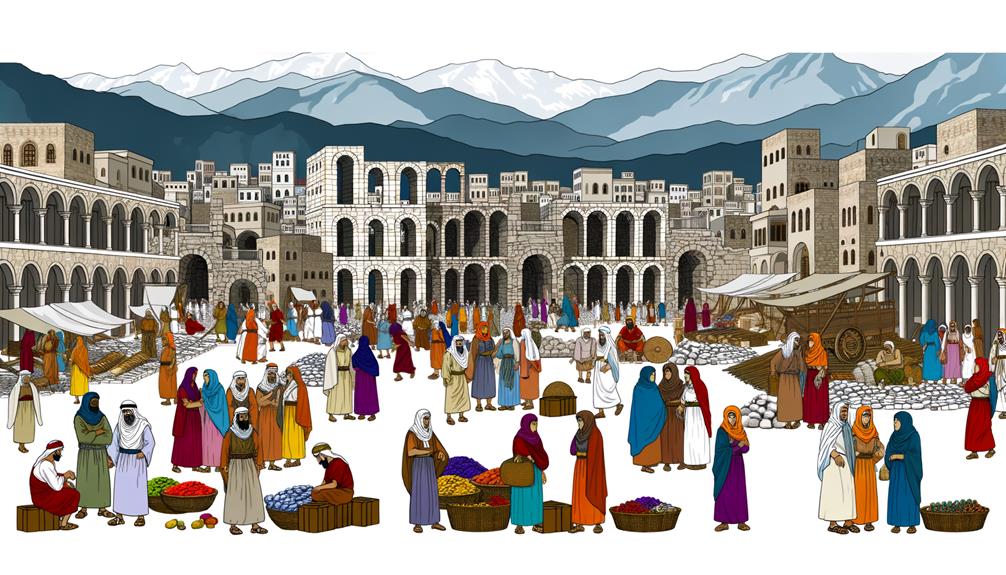
Frequently regarded as one of the most significant cities in early Christian history, Antioch was founded near the end of the 4th century BCE by Seleucus I Nicator, one of Alexander the Great’s generals.
Strategically located on the Orontes River, Antioch became a hub of commerce and culture, blending Greek, Roman, and local influences. Historically, its significance is underscored by its role as the third-largest city in the Roman Empire.
Scripturally, Antioch is mentioned in the New Testament as a pivotal center for the early Christian church, especially notable for being the place where followers of Jesus were first called ‘Christians’ (Acts 11:26).
This confluence of historical and biblical relevance marks Antioch as a cornerstone in understanding early Christianity.
Antioch in the Book of Acts

In the Book of Acts, Antioch emerges as a pivotal hub for the early Christian community, especially referenced in Acts 11:26 where ‘the disciples were first called Christians in Antioch.’
This city also served as the launching point for Paul’s missionary journeys (Acts 13:1-3), highlighting its strategic importance in spreading the Gospel.
Additionally, significant biblical events such as the Antioch Incident (Galatians 2:11-14) underscore its role in shaping early Christian theology and practice.
Early Christian Community
Situated at the confluence of major trade routes, Antioch emerged as a significant center for early Christianity, as depicted in the Book of Acts. This city became a pivotal locale for the nascent Christian community. In Acts 11:26, it is noted that “the disciples were called Christians first in Antioch”, highlighting its role in shaping Christian identity. The early church in Antioch was marked by diversity, inclusive of Jews and Gentiles, fostering a dynamic and multicultural congregation. The presence of prophets and teachers (Acts 13:1) further underscores Antioch’s spiritual significance.
| Key Feature | Scriptural Reference | Importance |
|---|---|---|
| First called Christians | Acts 11:26 | Identity Formation |
| Multicultural Community | Acts 11:20-21 | Inclusive Fellowship |
| Prophets and Teachers | Acts 13:1 | Spiritual Guidance |
Paul’s Missionary Journeys
Paul’s missionary journeys, prominently chronicled in the Book of Acts, frequently used Antioch as a strategic base, underscoring the city’s crucial role in the expansion of early Christianity.
Acts 13:1-3 depicts Antioch as the launching point for Paul’s first missionary journey, where the Holy Spirit commissioned him and Barnabas. This city’s significance is further highlighted in Acts 14:26-28, detailing Paul’s return to Antioch to report on the mission’s success.
Antioch served not only as a logistical hub but also as a center for theological discourse and community support, essential for the nascent Christian movement.
The historical context of Antioch as a cosmopolitan city facilitated the dissemination of the Gospel across diverse populations, reinforcing its foundational role in early Christian missions.
Significant Biblical Events
Emblematic of its pivotal role, Antioch witnessed several significant biblical events documented in the Book of Acts, such as the establishment of a vibrant Christian community and the pivotal Council of Jerusalem. Acts 11:19-26 details how believers, scattered by persecution, founded the first Gentile church in Antioch. This diverse congregation became a launchpad for missionary journeys (Acts 13:1-3). Additionally, Antioch was integral during the Council of Jerusalem (Acts 15:1-35), where leaders debated Gentile conversion and adherence to Mosaic Law, shaping early Christian doctrine.
| Event | Scriptural Reference |
|---|---|
| Founding of the Church | Acts 11:19-26 |
| First Missionary Journey | Acts 13:1-3 |
| Council of Jerusalem | Acts 15:1-35 |
These events underscore Antioch’s central role in Christian history.
Cultural Significance of Antioch
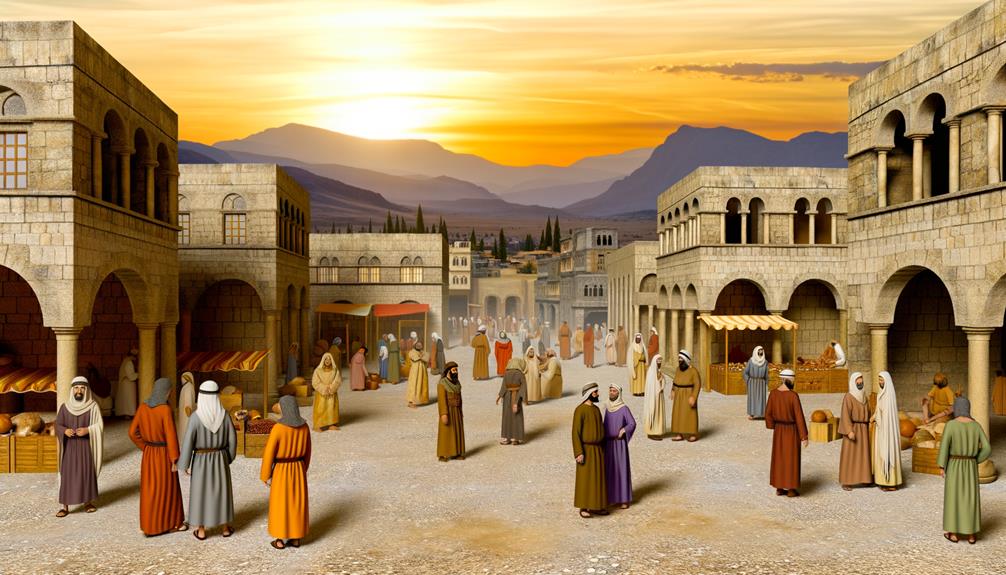
Antioch, one of the most prominent cities in early Christian history, played a pivotal role in the spread of Christianity and served as an essential cultural and theological hub, as evidenced by its mention in Acts 11:26 where disciples were first called Christians.
The city was a melting pot of diverse cultures, including Greeks, Romans, Jews, and various Eastern peoples, fostering an environment ripe for religious and philosophical exchange. This cosmopolitan nature enabled the early church to grow and integrate different cultural perspectives, greatly shaping Christian doctrine and practice.
Scriptural references highlight Antioch‘s strategic importance, such as its role in missionary journeys (Acts 13:1-3), emphasizing its influence in the broader narrative of early Christianity.
Antioch’s Role in Early Christianity
Antioch played a pivotal role in early Christianity, serving as the location of the first Gentile church as described in Acts 11:20-21.
It was from Antioch that the Apostle Paul and Barnabas set out on their missionary journeys, greatly contributing to the spread of the Gospel (Acts 13:1-3).
In addition, Antioch became an essential teaching ground for Paul, where he spent considerable time instructing new believers and reinforcing the Christian doctrine (Acts 11:26).
First Gentile Church
Emerging as a pivotal center in the nascent Christian movement, the First Gentile Church established in Antioch played an essential role in the spread of Christianity beyond the Jewish community, as documented in the Acts of the Apostles.
Acts 11:19-26 details how believers, scattered by persecution, preached to Greeks in Antioch, leading to a significant number of conversions. This church marked a critical shift, embracing Gentiles without requiring adherence to Jewish customs.
Barnabas and Saul (later Paul) ministered there, nurturing the diverse congregation. Antioch became a theological and communal hub, reflecting early Christian inclusivity.
This pivotal development heralded the universal mission of Christianity, transcending ethnic and cultural boundaries, and underscored the church’s expanding reach.
Missionary Launch Point
Building upon its role as the First Gentile Church, the city of Antioch served as a significant launch point for early Christian missionary efforts, as evidenced by the commissioning of Paul and Barnabas for their inaugural missionary journey in Acts 13:1-3.
Antioch’s strategic importance can be attributed to several factors:
- Geographic Location: Situated on major trade routes, Antioch facilitated travel and communication across the Roman Empire.
- Diverse Population: Its multicultural environment provided a fertile ground for spreading the Christian message to Gentiles and Jews alike.
- Spiritual Leadership: The church in Antioch had a strong base of prophets and teachers, fostering a robust spiritual environment conducive to missionary work.
These elements underscore Antioch’s pivotal role in the propagation of Christianity.
Paul’s Teaching Ground
As a central hub for early Christian teaching and evangelism, Paul’s extensive engagements in Antioch, as recounted in Acts 11:25-26, highlight the city’s critical role in shaping his ministry and doctrinal development.
In this vibrant and diverse metropolis, Paul, alongside Barnabas, spent a year teaching a significant number of disciples. This period was pivotal, as Antioch became the first place where followers were called Christians (Acts 11:26).
The city’s strategic location and diverse population provided a fertile ground for the dissemination of the Gospel, allowing Paul to refine his theological perspectives and missionary strategies.
The multicultural environment of Antioch also facilitated discussions on Gentile inclusion, which profoundly influenced early Christian doctrine and practice.
The First Christians in Antioch
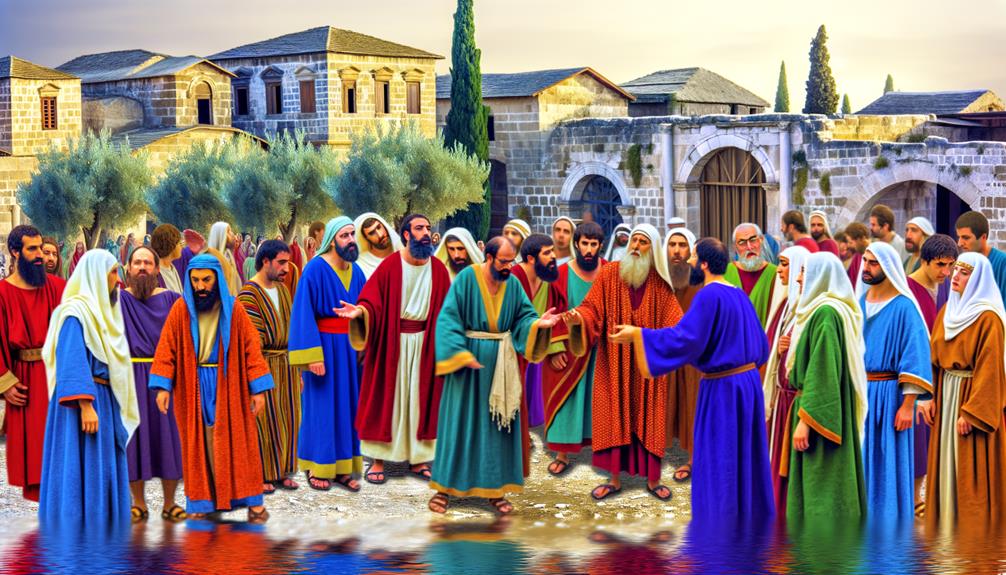
Situated in the ancient region of Syria, Antioch emerged as a vital center for early Christian evangelism, where followers of Jesus were first called Christians according to Acts 11:26.
This city played a significant role in the development of the early Church due to several key factors:
- Cultural Diversity: Antioch was a melting pot of various cultures, making it an ideal ground for spreading the gospel to a diverse audience.
- Strategic Location: Positioned along major trade routes, Antioch facilitated the movement of ideas and people, aiding the dissemination of Christian teachings.
- Active Congregation: The Christian community in Antioch was remarkably active in charity and evangelism, exemplified by their sending of relief to Judea during a famine (Acts 11:29-30).
These elements combined to establish Antioch as a foundational hub for early Christianity.
Paul’s Missionary Journeys From Antioch
Paul’s missionary journeys from Antioch marked a crucial phase in the spread of early Christianity, as documented in the Acts of the Apostles, highlighting the city’s strategic importance in launching extensive evangelistic missions.
Acts 13:1-3 recounts the Holy Spirit’s directive to set apart Paul and Barnabas for missionary work, initiating the first of Paul’s three significant journeys. Antioch served as a departure and return point, underscoring its role as a major center for Gentile mission (Acts 14:26-28).
These journeys facilitated the establishment of churches across Asia Minor and Europe, particularly in cities like Ephesus, Philippi, and Corinth. Paul’s outreach from Antioch exemplifies the city’s essential contribution to the burgeoning Christian movement.
The Church of Antioch
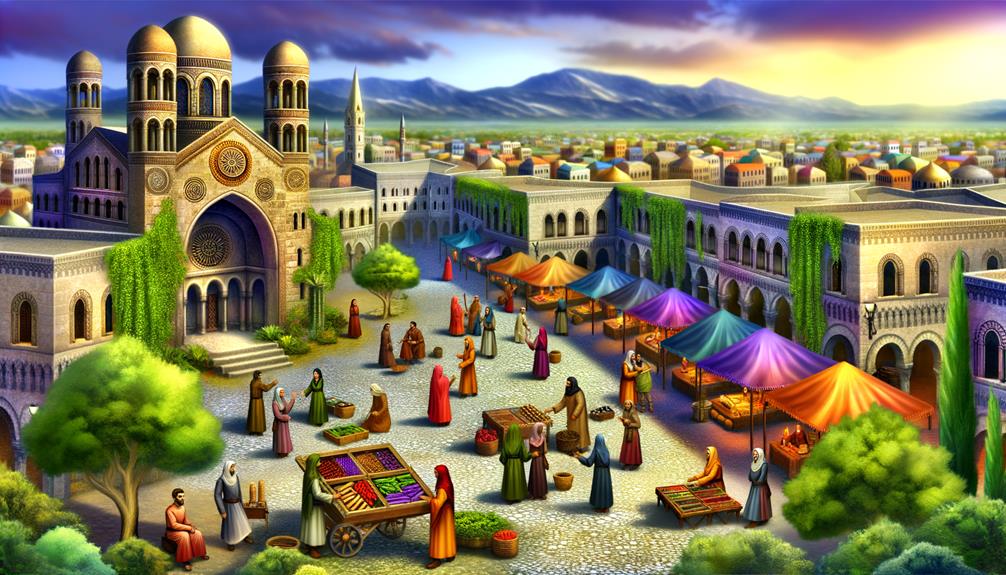
The Church of Antioch, emerging as a pivotal congregation in early Christianity, is especially recognized for its diverse and dynamic community of believers, as described in Acts 11:19-26. This church played an essential role in the spread of the gospel and the establishment of Christian doctrine.
Historically, its importance can be observed through several key aspects:
- Missionary Hub: Antioch served as the launch point for Paul’s missionary journeys, facilitating the spread of Christianity across the Roman Empire.
- Cultural Diversity: The congregation included Jews and Gentiles, reflecting the inclusive nature of the Christian message (Acts 11:20-21).
- Leadership and Teaching: The church was known for its strong leadership and teaching, with figures like Barnabas and Saul (later Paul) contributing considerably to its growth (Acts 11:25-26).
Key Biblical Figures in Antioch

Prominent biblical figures associated with Antioch, such as Barnabas and Saul (later known as Paul), played vital roles in the early Christian movement and are extensively documented in the New Scripture, particularly in Acts 11:19-30.
Barnabas, described as ‘a good man, full of the Holy Spirit and faith’ (Acts 11:24), was instrumental in encouraging the fledgling church. Recognizing Saul’s potential, Barnabas brought him to Antioch, where they taught for a year, greatly strengthening the Christian community.
Their collaboration marked a key period in spreading Christianity to the Gentiles. Furthermore, it was in Antioch that disciples were first called Christians (Acts 11:26), signifying the city’s importance as a center of early Christian identity and missionary activity.
Antioch as a Melting Pot
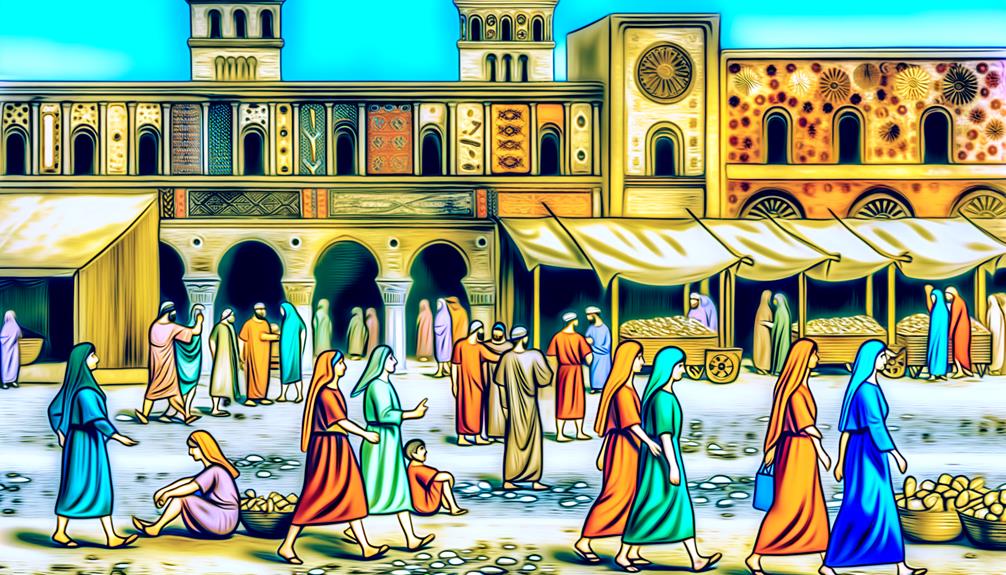
Antioch, one of the earliest centers of Christianity, was a quintessential melting pot, influenced by a convergence of Greek, Roman, and Jewish cultures, as highlighted in Acts 11:19-26.
This cosmopolitan city fostered not only religious diversity, with various faiths coexisting and interacting, but also robust economic and social exchanges that shaped its unique identity.
The blend of these diverse cultural and religious elements played a significant role in the propagation of the Christian faith, making Antioch a pivotal location in biblical history.
Diverse Cultural Influences
Throughout its history, Antioch emerged as a significant hub where diverse cultures converged, profoundly influencing its social, economic, and religious landscape. This ancient city, founded in 300 BCE by Seleucus I Nicator, became a melting pot due to its strategic location along trade routes.
- Greco-Roman Influence: As a major city in the Roman Empire, Antioch’s architecture, governance, and public life were heavily influenced by Roman and Greek traditions.
- Syrian and Persian Elements: The proximity to the Syrian and Persian regions introduced various artistic styles, culinary traditions, and linguistic influences.
- Jewish Diaspora: Scriptural references, such as Acts 11:19-20, indicate a significant Jewish population, contributing to the city’s complex cultural tapestry.
Antioch’s diverse influences shaped its unique identity and historical significance.
Religious Diversity in Antioch
How did Antioch’s role as a significant trade hub contribute to its remarkable religious diversity, fostering a vibrant mosaic of beliefs and practices?
Antioch’s strategic location on the Orontes River facilitated extensive trade, attracting merchants and travelers from diverse regions. This influx introduced a myriad of religious traditions, including Hellenistic polytheism, Judaism, and early Christianity.
The Book of Acts highlights Antioch as the birthplace of the term ‘Christian’ (Acts 11:26), underscoring its pivotal role in the early Christian movement.
The city’s cosmopolitan nature allowed for the coexistence and interaction of various faiths, creating an environment ripe for theological exchange and transformation.
Consequently, Antioch became a microcosm of the broader religious landscape of the ancient Mediterranean world.
Economic and Social Interactions
Situated at the crossroads of major trade routes, Antioch’s bustling marketplace served as a crucible for economic and social interactions that wove together the diverse threads of its multifaceted population. The city’s vibrant commerce facilitated:
- Cultural Exchange: Traders from various regions brought not only goods but also cultural practices, enhancing Antioch’s cosmopolitan nature.
- Economic Prosperity: The marketplace’s dynamism spurred wealth and growth, as evidenced in Acts 11:27-30, where Antioch’s Christians provided famine relief.
- Social Integration: The blending of Jews, Greeks, and other ethnic groups fostered an environment of diverse social interactions, highlighted by the church’s inclusive nature (Galatians 2:11-13).
This economic and social tapestry exemplifies Antioch as a true melting pot.
Archaeological Findings in Antioch
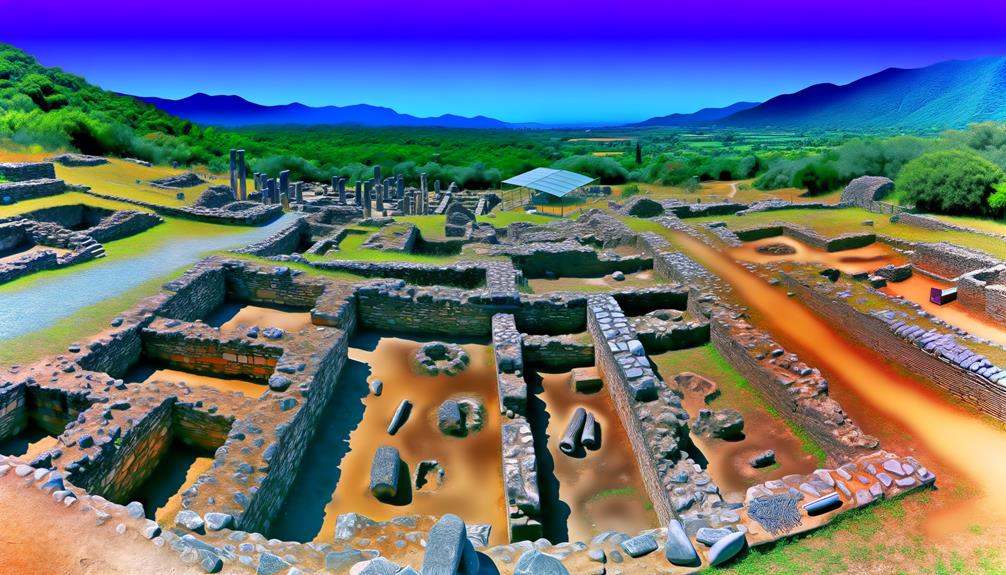
Archaeological excavations in Antioch have unearthed significant artifacts that provide deeper insights into the city’s historical and biblical relevance. Among these discoveries are mosaics, inscriptions, and remnants of early Christian churches, shedding light on Antioch’s role as a pivotal center of early Christianity.
The famed mosaic of ‘The Megalopsychia Hunt‘ reflects the city’s artistic achievements, while inscriptions and coins reveal its economic and cultural interactions.
Importantly, the findings include early Christian symbols and relics, aligning with scriptural references in Acts 11:26, where Antioch is noted as the first place disciples were called Christians.
These artifacts not only affirm biblical narratives but also offer a tangible connection to the spiritual and communal life of ancient Antioch.
Antioch’s Legacy in Christianity

The rich archaeological findings in Antioch underscore its enduring significance in Christianity, particularly as the city where followers of Jesus were first called Christians, a pivotal moment documented in Acts 11:26.
This city’s legacy in Christianity can be attributed to several key factors:
- Missionary Activity: Antioch served as the launchpad for Paul and Barnabas’ missionary journeys, spreading Christianity across the Roman Empire (Acts 13:1-3).
- Theological Development: The Antiochene school was influential in early Christian theological and biblical exegesis, contributing notably to the understanding of Scripture.
- Ecclesiastical Importance: As one of the five patriarchates in early Christendom, Antioch held considerable ecclesiastical authority, shaping the organizational structure of the early Church.
These elements collectively highlight Antioch’s profound legacy in the Christian tradition.
Conclusion
Antioch’s historical and scriptural significance cannot be understated, particularly as it was the location where followers of Jesus were first called Christians (Acts 11:26).
This city, a melting pot of cultures, played an essential role in the spread of early Christianity.
Significantly, by the fourth century, Antioch had become one of the four great patriarchates of the Christian Church, underscoring its enduring influence.
Archaeological findings continue to shed light on its vibrant religious and cultural history.