
Meaning of Seal in the Bible: Divine Authority
In the Bible, a seal signifies authority, authenticity, protection, and ownership. Seals validated decrees and covenants, exemplified by Pharaoh’s ring given to Joseph (Genesis 41:42) and the signet ring metaphor in Jeremiah 22:24.
Prophets used seals to convey divine revelation and protection, such as in Ezekiel 9:4 and Daniel 12:4. Revelation emphasizes God’s seal marking His servants for protection (Revelation 7:3).
The New Covenant highlights the Holy Spirit as a seal of divine ownership and inheritance (Ephesians 1:13-14). Discover how these elements intertwine to deepen understanding of divine assurance and authority.
Key Takeaways
- Seals represent authority and authenticate documents, signifying the sender’s power and ownership (Genesis 41:42; Esther 8:8).
- Seals symbolize divine protection and preservation, marking God’s people for safeguarding (Revelation 7:3; Ezekiel 9:4).
- The Holy Spirit’s seal signifies God’s ownership and guarantees believers’ inheritance in Christ (Ephesians 1:13-14).
- Seals indicate divine revelation and confidentiality, reserving God’s messages for future times (Daniel 12:4).
Seal of Kings
In biblical times, the seal of a king served as a symbol of authority and authenticity, often used to endorse decrees and official documents, as seen in instances such as 1 Kings 21:8 and Esther 8:8.
These seals, typically imprinted on clay or wax, bore the king’s unique emblem, ensuring the document’s legitimacy. The act of sealing signified the irrevocability and official status of the content, effectively binding the recipient to the king’s command.
In 1 Kings 21:8, Queen Jezebel uses King Ahab’s seal to usurp Naboth’s vineyard, demonstrating the seal’s power.
Similarly, Esther 8:8 highlights King Ahasuerus’ decree, sealed to protect Jews, underscoring the seal’s role in enacting immutable royal edicts.
Seal of Prophets

Beyond the authority of kings, the concept of the seal also holds significant theological implications when associated with prophets, as illustrated in texts such as Ezekiel 9:4 and Daniel 12:4.
In Ezekiel 9:4, the seal marks those who grieve over abominations, symbolizing divine protection and selection. Conversely, Daniel 12:4 discusses sealing the book until the end times, indicating divine revelation reserved for a future period.
These scriptural references demonstrate that the seal, in the prophetic context, serves as a divine endorsement of authenticity, confidentiality, and future fulfillment.
The prophetic seal consequently transcends mere symbolism, embodying God’s sovereign control over the dissemination and timing of His divine messages.
God’s Seal in Revelation

In the Book of Revelation, God’s seal serves as a profound symbol encompassing protection, ownership, and divine authority, as evidenced in Revelation 7:3, where the seal is placed on the foreheads of God’s servants to safeguard them from impending judgments.
This mark signifies God’s possession and identification of His people, distinguishing them from those who are not under His covenant.
Additionally, the seal represents the ultimate authority of God, underscoring His sovereign power and control over the events that unfold in the eschatological narrative.
Symbol of Protection
The concept of God’s seal in the Book of Revelation serves as a profound symbol of divine protection, marking the faithful and safeguarding them during times of eschatological tribulation (Revelation 7:3).
This seal, bestowed by angelic beings, signifies God’s sovereign choice to shield His elect from impending divine wrath (Revelation 9:4).
Scripturally, this protective mark echoes the Old Covenant precedent found in Ezekiel 9:4, where a mark on the foreheads of the righteous spared them from judgment.
Theologically, the seal represents a covenantal assurance, a divine pledge ensuring the preservation of believers amidst apocalyptic events.
Consequently, it is both a literal and metaphorical emblem of God’s unwavering commitment to protect His people in the ultimate unfolding of end-time prophecies.
Mark of Ownership
God’s seal in the Book of Revelation signifies divine ownership, as evidenced by the sealing of the 144,000 from the tribes of Israel, which marks them as belonging exclusively to Him (Revelation 7:4). This act of sealing denotes God’s sovereign claim over His people, providing them with identity and assurance of His protection.
Similarly, in Revelation 14:1, the sealed individuals bear the name of the Lamb and His Father, symbolizing an unbreakable bond and divine possession. The concept aligns with Pauline theology, where believers are marked with the Holy Spirit as a guarantee of their inheritance (Ephesians 1:13-14).
Hence, the seal functions as a divine mark of ownership, affirming God’s enduring covenant with His chosen ones.
Sign of Authority
How does the seal in Revelation function as a sign of divine authority, particularly in the context of God’s ultimate sovereignty and judgment?
The seal, as referenced in Revelation 7:2-4 and 9:4, serves as a divine mark of protection and ownership for the faithful, symbolizing their allegiance and God’s sovereign power. It underscores God’s final authority over salvation and judgment.
Key aspects of the seal include:
- Protection: Revelation 9:4 indicates that those sealed by God are spared from divine plagues.
- Ownership: The seal signifies that the faithful are God’s possession, emphasizing His dominion (Revelation 7:3).
- Judgment: It delineates the saved from the condemned, reinforcing the ultimate authority of God’s judgment (Revelation 14:1).
This seal denotes God’s supreme authority, ensuring His divine plan unfolds unchallenged.
Holy Spirit’s Seal

In Ephesians 1:13-14, the Apostle Paul elucidates the concept of the Holy Spirit’s seal as a mark of divine ownership and a guarantee of the believer’s inheritance in Christ.
This seal signifies God’s irrevocable claim over the believer, affirming their inclusion in the covenant community.
Paul further emphasizes that the Holy Spirit serves as a ‘deposit guaranteeing our inheritance until the redemption of those who are God’s possession’ (Ephesians 1:14, NIV).
This theological construct underscores the permanence and security of the believer’s salvation, reflecting a profound assurance rooted in divine promise.
Consequently, the Holy Spirit’s seal is both a confirmation of God’s eternal commitment and an anticipatory sign of the future consummation of His redemptive work.
Signet Rings in Scripture

In biblical contexts, signet rings are emblematic of authority, often used by figures such as Pharaoh in Genesis 41:42 to signify Joseph’s elevated status.
These rings also serve as tangible representations of covenants and promises, as seen in Haggai 2:23, where God promises to make Zerubbabel ‘like a signet ring.’
Such artifacts consequently encapsulate both divine and royal assurances, underscoring their profound theological significance.
Symbol of Authority
Why did signet rings hold such significance in biblical times, serving as powerful symbols of authority and authentication?
Signet rings, often inscribed with a unique emblem, were used by rulers and high-ranking officials to seal documents, thereby validating decrees and covenants. Their importance is underscored through various scriptural references:
- Genesis 41:42 – Pharaoh gives Joseph his signet ring, symbolizing Joseph’s newfound authority over Egypt.
- Esther 8:8 – King Ahasuerus empowers Mordecai by granting him the use of the king’s signet ring.
- Jeremiah 22:24 – The signet ring metaphor illustrates God’s irrevocable authority over Jehoiachin.
Thus, signet rings were indispensable in conveying legitimacy and command, marking the bearer as a person of significant power and trust.
Covenant and Promise
Signet rings in biblical scripture serve not only as symbols of authority but also as tangible representations of covenant and divine promise.
In Genesis 41:42, Pharaoh’s gift of his signet ring to Joseph signifies a transfer of authority and an unbreakable promise of trust.
Similarly, in Haggai 2:23, God declares Zerubbabel as His signet ring, symbolizing a covenantal promise of restoration and divine favor.
These rings functioned as personal seals, authenticating documents and decrees, thereby ensuring the perpetuation of the covenant.
Additionally, in Jeremiah 22:24, the removal of the king’s signet ring signifies the breaking of a divine relationship, emphasizing the ring’s role in covenantal fidelity.
Signet rings encapsulate the enduring nature of divine promises and covenants.
Sealing of Covenants
The sealing of covenants in the Bible represents a profound and binding agreement between God and His people, often symbolized through tangible signs and rituals, such as the use of a seal or a signet ring (Genesis 17:11; Jeremiah 32:10). This act carries deep theological significance:
- Divine Confirmation: A seal indicates God’s approval and validation of the covenant (Exodus 24:8).
- Perpetual Remembrance: It serves as a continual reminder of the promises made, ensuring they are not forgotten (Joshua 4:6-7).
- Exclusive Relationship: It denotes an exclusive, unbreakable bond between the parties involved (Exodus 19:5-6).
Such seals underscore the sacred and unalterable nature of divine agreements, reinforcing their importance and sanctity in biblical theology.
Seals as Symbols of Authority

In addition to their role in sealing covenants, seals in the Bible also function as potent symbols of authority and legitimacy, as seen in passages like Esther 8:8 and Daniel 6:17. The seal of a king or high official indicated the exercise of their sovereign power and the unchallengeable nature of their decrees. For instance, King Ahasuerus’ seal in Esther authenticated royal edicts, establishing their incontestability.
| Scriptural Reference | Implication |
|---|---|
| Esther 8:8 | Royal edicts sealed, irrevocable |
| Daniel 6:17 | Seal on the lion’s den, authority |
| Jeremiah 32:10 | Sealed deed, legal authority |
Thus, seals in the biblical context were more than mere marks; they were emblems of ultimate authority and governance.
Seals and Authenticity

A seal in biblical times served as an essential means of verifying authenticity, often symbolizing the genuine and unaltered nature of a document or covenant. This practice is exemplified in several scriptural references, underscoring its critical role in ancient societies.
Significantly:
- Jeremiah 32:10-14: The prophet Jeremiah sealed the deed of purchase, ensuring the document’s authenticity and future validity.
- Esther 8:8: King Xerxes used his ring to seal decrees, making them irrevocable and authentic under Persian law.
- Ephesians 1:13: The Holy Spirit is described as a seal, guaranteeing the believer’s inheritance and authenticity of God’s promise.
These instances highlight the profound importance of seals in maintaining the integrity and trustworthiness of commitments and declarations in biblical contexts.
Protective Seals

Often serving as a safeguard, protective seals in the Bible symbolized divine security and preservation, as seen in the sealing of the tomb of Jesus (Matthew 27:66) and the sealing of the faithful in Revelation 7:3.
The seal on Jesus’ tomb, sanctioned by Roman authority, was meant to prevent tampering and affirm the sanctity of the site.
Similarly, in Revelation, the sealing of the 144,000 signifies divine protection against impending judgments, underscoring God’s covenantal faithfulness.
These seals not only conveyed a physical barrier but also represented a spiritual assurance of God’s safeguarding power.
Such biblical instances reveal the profound theological significance attached to seals, emphasizing God’s unwavering commitment to protect and preserve His people.
Seals in Ancient Context
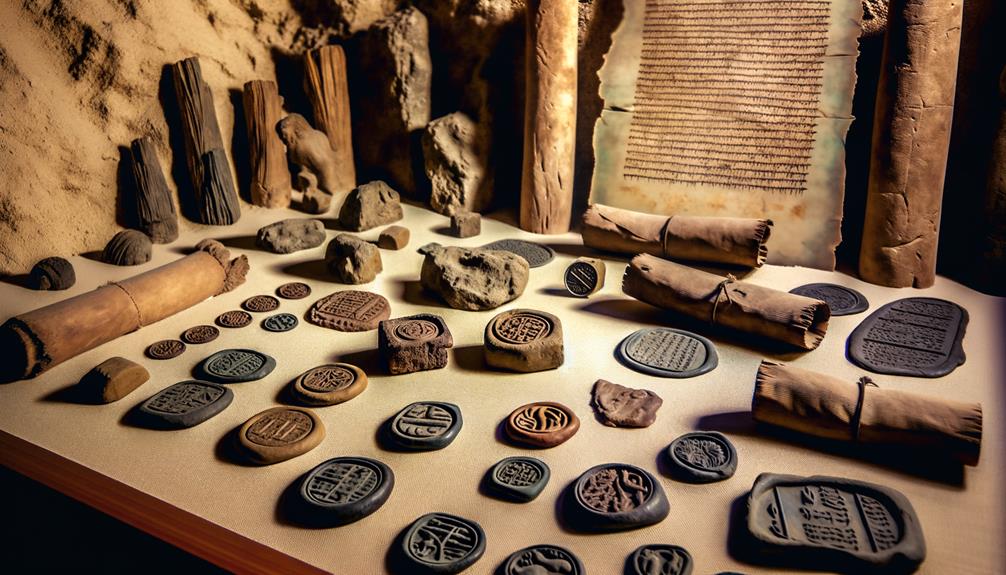
In ancient times, seals served as essential instruments for authentication, authority, and ownership, as evidenced in scriptural references such as Genesis 41:42 and Esther 8:8.
These seals, often engraved with unique symbols or inscriptions, were employed to validate documents, signify the authority of the sender, and mark possessions.
Understanding the cultural and historical significance of seals enriches our comprehension of their symbolic use in biblical texts.
Symbol of Authenticity
Throughout ancient civilizations, seals served as essential instruments of authentication, signifying the veracity and authority of documents, as evidenced in numerous scriptural references such as Jeremiah 32:10-12 and Esther 8:8. Seals were indispensable in ensuring the integrity and trustworthiness of written agreements and decrees.
These artifacts fulfilled several critical functions:
- Identity Confirmation: Seals validated the identity of the sender, ensuring that the document was indeed issued by the rightful authority.
- Tamper-Proof Assurance: The integrity of a sealed document was maintained, as breaking the seal indicated unauthorized access.
- Legal Validation: Seals rendered documents legally binding, thereby affirming their official and incontestable nature.
Such practices underscore the profound emphasis placed on authenticity in biblical times.
Sign of Authority
Building on the concept of authenticity, seals in ancient biblical contexts also represented a significant sign of authority, symbolizing the power and legitimacy of the issuer.
In the Bible, seals were often used by kings and high officials to signify decrees, as seen in Esther 8:8, where King Ahasuerus’ seal validated royal edicts. Similarly, the seal of King Darius in Daniel 6:17 underscored the irrevocability of his commands.
These imprints not only authenticated documents but also conferred legal and authoritative weight.
The use of seals consequently served to reinforce the hierarchical structure within ancient societies, ensuring that decrees and commands were adhered to, reflecting divine and sovereign governance, as seen throughout scriptural narratives.
Mark of Ownership
Seals in ancient biblical contexts frequently denoted ownership, serving as a tangible representation of one’s possession and control over property, as exemplified in Jeremiah 32:10-14 where the prophet uses a sealed deed to secure a land transaction. This practice stemmed from the need to authenticate and protect legal documents.
The significance of seals in marking ownership can be understood through:
- Personal Authority: A seal represented the owner’s identity and authority, as seen in Genesis 41:42 when Pharaoh gave Joseph his signet ring.
- Legal Validity: Seals guaranteed the integrity and authenticity of legal documents (Esther 8:8).
- Divine Ownership: Symbolically, seals also depicted God’s ownership of His people (2 Timothy 2:19).
Thus, seals were vital in the ancient world for establishing and verifying ownership.
Conclusion
The multifaceted symbolism of seals in biblical texts serves as a profound demonstration of divine authority, authenticity, and protection.
Like a key unfastening layers of spiritual meaning, seals appear in various contexts, from kings and prophets to the Holy Spirit and Revelation.
Scriptural references, such as Ephesians 1:13 and Revelation 7:3, underscore their critical role.
This exploration reveals that seals are not merely historical artifacts but enduring symbols of God’s covenant and sovereign power.