The Meaning Of Blessed In The Bible: Spiritual Favor
In the Bible, the term ‘blessed‘ signifies a profound state of divine favor and spiritual well-being, stemming from the Hebrew words ‘barak’ and ‘esher’ and the Greek ‘makarios.’ It encompasses material prosperity, relational harmony with God, and an intrinsic state of contentment and joy, particularly evident in the Psalms and Beatitudes. These blessings are often contingent on obedience and faithfulness, with significant implications for both immediate and eternal well-being.
Exploring the multifaceted dimensions of biblical blessedness reveals deeper theological insights and ethical guidelines central to the Christian faith and practice.

Key Takeaways
- Biblical blessings signify divine favor, provision, and a harmonious relationship with God.
- In the Old Testament, ‘barak’ is used to express divine favor and protection.
- The Beatitudes in Matthew 5:3-12 redefine blessedness, focusing on spiritual virtues over material wealth.
- Paul’s epistles emphasize blessings of faith, grace, and love, highlighting spiritual well-being.
The Concept of Blessing

How does the Bible define and contextualize the concept of blessing within its theological framework?
In biblical theology, ‘blessing’ encompasses a profound, multifaceted construct that signifies divine favor, provision, and relational harmony with God. The term, derived from the Hebrew words ‘barak’ and ‘esher’ and the Greek ‘makarios,’ encapsulates both spiritual and material dimensions.
Biblically, blessings often denote God’s benevolent intervention in human affairs, leading to prosperity, well-being, and fulfillment of divine promises. In addition, blessings are reciprocal, requiring human obedience and faithfulness.
This theological framework underscores blessings not merely as favorable circumstances but as manifestations of God’s covenantal faithfulness, illustrating an enduring relationship between the divine and humanity.
This layered understanding sets the stage for deeper exploration of scriptural teachings.
Old Testament Insights

In examining the Old Scriptures, the richness of the concept of being ‘blessed‘ can be understood through a detailed study of Hebrew terminology, such as the word ‘barak.’
The patriarchal narratives, particularly those involving figures like Abraham, Isaac, and Jacob, reveal the profound familial and covenantal dimensions of blessings.
Additionally, the prophetic literature underscores the broader national and eschatological significance of blessings within the context of Israel’s relationship with God.
Hebrew Word Study
The Hebrew word often translated as ‘blessed‘ in the Old Scriptures is ‘barak,’ which carries connotations of kneeling in reverence and invoking divine favor. This term encapsulates a dual concept: human acknowledgment of God’s supremacy and the consequent divine bestowal of prosperity and protection.
The use of ‘barak’ is pervasive in pivotal moments, such as in Genesis 1:28, where God blesses humanity to be fruitful and multiply. Additionally, ‘barak’ often occurs in liturgical contexts, highlighting its importance in worship and covenantal relationships.
Patriarchal Blessings Explained
Patriarchal blessings in the Old Scriptures serve as profound declarations that not only convey familial inheritance but also embody divine promises and future destinies. These blessings, often pronounced by patriarchs such as Abraham, Isaac, and Jacob, are pivotal in shaping the course of biblical history.
In Genesis, Jacob’s blessings to his twelve sons delineate the destinies of the tribes of Israel, reflecting both immediate and eschatological aspects. They function as a conduit for divine will, intertwining prophetic insight with tangible inheritance.
This dual nature underscores the belief that blessings are not mere words but vehicles of divine orchestration. Consequently, patriarchal blessings are foundational to understanding the interplay between divine sovereignty and human lineage in biblical theology.
Prophetic Blessings Significance
Expanding upon the significance of patriarchal blessings, prophetic blessings in the Old Scriptures further illuminate the divine orchestration of Israel’s history through foretelling and imparting God’s will upon individuals and nations.
These blessings, often delivered by prophets such as Isaiah, Jeremiah, and Ezekiel, served to guide, warn, and comfort the people of Israel. They encapsulated divine promises and judgments, reinforcing God’s covenantal relationship with His chosen people.
For instance, Isaiah’s prophecies articulate blessings contingent on Israel’s obedience, while also foreseeing the coming of the Messiah. Such blessings were not mere pronouncements but carried the weight of divine authority, shaping both immediate circumstances and future expectations.
This underscores their profound impact on Israel’s spiritual and communal identity.
New Testament Perspectives
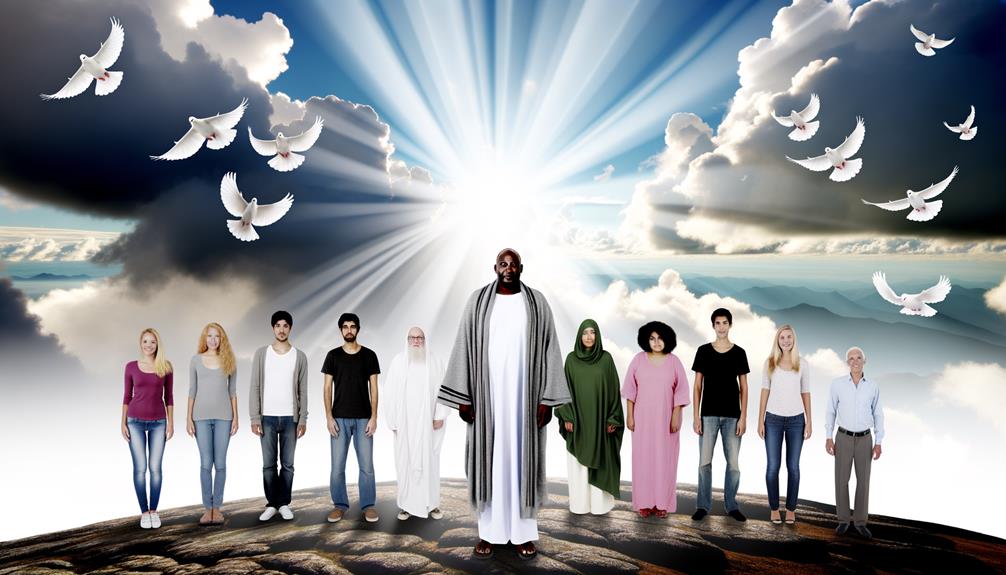
In examining New Scripture perspectives on blessedness, the Beatitudes within the Sermon on the Mount provide profound insights into the spiritual and ethical dimensions of being blessed.
Additionally, Paul’s epistles offer a theological framework that underscores blessings as markers of divine favor and grace, often linked to spiritual growth and communal well-being.
These texts collectively reframe blessedness, emphasizing internal virtues and divine relationships over external circumstances.
Beatitudes and Sermon Insights
The Beatitudes, as presented in the Sermon on the Mount in the New Scripture, offer profound insights into the nature of divine blessing and the ethical expectations of the Christian faith.
These declarations of blessedness, found in Matthew 5:3-12, emphasize virtues such as humility, mercy, and peacemaking. Each Beatitude begins with ‘Blessed are,’ indicating a state of divine favor that transcends worldly circumstances.
This passage redefines conventional understandings of happiness and success, suggesting that true blessedness is found in spiritual depth and moral integrity.
The Beatitudes serve as both a comfort to the marginalized and a challenge to the privileged, inviting all believers to align their lives more closely with the teachings and example of Jesus.
Paul’s Epistles Blessings
While the Beatitudes offer a profound redefinition of blessedness through the teachings of Jesus, Paul’s Epistles further expand upon the concept of divine favor by articulating blessings that emphasize faith, grace, and the transformative power of God’s love within the Christian community. Paul’s letters are replete with blessings that serve to fortify the spiritual resolve of believers, urging them to internalize divine virtues.
| Epistle | Key Blessing | Theme |
|---|---|---|
| Romans | Peace and grace through faith | Justification |
| Corinthians | Comfort and hope in affliction | Consolation |
| Ephesians | Spiritual blessings in Christ | Unity in the Body |
| Philippians | Joy and peace in Christ | Rejoicing in Suffering |
| Thessalonians | Sanctification and perseverance | Holiness and Endurance |
Through these blessings, Paul underscores the integral role of divine grace in fostering a resilient and devout Christian life.
The Beatitudes Explained
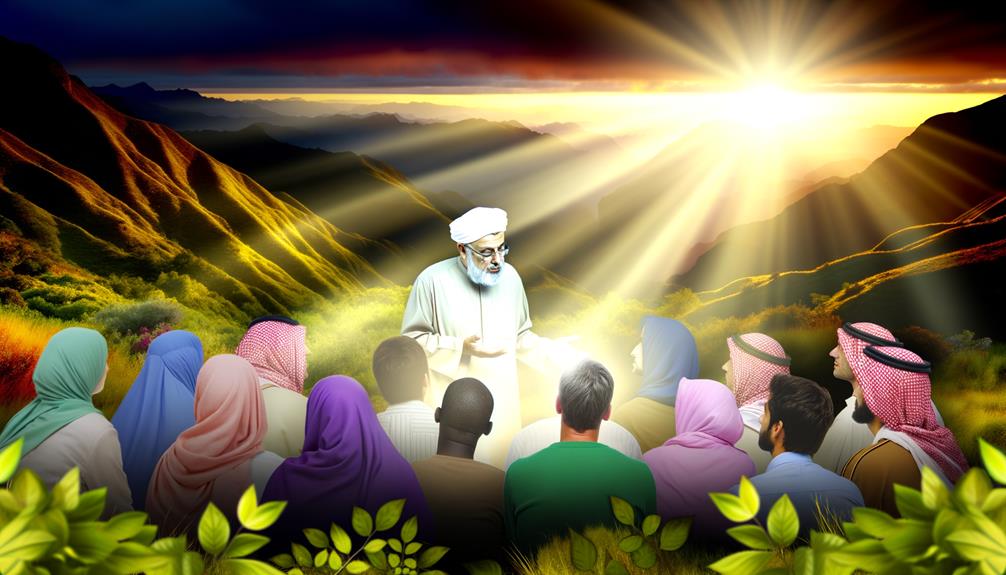
Rooted in the Sermon on the Mount, the Beatitudes encapsulate the core principles of Christian ethics and spiritual ideals. These pronouncements by Jesus in Matthew 5:3-12 articulate a vision of blessedness that transcends material wealth and societal status.
Each Beatitude begins with the Greek word ‘makarios,’ often translated as ‘blessed,’ signifying a state of divine favor and inner contentment. For instance, ‘Blessed are the poor in spirit’ underscores humility as a prerequisite for spiritual richness.
The Beatitudes collectively emphasize virtues such as meekness, mercy, and peacemaking, aligning the believer’s life with the kingdom of God. Contextually, they challenge conventional values, urging a reorientation towards a life marked by compassion, righteousness, and spiritual fulfillment.
Blessings in Psalms

In the Psalms, blessings are articulated through the expression of divine favor, often depicted as the joy and contentment experienced by those who adhere to a righteous path.
This joyful state is frequently associated with the protection and provision bestowed by God, highlighting the intrinsic connection between piety and well-being.
The Psalms consequently underscore a theological framework where righteousness aligns with receiving God’s blessings.
Divine Favor Expressed
The Book of Psalms frequently portrays blessings as manifestations of divine favor, offering insight into the multifaceted ways God’s benevolence is experienced and understood by believers.
Psalms such as Psalm 1:1-3 and Psalm 23 illustrate that divine favor encompasses both spiritual and material dimensions.
Psalm 1 extols the virtues of a righteous life, promising stability and prosperity as signs of God’s blessing.
Similarly, Psalm 23 vividly depicts God’s providence and protection, portraying the Lord as a shepherd who provides and cares for His flock.
These texts underscore that divine favor is not merely a reward but an all-encompassing state of well-being, facilitated by a close relationship with God and adherence to His commandments.
Joyful State Described
Amidst the poetic verses of the Book of Psalms, blessings are often depicted as an intrinsic aspect of a joyful and fulfilling life, deeply intertwined with one’s spiritual connection to God.
The Psalms vividly illustrate this state of blessedness through various expressions of divine favor and human response. Key elements include:
- Peace and Security: Psalms frequently relate blessings to a sense of divine protection and safety.
- Prosperity: Material and spiritual prosperity are seen as manifestations of God’s blessings.
These themes collectively underscore a holistic view of blessedness, emphasizing both tangible and intangible aspects, rooted in a devout relationship with the Divine.
Righteous Path Highlighted
Psalms not only depict the joyful state of blessedness but also intricately connect it to walking a righteous path, emphasizing that true blessings are a result of a life aligned with divine principles. This alignment is particularly evident in the juxtaposition of the righteous and the wicked within Psalms.
| Psalm Verse | Description |
|---|---|
| Psalm 1:1-3 | Blessings of the righteous |
| Psalm 32:1-2 | Joy of forgiveness and righteousness |
| Psalm 37:16-17 | Righteous versus wicked in blessings |
| Psalm 84:11 | God’s favor towards the righteous |
| Psalm 112:1-2 | Prosperity and descendants of the righteous |
These verses collectively underscore that blessings are bestowed upon those who adhere to God’s commands, presenting a consistent biblical theme that righteousness is inherently tied to divine favor.
Material Vs Spiritual Blessings

Distinguishing between material and spiritual blessings in the Bible necessitates an understanding of the scriptural contexts and theological implications associated with each form of blessing.
Material blessings often refer to tangible benefits such as wealth, health, and prosperity, seen in texts like Deuteronomy 28:1-14. Conversely, spiritual blessings encompass intangible gifts including peace, wisdom, and salvation, as highlighted in Ephesians 1:3.
Key distinctions include:
- Material Blessings: Temporary and earthly, often conditional on obedience.
- Spiritual Blessings: Eternal and heavenly, stemming from a relationship with Christ.
This duality underscores the profound depth of what it means to be ‘blessed’ in biblical theology.
God’s Favor and Grace

Building upon the understanding of material and spiritual blessings, it is imperative to examine how God’s favor and grace fundamentally underpin these blessings within biblical theology.
God’s favor, often manifested as divine approval, reflects a relational dynamic where God’s benevolence is bestowed upon individuals.
Grace, on the other hand, signifies unmerited divine assistance given to humans for their regeneration and sanctification.
Scriptural references such as Ephesians 2:8-9 underscore that salvation itself is a gift of grace, devoid of human merit.
This theological framework suggests that blessings, both material and spiritual, are ultimately manifestations of God’s favor and grace.
Consequently, understanding these concepts is vital to comprehending the biblical perspective on what it means to be truly blessed.
Blessed Are the Poor

The Beatitudes, as articulated in Matthew 5:3, declare ‘Blessed are the poor in spirit, for theirs is the kingdom of heaven,’ presenting a paradoxical valuation of spiritual poverty in Christian thought. This statement redefines conventional perceptions of wealth and status, emphasizing humility and dependence on God.
Spiritual Poverty: Recognizing one’s need for divine grace and guidance.
Kingdom of Heaven: The ultimate reward for those who acknowledge their spiritual insufficiency.
Paradoxical Blessing: Contrasting worldly views of prosperity with spiritual fulfilment.
Analytically, the verse underscores a theological framework where humility is exalted, and reliance on God is paramount. The ‘poor in spirit’ are positioned as recipients of divine favor, indicating a reversal of worldly values.
This profound teaching invites believers to embrace spiritual humility.
Blessed Are the Peacemakers

In Matthew 5:9, the Beatitudes extol ‘Blessed are the peacemakers, for they shall be called children of God,’ underscoring the divine approval of those who actively pursue and cultivate peace.
This passage highlights the intrinsic value of peace within the Christian doctrine, positioning peacemakers as integral to the realization of divine harmony.
The term ‘peacemakers’ transcends mere conflict resolution, encompassing efforts that foster reconciliation, justice, and communal well-being.
By being designated as ‘children of God,’ peacemakers are recognized as reflecting the nature and intent of God Himself.
This divine endorsement suggests that peacemaking is not only a moral imperative but also a spiritual vocation, deeply rooted in the ethos of Christian faith and practice.
Living a Blessed Life

Understanding the profound role of peacemakers brings us to a broader contemplation of what it means to live a blessed life according to biblical principles.
A blessed life, as delineated in scripture, transcends material wealth and societal status, focusing instead on spiritual fulfillment and righteous living.
Key aspects of such a life include:
- Spiritual Well-being: Emphasizing a close relationship with God and personal integrity.
- Compassion and Justice: Actively engaging in acts of kindness and fairness towards others.
These elements collectively underscore that a blessed life is characterized by a deep, abiding sense of purpose and alignment with divine will, rather than temporal success.
Modern Relevance

Examining the modern relevance of biblical blessings reveals how ancient principles can be applied to contemporary life to foster spiritual growth and ethical conduct.
The concept of being ‘blessed’ in the Bible often encompasses inner peace, contentment, and a sense of purpose. In today’s context, these elements can guide individuals toward a balanced life, emphasizing gratitude, humility, and community support.
Furthermore, the ethical teachings associated with biblical blessings—such as justice, compassion, and integrity—serve as timeless moral compasses. By integrating these principles into daily practices, modern society can address social challenges and cultivate a more empathetic and just environment.
Consequently, the essence of biblical blessings continues to offer valuable insights for personal and collective well-being.
Conclusion
The concept of being blessed in the Bible encompasses multifaceted dimensions, integrating Old Covenant insights, New Covenant perspectives, and specific teachings such as the Beatitudes.
In Psalms, blessings are invoked through worship and devotion; in the Gospels, they are conferred upon the humble, the peacemakers, and the righteous.
The notion of a blessed life transcends historical and cultural contexts, offering enduring relevance and guiding principles for ethical and spiritual living in contemporary society.