Meaning of Figs in the Bible: Fruitful Symbolism
In the Bible, figs carry profound theological symbolism. They first appear in the Garden of Eden, symbolizing human awareness and vulnerability (Genesis 3:7).
Biblically, figs represent prosperity and divine blessing, as seen in the depiction of the Promised Land’s abundance (Deuteronomy 8:8). They symbolize spiritual health and faithfulness (Jeremiah 24), peace and security (Micah 4:4), and play a key role in Jesus’ teachings on judgment against spiritual barrenness (Mark 11:12-14).
Through prophetic imagery, figs can signify both divine favor and impending judgment, urging a deeper reflection on one’s spiritual state. Explore further to uncover more layers of this rich symbolism.

Key Takeaways
- Figs symbolize prosperity and divine blessing, often representing God’s favor in biblical literature.
- Spiritual health and maturity are signified by figs, with good figs representing the faithful and bad figs the unfaithful.
- Figs are associated with peace and security, exemplified by the metaphor of sitting under one’s fig tree.
- Prophetic imagery uses fig trees to convey messages about divine judgment and the need for repentance and spiritual renewal.
Figs in the Garden of Eden

The fig tree, often overshadowed by the infamous apple, plays a significant role in the narrative of the Garden of Eden as it is believed by some scholars to be the actual tree whose leaves Adam and Eve used to cover their nakedness.
This interpretation stems from Genesis 3:7, where it is noted that Adam and Eve sewed fig leaves together to make loincloths.
The fig tree’s presence in this pivotal moment suggests its symbolic importance in early Judeo-Christian thought.
Historically, figs were abundant in the ancient Near East, making them a plausible candidate for the Edenic narrative.
This perspective invites a re-examination of traditional interpretations, underscoring the fig’s profound biblical resonance beyond mere foliage.
Symbol of Prosperity
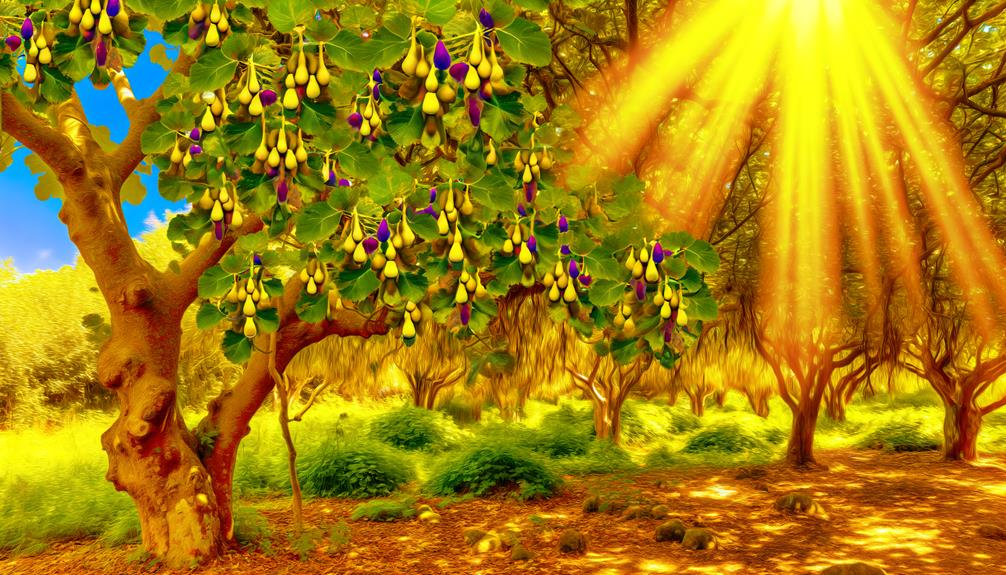
In biblical literature, figs frequently symbolize prosperity and divine blessing, as evidenced by their recurring presence in scriptures that depict agricultural abundance and societal well-being. This symbolism is deeply rooted in historical and theological contexts:
- Deuteronomy 8:8: The Promised Land is described as a land of wheat, barley, vines, fig trees, and pomegranates, illustrating divine provision and fertility.
- 1 Kings 4:25: Under Solomon’s reign, every man lived in safety, ‘under his own vine and fig tree,’ signifying peace and prosperity.
- Jeremiah 24:1-7: The vision of good figs represents those who will be blessed and restored by God, indicating His favor and future prosperity.
These verses collectively underscore the fig’s role as a potent symbol of God’s abundant blessings.
The Fig Tree in Israel

Fig trees hold a significant place within the agricultural and spiritual landscape of Israel, serving as a recurring motif in biblical narratives that intertwine the land’s fertility with divine covenant and judgment.
This ancient tree, abundant in the region, is frequently mentioned in scripture, symbolizing not only physical sustenance but also spiritual well-being.
The fig tree’s presence in the Promised Land signifies God’s provision and blessing, as seen in passages like Deuteronomy 8:8.
Conversely, the tree’s barrenness, such as in Jeremiah 8:13, represents divine displeasure and impending judgment.
Historically, the cultivation of fig trees was integral to Israelite agriculture, further embedding its symbolism in the daily life and faith of the people.
Prophetic Imagery

Prophetic imagery surrounding fig trees in the Bible often conveys profound theological messages about judgment, restoration, and the covenantal relationship between God and His people. This imagery is layered with rich symbolism, inviting deep reflection and interpretation.
Consider the following significant instances:
- Judgment: In Jeremiah 8:13, God declares that there will be no figs on the fig tree, symbolizing impending judgment and desolation for Israel due to their unfaithfulness.
- Restoration: Amos 9:14 depicts a time of renewal where Israel will rebuild and plant vineyards and fig trees, symbolizing hope and divine restoration.
- Covenantal Relationship: In Hosea 9:10, Israel is likened to early fruit on the fig tree, illustrating God’s initial delight and the special covenantal bond with His people.
These instances underscore the multifaceted use of fig trees as prophetic symbols.
Jesus and the Fig Tree

One of the most profound encounters between Jesus and a fig tree is recorded in the Gospels, where the tree’s barrenness serves as a striking metaphor for spiritual unfruitfulness and impending judgment.
In Mark 11:12-14 and Matthew 21:18-22, Jesus curses a fig tree that bore no fruit, despite its outward appearance of health. This act, occurring shortly before His cleansing of the Temple, symbolizes the judgment against religious hypocrisy and the failure to produce genuine spiritual fruit.
The fig tree, often representing Israel, underscores the urgency for repentance and spiritual renewal. Historically, this incident reflects the prophetic tradition of using agricultural imagery to convey divine messages, emphasizing the severe consequences of spiritual barrenness in the sight of God.
Parable of the Barren Fig Tree

In Luke 13:6-9, the Parable of the Barren Fig Tree is a poignant illustration used by Jesus to emphasize the necessity of repentance and the patience of God, who allows time for spiritual growth but ultimately demands fruitfulness. This parable involves a fig tree that has not borne fruit for three years, symbolizing unproductive lives. The vineyard owner represents divine judgment, while the gardener symbolizes Christ’s intercession.
Historical Context: Fig trees were essential in Israelite agriculture, making their barrenness significant.
Theological Insight: The three years reflect God’s patience, allowing time for repentance.
Scriptural Analysis: The call for cutting down the tree underscores the urgency of producing spiritual fruits.
This parable underscores the balance between divine mercy and justice.
Signs of Judgment
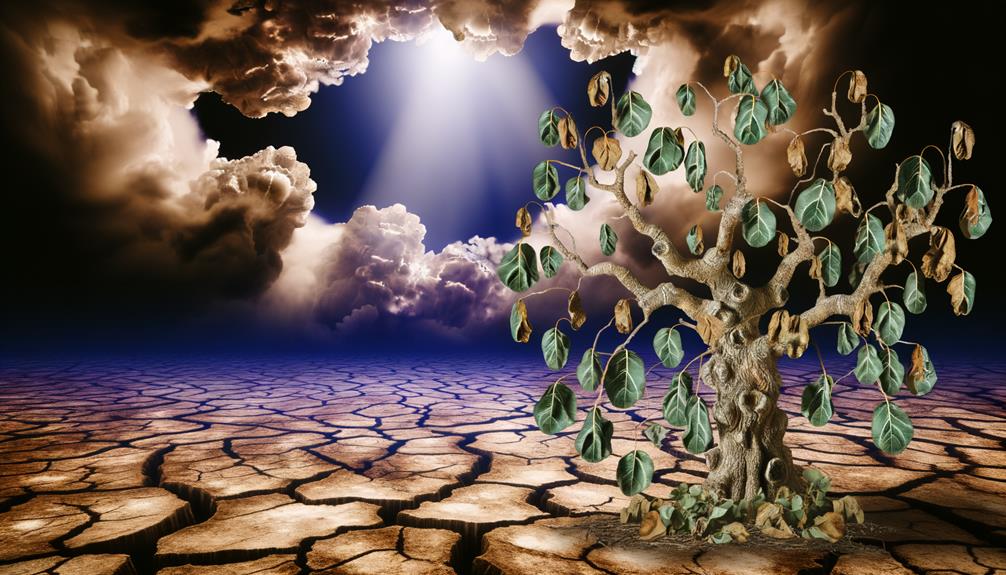
Throughout the Bible, fig trees often serve as harbingers of divine judgment, signaling a deeper spiritual malaise within the community of believers.
In the prophetic literature, the withering of fig trees frequently symbolizes impending doom. For instance, in Jeremiah 8:13, God declares, ‘I will take away their harvest… there will be no figs on the tree, and their leaves will wither.’
Similarly, in the New Covenant, Jesus cursing the barren fig tree (Mark 11:12-14) represents divine disapproval of Israel’s spiritual barrenness.
These episodes underscore the fig tree as a metaphor for the consequences of unfaithfulness and disobedience, urging adherents to heed divine warnings and align their lives with God’s expectations.
Figs and Spiritual Health

The fig tree’s frequent association with fruitfulness and prosperity in biblical texts serves as a poignant metaphor for spiritual health and liveliness. This symbolism is deeply embedded in scripture, reflecting an individual’s relationship with God and their spiritual well-being.
For instance, in Jeremiah 24, good figs represent those who are faithful to God, while bad figs symbolize those who are not.
This metaphor can be broken down into three critical aspects:
- Fruitfulness: A healthy fig tree bears fruit, symbolizing a spiritually fruitful life.
- Provision: The fig tree provided sustenance, reflecting God’s provision for the faithful.
- Growth: The process of nurturing a fig tree mirrors spiritual growth and maturity.
Understanding these elements enriches our grasp of biblical teachings on spiritual significance.
Healing and Restoration

Drawing from numerous scriptural narratives, the fig tree emerges as a potent symbol of healing and restoration, embodying God’s promise to renew and revive His people. In the Old Covenant, figs are often depicted as signs of prosperity and divine favor. For instance, in 2 Kings 20:7, a poultice of figs heals King Hezekiah, illustrating physical and spiritual renewal. The fig tree’s role extends to the prophetic texts, where its flourishing signifies Israel’s restoration after exile.
| Scripture | Context | Significance |
|---|---|---|
| 2 Kings 20:7 | Healing of King Hezekiah | Physical healing |
| Jeremiah 24:5-7 | Good figs representing God’s faithful remnant | Spiritual restoration |
| Amos 9:14 | Promise of Israel’s rebuilding and prosperity | National renewal |
| Micah 4:4 | Peace and security under one’s fig tree | Societal well-being |
| Joel 2:22 | Land’s restoration and abundance | Environmental revival |
These passages collectively underscore the fig tree as a multifaceted symbol of thorough restoration.
Figs in Biblical Poetry

Figs hold a significant place within biblical poetry, serving as rich symbols in various scriptural contexts.
In the Psalms, they are often evoked to illustrate themes of prosperity, security, and divine blessing.
These poetic references not only reflect the agrarian realities of ancient Israel but also imbue the fig tree with theological meanings that resonate deeply within the broader narrative of God’s covenantal relationship with His people.
Symbolism of Figs
In biblical poetry, figs often symbolize prosperity, peace, and divine blessings, reflecting their cultural and agricultural significance in ancient Israel. The fig tree’s abundant fruit and lush foliage serve as metaphors for divine favor and national well-being.
This symbolism is evident in several ways:
- Prosperity: The presence of fig trees and their fruitfulness often indicate economic abundance and the flourishing of the land.
- Peace: Sitting under one’s fig tree is a poetic expression denoting safety and tranquility, a life free from conflict.
- Divine Blessings: Figs are frequently associated with God’s provision and care, symbolizing His blessings upon His people.
These representations underscore the fig tree’s integral role in conveying theological and moral themes within scriptural texts.
Figs in Psalms
The Psalms often employ the fig tree as a poetic device to illustrate divine abundance and the covenantal relationship between God and His people.
For instance, Psalm 105:33 recounts God’s judgment, ‘He struck their vines also, and their fig trees,’ symbolizing the withdrawal of His blessings.
Conversely, Psalm 128:3 celebrates familial prosperity: ‘Your wife will be like a fruitful vine within your house; your children will be like olive shoots around your table.’
Here, the fig tree metaphor extends to depict peace and prosperity, reflecting God’s favor.
Historically, figs were a staple in ancient Israel, making their presence in Psalms a poignant reminder of God’s provision and promises, woven into the very fabric of daily life.
Conclusion
The fig holds profound theological significance in biblical texts, symbolizing prosperity, judgment, and spiritual health.
Intriguingly, figs are mentioned over 50 times in the Bible, underscoring their importance in ancient Israelite culture.
The fig tree’s presence in prophetic imagery and Jesus’s teachings further illustrates its multifaceted role.
Additionally, its association with healing and restoration highlights a deeper spiritual metaphor.
Consequently, the fig serves as a rich, complex symbol within the biblical narrative.