
Sinai Meaning in the Bible: Holy Mountain
Mount Sinai holds profound theological and historical significance in the Bible, primarily as the site where Moses received the Ten Commandments from God, thereby establishing a covenant between God and the Israelites. This event, detailed in the Book of Exodus, is marked by dramatic theophanies, including thunder and lightning, symbolizing God’s transcendence and holiness.
Sinai is frequently invoked in prophetic texts, serving as a symbol of divine revelation, moral law, and spiritual transformation. As a foundational moment in Biblical history, Sinai epitomizes the intersection of divine authority and human obedience, underscoring its enduring importance in Judeo-Christian thought.
Further exploration will reveal deeper dimensions of its symbolic and theological richness.

Key Takeaways
- Mount Sinai is where Moses received the Ten Commandments from God, marking a foundational moment in Biblical law.
- Sinai symbolizes the covenant between God and the Israelites, establishing them as God’s chosen people through divine law.
- Theophanies at Sinai feature natural phenomena, signifying God’s transcendence and holiness.
- Sinai represents a sacred space for divine law and human obedience, emphasizing the intersection of divine authority and moral foundation.
Sinai in Biblical History

Mount Sinai holds a pivotal role in Biblical history as the site where Moses received the Ten Commandments from God. This event is foundational to the religious and moral framework of Judaism, Christianity, and Islam.
The narrative, primarily detailed in the Book of Exodus, underscores Sinai as a locus of divine-human interaction and covenant formation. Its geographical and symbolic significance extends beyond mere location, representing a spiritual summit where divine law was imparted.
The historical and archaeological inquiries into Sinai aim to reconcile scriptural accounts with tangible evidence, though definitive identification of the actual site remains elusive.
Nonetheless, Mount Sinai‘s theological import as the setting for one of the most essential events in Biblical history is universally acknowledged among scholars.
Theophany at Sinai

The theophany at Sinai, characterized by the dramatic manifestation of God’s presence, represents a pivotal theological event with profound implications for the understanding of divine-human interaction in Biblical theology.
This event, described in Exodus 19, involves natural phenomena such as thunder, lightning, and a thick cloud enveloping Mount Sinai, signifying the transcendence and immanence of God.
The Israelites’ encounter with the divine at Sinai emphasizes the holiness and unapproachability of God, necessitating a mediated relationship through Moses.
This theophany underscores the covenantal relationship between God and Israel, establishing a framework for future divine revelations.
The encounter at Sinai consequently serves as a critical juncture in the narrative, shaping theological constructs around divine authority and sacred communication.
Sinai and the Ten Commandments
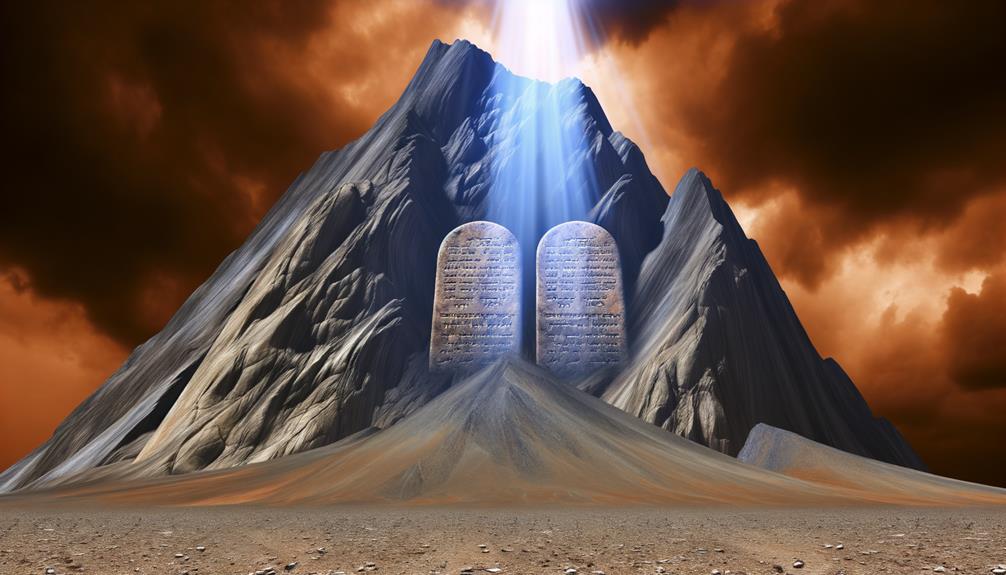
Receiving the Ten Commandments at Sinai represents a foundational moment in Biblical law and ethics, encapsulating core principles that have influenced Judeo-Christian moral thought throughout history.
The Decalogue, delivered directly by God to Moses, serves as a codified set of directives that outline moral imperatives and societal norms. These commandments not only establish a legal framework for the Israelites but also articulate universal ethical standards such as prohibitions against murder, theft, and false testimony.
The event at Sinai consequently signifies a divine endorsement of specific moral guidelines, shaping communal and individual behavior. This seminal episode underscores the importance of Sinai as more than a geographical location; it becomes a symbol of divine-human interaction and moral instruction.
Covenant and Law

Integral to the narrative of Sinai is the establishment of a covenantal relationship between God and the Israelites, wherein the laws given serve as the terms of this divine contract. This covenant, often referred to as the Mosaic Covenant, outlines the expectations and responsibilities of the Israelites in maintaining their relationship with God. The laws encompass moral, civil, and ceremonial dimensions, thereby shaping the societal and religious structure of the Israelite community.
| Aspect | Description |
|---|---|
| Moral Laws | Ethical directives, including the Ten Commandments |
| Civil Laws | Regulations governing social and judicial matters |
| Ceremonial Laws | Instructions for worship and religious observances |
| Covenantal Promise | God’s assurance of protection and blessing for obedience |
These facets collectively underscore the covenant’s role in defining the identity and conduct of the Israelites.
Sinai in Prophetic Texts
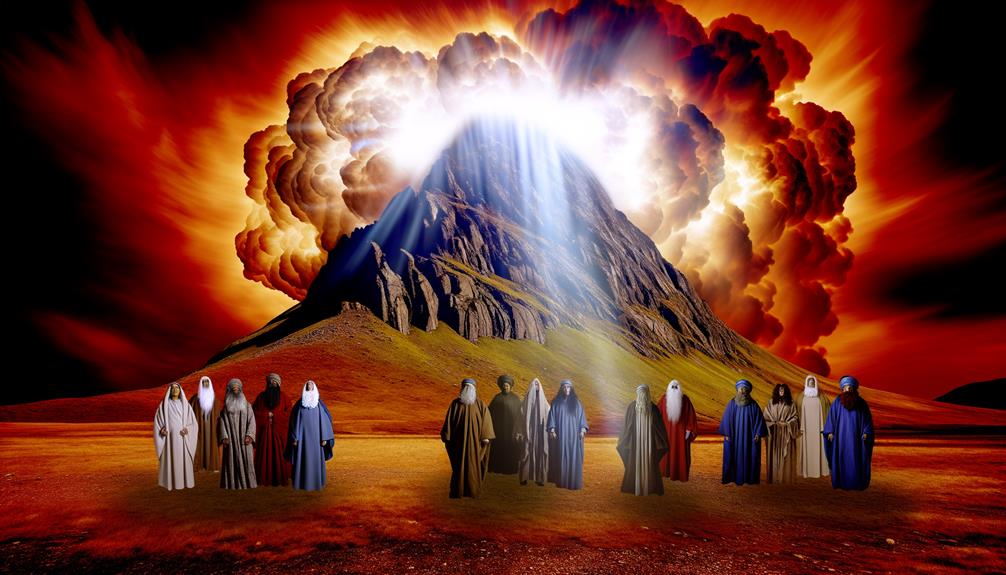
In examining Sinai within prophetic texts, one finds that it is frequently referenced in visions that underscore its profound symbolic significance.
Prophets often evoke Sinai to invoke themes of divine revelation and covenantal fidelity, illustrating its enduring theological import.
Additionally, Sinai serves as a rhetorical device to articulate future hopes and divine promises, reinforcing its pivotal role in biblical narrative and prophecy.
Prophetic Visions at Sinai
Prophetic literature frequently depicts Sinai as a locus of divine revelation, where theophanies and visions convey pivotal messages to the prophets. These texts often emphasize Sinai’s role in mediating divine communication.
Notable prophetic elements associated with Sinai include:
- Theophany: Manifestations of God to humans, providing direct divine guidance.
- Covenant Renewal: Moments where the covenant between God and Israel is reaffirmed or reinterpreted.
- Moral and Ethical Directives: Prophetic visions often reiterate Sinai’s ethical imperatives, urging adherence.
- Eschatological Prophecies: Future-oriented visions that draw on Sinai to frame God’s ultimate plan.
This framework situates Sinai as a perennial symbol of divine-human interaction within prophetic literature, highlighting its continued theological import.
Sinai’s Symbolic Significance
Rooted in its historical and theological context, Sinai’s symbolic significance in prophetic texts underscores the mountain’s enduring role as a site of divine covenant and revelation. Prophets often evoke Sinai to reaffirm God’s legal and moral directives, emphasizing Israel’s unique relationship with the divine. This covenantal imagery serves as both a reminder and a warning, reinforcing the necessity of adherence to divine law.
| Theme | Prophetic Reference | Significance |
|---|---|---|
| Divine Covenant | Jeremiah 31:31-34 | Renewal of God’s law |
| Revelation | Isaiah 2:2-3 | God’s wisdom as universal truth |
| Judgment | Micah 4:1-4 | Consequences of disobedience |
Such allusions to Sinai in prophetic literature highlight its pivotal role in Israelite identity and theological reflection.
Spiritual Symbolism of Sinai

Mount Sinai holds profound spiritual significance in the Bible, symbolizing the covenant between God and the Israelites, serving as the pivotal location for divine revelations.
It is here that Moses received the Ten Commandments, thereby establishing Sinai as the Law-Giving Mountain.
These events underscore Sinai’s role as a sacred space where divine law and human obedience intersect.
Covenant With God
The spiritual symbolism of Sinai is profoundly connected to the covenant between God and the Israelites, signifying a pivotal moment of divine revelation and commitment. This covenant established the Israelites as God’s chosen people, setting forth laws and commandments that would govern their relationship with Him.
The importance of this event can be highlighted through several key points:
- Divine Authority: Sinai represents God’s supreme authority and His direct communication with humanity.
- Moral Foundation: The commandments delivered at Sinai form the ethical basis for Judeo-Christian values.
- Community Identity: The covenant solidified the collective identity of the Israelites as a people bound by divine law.
- Spiritual Commitment: It underscored the necessity of faithfulness and obedience to God’s will.
These aspects underscore Sinai’s enduring spiritual significance.
Divine Revelation Location
Sinai, as the chosen location for divine revelation, holds profound spiritual symbolism within biblical tradition.
This mountainous region is often depicted as a liminal space where the divine intersects with the human, emphasizing the transcendence and immanence of God.
The isolation and elevation of Sinai underscore its role as a unique setting for divine encounter, removed from the mundane world, fostering a sense of awe and reverence.
Furthermore, Sinai’s rugged terrain and formidable presence symbolize the transformative journey of faith and obedience.
This setting not only accentuates the solemnity of the revelations received but also signifies the enduring covenant between God and His people, a theme that resonates deeply throughout biblical narratives and theological discourse.
Law-Giving Mountain
As the site where Moses received the Ten Commandments, Sinai embodies the profound intersection of divine law and human responsibility. This mountain’s spiritual symbolism is multifaceted and significant in biblical theology.
Sinai represents:
- Divine Authority: The commandments issued from Sinai underscore God’s sovereign authority over ethical and moral imperatives.
- Covenantal Relationship: Sinai marks the moment when the Israelites are bound to God through a covenant, highlighting mutual obligations.
- Moral Foundation: The laws given at Sinai serve as a foundational ethical guide, influencing Judeo-Christian moral frameworks.
- Spiritual Transformation: Ascending Sinai symbolizes an elevation to a higher spiritual state, reflecting the transformative impact of divine law.
Conclusion
Sinai occupies a pivotal role in biblical history, serving as the site of divine revelation and theophany. It stands as the locus where the Ten Commandments were delivered, symbolizing the covenant between God and Israel.
The prophetic texts often reference Sinai, reinforcing its significance. The spiritual symbolism of Sinai persists, embodying themes of law, covenant, and divine encounter.
The convergence of historical, theological, and symbolic dimensions underscores Sinai’s enduring importance in biblical scholarship.