
Types of Fasting in the Bible and Their Meaning
Fasting in the Bible encompasses various types, each bearing significant spiritual meaning and purpose. An absolute fast, like those undertaken by Esther and Paul, signifies total reliance on divine intervention through complete abstention from food and water.
The partial fast, exemplified by Daniel, involves selective dietary restrictions to maintain spiritual focus. Normal fasts, such as Jesus’ 40-day fast, feature abstention from food while drinking water, often during key spiritual crises.
Corporate fasts, like those in Esther’s and Jonah’s narratives, underscore communal appeals for divine mercy. Finally, private fasts allow personal introspection and transformation.
Each of these practices reveals profound layers of faith and devotion.

Key Takeaways
- Absolute Fast: Abstaining from food and water, symbolizing total dependence on divine intervention during significant spiritual transformations.
- Partial Fast: Refraining from specific foods, such as the Daniel Fast, to focus on prayer and spiritual discipline while maintaining physical strength.
- Normal Fast: Abstaining from all food but drinking water, often undertaken during pivotal spiritual crises or decision-making periods, like Jesus’ 40-day fast.
- Corporate Fast: A community-wide abstention from food to seek divine mercy during crises, exemplified by the Jewish community’s fast in Esther’s narrative.
Absolute Fast

An Absolute Fast, often referred to in biblical texts as a complete fast, involves abstaining from both food and water for a designated period, typically undertaken during times of urgent spiritual need or crisis.
This rigorous form of fasting is exemplified by instances such as Esther’s call for a three-day fast before approaching King Xerxes (Esther 4:16) and Paul’s three-day fast following his encounter on the road to Damascus (Acts 9:9).
Such fasts are marked by their intensity and the serious circumstances prompting them, emphasizing a total dependence on divine intervention.
The absolute fast underscores a profound level of spiritual commitment and desperation, often signaling moments of significant transformation or divine revelation within the biblical narrative.
Partial Fast

Partial fasting, which involves abstaining from certain types of food or drink rather than complete abstention, is a prevalent and significant practice in biblical texts. It is often undertaken to demonstrate devotion, seek divine guidance, or express repentance.
One notable instance is the Daniel Fast, where the prophet Daniel refrains from consuming delicacies, meat, and wine (Daniel 10:2-3). This form of fasting, though less severe than a complete fast, still serves as a powerful spiritual discipline.
It emphasizes a selective restriction, allowing individuals to focus on prayer and meditation while maintaining physical strength. Partial fasting underscores a commitment to spiritual growth, illustrating how modifying one’s diet can become an act of worship and a conduit for divine connection.
Normal Fast

A normal fast, characterized by the complete abstention from all food while continuing to drink water, is frequently depicted in the Bible as a profound act of faith and seeking divine intervention.
The practice is often associated with pivotal moments of spiritual crisis or significant decision-making. It represents a surrender of earthly needs to prioritize spiritual connection and guidance from God.
- Moses on Mount Sinai: Moses fasted for 40 days and nights while receiving the Ten Commandments.
- Jesus in the Wilderness: Jesus undertook a 40-day fast to prepare for His ministry.
- Esther’s Intercession: Queen Esther called for a three-day fast before approaching the king.
This form of fasting underscores complete reliance on divine sustenance.
Corporate Fast

In contrast to the individual nature of a normal fast, a corporate fast involves a collective act of abstention from food by a community or group, united in purpose and intent to seek God’s guidance and intervention.
Biblically, corporate fasts are often called during times of crisis or significant decision-making. For instance, in the Book of Esther, the Jewish community fasted together for three days to seek divine favor before Queen Esther approached the king (Esther 4:16).
Similarly, the people of Nineveh collectively fasted in response to Jonah’s prophecy of impending destruction (Jonah 3:5-10).
This shared act of humility and repentance underscores the power of communal spiritual practice to invoke God’s mercy and direction, fostering unity and collective spiritual resilience.
Private Fast

Unlike corporate fasts that involve communal participation, a private fast is a personal and solitary act of devotion where an individual abstains from food to seek a deeper spiritual connection and divine guidance.
This form of fasting is often characterized by introspection and earnest prayer, allowing believers to focus deeply without external distractions.
The Bible highlights several instances of private fasting that underscore its spiritual significance:
- Moses on Mount Sinai: Engaged in a 40-day fast while receiving the Ten Commandments.
- David’s Penitence: Fasted privately in repentance after sinning.
- Elijah’s Journey: Fasting during his 40-day trek to Mount Horeb.
Such instances illustrate the profound personal transformation and divine encounters associated with private fasting.
Daniel Fast

The Daniel Fast, rooted in the experiences of the prophet Daniel, is a biblically-based partial fast that involves abstaining from certain foods to cultivate spiritual discipline and heightened prayerfulness. This fast is derived from Daniel 1:12-16, where Daniel and his companions abstained from rich foods, opting instead for vegetables and water. The fast underscores the principles of self-denial and reliance on God, reflecting a desire for spiritual clarity and purity.
| Aspect | Details | Biblical Reference |
|---|---|---|
| Duration | Typically 21 days | Daniel 10:2-3 |
| Permitted Foods | Vegetables, fruits, whole grains, water | Daniel 1:12 |
| Purpose | Spiritual discipline, prayer, and reflection | Daniel 10:3 |
Through this structured approach, participants aim to deepen their relationship with God.
Esther’s Fast
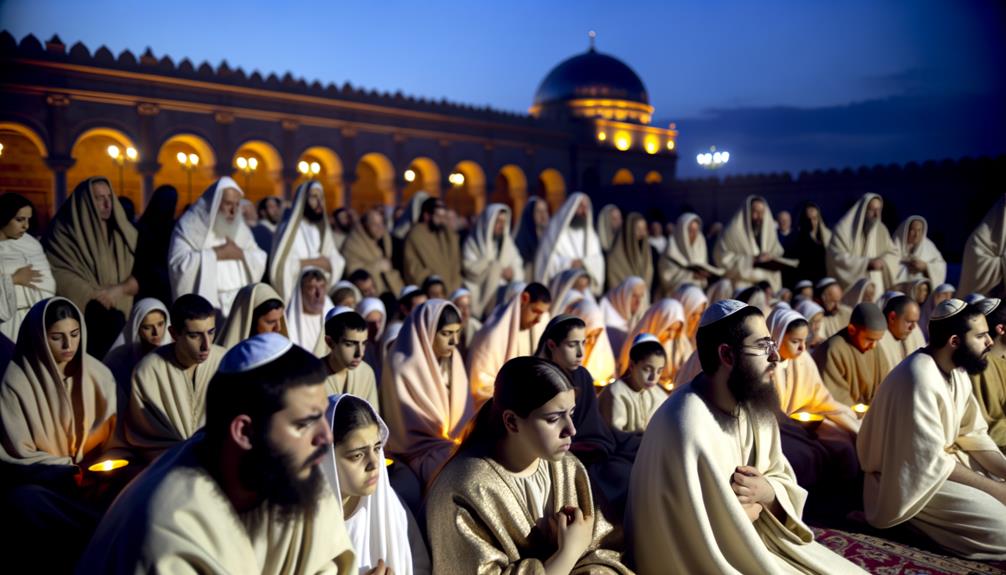
Esther’s Fast, found in the Book of Esther, was a collective three-day fast undertaken by Queen Esther and the Jewish community of Susa, aimed at seeking divine intervention against a decree threatening their annihilation.
This fast was marked by complete abstinence from food and drink, highlighting its intensity and urgency.
The spiritual significance of Esther’s Fast lies in its demonstration of solidarity, faith, and dependence on God during a time of crisis, reflecting the profound interplay between communal action and divine providence.
Purpose and Context
In the Book of Esther, the fast initiated by Queen Esther serves a critical role in the narrative, underscoring the themes of communal solidarity and divine intervention during a period of imminent danger for the Jewish people.
Esther’s fast is a strategic act of faith and desperation, highlighting her leadership and willingness to risk her life for her people. The purpose and context of this fast are multifaceted:
- Spiritual Preparation: Seeking divine favor before approaching King Xerxes.
- Communal Unity: Uniting the Jewish community in a collective plea for mercy.
- Crisis Response: Addressing the genocidal threat posed by Haman’s decree.
This fast exemplifies deep reliance on spiritual intervention in times of crisis.
Duration and Method
Characterized by its intensity and urgency, the fast mandated by Queen Esther lasted for three days and three nights, during which participants abstained from both food and drink. This form of fasting, known as a complete or absolute fast, was undertaken in a critical moment of impending danger to the Jewish people. The duration of the fast, precisely 72 hours, underscores the extreme nature of the appeal to divine intervention. The method, involving total abstention, highlights the depth of commitment and the seriousness of the situation.
| Aspect | Details | Implication |
|---|---|---|
| Duration | 3 days, 3 nights | Intense period of fasting |
| Type | Absolute | No food or drink |
| Context | Urgency | Life-threatening situation |
| Leadership | Queen Esther | Demonstrated resolve and faith |
Spiritual Significance
The profound spiritual significance of Queen Esther’s fast is exemplified by its role in uniting the Jewish community in a collective act of devotion and supplication.
This fast, described in the Book of Esther, was a pivotal moment when Esther, facing the potential annihilation of her people, called for a three-day fast without food or drink.
This act of communal fasting had multiple spiritual dimensions:
- Intercession: A powerful plea for divine intervention in a time of crisis.
- Unity: Strengthened communal bonds through shared sacrifice and prayer.
- Repentance: A collective return to faithfulness and humility before God.
Esther’s fast, consequently, underscores fasting as a means of spiritual solidarity and divine petition.
Jesus’ Fast

During His time in the wilderness, Jesus undertook a 40-day fast, a period marked by profound spiritual significance and intense physical deprivation. This fast, detailed in the Gospels of Matthew, Mark, and Luke, was an essential preparation for His public ministry.
By abstaining from food, Jesus demonstrated complete reliance on God, countering the temptations of Satan and affirming His divine mission. The 40 days symbolize a period of testing and transformation, echoing Israel’s 40 years in the desert.
Jesus’ fast underscores the themes of spiritual vigilance and the triumph of divine will over bodily needs. This act of fasting invites reflection on the importance of spiritual focus and dependence on God in the face of worldly challenges.
Moses’ Fast

Similarly exemplifying profound spiritual devotion, Moses’ fast on Mount Sinai is another pivotal instance of fasting in the Bible, marked by forty days without food or water as he received the Ten Commandments from God. This extraordinary period of abstinence underscores Moses’ deep commitment and the gravity of the divine encounter. The fast was not merely an act of personal piety but a momentous event with significant theological implications.
- Mount Sinai’s rugged, barren landscape: Reflecting the starkness and intensity of Moses’ spiritual journey.
- The solitude of the mountain: Signifying direct, undistracted communion with God.
- The physical endurance required: Highlighting the extraordinary nature of the fast.
Emergency Fast

An emergency fast, often undertaken in moments of acute crisis or impending danger, serves as a fervent plea for divine intervention and immediate response.
This form of fasting is prominently illustrated in the Book of Esther when Queen Esther and the Jewish community fasted for three days, seeking deliverance from a genocidal decree (Esther 4:16).
Similarly, King Jehoshaphat proclaimed a fast throughout Judah when faced with a formidable enemy coalition (2 Chronicles 20:3).
The underlying principle of an emergency fast is an urgent appeal to God, acknowledging human limitations and seeking His supreme aid.
It embodies deep repentance, humility, and a recognition of the necessity for divine involvement in dire circumstances, thereby reflecting a profound reliance on God’s providence.
Conclusion
Each type of fasting in the Bible carries profound spiritual significance and distinctive characteristics.
From the absolute and partial fasts to those undertaken by pivotal figures like Esther, Jesus, and Moses, these practices serve varied purposes—from seeking divine intervention to demonstrating repentance.
The complexities and depths of these fasts invite deeper exploration and understanding, revealing layers of religious devotion and the intricate relationship between humanity and the divine.
What further mysteries might these ancient practices unravel?