
Tetrarch Meaning in the Bible: Regional Ruler
The term ‘tetrarch‘ in the Bible refers to a ruler who governs one-fourth of a province or kingdom, stemming from the Greek words ‘tetra’ (four) and ‘archon’ (ruler). This title indicates a lesser rank than a king but still holds significant local authority within the political framework of the Roman Empire.
Notable tetrarchs, such as Herod Antipas, are essential figures in the New Testament, influencing the political and social climate surrounding Jesus and His ministry. Understanding the role and impact of tetrarchs like Herod Antipas in biblical history offers deeper insights into the context and events depicted in scriptural narratives.

Key Takeaways
- The term ‘tetrarch’ means a ruler governing one-fourth of a province or kingdom, derived from Greek origins.
- Herod Antipas, a notable tetrarch, ruled Galilee and Perea, significantly shaping the socio-political environment of the New Testament.
- Tetrarchs had limited authority compared to kings but maintained significant local power under Roman oversight.
- Key biblical passages involving tetrarchs include Luke 3:1, Mark 6:14-29, and Matthew 14:1-12, reflecting their influence on Jesus and John the Baptist.
Historical Background

In the historical context of the Bible, the term ‘tetrarch‘ specifically refers to a ruler who governs one-fourth of a province or kingdom, a division often seen in the Hellenistic and Roman administrative systems.
This title emerged during the fragmentation of larger territories into smaller, more manageable units. The term is rooted in the Greek words ‘tetra,’ meaning four, and ‘archōn,’ meaning ruler.
In the New scripture, the title is particularly applied to Herod Antipas, son of Herod the Great, who ruled Galilee and Perea.
The tetrarch’s authority was more limited than that of a king, yet it signified significant local power within the overarching Roman Empire, reflecting the complex political landscape of the period.
Role of a Tetrarch

A tetrarch, though possessing limited sovereignty compared to a king, wielded considerable influence and administrative control within their designated territory, often balancing local governance with the overarching demands of Roman authority. This role involved maintaining peace, collecting taxes, and implementing Roman policies, while also addressing the specific needs and customs of the local population. The tetrarch’s responsibilities were multifaceted, requiring diplomatic skill and political acumen.
| Function | Description | Example Duties |
|---|---|---|
| Governance | Administer local laws and customs | Judicial oversight, public order |
| Taxation | Collect and manage revenues | Tax collection, financial audits |
| Diplomacy | Liaison between Rome and locals | Negotiations, conflict resolution |
This table illustrates the key functions and duties of a tetrarch, highlighting their integral role in the provincial administration.
Tetrarchs in the New Testament
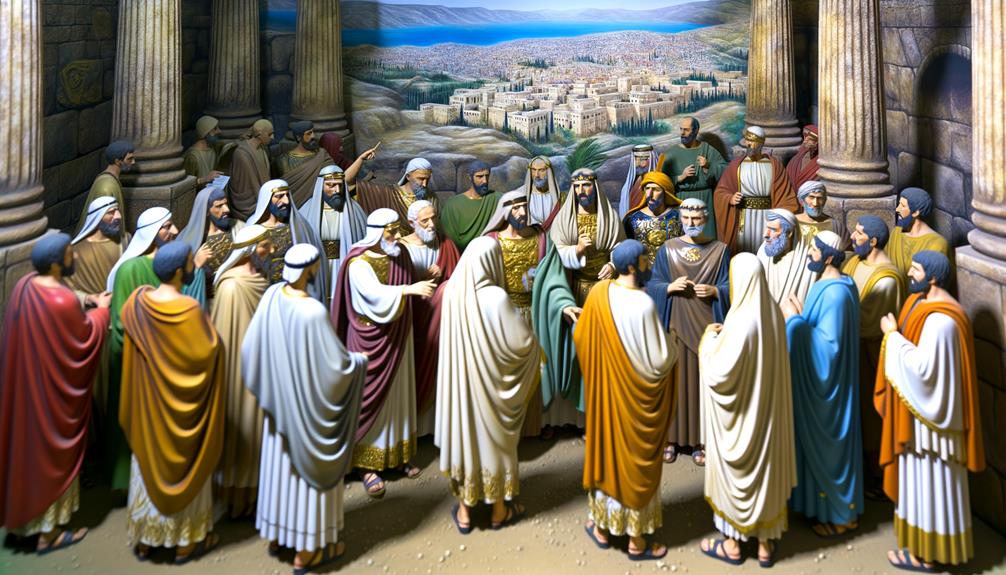
How did the role of a tetrarch intersect with the socio-political landscape of the New Scriptures, and what implications did this have for the early Christian narrative?
In the New Covenant, tetrarchs such as Herod Antipas held significant influence, governing regions and impacting daily life. Their authority was divinely acknowledged and politically strategic, shaping the backdrop of key biblical events.
This context is essential as it:
- Illustrates the political climate: Understanding the tetrarch’s role aids in grasping the environment in which Jesus and His disciples operated.
- Highlights the fulfillment of prophecy: Their governance and actions often aligned with prophetic scriptures.
- Contextualizes Christ’s ministry: The tetrarchs’ rule influenced Jesus’ movements and ministry.
Political Significance

The political significance of tetrarchs in the New Scriptures is underscored by their strategic appointments and the control they exerted over their territories, shaping the socio-political dynamics that influenced early Christian history.
Tetrarchs, such as Herod Antipas, played critical roles in maintaining Roman authority while managing local governance. Their jurisdiction often covered regions pivotal to the spread of Christianity, including Galilee and Perea.
This dual allegiance to Roman imperial power and local traditions positioned tetrarchs as key figures in negotiating political stability and local autonomy.
Their governance directly impacted the lives of early Christians, influencing the cultural and political landscapes in which the nascent Christian communities emerged and spread their teachings.
Key Biblical Passages

Key biblical passages that mention the term ‘tetrarch’ particularly include the Gospel accounts that refer to Herod Antipas‘ rule, reflecting his political authority in Galilee and Perea under Roman oversight.
These passages underscore the intricate interplay between local governance and Roman imperial influence during the New Covenant period.
Herod Antipas’ Rule
Herod Antipas, known as the tetrarch of Galilee and Perea, is frequently mentioned in the New Scriptures, with his rule prominently featured in passages such as Luke 3:1, Mark 6:14-29, and Matthew 14:1-12.
His governance is marked by significant events that intertwine with the life of Jesus and John the Baptist, showcasing his complex role in biblical history.
- Luke 3:1: Establishes the historical context of Herod’s governance.
- Mark 6:14-29: Details the beheading of John the Baptist at Herod’s behest.
- Matthew 14:1-12: Reiterates the narrative of John the Baptist’s martyrdom.
These passages provide insight into Herod Antipas’s political and moral landscape.
Roman Political Influence
While Herod Antipas’s rule offers a glimpse into localized governance, it is the overarching Roman political influence that profoundly shapes the biblical narrative.
This is evidenced by key passages such as Luke 2:1-3 and John 19:10-11.
Luke 2:1-3 highlights the decree from Caesar Augustus, mandating a census that sets the stage for Jesus’s birth in Bethlehem. This central event underscores Roman governance‘s role in fulfilling Messianic prophecies.
Likewise, in John 19:10-11, Pontius Pilate’s dialogue with Jesus reveals the Roman authority’s significant impact, stating, ‘You would have no power over me if it were not given to you from above.’
These passages illustrate the pervasive influence of Roman political structures on biblical events and theological themes.
Interpretative Implications

The interpretative implications of the term ‘tetrarch’ necessitate a thorough analysis of its historical context, a meticulous examination of relevant biblical texts, and an exploration of its theological significance.
Understanding how the role of a tetrarch functioned within the sociopolitical landscape of the New Covenant period provides critical insights into the governance structures referenced in Scripture.
This, in turn, enhances our comprehension of the theological narratives that intersect with these historical realities.
Historical Context Analysis
In understanding the term ‘tetrarch’ within its historical context, it is essential to recognize its implications for interpreting New Scripture narratives and its reflection of Roman administrative practices in Judea. The role of a tetrarch, as a governor of one-fourth of a province, reveals the political fragmentation and local governance under Roman rule. This insight aids in comprehending the sociopolitical landscape of the Gospels and Acts.
- Roman Provincial Division: Tetrarchs governed regions subdivided from larger provinces.
- Herodian Dynasty: Notable tetrarchs included Herod Antipas, illustrating the Herodian influence.
- Political Autonomy: Tetrarchs had limited autonomy, subject to Roman oversight.
Such historical context is vital for accurate scriptural interpretation.
Biblical Text Examination
Examining the term ‘tetrarch’ within specific Biblical passages reveals its significance in delineating the political and administrative framework that influenced the actions and decisions of key figures in the New Covenant. For instance, in Luke 3:1, the tetrarchy is essential for understanding the geopolitical landscape during John the Baptist’s ministry. Similarly, Matthew 14:1-12 discusses Herod Antipas, a tetrarch, whose political maneuvers ultimately led to John’s imprisonment and execution. These passages underscore the tetrarch’s authoritative role, which shaped the socio-political dynamics of the time.
| Biblical Passage | Contextual Relevance |
|---|---|
| Luke 3:1 | John the Baptist’s ministry |
| Matthew 14:1-12 | Herod Antipas and John’s fate |
| Acts 13:1 | Governance in early Christianity |
This examination highlights how the term ‘tetrarch’ provides vital insights into the historical and political context of the New Testament.
Theological Significance Insights
Understanding the term ‘tetrarch’ within its historical context allows for a deeper exploration of its theological implications, particularly in illustrating the interplay between divine providence and political authority in the New Scriptures narrative. This term, often linked to rulers like Herod Antipas, underscores the nuanced relationship between secular power and divine orchestration.
- Divine Sovereignty: God’s ultimate control over political domains, even under imperfect rulers.
- Messianic Expectation: The tetrarchs’ rule highlights the anticipation of a divinely appointed Messiah.
- Judicial Authority: Examines the limits of human justice juxtaposed with divine justice.
These insights reveal the complex, yet deliberate, unfolding of God’s redemptive plan amidst human governance.
Conclusion
In summation, the term ‘tetrarch‘ holds substantial historical and theological significance, delineating a ruler responsible for governing a quarter of a province.
As evidenced in the New Scriptures, tetrarchs like Herod Antipas played pivotal roles in the sociopolitical landscape of the era.
‘To understand the times is to understand the men who shaped them.’ Hence, the study of tetrarchs illuminates the intricate interplay between political authority and scriptural narrative, enriching biblical exegesis and historical comprehension.