Abode Meaning in the Bible: Dwelling of God
In the Bible, the concept of an abode signifies divine presence and relationship with humanity through various dwelling places. Old Covenant tents, such as Abraham’s and Moses’ Tent of Meeting (Genesis 12:8; Exodus 33:7-11), symbolized sacred spaces.
The Tabernacle and Solomon’s Temple represented God’s dwelling amid Israel (Exodus 25; 1 Kings 6). Jesus redefined this concept by referring to His body as the ultimate temple (John 2:19-21).
Promises of eternal abodes, such as the ‘many mansions‘ in God’s house (John 14:2) and the New Jerusalem (Revelation 21:2), highlight future communion with the divine. Explore further to uncover deeper theological insights.

Key Takeaways
- Tents in the Old Testament symbolized divine presence and covenantal relationships, serving as sacred spaces for nomadic tribes.
- The Tabernacle and Solomon’s Temple represented God’s dwelling among Israelites, reflecting holiness, covenant, and divine glory.
- Jesus redefined divine abodes by identifying His body as the ultimate temple, transforming access to God.
- Early Christian homes functioned as worship centers, facilitating communal bonds and the spread of Christian teachings.
Old Testament Tents

In the Old Scripture, tents served not only as physical dwellings for nomadic tribes but also held profound theological significance as symbols of God’s presence among His people. These portable shelters underscored the transient nature of human existence and the divine guidance during Israel’s wilderness journey.
For instance, in Genesis 12:8, Abraham pitched his tent and built an altar to invoke the Lord’s name, demonstrating an intimate relationship with God amidst his travels.
Furthermore, in Exodus 33:7-11, Moses set up a tent outside the camp, calling it the Tent of Meeting, where the Lord spoke to him face-to-face.
These instances illustrate how tents were more than mere habitation; they were sacred spaces where divine-human interaction occurred, embodying a covenantal relationship.
Tabernacle Symbolism
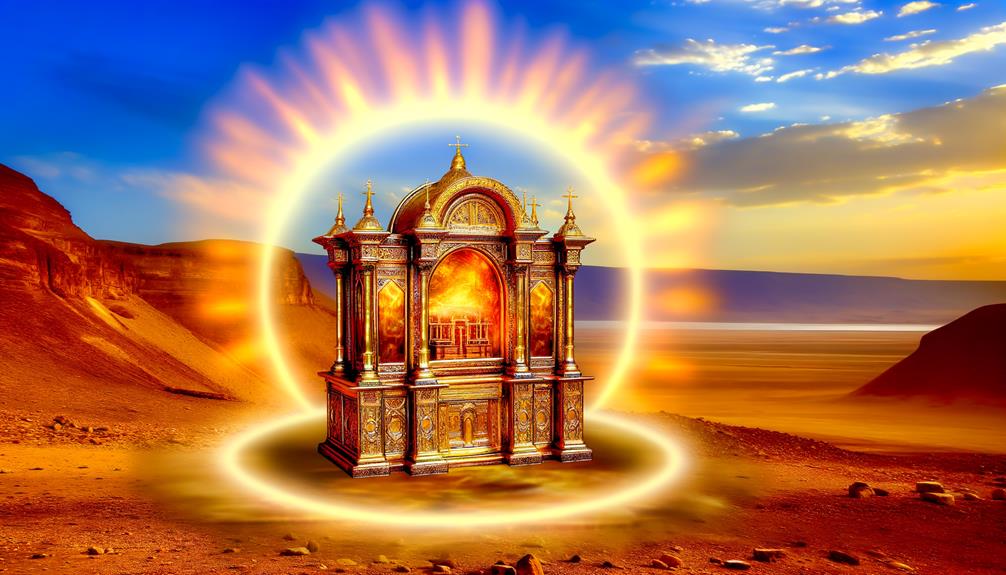
The Tabernacle, as described in the Book of Exodus, serves as a profound representation of God’s dwelling place among the Israelites, laden with rich theological symbolism and intricate design details that reflect divine holiness and covenantal relationship.
Constructed under divine instructions (Exodus 25-31), the Tabernacle’s elaborate design, including the Ark of the Covenant, the Table of Showbread, and the Golden Lampstand, symbolizes God’s presence and guidance.
The Holy of Holies, veiled and set apart, signifies God’s unapproachable holiness.
The use of precious materials like gold and fine linen symbolizes purity and divine glory.
The Tabernacle’s layout, from the outer court to the innermost sanctum, illustrates the journey from sinfulness to sanctification, underscoring the process of approaching God through prescribed rituals.
Solomon’s Temple
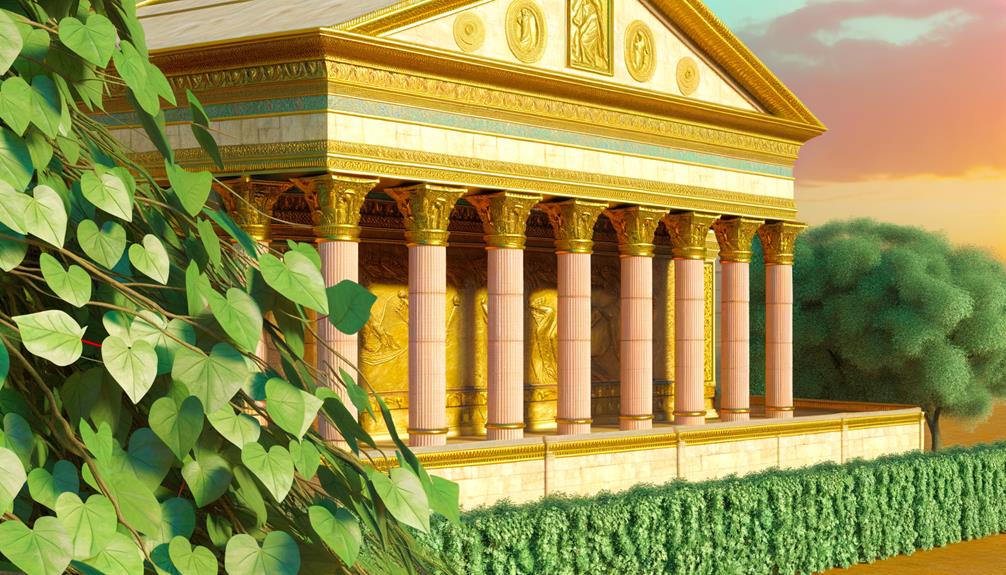
Solomon’s Temple stands as a monumental embodiment of divine presence, its architectural grandeur and intricate details reflecting God’s glory (1 Kings 6:14-38).
The temple’s construction, employing the finest materials and skilled artisans, underscores its sanctity and the significance of Israel’s covenant with God.
Symbolically, it represents not only a physical dwelling place for the Divine but also a focal point for spiritual devotion and national identity.
Architectural Significance Explored
Regarded as one of the most significant architectural achievements in biblical history, the construction of Solomon’s Temple not only symbolizes divine presence but also reflects ancient Israel’s religious and cultural zenith.
The temple, described in 1 Kings 6, epitomized sacred architecture through its:
- Design and Dimensions: Precisely detailed in Scripture, the temple’s layout included the Holy of Holies, the main hall, and the outer courts.
- Materials Used: Lavish resources like cedar wood from Lebanon and gold overlays signified the temple’s grandeur and sanctity (1 Kings 6:18-22).
- Labor and Craftsmanship: Skilled artisans and laborers, including Phoenician craftsmen, contributed to its construction, showcasing a collaborative effort (1 Kings 5:13-18).
This architectural marvel served as the central place for worship and national identity.
Symbolism and Spirituality
Throughout its existence, Solomon’s Temple has been imbued with profound symbolism, representing not only the dwelling place of God but also the spiritual heart of Israel. Scripturally, the temple served as a divine nexus, illustrating God’s covenantal presence (1 Kings 8:10-11). Theologically, it epitomized sanctity and divine order, as reflected in its intricate design mirroring heavenly realities (Hebrews 8:5). Historically, the temple unified Israel, serving as a focal point for worship and national identity.
| Symbol | Spiritual Significance |
|---|---|
| Ark of the Covenant | God’s covenant and presence |
| Holy of Holies | Ultimate sanctity and divine throne |
| Altar | Atonement and sacrifice |
| Cherubim | Divine guardianship and protection |
| Lampstand | Light of divine wisdom and guidance |
This temple consequently transcended mere architecture, embodying divine-human communion.
Construction and Materials Used
Integral to understanding the profound symbolism of Solomon’s Temple is an examination of its construction and the materials employed, which were meticulously chosen to reflect divine specifications and opulence (1 Kings 6:7-22).
The Temple, a centerpiece of Israelite worship, utilized exquisite resources:
- Cedar and Cypress Wood: Sourced from Lebanon, these woods were renowned for their durability and fragrance (1 Kings 5:6).
- Gold Overlays: The interior was lavishly overlaid with gold, symbolizing divine glory and purity (1 Kings 6:21-22).
- Stone Quarried Without Iron Tools: The stones were prepared off-site to preserve the sanctity of the construction process (1 Kings 6:7).
Each element, meticulously selected, underscores the Temple’s role as an earthly reflection of divine majesty.
Divine Presence in Abodes

The concept of divine presence within abodes is vividly illustrated in the Bible, particularly through the depiction of the Tabernacle and the Temple as sacred spaces where God dwells among His people.
The Tabernacle, described in Exodus 25-27, served as a mobile sanctuary during Israel’s wilderness journey, symbolizing God’s guidance and presence.
Later, Solomon’s Temple, detailed in 1 Kings 6-8, became a permanent dwelling for God’s name in Jerusalem.
These structures were not merely architectural feats but were imbued with theological significance, manifesting God’s covenant relationship with Israel.
The Ark of the Covenant, housed within these abodes, epitomized God’s throne on Earth, emphasizing His holiness and accessibility.
Consequently, these sacred spaces underscored the divine intimacy and reverence central to biblical faith.
Jesus and Abodes

Building upon the rich tradition of divine presence in sacred spaces, Jesus redefined the concept of abodes by identifying His own body as the ultimate temple, as seen in John 2:19-21. This profound shift emphasized the personal and immediate nature of divine communion.
Historically, the temple in Jerusalem was the center of Jewish worship, but Jesus’ declaration marked a new era. Theologically, this reinterprets:
- Divine Presence: God’s presence now dwells in Jesus, not a physical structure.
- Sacrificial System: Jesus’ body becomes the locus of atonement, replacing temple sacrifices.
- Access to God: Believers can now approach God directly through Jesus.
These elements highlight a pivotal transformation in understanding divine abodes.
Heavenly Mansions

Jesus’ promise of ‘many mansions‘ in His Father’s house, as recorded in John 14:2, provides a profound glimpse into the eternal dwelling places prepared for believers. This imagery of heavenly mansions symbolizes the abundant and diverse provisions that await the faithful.
The term ‘mansions’ is derived from the Greek word ‘μονή’ (monē), meaning dwelling places or abodes, indicating permanence and security. Historically, this promise offered comfort to early Christians facing persecution, assuring them of a future in God’s presence.
Theologically, it underscores the inclusivity and vastness of God’s kingdom. In Revelation 21:2, the New Jerusalem is depicted as a grand city, reinforcing the concept of an eternal, prepared place for the redeemed.
Abodes in Psalms

Many passages in the Psalms vividly describe God’s abodes as sanctuaries of refuge, strength, and everlasting presence for the faithful.
The Psalms often portray these divine dwellings through rich metaphors and poetic language, emphasizing their significance in the life of believers.
- Psalm 27:5: ‘For in the day of trouble he will keep me safe in his dwelling; he will hide me in the shelter of his sacred tent.’
- Psalm 91:1: ‘Whoever dwells in the shelter of the Most High will rest in the shadow of the Almighty.’
- Psalm 23:6: ‘Surely your goodness and love will follow me all the days of my life, and I will dwell in the house of the Lord forever.’
These verses highlight the theological theme of divine protection and eternal communion with God.
Prophetic Visions

Prophetic visions in the Bible often depict divine abodes as ultimate sanctuaries, revealing God’s sovereign plan for His people and their eventual restoration.
For instance, Ezekiel’s vision of a new temple (Ezekiel 40-48) symbolizes God’s presence and the restoration of Israel.
Similarly, Isaiah’s prophecy of the New Jerusalem (Isaiah 65:17-25) anticipates a renewed creation where peace and righteousness dwell.
The Book of Revelation offers a culminating vision of the heavenly Jerusalem, descending from heaven adorned as a bride (Revelation 21:1-3), representing the consummation of God’s redemptive plan.
These visions provide eschatological hope, assuring believers of a future where God’s abode is intricately intertwined with His people’s eternal fellowship and worship.
Early Christian Homes
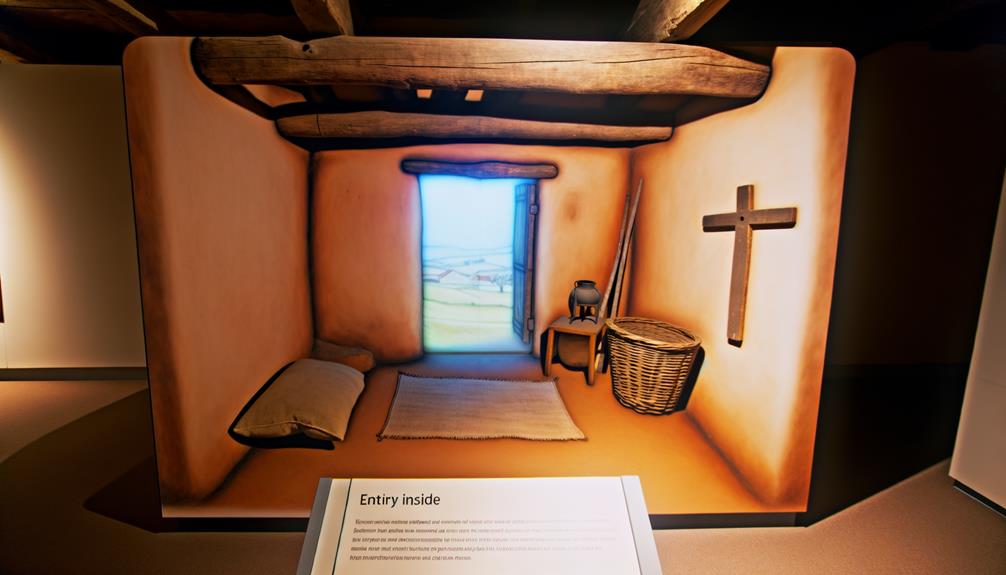
In the nascent Christian communities, homes often served as pivotal centers for worship, fellowship, and the dissemination of the Gospel, as evidenced by accounts in Acts where believers gathered in private residences for prayer and breaking of bread (Acts 2:46; 12:12).
These early Christian homes were more than just living spaces; they were sacred venues fostering spiritual growth.
Key aspects include:
- Worship: Homes became sanctuaries where early Christians conducted liturgical practices and celebrated the Eucharist.
- Fellowship: These gatherings strengthened communal bonds, reflecting the early Church’s emphasis on unity (Acts 4:32).
- Evangelism: Domestic settings enabled the spread of Christian teachings, offering a hospitable environment for new converts (Romans 16:5).
Thus, homes were integral to the church’s foundation and expansion.
Eternal Dwelling Places

The concept of eternal dwelling places is profoundly rooted in biblical theology, symbolizing the believers’ ultimate union with God and the culmination of divine promise as depicted in passages such as John 14:2-3 and Revelation 21:3.
In John 14:2-3, Jesus reassures His followers, saying, ‘In my Father’s house are many rooms… I am going there to prepare a place for you.’ This promise of a heavenly abode reflects a spiritual reality beyond the temporal world.
Revelation 21:3 further envisions this eternal communion: ‘Behold, the dwelling place of God is with man.’
Historically, these scriptures have offered profound hope and comfort, assuring believers of a future eternal home where divine presence and peace are eternally realized.
Conclusion
The concept of ‘abode’ in biblical scripture juxtaposes transient and eternal dwellings, from the nomadic tents of the Old Covenant to the prophetic visions of everlasting sanctuaries.
The tabernacle and Solomon’s Temple epitomize a divine presence within human constructs, while Jesus redefines abodes through a spiritual lens.
Psalms and early Christian homes further articulate this sacred dwelling.
Such themes underscore a theological continuum, reflecting humanity’s evolving relationship with the divine across temporal and eternal domains.