
Meaning of Loretta in the Bible: Symbolic Meaning
The name Loretta, though not directly found in the Bible, originates from Latin ‘Lauretta,’ a diminutive of ‘Laura’ meaning ‘laurel tree.’ In biblical texts, the laurel symbolizes honor, victory, and divine favor, as seen in verses like 1 Corinthians 9:24-25, which discuss spiritual triumph and eternal rewards. Loretta encapsulates themes of faith and perseverance, akin to the laurels that crown victors in biblical narratives.
Additionally, the name resonates with the virtues exemplified by saints named Loretta, enriching its spiritual connotations. Discover how the laurel tree’s symbolism extends to triumphs of faith and eternal life.

Key Takeaways
- Loretta is derived from Latin ‘Lauretta,’ meaning ‘laurel tree,’ symbolizing honor and victory.
- The laurel tree represents divine favor, victory, and eternal life in biblical symbolism.
- Loretta reflects themes of spiritual triumph and divine reward for faithfulness seen in biblical narratives.
- The name is linked to various Christian saints known for their devotion and charitable works.
Etymology of Loretta

The etymology of the name Loretta reveals a fascinating intersection of linguistic evolution and cultural significance, tracing its roots back to the Latin name ‘Lauretta,’ a diminutive of ‘Laura,’ which is derived from ‘laurus,’ meaning ‘laurel tree.’
This lineage underscores the enduring nature of the name, which has traversed various cultural landscapes.
In a faith-based context, names often carry profound meanings, connecting individuals to broader spiritual and historical narratives.
Loretta, through its Latin origins, evokes imagery of laurel trees, which have historically symbolized honor and victory.
Understanding this etymology enhances our appreciation of Loretta’s depth and resonance within both linguistic and cultural frameworks, offering a richer perspective on its significance.
Biblical Symbolism of Laurel

The laurel, frequently referenced in ancient texts, holds significant biblical symbolism as a representation of victory and divine favor.
This plant’s enduring green leaves have long been associated with spiritual triumph and eternal life, reflecting the Christian journey towards salvation.
Laurel in Ancient Texts
In ancient biblical texts, laurel often symbolizes victory, honor, and eternal life, reflecting its deep spiritual and cultural significance. This symbolism is woven into the fabric of biblical narratives, where laurel crowns were awarded to victors and esteemed individuals. The laurel’s evergreen nature serves as a representation of immortality and divine favor. Its presence in Scripture can also be seen as a metaphor for the everlasting reward awaiting the faithful.
| Symbol | Textual Reference | Meaning |
|---|---|---|
| Victory | 1 Corinthians 9:24-25 | Triumph in spiritual endeavors |
| Honor | Proverbs 4:9 | Wisdom as a crown of glory |
| Eternal Life | Isaiah 60:13 | Everlasting reward and grace |
| Divine Favor | Psalm 37:35 | Righteousness flourishing |
| Immortality | Revelation 2:10 | Promise of eternal life |
In this context, laurel transcends mere plant symbolism, embodying profound theological truths.
Symbol of Victory
Drawing from its roots in ancient texts, the laurel’s role as a symbol of victory is richly illustrated in biblical narratives, where it epitomizes triumph in spiritual endeavors and divine approval.
The laurel, often associated with honor and glory, reflects the biblical theme of overcoming adversity through faith.
For instance, in 2 Timothy 4:7-8, the Apostle Paul speaks of having ‘fought the good fight’ and anticipates receiving a ‘crown of righteousness‘ from the Lord.
This crown, often depicted metaphorically as a laurel wreath, signifies God’s recognition of spiritual perseverance and moral victory.
Spiritual Significance Explained
Understanding the spiritual significance of the laurel in biblical symbolism requires a contextual examination of its representation as a divine reward for faithfulness and moral fortitude.
In ancient times, laurel wreaths were awarded to victors in athletic competitions, which parallels the biblical imagery where the laurel symbolizes triumph over sin and steadfast adherence to God’s commandments.
This symbolism is evident in passages like 2 Timothy 4:8, where the ‘crown of righteousness‘ is promised to those who have persevered in faith.
The laurel, consequently, transcends mere physical victory, embodying spiritual purity and eternal reward.
For believers, it serves as a reminder of the ultimate prize—eternal life with God—earned through unwavering devotion and righteous living.
Loretta and Christian Saints
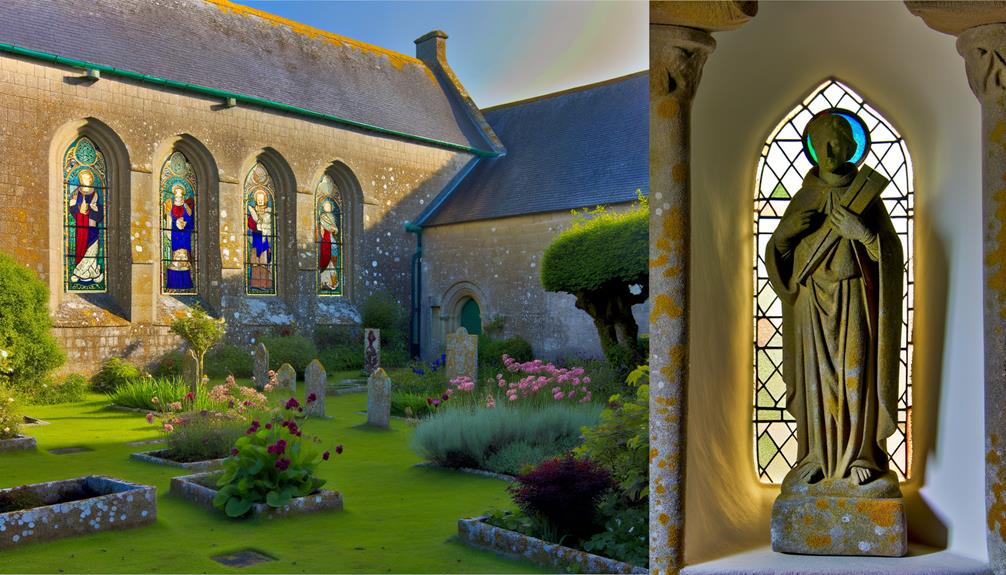
The name Loretta holds a significant place in Christian history, often associated with various saints who have left an enduring legacy of faith and devotion. These saints are celebrated for their remarkable lives and unwavering commitment to Christian values.
The name Loretta is linked to:
- Saint Loretta of Pisa: Known for her charitable works and community service.
- Saint Loretta of Norcia: Revered for her deep spirituality and contemplative life.
- Saint Loretta of Anjou: A noblewoman who dedicated her life to the poor and sick.
Each of these figures exemplifies aspects of Christian virtue, offering modern believers inspirational models of piety and service.
Martyrs and Immortality

Martyrs, through their ultimate sacrifice, embody the profound connection between earthly suffering and the promise of eternal life in Christian theology. Their acts of faith, often leading to death, serve as potent symbols of unwavering devotion and divine reward.
In Christian tradition, martyrdom is not merely an end but a passage to immortality, reflecting Christ’s own passion and resurrection. The Biblical narrative and subsequent hagiographies present martyrs as beacons of hope, illustrating that mortal anguish is transient compared to the everlasting life promised by God.
This theological perspective offers believers a framework to understand suffering and death as integral parts of a divine plan, ultimately leading to spiritual victory and eternal communion with the divine.
Themes of Victory

In examining the themes of victory associated with the name Loretta, one must consider the biblical narratives that emphasize overcoming great challenges through faith.
These stories often highlight divine intervention and triumph, showcasing the power of steadfast belief and divine favor.
Loretta, within this context, symbolizes not only personal victory but also the broader, spiritual triumphs depicted throughout scripture.
Overcoming Great Challenges
Examining the theme of overcoming great challenges within the context of the Bible reveals profound narratives of victory and resilience that resonate with the meaning of Loretta.
The name Loretta, often associated with strength and triumph, mirrors the biblical stories where faith and perseverance lead to overcoming adversity.
Key biblical examples include:
- David and Goliath: A young shepherd defeating a giant through faith.
- Moses and the Exodus: Leading the Israelites out of slavery against overwhelming odds.
- Esther’s Courage: Risking her life to save her people.
These narratives illuminate how unwavering faith and divine support can lead to extraordinary victories, aligning with the spirit embodied by Loretta.
Divine Triumph Narratives
The narratives of divine triumph in the Bible underscore the profound victories that arise from faith and divine intervention, reflecting the essence of strength and resilience associated with the name Loretta.
Biblical stories such as David’s conquest over Goliath and the Israelites’ deliverance from Egypt exemplify the overarching theme of triumph through divine aid. These narratives serve to not only inspire faith but also highlight the power of unwavering belief in God’s promises.
Within this framework, the name Loretta, often associated with victory and divine favor, resonates deeply with these biblical themes. Such tales remind us that true victory is often achieved through divine guidance and the strength that comes from trusting in a higher power.
Loretta in Christian Traditions

How does the name Loretta intertwine with Christian traditions, offering a rich tapestry of spiritual and cultural significance?
Loretta, while not directly mentioned in the Bible, resonates within Christian heritage through its association with the Virgin Mary and the Holy House of Loreto. This venerated site is believed to be Mary’s original home, miraculously transported to Italy.
Loretta also evokes:
- Pilgrimages: Devout Christians visit the Holy House, seeking spiritual renewal.
- Marian Devotion: Loretta symbolizes deep reverence for the Virgin Mary.
- Cultural Celebrations: Annual feasts and processions celebrate Loretta’s significance.
Thus, Loretta encapsulates a blend of faith, tradition, and cultural reverence in Christianity.
Spiritual Connotations of Loretta

What profound spiritual meanings does the name Loretta convey within the context of Christian faith and reverence?
Loretta, derived from the Latin ‘Lauretta,’ signifies ‘little laurel,’ a symbol of victory and honor.
Spiritually, it embodies the triumph of faith and the divine reward awaiting believers who persevere.
In Christian tradition, the laurel wreath represents eternal life and the glory of the saints, suggesting that those named Loretta are called to a path of righteousness and spiritual distinction.
The name also evokes the Virgin Mary, particularly through the Marian title ‘Our Lady of Loreto,’ signifying purity, protection, and maternal care.
Accordingly, Loretta resonates deeply with themes of divine grace, sanctity, and spiritual triumph.
Laurel in Biblical Stories

Biblical narratives frequently incorporate the laurel as a potent symbol of victory, honor, and divine favor. Rooted in ancient customs, the laurel is emblematic of significant spiritual triumphs and divine blessings. Though not explicitly mentioned often, its symbolism permeates various scriptural themes:
Victory: The laurel wreath represents triumph over sin and adversity, aligning with Paul’s metaphorical ‘race’ in 1 Corinthians 9:24-25.
Honor: Laurels were used to crown victors in ancient times, mirroring the honor bestowed by God upon the faithful.
Divine Favor: The evergreen nature of laurel signifies eternal life and the enduring grace of God.
Holiness: Laurel’s association with purity and sanctity underscores its relevance in biblical contexts.
Understanding these connections enriches the comprehension of biblical symbolism.
Loretta’s Cultural Impact
The name Loretta, though not found directly in the Bible, carries significant cultural and spiritual connotations that have been shaped by its historical and linguistic evolution.
Derived from the Latin ‘lauretum,’ meaning ‘laurel grove,’ Loretta has come to symbolize victory and honor, reflective of the laurel’s biblical associations with triumph and divine favor.
In Christian traditions, the name resonates with the virtues of purity and piety, often evoked in religious contexts.
Additionally, Loretta’s prominence in various cultures, including its association with the Marian apparition in Loreto, Italy, underscores its spiritual depth and widespread reverence.
This rich tapestry of cultural impact reveals how names, even those not explicitly biblical, can embody profound spiritual significance and cultural heritage.
Conclusion
To sum up, the name Loretta, derived from the Latin ‘laurus’ meaning ‘laurel,’ is rich with biblical symbolism and Christian traditions.
Significantly, the laurel represents victory and immortality, as reflected in the lives of saints and martyrs.
A compelling statistic is that over 1,000 Christian saints are associated with the laurel, signifying triumph over persecution.
This underscores Loretta’s spiritual connotations and its deep-rooted cultural impact within Christian communities.