Thronged Meaning in the Bible: Pressed by Crowds
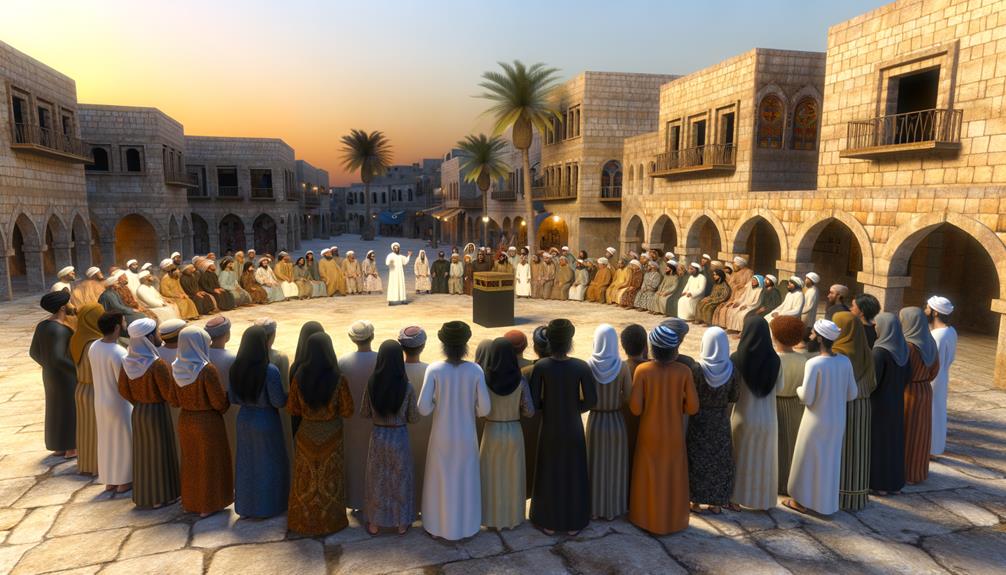
In biblical terminology, ‘thronged‘ captures the image of densely packed crowds, signifying intensity and desperation in seeking divine intervention. Old Covenant scenes like the gathering at Mount Sinai and New Covenant instances, such as multitudes flocking to Jesus, illustrate thronged moments highlighting communal longing for spiritual encounters.
This term underscores the collective dimension of faith, reflecting societal dynamics where public assemblies provided both spiritual and social nourishment. Analyzing these episodes reveals deeper insights into human nature, yearning for divine connection, and the communal aspects of biblical faith narratives.
Continue to explore these profound theological implications and cultural contexts.
Key Takeaways
- Thronged denotes a large, closely gathered crowd, often reflecting intensity and urgency in biblical contexts.
- It underscores human response to divine presence or miracles, highlighting communal participation.
- In the Old Testament, it marks significant events like Passover and Solomon’s Temple Dedication.
- In the New Testament, it illustrates the public’s fervent interest in Jesus’ teachings and miracles.
Biblical Definition of ‘Thronged’

The term ‘thronged‘ in the Bible typically denotes a large assembly or crowd of people gathered closely together, often with connotations of pressing or jostling.
This usage conveys more than mere numbers; it evokes an image of intensity and urgency, reflecting the fervor or desperation of the crowd.
Theologically, ‘thronged’ underscores the human response to divine presence or miraculous events. Its connotation of physical closeness often symbolizes spiritual yearning or communal participation in sacred moments.
Biblical narratives employing ‘thronged’ consequently highlight collective human engagement with the divine, illustrating how mass gatherings amplify the significance of the event.
This term enriches the scriptural portrayal of communal dynamics, providing deeper insight into the socio-religious contexts of ancient biblical times.
Old Testament Occurrences
In the Old Scriptures, the term ‘thronged’ frequently appears in narratives describing significant communal gatherings, such as during religious festivals or pivotal events in Israelite history. These instances often signal moments of deep spiritual and societal importance, encapsulating the collective experience of the people. The gatherings are depicted as dense assemblies, where the presence of the multitude underscores the gravity of the occasion.
| Event | Reference |
|---|---|
| Passover Celebration | Exodus 12 |
| Assembly at Mount Sinai | Exodus 19 |
| David’s Coronation | 1 Samuel 16 |
| Solomon’s Temple Dedication | 1 Kings 8 |
| Feast of Tabernacles | Nehemiah 8 |
Through these episodes, the term ‘thronged’ conveys the communal unity and shared purpose of the Israelites.
New Testament Examples
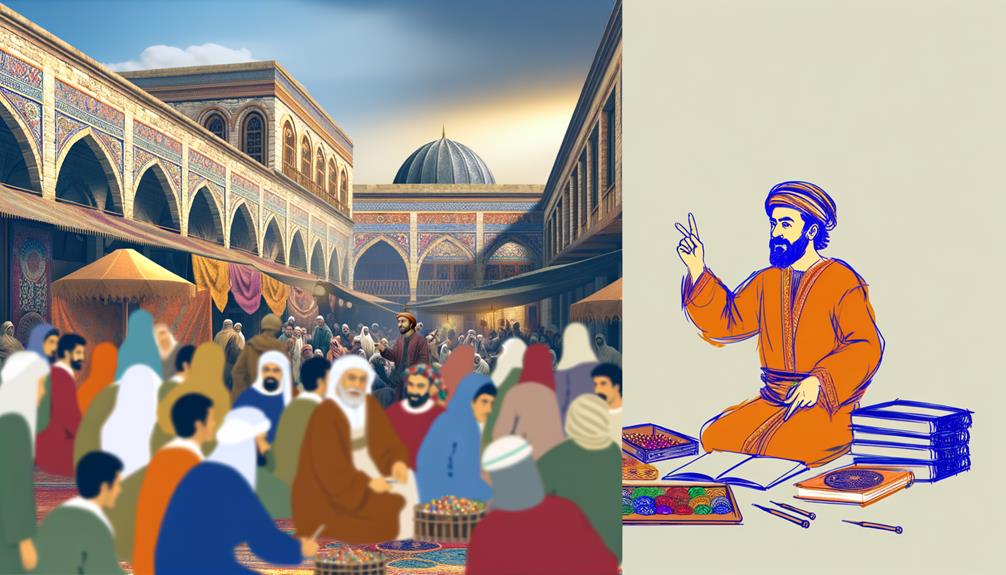
New Covenant narratives similarly employ the term ‘thronged‘ to describe occasions where large crowds gather around Jesus, highlighting pivotal moments in His ministry and the collective response of the people.
In Mark 5:24, the text states, ‘And a great crowd followed him and thronged about him,’ emphasizing the immense public interest in Jesus‘ healing powers and teachings. This recurring motif underscores the magnetic nature of His presence and the urgency with which people sought Him.
Additionally, Luke 8:42 recounts, ‘As Jesus went, the people thronged him,’ illustrating the overwhelming demand for His attention and miracles.
These instances of thronging serve not merely as narrative details but as theological indicators of Jesus’ profound impact on His contemporaries.
Cultural Context and Significance

Understanding the cultural context and significance of the term ‘thronged’ within biblical narratives requires an examination of ancient societal structures and communal behaviors surrounding religious figures.
In biblical times, public gatherings often reflected the communal nature of society, where individuals collectively sought physical, spiritual, and social nourishment from revered leaders.
Crowds, or throngs, symbolized both the magnetic attraction of these figures and the communal validation of their authority. This phenomenon underscores the deep societal yearning for divine interaction and guidance.
The act of thronging around a prophet or healer was a manifestation of collective faith and a reflection of the compelling nature of the messages and miracles being witnessed.
Consequently, ‘thronged’ encapsulates both fervent devotion and societal dynamics in biblical contexts.
Theological Implications

The theological implications of ‘thronged’ in the Bible extend beyond cultural context, revealing profound insights about the nature of divine-human interaction and the manifestation of collective faith in religious narratives.
This term often signifies moments when large gatherings seek divine intervention, underscoring the communal dimension of faith. For instance, in the Gospels, thronging crowds around Jesus highlight their collective desperation for healing and teaching. This mass convergence symbolizes humanity’s innate yearning for divine presence and guidance.
Additionally, the act of thronging, in a theological sense, emphasizes the accessibility of the divine to the masses, suggesting an inclusive approach to salvation. Consequently, ‘thronged’ serves as a metaphor for the collective pursuit of spiritual fulfillment and divine encounter.
Conclusion
The term ‘thronged‘ in biblical texts intricately intertwines with theological themes, cultural contexts, and scriptural significance.
The Old Scripture and New Scripture variances reveal a recurring motif of masses moving with purpose, whether in devotion, desperation, or divine encounter.
The cultural and theological implications underscore a collective consciousness, emphasizing communal experiences and societal structures.
The analysis affirms that ‘thronged’ transcends mere physical gathering, embodying a spiritual and symbolic congregation within the biblical narrative.