Art Meaning in the Bible: Biblical Use
Art in the Bible transcends mere aesthetics, embodying divine communication and spiritual truths. Through poetic structures, such as parallelism in Psalms and allegory in Song of Solomon, biblical texts convey profound theological themes.
Music, exemplified by Miriam’s songs and early Christian hymns, enhances worship and communal identity. Sacred architecture, seen in the intricate designs of the Temple and Tabernacle, symbolizes divine order and covenantal relationships.
Visual symbols like the burning bush and menorah articulate God’s presence and guidance. Narrative art encapsulates divine history and moral teachings, fostering collective faith.
Exploration of these elements reveals deeper spiritual insights.

Key Takeaways
- Biblical art often symbolizes divine presence and theological truths, such as the burning bush and the Menorah.
- Sacred architecture, like the Temple and Tabernacle, embodies spiritual concepts through meticulous design and material symbolism.
- Music in Scripture, including hymns and spiritual songs, facilitates worship and theological teaching.
- Narrative art in the Bible intertwines history with theology, offering moral guidance and shaping community faith.
Biblical Poetry

Biblical poetry, a significant element of the Scriptures, employs a rich tapestry of literary techniques to convey theological truths and historical narratives.
Through parallelism, metaphor, and vivid imagery, these poetic passages elucidate divine attributes and human experiences.
The Psalms, for example, often use synonymous parallelism to reinforce spiritual themes, while the Song of Solomon employs intricate allegory to describe love and devotion.
The wisdom literature, particularly Proverbs, utilizes antithetical parallelism to contrast righteousness with folly.
Understanding the historical context of these texts enhances one’s appreciation of their profound messages.
Music in Scripture

The Scriptures reveal music as a profound instrument of worship, communication, and communal identity throughout the history of Israel and the early Christian church. From the jubilant songs of Miriam (Exodus 15:20-21) to the Psalms of David, music served as a vehicle for divine praise and lamentation.
Theologically, music in Scripture transcends mere artistic expression, embodying spiritual truths and divine encounters. In the New Covenant, hymns and spiritual songs (Ephesians 5:19) were integral to early Christian gatherings, fostering unity and edification.
Historically, music facilitated the transmission of sacred traditions and theological teachings, reinforcing communal bonds. As a result, music in Scripture reflects a dynamic interplay between divine inspiration and human creativity, enriching the spiritual life of believers.
Sacred Architecture
Sacred architecture in the Bible holds profound theological importance, as evidenced by the intricate symbolism in the design of the Temple and the detailed instructions for constructing the Tabernacle.
These sacred structures not only served as physical spaces for worship but also embodied deep spiritual truths, particularly in the placement and significance of altars.
Through scriptural analysis and historical context, we can appreciate how these architectural elements reflect the divine order and covenantal relationship between God and His people.
Symbolism in Temple Design
Ancient temple design in biblical scripture reveals a profound interplay of symbolic elements intended to reflect spiritual truths and divine order. The layout, materials, and ornamentation of temples were meticulously prescribed to embody theological concepts.
For instance, the inner sanctum, or Holy of Holies, symbolizes the divine presence and ultimate sacred space, accessible only to the high priest, reflecting humanity’s separation from God and the necessity of mediation.
The use of gold, cedar, and precious stones in temple construction signifies purity, durability, and divine glory. Architecturally, the eastward orientation of temples mirrors the rising sun, symbolizing enlightenment and the presence of God.
These elements collectively convey a rich tapestry of meaning, embedding profound spiritual insights within the temple’s physical structure.
Tabernacle Construction Details
In detailing the construction of the Tabernacle, scripture meticulously outlines the dimensions, materials, and craftsmanship required, ensuring that every aspect serves a symbolic and theological purpose.
Exodus 25–31 provides extensive instructions, emphasizing the use of gold, silver, and bronze, signifying divine presence and purity. The curtains, crafted from fine linen and adorned with cherubim, symbolized the heavenly domain.
The dimensions—such as the precise measurements of the Ark of the Covenant—reflect divine order and perfection. Historical context reveals that such detailed prescriptions were intended to foster a deep sense of sacred space among the Israelites.
Skilled artisans, endowed with wisdom and understanding by God, executed the work, reinforcing the divine-human collaboration inherent in sacred architecture.
Spiritual Significance of Altars
As the Tabernacle’s detailed construction underscores the meticulous nature of sacred spaces, the spiritual significance of altars within these sanctified environments further illuminates their role as focal points for divine-human interaction.
Altars, as seen throughout biblical history, are monumental in their theological implications and sacramental functions. They serve as sites for offerings, symbolizing covenantal commitments and divine presence.
- Covenant Ratification: Altars signify agreements between God and His people (Genesis 12:7).
- Sacrificial System: They are central to the Levitical law, mediating atonement (Leviticus 1:3-17).
- Memorials: Altars commemorate divine interventions and blessings (Joshua 4:20-24).
- Holy Encounters: They mark places of divine revelation (Exodus 24:4).
This theological framework underscores altars’ profound spiritual and communal significance.
Visual Symbols
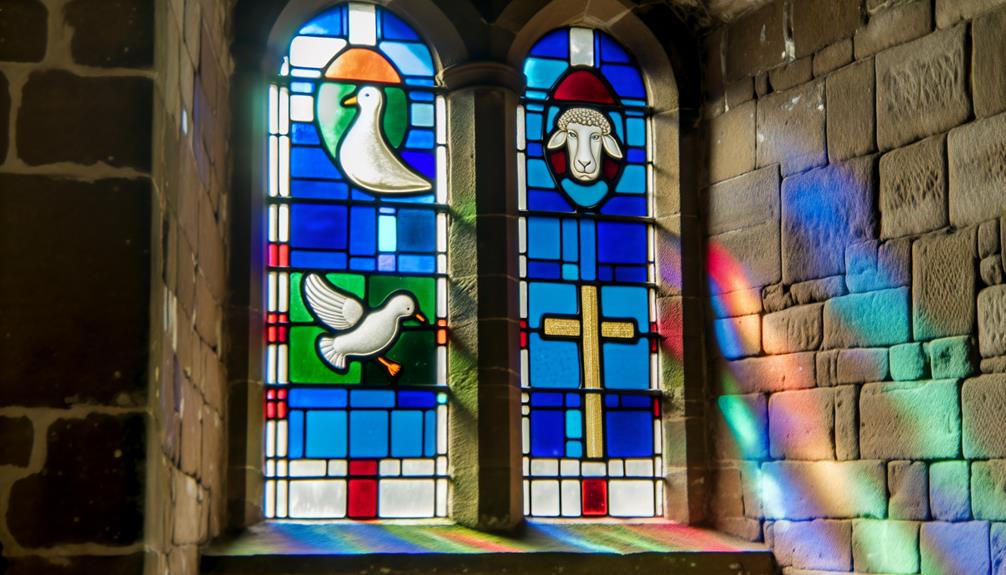
Visual symbols in the Bible serve as profound conduits of divine communication, embodying theological truths and historical narratives.
From the burning bush in Exodus, symbolizing God’s holy presence and call to Moses, to the menorah in the Tabernacle, representing divine light and guidance, these symbols convey deep spiritual meanings.
The imagery of the Lamb in Revelation epitomizes Christ’s sacrificial atonement, while the rainbow in Genesis 9 signifies God’s covenant with humanity.
Furthermore, Ezekiel’s vision of dry bones transforming into a living army illustrates Israel’s restoration.
Each symbol, steeped in scriptural richness and historical context, offers believers a tangible connection to divine mysteries, enhancing theological understanding and fostering a deeper spiritual reflection.
Narrative Art
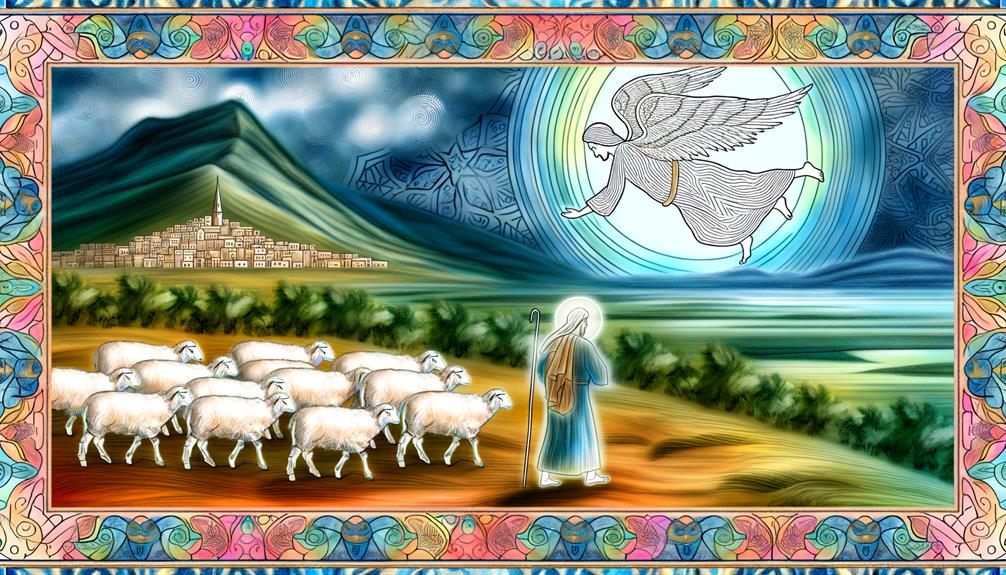
Narrative art in the Bible serves as a dynamic medium through which sacred stories are vividly brought to life, intertwining theological insights with historical events to convey profound spiritual lessons. This form of art comprises rich storytelling that encapsulates the essence of divine-human interaction, providing a deeper understanding of God’s will and purpose.
- Historical Context: Rooted in the cultural and historical milieu of its time, narrative art reflects the lived experiences and societal norms of biblical figures.
- Theological Depth: Each narrative is imbued with theological significance, revealing divine attributes and principles.
- Moral Instruction: Stories offer moral teachings, guiding believers in righteous living.
- Symbolic Elements: Narrative art often employs symbols to communicate complex theological truths.
Theological Concepts
Theological concepts in the Bible are foundational elements that elucidate the nature of God, the human condition, and the framework of salvation history. These concepts encompass doctrines such as the Trinity, the Incarnation, and Redemption, each richly depicted through diverse biblical art forms.
For instance, the Trinity is symbolized in early Christian iconography by the three interlocking circles or the Trinitarian shield. The Incarnation is vividly portrayed in nativity scenes, emphasizing God’s entry into human history.
Redemption, a central theme, is often depicted through crucifixion imagery, illustrating Christ’s sacrificial atonement.
Understanding these theological constructs within their historical and cultural context enhances one’s comprehension of biblical narratives, offering profound insights into divine revelation and the salvific mission of Christ.
Conclusion
The Bible, a vast tapestry of divine revelation, intricately weaves together various forms of art—poetry, music, architecture, visual symbols, and narrative.
Each thread contributes to a deeper understanding of God’s nature and His relationship with humanity.
Through scriptural analysis and historical context, it becomes evident that art in the Bible serves as a conduit for theological truths, enhancing the richness of spiritual experience and illuminating the path to divine wisdom.