Reset Meaning In The Bible: New Beginnings
In the Bible, the concept of ‘reset’ is intertwined with divine intervention and the theme of new beginnings. Notable instances include the Great Flood, where Noah’s Ark represents a divine reset for humanity, cleansing the earth and initiating a covenant of renewal.
Similarly, the Exodus signifies a profound reset as the Israelites shift from Egyptian bondage to a liberated nation under a renewed covenant at Sinai. Post-exilic Israel’s return highlights physical and spiritual renewal, reaffirming covenantal identity.
Furthermore, the Resurrection of Christ epitomizes the ultimate reset, symbolizing triumph over death and the promise of eternal life. These narratives offer substantial insights into divine renewal and transformation.

Key Takeaways
- Divine Intervention: The concept of a reset often involves God’s judgment and mercy, leading to a new beginning for humanity.
- New Beginnings: Biblical resets signify a fresh start, as seen with Noah’s Ark and the Exodus, establishing a renewed moral and societal order.
- Covenantal Renewal: Events like Israel’s return from exile represent a recommitment to God’s promises and a realignment of identity.
- Transformation and Redemption: Stories such as Job’s restoration and Paul’s conversion highlight personal and communal transformation through faith and divine grace.
Noah’s Ark and New Beginnings

One of the most profound illustrations of a reset in the Bible is found in the narrative of Noah’s Ark, which signifies a divine intervention aimed at establishing a new beginning for humanity.
This story, documented in Genesis 6-9, underscores the theme of renewal through divine judgment and mercy. God, displeased with human wickedness, decides to cleanse the earth with a flood, sparing only Noah, his family, and selected animal species.
The ark becomes a vessel of salvation, ensuring the continuity of life post-deluge. This act of destruction followed by preservation emphasizes God’s sovereignty and the possibility of redemption.
Post-flood, the covenant between God and Noah, symbolized by the rainbow, marks a commitment to a renewed creation and moral order.
Exodus and Covenant Renewal

The Exodus marks a significant reset in Israel’s history, characterized by the shift from bondage in Egypt to the formation of a liberated nation.
This journey underscores the reestablishment of Israel’s identity through the reception of new covenant promises at Sinai, where God outlines a renewed framework for the relationship between Him and His chosen people.
The covenant renewal not only reaffirms divine commitment but also sets forth a legal and moral compass intended to guide Israel’s societal and spiritual path.
Israel’s Journey Reset
How does the Exodus narrative illustrate the profound reset in Israel’s journey through the renewal of their covenant with God?
The Exodus serves as a pivotal moment of transformation, liberating the Israelites from Egyptian bondage and guiding them towards a renewed identity as God’s chosen people.
This journey, marked by miraculous deliverance and divine guidance, culminates at Mount Sinai, where the covenant is reaffirmed.
The delivery of the Ten Commandments symbolizes a formal reset of their relationship with God, establishing laws that define their communal and spiritual life.
This covenant renewal is essential, as it sets the foundation for Israel’s societal norms and religious duties, reorienting them towards a future grounded in divine promise and moral rectitude.
New Covenant Promises
In the biblical narrative, the concept of New Covenant Promises emerges distinctively during the Exodus and subsequent covenant renewal, where God’s assurances of a transformed relationship with Israel are articulated through a series of divine commitments and commandments.
Central to this is the giving of the Ten Commandments at Mount Sinai, which serves as a foundational moment in establishing a renewed covenantal framework. This covenant underscores God’s fidelity and the expectation of Israel’s obedience and faithfulness.
Additionally, the renewal of the covenant in Deuteronomy reiterates these promises, emphasizing a heart-oriented obedience.
These divine commitments not only signify a reset in Israel’s spiritual journey but also foreshadow the ultimate fulfillment in the New Scripture, where a new covenant is established through Christ.
Israel’s Return From Exile
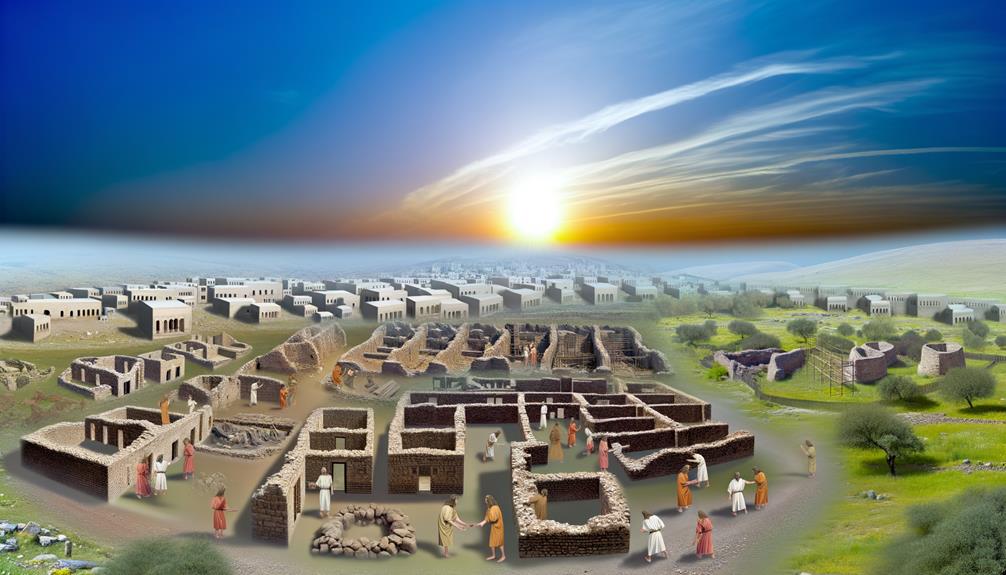
When examining Israel’s return from exile, one must consider the profound theological and historical implications that this event held for the Jewish people and their understanding of divine covenant and restoration. This pivotal moment marked not only the physical return to the Promised Land but also a spiritual renewal of their commitment to God. The event underscored themes of repentance, divine mercy, and the fulfillment of prophetic promises.
| Aspect | Significance | Scriptural Reference |
|---|---|---|
| Divine Promise | Fulfillment of God’s covenant | Jeremiah 29:10 |
| Spiritual Renewal | Reaffirmation of faith and laws | Nehemiah 8:1-8 |
| Prophetic Fulfillment | Validation of prophetic words | Isaiah 44:28, Ezra 1:1 |
This return served as a profound reset, realigning Israel’s national identity with their covenantal destiny.
Job’s Redemption and Restoration

The narrative of Job presents a profound examination of faith under extreme duress, where Job’s unwavering devotion amidst unparalleled suffering becomes a focal point.
Following his trials, the text illustrates the theme of divine recompense as Job is ultimately restored with greater prosperity and blessings.
This segment of the biblical account underscores the theological assertion that steadfast faith, even in the face of severe adversity, attracts divine favor and restoration.
Job’s Faith Tested
Job’s narrative exemplifies the profound theological discourse on suffering and divine justice, culminating in his ultimate redemption and restoration as a demonstration of unwavering faith. Throughout his trials, Job’s faith is rigorously tested, facing immense loss and physical affliction. His steadfastness under such duress underscores a central tenet of biblical teachings: the virtue of unwavering faith amidst adversity. Job’s dialogues with his friends and his eventual confrontation with God provide a rich tapestry of introspection and divine-human interaction. The following table elucidates key aspects of Job’s trials and responses:
| Aspect of Trial | Job’s Response |
|---|---|
| Loss of Wealth | Maintains faith in God |
| Death of Children | Refuses to curse God |
| Physical Suffering | Questions but remains faithful |
| Friends’ Accusations | Defends his integrity |
| Divine Revelation | Acknowledges God’s sovereignty |
This narrative invites readers to explore the depths of faith amid profound suffering.
Divine Rewards Bestowed
With unwavering faith amidst unparalleled trials, Job’s narrative reaches a profound culmination in the divine rewards bestowed upon him, symbolizing restoration and the reaffirmation of divine justice. This pivotal moment underscores four key aspects:
- Material Wealth: Job’s possessions are restored twofold, reflecting God’s abundant generosity (Job 42:10).
- Family Blessings: Job is blessed with new children, signifying continuity and hope (Job 42:13).
- Longevity: Job’s extended life, spanning 140 years, symbolizes God’s favor and the fullness of divine reward (Job 42:16).
- Community Esteem: Job’s regained honor among peers illustrates societal restoration and divine vindication (Job 42:11).
These elements collectively highlight the thorough nature of divine recompense, embodying spiritual, material, and communal aspects of restoration.
Jonah’s Mission to Nineveh

Jonah’s mission to Nineveh serves as a profound narrative illustrating themes of repentance, divine mercy, and the complexities of prophetic obedience within the Biblical context.
Commanded by God to deliver a dire warning to the inhabitants of Nineveh, Jonah initially resists, fleeing in the opposite direction. This act of defiance results in a tumultuous journey, culminating in Jonah’s famous encounter with a great fish.
Upon finally reaching Nineveh, Jonah’s proclamation of impending doom leads to an unexpected mass repentance, prompting God to relent from the promised destruction.
Jonah’s reluctance juxtaposed with Nineveh’s earnest repentance underscores the transformative power of divine grace and the human capacity for change, even within a seemingly irredeemable city, highlighting the dynamic interplay between divine will and human agency.
Jesus’ Baptism and Ministry

The baptism of Jesus by John the Baptist in the River Jordan marks the commencement of His public ministry, signifying both a moment of divine endorsement and the fulfillment of prophetic anticipation. This pivotal event serves as a theological reset, emphasizing Jesus’ role as the Messiah and the inauguration of a new covenant.
Key aspects of this transformative moment include:
- Divine Confirmation: The descent of the Holy Spirit as a dove and the voice of God affirming Jesus as His beloved Son.
- Prophetic Fulfillment: It aligns with Old scriptures, particularly Isaiah 42:1.
- Model of Righteousness: Jesus’ baptism exemplifies obedience and humility.
- Initiation of Ministry: Following His baptism, Jesus begins His ministry, performing miracles and teaching about the Kingdom of God.
The Prodigal Son’s Return

In the parable of the Prodigal Son, the return of the wayward son to his father serves as a profound illustration of repentance, forgiveness, and the boundless grace of God.
The son’s journey back symbolizes a spiritual rebirth, a reset of his former life marred by sin and folly.
His father’s warm reception, marked by the bestowal of a robe, ring, and a celebratory feast, underscores the divine readiness to forgive transgressions and restore those who seek redemption.
This parable, found in Luke 15:11-32, articulates themes of unconditional love and the transformative power of genuine repentance.
It invites readers to reflect on the infinite mercy available to them, emphasizing that no misstep is beyond the reach of divine forgiveness.
The Resurrection of Christ

Central to Christian theology, the Resurrection of Christ epitomizes the triumph over death and the promise of eternal life, serving as a cornerstone for faith and doctrine. This event is pivotal, as it symbolizes the ultimate reset—transitioning from mortality to immortality, despair to hope.
Analyzing the Resurrection reveals several profound implications:
- Validation of Jesus’ Divinity: The Resurrection confirms Jesus as the Son of God, affirming his teachings and miracles.
- Fulfillment of Prophecy: It aligns with Old Testament scriptures prophecies, validating scriptural integrity.
- Foundation of Christian Hope: It guarantees believers’ resurrection and eternal life.
- Transformation of Disciples: Witnessing the risen Christ emboldened the apostles, catalyzing the spread of Christianity.
This transformative event underscores the essential reset inherent in Christian belief.
Paul’s Transformation on the Road

Following the Resurrection of Christ, another profound reset in the New Covenant narrative is evidenced by Paul’s dramatic transformation on the road to Damascus. This event, meticulously chronicled in Acts 9:1-19, marks a pivotal shift from Saul the persecutor to Paul the apostle.
Struck by a divine vision, Paul’s encounter with the risen Christ not only alters his personal trajectory but also signifies the inclusivity of the Christian message. This transformation underscores the theme of redemption, illustrating that profound personal change is possible through divine intervention.
Paul’s subsequent missionary journeys and theological contributions become foundational to early Christianity, highlighting the transformative power of faith and the expansiveness of God’s grace in the New Scriptures context.
Conclusion
In the biblical narrative, the concept of ‘reset‘ is vividly illuminated through the juxtaposition of destruction and renewal, despair and hope.
From Noah’s Ark to the Resurrection of Christ, each story embodies a cycle of profound transformation.
The floodwaters recede, the exiled return, the fallen are restored, and the dead rise.
These narratives collectively underscore a divine pattern: through trials and tribulations, new beginnings emerge, offering a powerful demonstration to the enduring nature of redemption and restoration.