
Calamity Meaning in the Bible: Divine Judgment
In the Bible, calamity often signifies severe distress or destruction, depicted through both divine judgment and natural disasters. The Hebrew term ‘ra’ah’ and Greek ‘kakos’ underscore its association with evil and misfortune.
Theologically, calamities serve as instruments of divine justice, prompting reflection and repentance. For instance, the Great Flood and the plagues of Egypt highlight human sin and God’s sovereignty.
Additionally, calamities are transformative, fostering faith and resilience. Through events like Job’s trials and the Babylonian Exile, believers are guided towards spiritual renewal.
Understanding these dimensions can deepen one’s grasp of the nuanced role of calamity in scripture.

Key Takeaways
- Calamity in the Bible often signifies divine judgment and punishment for collective sins.
- It serves as a call for repentance and moral rectitude among believers.
- Biblical calamities include events like the Flood, Sodom and Gomorrah’s destruction, and the Plagues of Egypt.
- Calamity highlights God’s sovereignty and encourages reliance on divine strength and faith.
Biblical Definition of Calamity

Understanding the biblical definition of calamity necessitates an examination of the original Hebrew and Greek terms used in the Scriptures, as well as their theological implications within the context of divine judgment and human suffering.
The Hebrew word ‘ra’ah’ and the Greek term ‘kakos’ encapsulate a range of meanings from evil and disaster to misfortune. These terms are often employed to describe events or conditions that result in severe distress or destruction.
Theologically, calamity is not merely an arbitrary occurrence but is often depicted as an instrument through which deeper spiritual truths are revealed.
Within the biblical narrative, calamity serves as a lens through which the complexities of human suffering and divine sovereignty are explored, urging readers to reflect on their faith and resilience.
Calamity as Divine Judgment

In biblical theology, calamity is frequently portrayed as an instrument of divine judgment, particularly evident in Old Scriptures narratives where natural disasters and societal upheavals serve as consequences of collective sin.
Prophetic warnings often precede these events, urging repentance and adherence to God’s commandments to avert impending disaster.
For contemporary believers, these scriptural accounts offer profound lessons on the relationship between moral conduct and divine retribution, underscoring the importance of obedience and faithfulness.
Old Testament Examples
The Old Scripture frequently portrays calamity as a manifestation of divine judgment, illustrating the consequences of disobedience to God’s commandments. This theological concept is vividly demonstrated through several pivotal events:
- The Flood (Genesis 6-9): Humanity’s pervasive wickedness prompted God to cleanse the earth with a catastrophic flood.
- Sodom and Gomorrah (Genesis 19): These cities were obliterated by fire and brimstone due to their egregious sins.
- The Plagues of Egypt (Exodus 7-12): Pharaoh’s hardened heart against freeing the Israelites led to ten devastating plagues.
- Babylonian Exile (2 Kings 24-25): Judah’s persistent idolatry resulted in their conquest and exile by Babylon.
Each instance underscores the gravity of defying divine law and the inevitable calamity that follows.
Prophetic Warnings
Numerous prophetic texts in the Bible elucidate calamity as a form of divine judgment, serving both as a warning and a call to repentance for the people of Israel.
Prophets such as Isaiah, Jeremiah, and Ezekiel frequently conveyed messages that linked national disasters to spiritual failings. For example, Isaiah 1:4-9 describes calamity as a result of Israel’s rebellion against God, portraying it as a purifying process.
Jeremiah 18:7-10 emphasizes the conditional aspect of divine judgment, where repentance can avert disaster. This theological framework underscores the covenantal relationship between God and Israel, wherein calamities are not arbitrary but are deeply tied to divine justice and mercy.
The prophetic warnings consequently function as a divine mechanism for moral and spiritual realignment.
Lessons for Believers
Understanding calamity as divine judgment provides believers with profound insights into the nature of God’s justice and the importance of spiritual diligence. This concept underscores several key lessons:
- Recognition of Sin: Calamities often serve as a wake-up call for believers to recognize and repent of their sins.
- Dependence on God: Such events remind believers of their need to rely on God rather than their own strength.
- Moral Rectitude: Divine judgment encourages believers to uphold moral standards and live righteously.
- Hope in Restoration: Biblical accounts show that repentance and returning to God can lead to restoration and blessings.
Examples of Calamity in Scripture
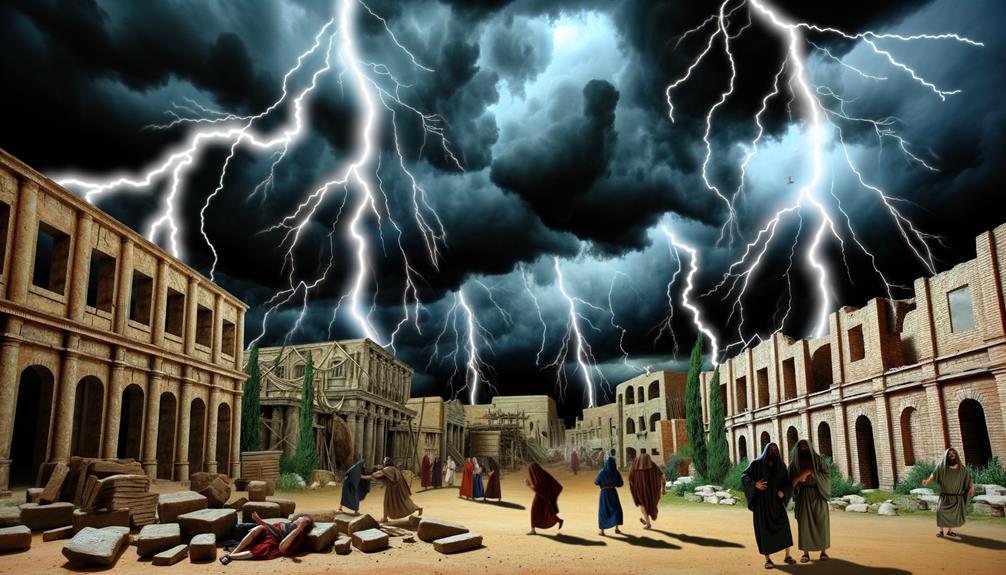
Biblical narratives abound with instances of calamity, each illustrating profound theological and moral lessons. These events serve as divine interventions, reflecting humanity’s vulnerability and God’s supreme authority. For instance, the Great Flood, a manifestation of divine judgment, underscores the consequences of pervasive wickedness. Similarly, the plagues in Egypt reveal God’s power and determination to liberate His chosen people. The Babylonian exile represents a period of intense suffering and reflection for the Israelites, emphasizing themes of repentance and divine justice.
| Event | Description | Theological Lesson |
|---|---|---|
| The Great Flood | Divine judgment through a global deluge | Consequences of widespread wickedness |
| Plagues in Egypt | Series of calamities inflicted on Egypt | God’s power and liberation |
| Babylonian Exile | Israelites’ captivity in Babylon | Repentance and divine justice |
| Job’s Suffering | Personal calamities endured by Job | Faith and endurance through trials |
Human Response to Calamity

Human response to calamity in the Bible often involves a complex interplay of coping mechanisms and expressions of faith.
Scriptural narratives frequently illustrate how individuals and communities navigate adversity through prayer, lamentation, and reliance on divine promises.
Examining these responses provides insight into the theological underpinnings of faith amidst trials and the practical applications of biblical teachings in moments of despair.
Biblical Coping Mechanisms
In the face of calamity, the Bible offers a multitude of coping mechanisms that encompass prayer, community support, and unwavering faith in divine providence. These mechanisms are rooted in scriptural teachings and aim to provide comfort and guidance.
Key biblical coping strategies include:
- Prayer: Engaging in heartfelt communication with God as seen in Philippians 4:6-7.
- Community Support: Leaning on the fellowship of believers for mutual encouragement, highlighted in Galatians 6:2.
- Scriptural Meditation: Reflecting on God’s promises and instructions, as advised in Psalm 1:2.
- Trust in God’s Sovereignty: Embracing the belief in God’s ultimate control and benevolence, illustrated in Romans 8:28.
These mechanisms foster resilience and spiritual fortitude during times of distress.
Faith Amidst Adversity
Amidst adversity, faith serves as a pivotal anchor, offering believers a profound sense of hope and purpose even in the darkest times.
Theologically, faith is not merely a passive acceptance but an active trust in God’s sovereignty and benevolence. Scriptural narratives, such as Job’s unwavering trust amidst suffering, illustrate this dynamic.
Contextually, these stories provide a framework for understanding human resilience. Faith transforms calamity from an insurmountable obstacle into an opportunity for spiritual growth.
By contextualizing calamity within divine providence, believers find the strength to endure and the capacity to transcend their immediate suffering.
Consequently, faith amidst adversity is not an escape but a means of engaging with and overcoming life’s profound challenges.
Calamity and Redemption

How does the concept of calamity in the Bible intertwine with the theme of redemption, revealing a profound theological narrative that underscores the transformative power of divine grace?
Scriptural accounts often depict calamities as pivotal moments that lead to spiritual renewal and redemption. This dynamic is evident through several key biblical themes:
- Divine Discipline: Calamity can serve as a form of divine correction, guiding believers back to righteousness (Hebrews 12:5-11).
- Prophetic Fulfillment: Disasters fulfill prophecies, affirming God’s sovereign plan (Isaiah 10:5-6).
- Testing Faith: Trials purify and strengthen faith, revealing genuine devotion (James 1:2-4).
- Ultimate Redemption: Calamity paves the way for ultimate redemption, culminating in eternal salvation (Revelation 21:4).
Through these lenses, calamity is not merely punitive but redemptive, embodying God’s grace.
Lessons for Modern Believers

Modern believers can draw essential lessons from biblical accounts of calamity, understanding them as opportunities for spiritual growth and deeper alignment with divine purposes. The Bible illustrates that calamities are not merely punitive but are also formative, shaping faith and character. By examining these narratives, believers today can discern principles that resonate in their spiritual journey.
| Biblical Calamity | Lesson | Application |
|---|---|---|
| Noah’s Flood | Divine judgment and renewal | Pursue righteousness and renewal |
| Job’s Trials | Faithfulness in suffering | Trust God’s wisdom and timing |
| Israel’s Exile | Consequences of disobedience | Embrace repentance and obedience |
| Jesus’ Crucifixion | Sacrificial love and redemption | Live sacrificially and with purpose |
| Early Church Persecutions | Perseverance and growth under trial | Endure hardships with resilience |
Understanding calamity through a biblical lens fosters resilience and hope, guiding modern believers towards a more profound spiritual maturity.
Conclusion
In the biblical context, calamity often serves as a manifestation of divine judgment, reflecting a broader theological narrative of sin, consequence, and redemption.
Scriptural accounts provide numerous instances where calamity acts as a catalyst for human repentance and divine intervention.
Contemporary believers are therefore reminded that adversities, while challenging, are opportunities for spiritual growth and redemption.
Fundamentally, understanding biblical calamities is akin to decoding a cosmic Morse code, revealing deeper truths about the human-divine relationship.