
Almond Meaning in the Bible: Symbol of Awakening
In the Bible, almonds symbolize divine watchfulness, authority, and renewal. The Hebrew word ‘shaqed’ (almond) is linked to ‘shaqad,’ meaning to watch.
This connection is highlighted in Jeremiah 1:11-12, where an almond branch signifies God’s vigilance over His word. The blossoming of almond branches, as seen in Aaron’s rod, underscores divine selection and leadership.
Almonds also play a role in Jewish rituals, symbolizing resilience and new beginnings. These elements collectively underscore the themes of divine favor and spiritual renewal within biblical contexts, offering deeper insights into the symbolism when examined further.

Key Takeaways
- Almonds symbolize divine watchfulness and favor, seen in the Hebrew words ‘shaqed’ (almond) and ‘shaqad’ (to watch).
- In Jeremiah 1:11-12, the almond branch represents God’s vigilance over His word and promises.
- Aaron’s rod, which budded with almonds, signifies divine selection, authority, and God’s power.
- Almond blossoms signify renewal, new beginnings, and God’s attentive nature, as highlighted in Ecclesiastes 12:5.
Almonds in Old Testament

In the Old Scripture, almonds are frequently mentioned as symbols of watchfulness and divine favor. The Hebrew word for almond, ‘shaqed,’ is closely linked to ‘shaqad,’ meaning to watch or wake. This etymological connection underscores the almond tree’s role in biblical symbolism.
For instance, in Jeremiah 1:11-12, God uses the image of an almond branch to signify His active vigilance over His word to fulfill it. Additionally, the almond blossom, which blooms early in spring, represents the hastening of God’s promises and the hope of renewal.
The almond’s frequent appearance in texts such as Genesis 43:11, where it is listed among the finest products of the land, further underscores its symbolic richness and value in biblical narratives.
Aaron’s Rod and Almonds

The story of Aaron’s rod that budded with almonds is a profound biblical symbol of divine selection and authority, as detailed in Numbers 17:1-11. This miraculous event signified God’s choice of Aaron and the Levites for priestly service, resolving disputes about leadership among the Israelites. The rod, which blossomed overnight, demonstrated divine approval in a tangible and irrefutable manner.
- Symbol of Legitimate Authority: The budding rod validated Aaron’s leadership, reinforcing his God-given role.
- Divine Intervention: It underscored the direct involvement of God in the affairs of His people.
This narrative emphasizes that true spiritual authority is divinely ordained.
Almonds in Jewish Rituals
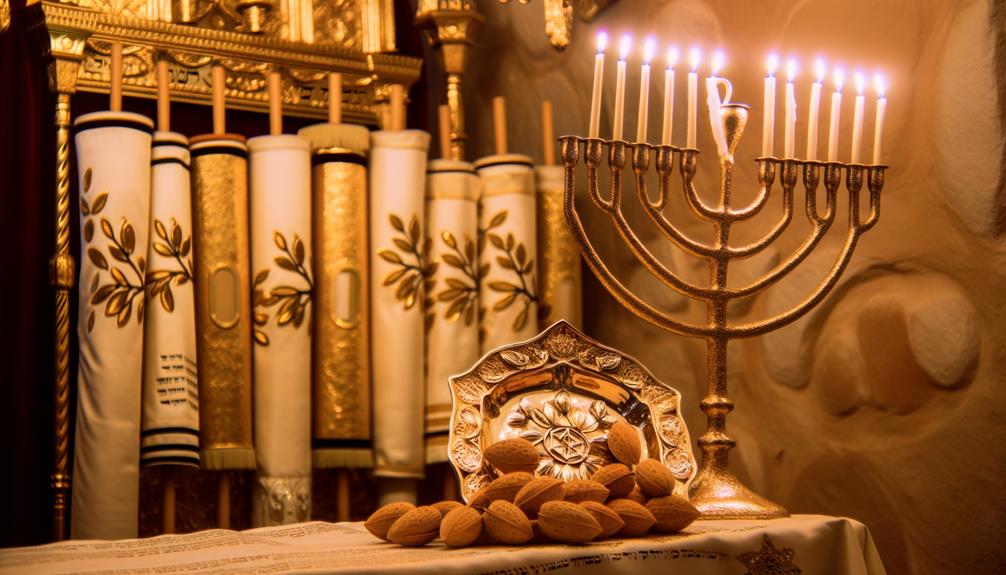
While the story of Aaron’s rod highlights the miraculous nature of almonds in biblical narratives, their significance extends into various Jewish rituals, symbolizing purity and divine favor.
Almonds feature prominently during Passover, specifically in the form of charoset—a sweet, brown mixture representing the mortar used by Hebrew slaves in Egypt. The inclusion of almonds in this dish underscores themes of resilience and divine deliverance.
Additionally, almonds are often present during Rosh Hashanah meals, symbolizing new beginnings and hopes for a fruitful year.
These rituals emphasize almonds’ deeper theological connotations, anchoring them not merely as food but as emblems of enduring faith and divine blessings, thereby enriching the spiritual tapestry of Jewish life and worship.
Symbolism of Almond Blossoms

Almond blossoms, with their early blooming and delicate beauty, hold profound symbolic significance in biblical texts, often representing vigilance, renewal, and divine watchfulness.
These blossoms are among the first to flower, heralding the arrival of spring and symbolizing new beginnings and hope. In the Old Scripture, particularly in the Book of Jeremiah, the almond tree is a metaphor for God’s ever-watchful nature and readiness to act.
Key symbolic aspects of almond blossoms include:
- Vigilance: Their early bloom signifies alertness and readiness.
- Renewal: They mark the seasonal shift, embodying rebirth and rejuvenation.
These elements highlight the deep theological resonance of almond blossoms.
Divine Watchfulness and Almonds

In biblical literature, the almond tree is frequently employed as a potent symbol of divine watchfulness, reflecting God’s unwavering vigilance and readiness to intervene in human affairs. This symbolism is profoundly illustrated in Jeremiah 1:11-12, where God uses the image of an almond branch to confirm His prompt fulfillment of His word. The Hebrew term for almond, ‘shaqed,’ is etymologically linked to ‘shoqed,’ meaning ‘to watch,’ thereby reinforcing this divine attribute.
| Biblical Reference | Symbolism | Significance |
|---|---|---|
| Jeremiah 1:11-12 | Almond Branch | God’s alertness and fidelity to His promises |
| Numbers 17:8 | Aaron’s Rod | Divine selection and authentication of priesthood |
| Ecclesiastes 12:5 | Blossoming Almond | Symbol of old age and the vigilance of life’s stages |
Conclusion
The almond, deeply embedded within the Old Scriptures, serves as a potent symbol in various theological contexts.
From Aaron’s rod that budded to its integration in Jewish rituals, the almond conveys themes of divine watchfulness and spiritual awakening.
The almond blossom, often seen as an early harbinger of spring, symbolizes renewal and vigilance.
This botanical element, akin to a divine ‘watchdog,’ underscores the enduring presence and attentive care of the divine in biblical narrative.