
Dung Meaning in the Bible: Worthlessness and Judgment
In the Bible, dung holds both practical and symbolic significance. Agriculturally, it was valued as a fertilizer, enhancing crop yields and reflecting stewardship principles (Proverbs 14:4).
Theologically, dung symbolizes defilement and divine judgment, seen in passages like Ezekiel 4:12-15 and Malachi 2:3, where it represents moral decay and consequences of disobedience. Additionally, purification rituals involving dung, as in Numbers 19, underscore themes of cleanliness and redemption.
The use of dung in prophetic imagery serves as a sobering reminder of spiritual and moral responsibilities. Exploring these layers enriches one’s understanding of its multifaceted role in Scripture.

Key Takeaways
- Dung symbolizes spiritual filth and divine judgment, representing the consequences of moral decay and disobedience (Ezekiel 4:12-15).
- It serves as a practical and theological symbol of fertility and stewardship in agricultural practices, enhancing soil and crop yields (Proverbs 14:4).
- Dung’s role in purification rituals highlights themes of redemption and the need for spiritual and physical cleanliness (Numbers 19).
- References to dung emphasize the importance of cleanliness, order, and responsible land stewardship in community life (Deuteronomy 23:12-14).
Agricultural Practices
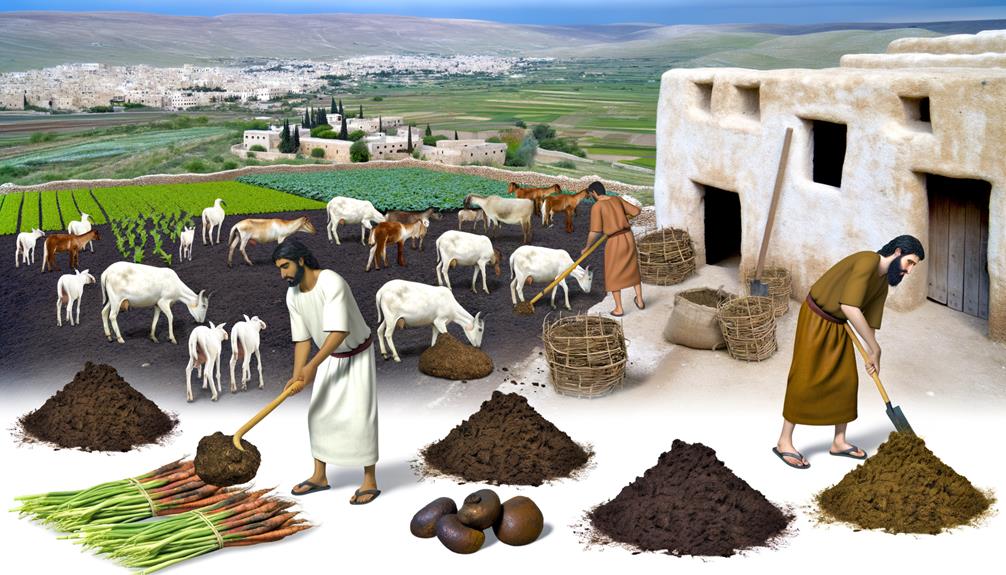
In biblical times, agricultural practices frequently incorporated the use of dung as an essential fertilizer, reflecting both a theological understanding of stewardship and a practical approach to sustaining crop yields.
This practice is rooted in the belief that God provided the earth’s resources for human use and care, as seen in Genesis 1:28. The utilization of dung symbolized a harmonious relationship between humans and creation, emphasizing responsible resource management.
Scriptural references, such as in Luke 13:6-9, where a fig tree is fertilized with dung, underscore its role in promoting growth and productivity.
Historically, this method was crucial for maintaining soil fertility in ancient agrarian societies, ensuring food security and demonstrating humanity’s duty to cultivate and preserve the land.
Symbol of Disgrace

Throughout the Bible, dung also serves as a potent symbol of disgrace, often used to represent defilement, rejection, and divine judgment against unfaithfulness.
In prophetic literature, such as in Ezekiel 4:12-15, dung’s use underscores the severity of Israel’s impurity and estrangement from God. This imagery permeates various texts to emphasize the consequences of disobedience, as seen in Malachi 2:3, where God threatens to spread dung on the faces of corrupt priests.
Historically, the association of dung with waste and filth provided a vivid metaphor for moral and spiritual corruption. Consequently, dung’s symbolism in scripture is deeply rooted in conveying the profound dishonor and divine disfavor that accompanies a departure from covenantal faithfulness.
Purification Rituals
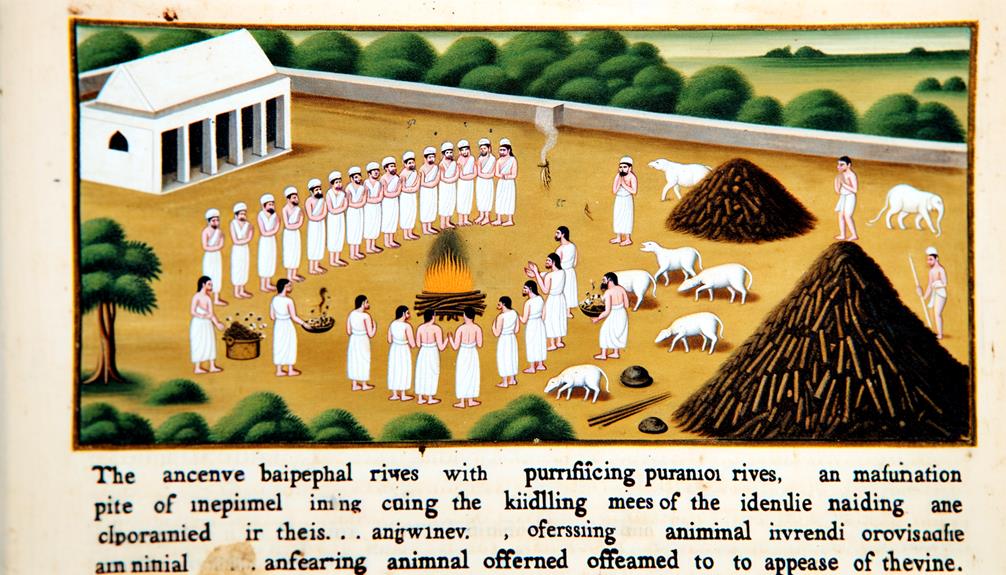
While dung often symbolizes disgrace, it also paradoxically appears in purification rituals within the biblical narrative, illustrating the transformative power of divine intervention.
In Numbers 19, the ashes of a red heifer, mixed with water, were used for purification, and the cow’s dung was part of the burnt offering. This ritual underscores the theme of purification through seemingly unclean elements, demonstrating God’s ability to sanctify.
Historically, such practices emphasized the Israelites’ need for spiritual and physical cleanliness.
Scripturally, the use of dung in these rites highlights a divine paradox: the most impure elements can become instruments of holiness.
Consequently, dung in purification contexts reveals deeper theological truths about redemption and sanctification in the Bible.
Divine Judgment

Often serving as a symbol of divine judgment, dung in the Bible underscores the consequences of disobedience and the severity of God’s retribution.
Scriptural references, such as in Ezekiel 4:12-15, depict dung as an instrument of defilement, symbolizing the impurity resulting from Israel’s sins.
Historically, the Israelites understood dung as unclean, reinforcing the gravity of divine punishment.
In Malachi 2:3, God warns the priests, ‘I will spread dung on your faces,’ indicating the disgrace accompanying their failure to uphold covenantal duties.
This stark imagery serves to highlight the profound seriousness of divine judgment.
Through these scriptural depictions, dung becomes a potent emblem of the devastating repercussions of forsaking divine commandments.
Moral Lessons
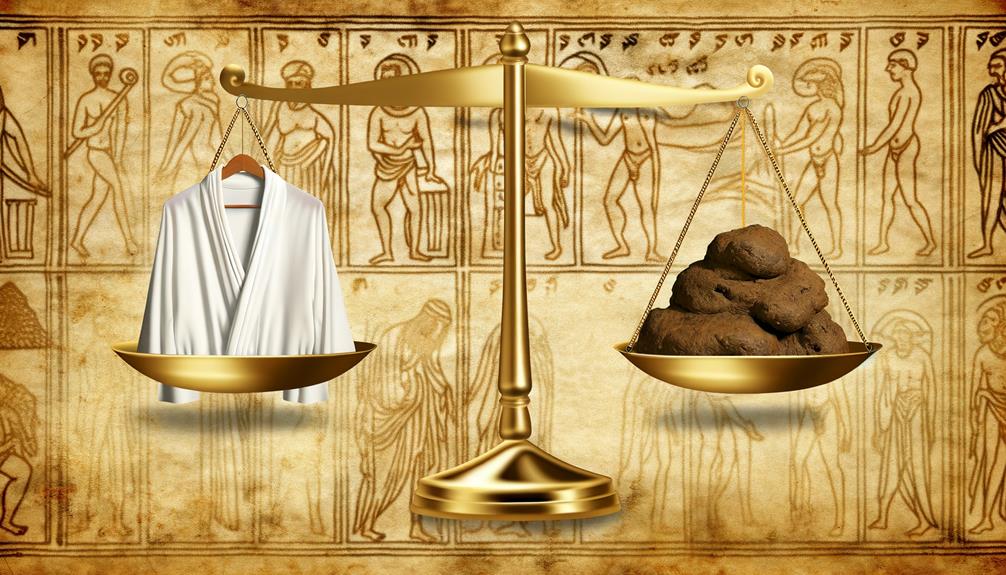
The biblical portrayal of dung as a symbol of impurity and divine judgment conveys profound moral lessons about the consequences of disobedience and the importance of maintaining spiritual purity. Historically, dung was considered unclean, reflecting societal and religious standards of the time. Scripturally, it serves as a stark warning against sin, as seen in passages like Ezekiel 4:12-13, where it symbolizes Israel’s defilement. This underscores the theological insight that impurity leads to separation from God, urging believers to pursue holiness.
| Aspect | Biblical Reference | Moral Lesson |
|---|---|---|
| Impurity | Ezekiel 4:12-13 | Consequences of Sin |
| Judgment | Malachi 2:3 | Divine Retribution |
| Repentance | Philippians 3:8 | Value of Spiritual Purity |
| Transformation | Luke 13:8 | Potential for Renewal |
Understanding these elements fosters a deeper appreciation of the necessity for spiritual cleanliness.
Prophetic Imagery

Prophetic imagery in the Bible frequently employs dung as a potent symbol of divine judgment and a metaphor for the necessity of repentance.
Scriptural instances, such as in Ezekiel 4:12-15, illustrate how the use of dung underscores the severity of God’s warnings to His people.
Historically, this vivid symbolism served to confront audiences with the stark reality of their moral and spiritual condition, urging a return to covenantal faithfulness.
Symbol of Judgment
In biblical prophecy, dung is frequently employed as a potent symbol of divine judgment, reflecting the severe consequences of disobedience and sin.
Scriptural references such as Malachi 2:3, where God threatens to spread dung on the faces of the priests, underscore the depth of divine displeasure.
Theologically, dung illustrates the utter defilement and worthlessness of actions contrary to God’s will.
Historically, the use of such vivid imagery would have resonated deeply with ancient agrarian societies familiar with the unpleasantness of dung.
Prophetic texts often utilize this stark symbolism to communicate the gravity of impending judgment, urging repentance and adherence to divine commandments.
This imagery serves to emphasize the seriousness with which God views sin and rebellion.
Metaphor for Repentance
Beyond serving as a symbol of divine judgment, dung also emerges in prophetic texts as a metaphor for the process of repentance and purification. This imagery underscores the necessity of cleansing oneself from sin to restore a holy and acceptable state before God. In Ezekiel 4:12-15, the prophet’s symbolic use of dung highlights the depth of Israel’s impurity and the need for their purification. Theologically, this metaphor emphasizes that true repentance involves removing the filth of sin and returning to righteousness.
| Scripture Reference | Contextual Insight | Theological Implication |
|---|---|---|
| Ezekiel 4:12-15 | Symbolic acts of prophecy | Necessity of purification |
| Malachi 2:3 | Priestly corruption | Consequence of unrepentance |
| Philippians 3:8 | Paul’s renunciation | Value of knowing Christ |
| Isaiah 36:12 | Assyrian defiance | Public disgrace |
This table elucidates the scriptural instances where dung metaphorically represents deeper spiritual truths.
Cultural Contexts
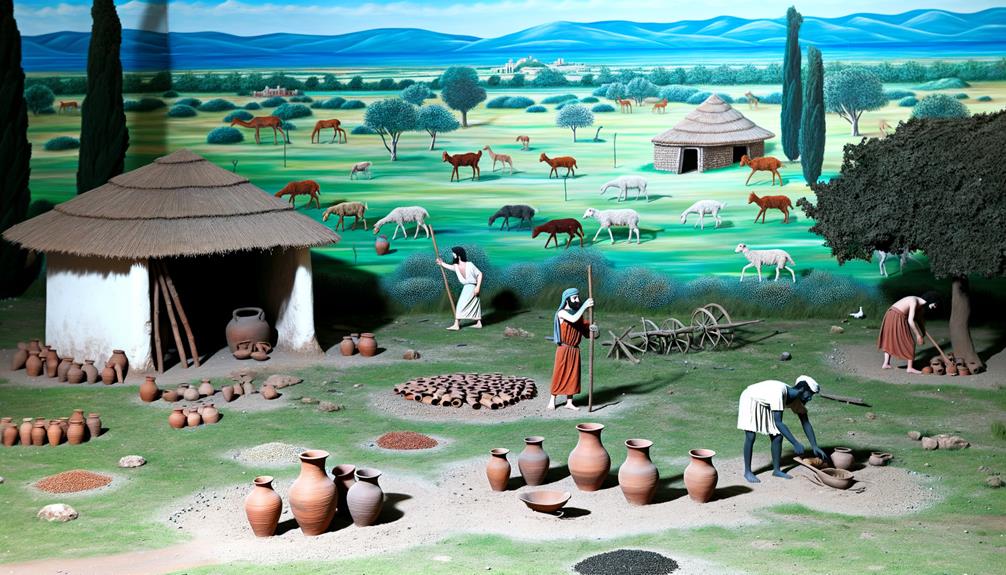
Understanding the cultural contexts of dung in biblical times requires examining its role in ancient fertilization practices, its symbolic significance in scriptures, and its references in everyday life.
Historically, dung was a valuable agricultural resource, enriching the soil and enhancing crop yields.
Scripturally, it also carried metaphorical weight, representing both purification and defilement depending on the narrative context.
Ancient Fertilization Practices
Examining the utilization of dung in ancient fertilization practices reveals a profound intersection of agricultural necessity and theological symbolism within biblical contexts.
In the agrarian societies of the ancient Near East, dung was indispensable for maintaining soil fertility, thereby ensuring the sustenance of communities. The practical application of animal excrement as fertilizer is referenced in several biblical texts, such as Deuteronomy 23:12-14, which underscores the importance of cleanliness and order in camp life.
This practice not only reflects the Israelites’ understanding of sustainable agriculture but also aligns with the divine mandate to steward the land responsibly. Such integration of pragmatism and piety illustrates how everyday activities were imbued with spiritual significance, echoing the broader theological themes pervasive in Scripture.
Symbolism in Scriptures
In biblical literature, dung often serves as a potent symbol, reflecting cultural attitudes towards purity, judgment, and the transitory nature of human endeavors.
The Hebrew Bible frequently uses dung to illustrate spiritual filth and moral decay, as seen in passages like Ezekiel 4:12-15, where it signifies defilement.
Additionally, in Zephaniah 1:17, dung metaphorically represents the worthlessness of earthly pursuits in the face of divine judgment. This symbolism encapsulates the transient and often corruptible nature of worldly achievements, contrasting them with eternal spiritual values.
Understanding these references within their historical and cultural contexts reveals how biblical authors utilized everyday elements to convey profound theological truths, ultimately emphasizing the impermanence of material existence and the importance of spiritual purity.
Everyday Life References
Beyond its symbolic implications, dung also held practical significance in the daily lives of ancient Near Eastern communities, influencing agricultural practices, sanitation methods, and even religious rituals.
Agriculturally, dung was an essential fertilizer, enhancing soil fertility and crop yields. This is evident in Proverbs 14:4, where a well-managed ox—often fed with fodder producing dung—indicates prosperity.
Sanitation-wise, Deuteronomy 23:12-14 instructs the Israelites on waste disposal to maintain camp cleanliness and divine favor.
In religious contexts, dung’s use in sacrificial practices, such as in Ezekiel 4:12-15, underscores its dual role in both mundane and sacred life.
These references illuminate dung’s multifaceted role, underscoring its significance in sustaining both physical and spiritual well-being in biblical times.
Modern Interpretations

Delving into modern interpretations of dung in the Bible necessitates a nuanced understanding of historical context, theological symbolism, and scriptural analysis. Scholars and theologians have explored the multifaceted significance of dung, yielding insights that deepen contemporary comprehension.
- Purification and Renewal: Dung’s role in ancient agrarian societies as fertilizer symbolizes spiritual renewal and growth.
- Judgment and Consequence: Biblical references often use dung to depict divine judgment, highlighting consequences of moral failings.
- Humility and Repentance: Its humble nature underscores themes of repentance and humility before God.
- Transformation: The process of dung turning waste into nourishment mirrors spiritual transformation and redemption.
These interpretations offer a richer, more intricate understanding of scriptural texts, bridging ancient practices with modern faith perspectives.
Conclusion
The biblical references to dung encompass a rich tapestry of theological, historical, and cultural significances.
Significantly, over 50 instances highlight its roles from agricultural utility to symbols of moral and prophetic lessons. Such frequent mention underscores its multifaceted importance in scriptural narratives and ancient societal practices.
Analyzing dung within these contexts reveals profound insights into purification rituals, divine judgment, and the socio-religious fabric of the biblical world, offering modern readers a deeper understanding of ancient beliefs and values.