
Habergeon Meaning in the Bible: Armor of Protection
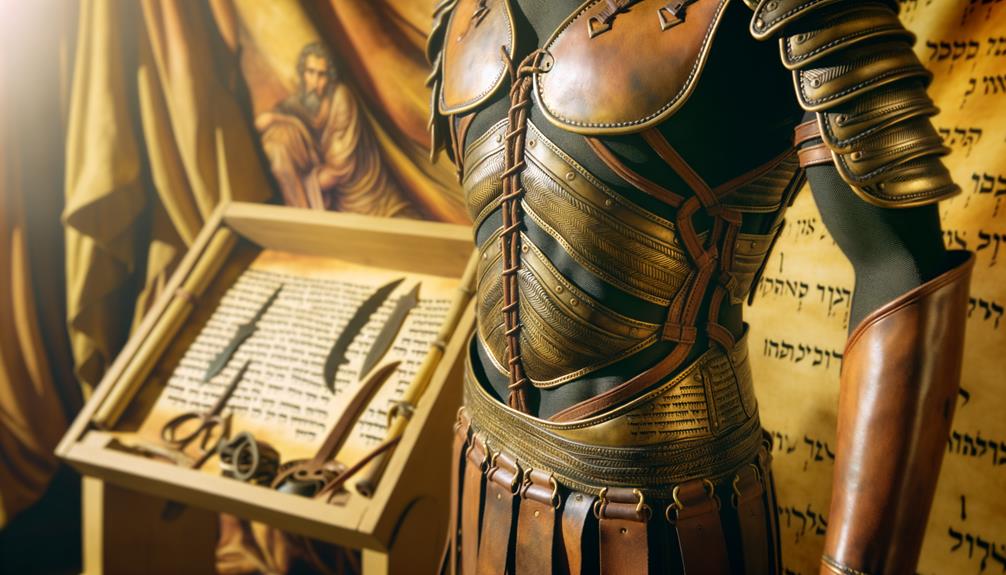
In the Bible, a ‘habergeon‘ refers to a sleeveless coat of chain mail or scale armor designed for protecting the torso, mentioned in passages like Exodus 28:32 and 2 Chronicles 26:14. Originating from the Old French ‘haubergeon,’ it symbolizes divine protection and righteousness.
Historically, it represents military and theological strength, evolving from bronze to iron to reflect advancements in ancient technology. The habergeon metaphorically underscores spiritual vigilance and integrity, akin to the armor of God in Ephesians 6:11.
To uncover more about its rich historical and spiritual layers, one can explore biblical and historical contexts further.
Key Takeaways
- The habergeon in the Bible symbolizes divine protection and spiritual fortitude for the believer’s moral and spiritual battles.
- It represents physical armor in ancient warfare, providing a metaphor for spiritual vigilance and readiness.
- Mentioned in Exodus 28:32 and 2 Chronicles 26:14, it highlights the importance of protection and strength through divine favor.
- Job 41:26 uses the habergeon metaphorically to describe Leviathan’s invincibility, illustrating its symbolic significance.
Definition of Habergeon
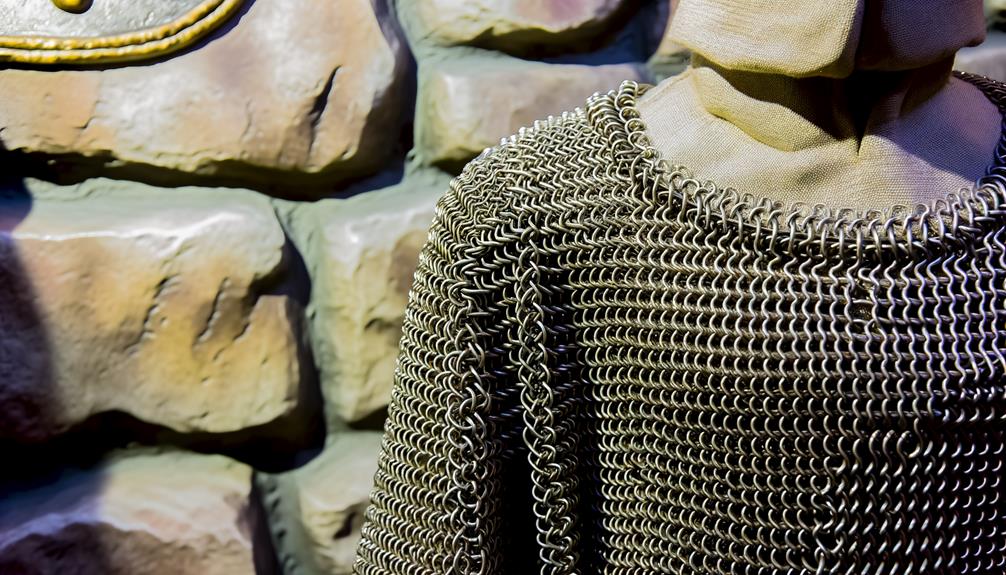
The term ‘habergeon‘ in the Bible refers to an ancient piece of armor, specifically a type of sleeveless coat or tunic made of chain mail or scale armor, designed to protect the torso during battle.
This garment, mentioned in texts such as Exodus 28:32 and 2 Chronicles 26:14, played a significant role in warfare, symbolizing strength and divine protection.
Historically, the habergeon was essential to a soldier’s defense, safeguarding important organs from enemy strikes.
Theologically, its mention underscores the importance of preparedness and God’s provision for His people.
Functioning both as a literal protective gear and a metaphor for spiritual defense, the habergeon illustrates the Biblical theme of God’s enduring shield over His followers amidst conflict.
Etymology and Origins

The term ‘habergeon‘ traces its linguistic roots to the Old French ‘haubergeon,’ a diminutive of ‘hauberk,’ indicating a type of protective garment.
In biblical usage, primarily found in the Old Scriptures, it refers to a piece of armor, often symbolizing divine protection.
Over time, its cultural significance evolved, intertwining with theological interpretations of spiritual defense and God’s safeguarding presence.
Historical Linguistic Roots
Etymologically, ‘habergeon’ frequently traces its roots back to the Old French word ‘haubergeon,’ which itself is a diminutive form of ‘hauberk,’ indicating a piece of armor used historically to protect the neck and shoulders. This linguistic evolution highlights the term’s journey from medieval warfare into biblical texts, reflecting the cross-cultural exchanges of language and technology.
| Term | Origin |
|---|---|
| Habergeon | Old French ‘haubergeon’ |
| Haubergeon | Diminutive of ‘hauberk’ |
| Hauberk | Armor for neck and shoulders |
| Medieval Use | Armor in medieval times |
| Biblical Use | Described in scripture |
This intricate history not only deepens our understanding of ancient military attire but also enriches theological studies, illustrating the broader historical context within which biblical texts were written.
Biblical Usage Context
Frequently appearing in biblical texts, the term ‘habergeon’ is employed to convey not just a piece of ancient armor but also to symbolize divine protection and strength within the religious and historical framework.
Deriving from the Old French word ‘haubergeon,’ it was a form of chainmail tunic worn by warriors. Its biblical usage can be observed in several contexts:
- Exodus 28:32 – Describes the priestly garments, emphasizing the meticulous craftsmanship and divine specifications.
- 2 Chronicles 26:14 – Chronicles King Uzziah’s military preparations, highlighting the habergeon as part of the soldiers’ defensive gear.
- Job 41:26 – Utilizes the habergeon metaphorically to depict the indomitable nature of the Leviathan, underscoring divine invincibility.
These references encapsulate its multifaceted symbolic and practical significance.
Cultural Significance Evolution
Tracing its etymological roots, ‘habergeon‘ originates from the Old French ‘haubergeon,’ a diminutive of ‘hauberk,’ which was an essential piece of medieval armor, consequently reflecting its deep historical and cultural significance.
This term, when translated to the biblical context, underscores the importance of protective gear in ancient warfare and spiritual metaphor.
In historical texts, the habergeon was a sleeveless coat of mail, providing soldiers with crucial protection.
Theologically, its usage in scripture illustrates divine protection and preparedness for spiritual battles.
In this manner, the habergeon not only served as a physical safeguard but also symbolized faith and righteousness, mirroring the believer’s need for spiritual armor in the face of life’s adversities.
Biblical References

The term ‘habergeon’ appears in several key biblical passages, serving as a crucial element in descriptions of ancient armor and its symbolic significance within the scriptural narrative.
Significantly, the habergeon is referenced in:
- Exodus 28:32 – detailing the garment worn by the High Priest, symbolizing divine protection and sanctity.
- 2 Chronicles 26:14 – describing King Uzziah’s military preparations, emphasizing strength and preparedness.
- Nehemiah 4:16 – highlighting the laborers’ armor during the rebuilding of Jerusalem’s wall, reflecting vigilance and resilience.
These texts underscore the habergeon’s role not merely as physical protection but as a profound symbol of spiritual defense and divine authority, enriching the theological depth of biblical accounts.
Historical Context

The habergeon, an ancient military garment, was an essential piece of armor referenced in biblical texts, symbolizing not only physical protection but also spiritual fortitude.
Its significance extends beyond mere utility, reflecting broader cultural values and theological themes of divine defense and righteousness.
Ancient Military Garments
Among the array of ancient military garments, the habergeon holds significant importance, providing both physical protection and symbolic meaning in biblical times. This sleeveless coat of mail, often crafted from interlinked metal rings or hardened leather, was central to the attire of warriors.
Understanding its context involves examining:
- Materials Used: From bronze to iron, the choice of materials evolved, reflecting technological advancements.
- Construction Techniques: Intricate methods, such as riveting and forging, guaranteed durability and flexibility.
- Cultural Symbolism: Beyond mere defense, the habergeon often represented divine protection in biblical narratives.
These elements underscore the habergeon’s dual role in ancient societies as both a practical defense mechanism and a potent symbol within theological discourse.
Biblical Armor Significance
Delving into the historical context of biblical armor reveals its profound significance not only as a means of physical protection but also as a potent symbol of divine providence and spiritual warfare.
In ancient Israel, armor such as the habergeon was meticulously crafted to safeguard warriors in battle, embodying God’s tangible provision for His people. Theologically, these garments were seen as instruments through which divine favor was manifested, reinforcing the belief that victory was granted by God.
Texts like Ephesians 6:11 further amplify this symbolism, urging believers to ‘put on the full armor of God,’ thereby intertwining the physical act of wearing armor with spiritual vigilance and moral fortitude.
This duality underscores the multifaceted role of armor in biblical narratives.
Cultural Symbolism Analysis
In exploring the cultural symbolism of the habergeon within its historical context, one must consider its dual function as both a practical military garment and a profound theological emblem of divine protection and spiritual readiness.
The habergeon, a form of chainmail, was integral to ancient warfare, offering soldiers essential physical defense. However, its significance extends beyond mere utility.
- Symbol of Divine Protection: In biblical texts, the habergeon often symbolizes God’s safeguarding presence.
- Spiritual Readiness: It serves as a metaphor for the believer’s preparedness to face spiritual battles.
- Cultural Identity: The habergeon embodies cultural values of strength, faith, and resilience.
Thus, its representation in scripture underscores a blend of martial prowess and spiritual fortitude.
Material and Construction
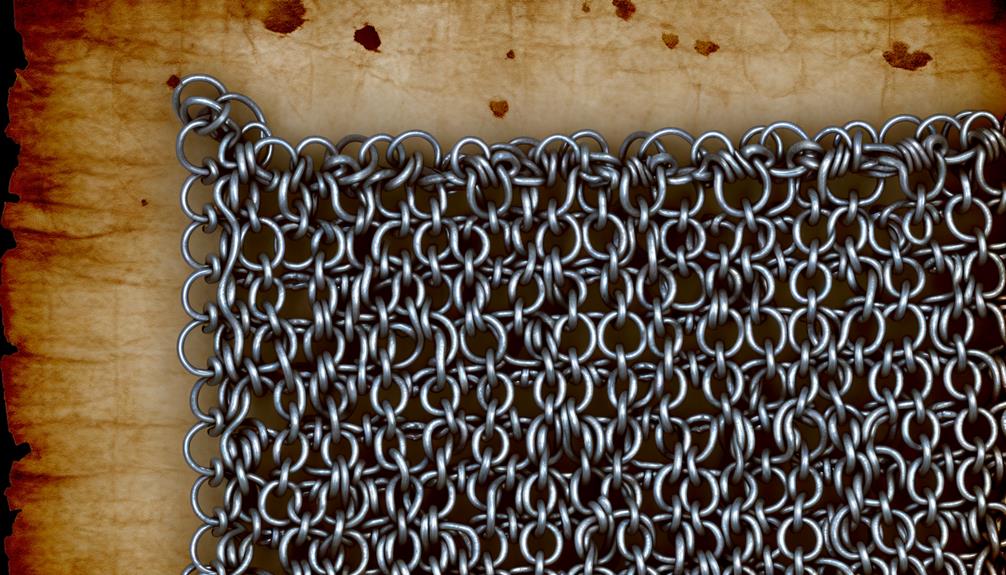
The habergeon, mentioned in various biblical texts, was typically crafted from interlinked metal rings or scales, providing both flexibility and protection in combat. This construction technique, known as mail, allowed for a balance between mobility and defensive strength, essential for ancient warriors.
Historically, such armor was prevalent in Near Eastern and Mediterranean cultures, reflecting advanced metallurgical skills. Biblically, the habergeon symbolizes both physical and spiritual armor, suggesting divine protection.
Theologically, it underscores the importance of preparedness and resilience in facing adversities. The meticulous craftsmanship involved in creating a habergeon parallels the spiritual diligence required to fortify oneself against moral and existential threats, as implied in scriptural narratives.
This duality of purpose enriches its biblical significance.
Function and Purpose

The function and purpose of the habergeon in biblical times primarily centered on its role as protective armor, shielding warriors in battle.
Its usage in scripture not only underscores its practical significance but also serves as a metaphor for spiritual fortitude and divine protection.
This duality reflects both the historical necessity for physical defense and the theological symbolism associated with spiritual resilience.
Protective Armor Significance
Symbolizing divine protection and physical fortitude, the habergeon in biblical times served as a critical element of a warrior’s armor, meticulously designed to shield the wearer from the perils of battle. This piece of defensive gear held profound significance in several ways:
- Physical Protection: Constructed from interlinked iron rings or scales, the habergeon provided essential protection against slashing and piercing attacks.
- Symbolic Meaning: It represented God’s safeguarding presence, reinforcing the belief that divine intervention was a shield for the faithful.
- Tactical Advantage: By granting better mobility than heavier armor, the habergeon allowed warriors to engage more effectively in combat.
In essence, the habergeon was not merely practical but also laden with deep spiritual meaning, reflecting the intertwined nature of faith and warfare.
Biblical Context Usage
Examining the habergeon’s role within the biblical narrative reveals its function and purpose as both a physical safeguard for warriors and a profound emblem of divine protection and faith. In the Old Scripture, the habergeon, a sleeveless coat of mail, is mentioned in Exodus 28:32 and 39:23 as part of the priestly attire. Its construction and usage underscore the significance of divine armor in theocratic warfare and spiritual readiness.
| Passage | Context | Function |
|---|---|---|
| Exodus 28:32 | Priestly Garments | Divine Protection |
| 2 Chronicles 26:14 | Military Equipment | Physical Safeguard |
| Nehemiah 4:16 | Rebuilding Jerusalem’s Walls | Preparedness |
This physical and symbolic armor reflects the Israelites’ belief in God’s provision, merging martial and spiritual domains.
Symbolic Spiritual Meaning
How does the habergeon transcend its physical form to embody a profound spiritual symbolism within biblical theology?
Within the biblical context, the habergeon is not merely a piece of armor but a representation of divine protection and moral fortitude. Its symbolic spiritual meaning can be understood through several theological lenses:
- Divine Protection: The habergeon signifies the protective presence of God, shielding the faithful from spiritual adversities.
- Righteousness: It embodies the concept of righteousness, acting as a moral safeguard against sin and temptation.
- Spiritual Warfare: The habergeon highlights the believer’s role in spiritual warfare, emphasizing the need for vigilance and steadfast faith.
Thus, it serves a greater purpose in illustrating the dynamics of faith and divine guardianship.
Symbolism in Scripture

In the biblical context, the habergeon, a form of ancient body armor, serves as a profound symbol of divine protection and spiritual readiness.
Historically, the habergeon was a piece of mail armor designed to protect the wearer in battle, reflecting the physical and spiritual perils faced by believers.
Theologically, it signifies God’s unwavering shield over His people, ensuring their preparedness against moral and spiritual adversities.
Scriptural references, such as in Exodus 28:32 and Nehemiah 4:16, underscore its importance in safeguarding the priestly and communal duties.
The habergeon not only represents physical defense but also conveys the necessity of embodying righteousness and faithfulness, resonating with the broader biblical theme of God’s providential care and the call to spiritual vigilance.
Comparisons With Other Armor
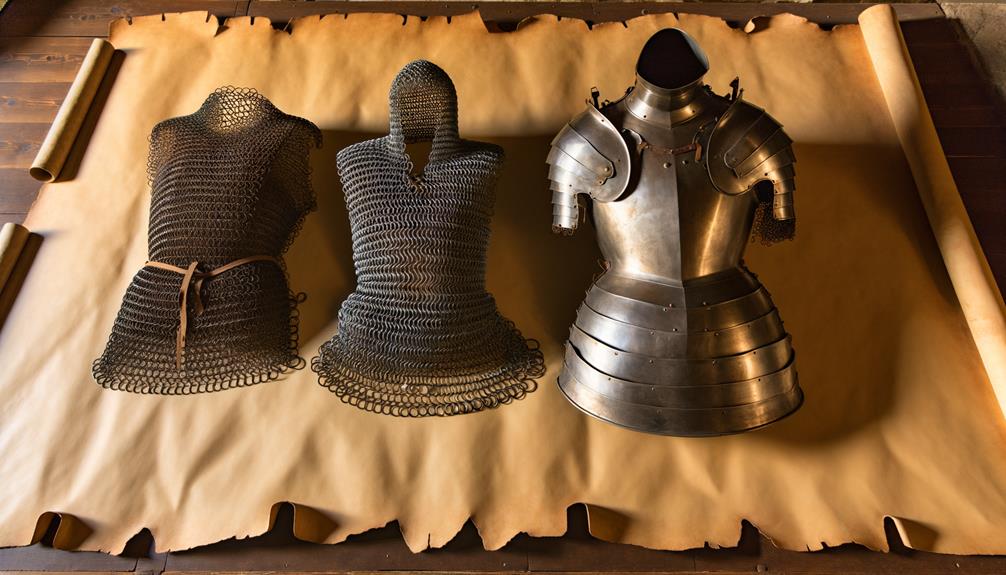
The habergeon’s unique design and function can be contrasted with other biblical armaments, such as the helmet of salvation and the breastplate of righteousness, to illuminate its distinct role in both physical and spiritual warfare.
Unlike the helmet and breastplate, which symbolize specific aspects of spiritual protection:
- Helmet of Salvation: Represents the mind’s safeguarding through divine assurance.
- Breastplate of Righteousness: Protects the heart with moral integrity and virtuous living.
- Habergeon: Covers the torso, symbolizing thorough protection against external assaults.
Historically, the habergeon was a sleeveless coat of mail, emphasizing flexibility and mobility.
Theologically, it signifies God’s pervasive safeguarding, ensuring believers are shielded from all-encompassing threats.
This extensive protection underscores its crucial importance in the biblical metaphor of divine armor.
Habergeon in Art and Culture

Frequently depicted in medieval manuscripts and early Christian art, the habergeon serves as a powerful emblem of divine protection and martial readiness.
This chainmail garment, often portrayed on saints and biblical figures, symbolizes the spiritual armor referenced in Ephesians 6:13-17. Theologically, the habergeon underscores the believer’s preparedness against spiritual adversaries.
In historical context, its artistic representation reflects the medieval societal emphasis on chivalric virtues and the sanctity of righteous warfare.
The meticulous detail in these depictions, from intricate links of mail to the contextual placement in battle scenes or angelic encounters, highlights the habergeon’s dual role as both literal armor and as a metaphor for divine safeguarding and moral fortitude in Christian iconography.
Modern Interpretations

Modern interpretations of the habergeon extend its symbolic resonance from historical and religious contexts into contemporary discussions on spiritual resilience and ethical fortitude. The habergeon, originally a protective garment for warriors, is now a metaphor for the inner armor Christians must don to navigate moral and spiritual challenges.
The following modern insights emerge:
- Spiritual Armor: The habergeon symbolizes the necessity for inner strength and divine protection in the face of spiritual warfare.
- Moral Integrity: It underscores the importance of unwavering ethical principles as a bulwark against societal pressures.
- Perseverance: It highlights the enduring nature of faith, encouraging believers to remain steadfast through trials.
These interpretations provide a nuanced understanding of the habergeon’s enduring relevance.
Lessons From the Habergeon

Understanding the lessons from the habergeon requires an extensive exploration into its historical usage, theological symbolism, and its significance in biblical literature.
Historically, the habergeon, a sleeveless coat of mail, provided physical protection in battle, symbolizing God’s provision and safeguarding of His people.
Theologically, it represents the armor of God, as highlighted in Ephesians 6:10-18, emphasizing the necessity of spiritual defense against evil.
In biblical literature, the habergeon underscores the themes of divine protection and preparedness, illustrating how faith and righteousness serve as spiritual armor.
These lessons highlight the importance of being spiritually vigilant and fortified, drawing a parallel between ancient physical armor and modern spiritual resilience.
Consequently, the habergeon serves as a profound metaphor for divine protection and moral integrity.
Conclusion
The habergeon, a linchpin of ancient armor, embodies both practical utility and symbolic resonance within biblical texts.
Its evolution in material and construction mirrors the shifting sands of historical contexts and technological advancements.
Theological interpretations highlight its role as a metaphor for divine protection.
Consequently, the habergeon serves as a bridge between the corporeal and the spiritual, a representation of humanity’s enduring quest for security amidst the trials of existence.