
Harlot Meaning in the Bible: Symbol of Unfaithfulness
In the Bible, the term ‘harlot‘ refers to women engaging in sexual immorality, often linked to prostitution or adultery. It holds a metaphorical significance, symbolizing spiritual unfaithfulness and idolatry against God.
Both the Old and New Scriptures employ this term to illustrate severe breaches of trust in human and divine relationships. Prophets like Hosea and Ezekiel depict Israel’s infidelity through the lens of harlotry, while the Book of Revelation uses it to warn against moral and spiritual corruption.
Increasing one’s understanding of these narratives and their moral teachings further reveals their importance in biblical discourse.

Key Takeaways
- Harlot refers to women engaging in sexual immorality, often linked to prostitution or adultery.
- Metaphorically, it symbolizes spiritual unfaithfulness and idolatry against God.
- Old Testament examples include Rahab and Israel’s spiritual infidelity depicted by prophets like Hosea.
- In the New Testament, it represents moral and ethical warnings, notably the ‘Great Harlot’ in Revelation.
Biblical Definition of Harlot

In the Bible, the term ‘harlot‘ is used to describe a woman who engages in sexual immorality, often in the context of prostitution or adultery, and is frequently employed metaphorically to represent spiritual unfaithfulness.
The term carries a dual significance: it denotes both literal acts of sexual transgression and figurative acts of idolatry or covenantal betrayal against God.
This dual usage underscores the gravity of unfaithfulness, whether in human relationships or in the divine-human relationship.
The metaphorical use of ‘harlot’ emphasizes a breach of trust and loyalty, illustrating how turning away from God to idols or false deities is akin to the betrayal found in adultery.
This nuanced definition is foundational for understanding various Biblical narratives and teachings.
Old Testament References

Numerous passages in the Old Scripture employ the term ‘harlot‘ to illustrate both literal and metaphorical instances of infidelity and moral corruption.
In literal terms, figures like Rahab in the Book of Joshua are described as harlots, emphasizing societal views on sexual morality.
Metaphorically, the prophets frequently use the term to convey Israel’s spiritual unfaithfulness. For instance, in Hosea, Israel is depicted as a harlot for turning away from God to worship idols, symbolizing a breach of covenantal faith.
Similarly, in Ezekiel, Jerusalem’s harlotry represents political alliances with foreign nations, viewed as betrayals of divine trust.
These references underscore the gravity of both physical and spiritual unfaithfulness in the context of the Old Covenant.
New Testament References

In the New Scripture, the term ‘harlot‘ carries significant symbolic weight, often representing spiritual unfaithfulness and idolatry.
Notable figures such as the ‘Great Harlot’ in the Book of Revelation serve as allegories for moral and ethical warnings against corruption and apostasy.
Examining these references provides insight into early Christian teachings on purity, repentance, and the consequences of moral transgressions.
Symbolism of Harlots
Examining the symbolism of harlots in the New Scripture reveals complex metaphors that often illustrate spiritual unfaithfulness and moral corruption.
Within the New Covenant, harlots are frequently used to convey deeper theological and moral lessons, emphasizing the consequences of turning away from divine teachings.
The imagery serves to highlight:
- Spiritual Adultery: Representing the betrayal of one’s covenant with God, akin to marital infidelity.
- Moral Degradation: Illustrating the descent into sin and the abandonment of righteous paths.
These symbolic interpretations offer profound insights into the spiritual and ethical dimensions within the New Covenant, contributing to a richer understanding of biblical teachings.
Notable Biblical Figures
The New Covenant references several notable biblical figures often associated with harlotry, each serving to elucidate various theological and moral themes. Among these, Mary Magdalene and the woman caught in adultery stand out. Their stories, found in the Gospels, highlight themes of redemption, forgiveness, and the transformative power of Jesus’ teachings. The portrayal of these figures is nuanced, reflecting complex societal attitudes towards sin and repentance.
| Figure | Biblical Reference | Significance |
|---|---|---|
| Mary Magdalene | Luke 8:2, John 20:1-18 | Redemption and devotion |
| Woman Caught in Adultery | John 8:1-11 | Mercy and forgiveness |
| Prostitute (Parable) | Luke 7:36-50 | Repentance and faith |
| Rahab (Honorable Mention) | Hebrews 11:31, James 2:25 | Faith leading to salvation |
These figures profoundly impact biblical narratives, emphasizing divine grace.
Moral and Ethical Lessons
New Covenant references to harlotry serve as a profound source of moral and ethical lessons, highlighting themes of redemption, forgiveness, and the transformative power of faith.
The New Scripture portrays harlotry not just as a moral failing but as an opportunity for profound spiritual renewal. For instance, the story of the woman caught in adultery (John 8:1-11) underscores Jesus’ message of compassion and forgiveness.
- Redemption: Demonstrated through Jesus’ interactions with sinners, showing that no one is beyond the reach of divine mercy.
- Forgiveness: Emphasized in teachings where Jesus encourages the faithful to forgive others as they have been forgiven.
These narratives offer timeless ethical guidance.
Symbolism of Infidelity

In biblical literature, the term ‘harlot’ often serves as a potent symbol of infidelity, representing both physical adultery and a broader spiritual unfaithfulness to God. This symbolism is frequently employed to illustrate the covenantal relationship between God and His people, likening spiritual betrayal to marital unfaithfulness. The harlot metaphor emphasizes the gravity of abandoning divine commandments and pursuing other deities or secular desires. Here is a comparative table highlighting key aspects:
| Aspect of Infidelity | Physical Adultery | Spiritual Unfaithfulness |
|---|---|---|
| Relationship Breach | Marriage | Covenant with God |
| Nature of Betrayal | Sexual | Idolatry |
| Consequences | Marital Disharmony | Divine Judgment |
| Biblical Examples | Gomer (Hosea) | Israel (Various Prophets) |
| Restoration Path | Repentance | Repentance and Return to God |
This exploration underscores the powerful moral and theological implications embedded in the harlot metaphor.
Idolatry and the Harlot

Examining the concept of idolatry within biblical texts reveals how the metaphor of the harlot is intricately used to depict the profound betrayal of turning away from God to worship false idols. This metaphor is employed to illustrate the spiritual adultery committed by the Israelites.
Detailed analysis uncovers several key aspects:
- Symbolic Language: The harlot represents unfaithfulness and the abandonment of divine covenant.
- Moral Degradation: Idolatry is seen as corrupting the moral and spiritual fabric of the community.
These elements highlight the gravity with which idolatry is treated within the biblical narrative, emphasizing its impact on the relationship between God and His people.
Historical Context
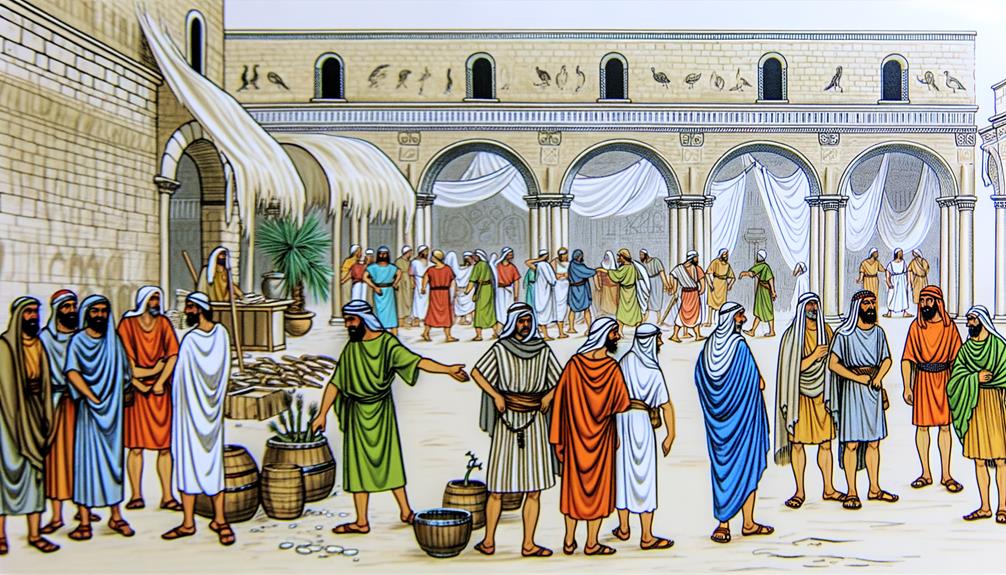
Understanding the term ‘harlot’ within its historical context necessitates an examination of ancient cultural perceptions and how these views are reflected in scriptural references.
Analyzing the linguistic evolution of the term provides further clarity on its shifting meanings and implications over time.
These elements collectively offer a thorough perspective on how the term ‘harlot’ is employed within biblical texts.
Ancient Cultural Perceptions
Ancient cultural perceptions of the term ‘harlot’ were deeply intertwined with societal norms, religious beliefs, and legal structures, reflecting a complex interplay between morality and social order. The term often carried significant negative connotations and was used to describe women who engaged in sexual activities outside the boundaries of marriage, often for financial gain. This label was not merely a descriptor but a societal judgment with profound implications.
- Religious Doctrine: Religious texts often condemned harlotry, associating it with sin and moral decay.
- Legal Ramifications: Laws in various ancient cultures penalized harlotry, sometimes severely, to maintain social order.
These perceptions underscored the stringent moral codes of the era.
Scriptural References Explained
Building upon the ancient cultural perceptions, the examination of scriptural references to ‘harlot‘ within their historical context reveals how these texts framed and influenced societal attitudes towards women labeled with this term.
In the Hebrew Bible, terms like ‘zonah’ and ‘kedeshah’ appear, often translating to ‘harlot’ or ‘prostitute.’ These references are found in narratives such as Rahab in Joshua 2 and Gomer in Hosea, where the designation of ‘harlot’ extends beyond mere occupation, symbolizing moral and spiritual infidelity.
Contextually, such terms reflected societal norms and religious ideals, emphasizing themes of purity, covenant fidelity, and divine judgment. This scriptural framing reinforced gendered moral expectations, impacting the perception and treatment of women within the ancient societal structure.
Linguistic Evolution Analysis
In tracing the linguistic evolution of the term ‘harlot,’ it is essential to examine how its connotations and applications have shifted across different historical periods and cultural contexts. Originally, ‘harlot’ in biblical texts referred to a woman engaged in prostitution, yet its usage has broadened and changed over centuries.
This term’s evolution can be categorized into several phases:
- Medieval Period: Used mainly as a descriptor for a woman of loose morals, often linked to economic necessity.
- Renaissance Era: The term began to carry heavier moral judgments and was employed in religious and literary works to critique societal vices.
Cultural Background

The term ‘harlot’ in the Bible is deeply intertwined with the socio-cultural dynamics of ancient Near Eastern societies, where it often carried complex connotations beyond its primary association with prostitution.
In these cultures, the role of a harlot could be multifaceted, sometimes linking to religious rites, including sacred prostitution in temples.
The societal status of women and their economic dependence greatly influenced the perception and roles of harlots.
Additionally, the presence of harlots in biblical texts often symbolized broader themes such as idolatry and unfaithfulness to God.
Therefore, to grasp the term ‘harlot’ thoroughly, it is essential to examine the intricate societal structures, religious practices, and symbolic meanings prevalent in the ancient Near Eastern context.
Moral Implications

The moral implications of the term ‘harlot’ in biblical texts encompass themes of sin and repentance, reflecting the broader cultural contexts in which these scriptures were written.
Analyzing these narratives reveals ethical lessons that extend beyond individual behavior to societal values and norms.
This section will explore how the portrayal of harlots serves as a vehicle for moral teaching, illustrating complex intersections between personal morality and collective cultural standards.
Sin and Repentance
How does the depiction of a harlot in biblical scripture underscore the profound moral implications of sin and the necessity for repentance?
The portrayal of a harlot often symbolizes the degradation of moral values and unfaithfulness to God. This imagery serves as a stark reminder of the consequences of sin and the need for sincere repentance to regain divine favor.
- Representation of Idolatry: The harlot often symbolizes Israel’s spiritual infidelity, equating idolatry with adultery.
- Call to Repentance: Scriptures commonly urge repentance, highlighting God’s willingness to forgive those who genuinely seek redemption.
These elements collectively stress the critical need for repentance in the face of sin.
Cultural Contexts
Examining the cultural contexts within biblical times reveals how the depiction of a harlot underscores the moral implications of societal values and religious fidelity. Harlots, often portrayed negatively, symbolized a breach of both social and divine order. Their representation was not solely about individual moral failure but reflected broader societal concerns regarding purity, family integrity, and covenantal faithfulness to God.
In a patriarchal society, the actions of a harlot were seen as threatening to the established norms and religious commandments. Consequently, these depictions served as cautionary tales, reinforcing the community’s adherence to prescribed moral codes and religious obligations.
Therefore, the term ‘harlot’ became a potent symbol of moral deviance, emphasizing the importance of maintaining societal and religious boundaries.
Ethical Lessons
In analyzing the ethical lessons derived from the depiction of harlots in the Bible, one must consider how these narratives convey profound moral implications that extend beyond individual behavior to encompass communal and religious integrity.
These stories often serve as cautionary tales, emphasizing the consequences of moral transgressions and the importance of repentance and redemption.
Key ethical lessons include:
- Moral Accountability: Individuals are held accountable for their actions, highlighting the importance of personal integrity.
- Impact on Community: The actions of one person can affect the spiritual and social well-being of the entire community.
These lessons underscore the intertwined nature of personal and communal ethics in biblical teachings.
Spiritual Connotations

The term ‘harlot’ in the Bible carries profound spiritual connotations, often symbolizing idolatry and unfaithfulness to God.
Scriptural references, particularly in the Old Covenant, employ the metaphor of harlotry to depict Israel’s spiritual adultery by pursuing foreign gods and abandoning their covenant with Yahweh. For instance, in the book of Hosea, Israel is portrayed as an unfaithful wife, reflecting the nation’s infidelity.
This allegorical use underscores the gravity of apostasy and the breach of divine trust. Additionally, the term serves as a powerful warning against the allure of false teachings and the consequences of spiritual betrayal.
Consequently, the biblical concept of a harlot extends beyond physical promiscuity, encapsulating deeper themes of loyalty, devotion, and spiritual integrity.
Modern Interpretations

Modern interpretations of the term ‘harlot’ in the Bible often explore its sociocultural implications and evolving significance within contemporary theological discourse. Scholars and theologians analyze the term through various lenses, reflecting on its historical and modern contexts.
Key areas of focus include:
- Cultural Reinterpretation: Investigating how the concept of a ‘harlot’ is reshaped by modern societal norms and gender roles.
- Linguistic Evolution: Examining how translations and linguistic shifts affect the understanding of biblical texts.
These perspectives provide a deeper, more nuanced understanding of the term, moving beyond its traditional connotations to reflect current ethical and social paradigms.
Lessons for Today

Frequently, the term ‘harlot‘ in biblical texts serves as a catalyst for discussions on ethical behavior, societal norms, and the role of morality in contemporary life. These narratives often highlight the consequences of moral and ethical deviations, urging modern readers to reflect on their own societal values.
The historical context of the term underscores the importance of understanding cultural and social dynamics before forming judgments. Additionally, the stories involving harlots in the Bible reveal themes of redemption and forgiveness, emphasizing that moral failings can be met with compassion and transformation.
Today, these lessons encourage a more nuanced perspective on human behavior, advocating for empathy and ethical consistency in addressing modern societal challenges.
Conclusion
The term ‘harlot’ in the Bible, with references spanning both Old and New Scriptures, serves as a powerful metaphor for spiritual infidelity and idolatry. Its moral and spiritual implications are profound, symbolizing a breach of divine covenant.
While historical and cultural contexts vary, modern interpretations still find relevance in its cautionary lessons. Consequently, the biblical harlot stands as a timeless emblem, warning against the seduction of moral and spiritual compromise, much like a lighthouse in a storm.