
Intercession Meaning in the Bible: Divine Mediation
In the Bible, intercession is the act of mediating between God and humanity to seek divine mercy and favor. This practice is evident in the Old Scriptures through key figures like Abraham, who implores God to spare Sodom, and Moses, who intercedes for Israel after the golden calf incident.
Prophets such as Samuel and Jeremiah also serve in this intermediary role, emphasizing communal and spiritual fidelity. In the New Scriptures, Jesus is the ultimate intercessor, offering sacrificial atonement and continually advocating for believers.
The concept underscores the dynamic interplay between divine sovereignty and human agency, promising deeper insights into its theological depth.

Key Takeaways
- Intercession in the Bible involves mediating between God and humanity, seeking divine mercy and forgiveness.
- Key figures like Moses and Abraham exemplify intercession through bold, persistent prayer and advocacy for others.
- Prophetic intercessors, such as Samuel and Jeremiah, convey divine messages while praying for communal mercy and justice.
- Jesus is the ultimate intercessor, fulfilling Old Testament prophecies through sacrificial atonement and ongoing advocacy for believers.
Old Testament Foundations

Frequently, the Old Scripture presents intercession as a pivotal act of mediation between God and humanity, underscoring its theological significance within the narrative. This theme is evident in various accounts where individuals act as intermediaries, seeking divine favor or forgiveness on behalf of others.
From the Levitical priests’ sacrificial rites to Moses’ appeals for Israel, intercession is portrayed as a conduit for divine mercy and justice. Theologically, these acts underscore the holiness of God and the need for repentance and reconciliation.
Contextually, intercession also reflects the communal nature of ancient Israelite society, where leaders often bore spiritual responsibility for their people. Therefore, intercession in the Old Covenant is a multifaceted concept, integral to understanding the relationship between the divine and the human.
Abraham’s Plea for Sodom

Abraham’s plea for Sodom exemplifies the boldness inherent in intercessory prayer, as he negotiates with God to spare the city for the sake of the righteous.
This narrative underscores the concept of divine mercy, illustrating that God is willing to contemplate human appeals for justice and compassion.
Abraham’s engagement with the divine reveals a theological framework where human intercession can influence divine action.
Abraham’s Bold Request
In a profound demonstration of intercessory prayer, Abraham engages in a bold negotiation with God to spare the city of Sodom if even a few righteous individuals can be found within it.
This episode, found in Genesis 18:22-33, illustrates the theological concept of intercession, where a human mediates on behalf of others.
Abraham’s approach is marked by humility and persistence, characteristics essential for effective intercession.
His plea underscores a deep understanding of divine justice and mercy, as he appeals to God’s righteousness.
Analyzing this interaction reveals Abraham’s role as a mediator and friend of God, emphasizing the power and importance of righteous intercession in biblical theology.
This exchange serves as a seminal example of faith and advocacy within Scripture.
Divine Mercy Shown
The narrative of Abraham’s plea for Sodom exemplifies divine mercy as it highlights God’s willingness to contemplate the righteousness of a few as a basis for sparing an entire city. This theological concept underscores the profound compassion intrinsic to the divine character.
Key elements include:
- Divine Patience: God listens to Abraham’s continuous intercession, revealing His forbearance.
- Moral Consideration: The discussion emphasizes that even a minority of righteous individuals can influence divine judgment.
- Intercessory Role: Abraham’s role as an intercessor demonstrates the potential impact of human mediation in divine decisions.
- Conditional Judgment: God’s readiness to spare Sodom if ten righteous people were found showcases conditional rather than absolute judgment.
Thus, this episode underscores the dynamic interplay between divine justice and mercy.
Negotiating With God
Within the biblical narrative, Abraham’s negotiation with God over the fate of Sodom is a profound example of human intercession influencing divine action.
In Genesis 18:23-33, Abraham boldly petitions God to spare the city if righteous individuals are found within it. This dialogue reveals a dynamic relationship where Abraham appeals to God’s justice and mercy, progressively lowering the number of righteous required to prevent destruction.
Theologically, this episode underscores the power of intercession and God’s responsiveness to human pleas. It demonstrates that divine judgment is not arbitrary but considers human righteousness and advocacy.
Abraham’s plea highlights the potential for human agency within the divine framework, offering a template for understanding intercessory prayer’s efficacy in Biblical theology.
Moses’ Intercession for Israel
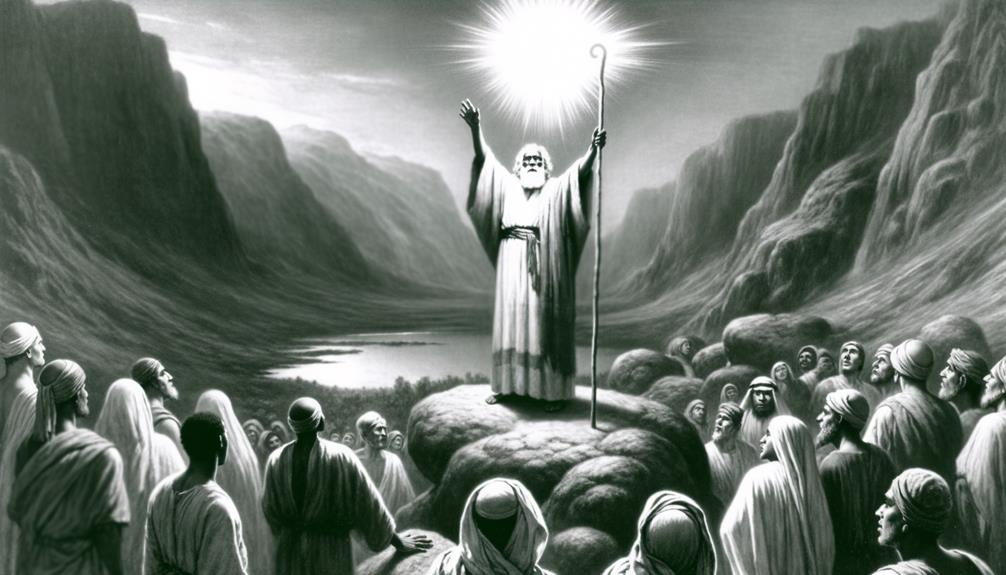
When the Israelites sinned by worshiping the golden calf, Moses’ intercession highlighted his role as a mediator between God and His people, demonstrating the profound theological significance of advocacy in biblical narratives. This event underscores several critical dimensions of intercession:
- Divine Patience: Moses appealed to God’s patience, preventing immediate judgment.
- Covenantal Remembrance: He reminded God of His covenant with Abraham, Isaac, and Jacob.
- National Preservation: Moses emphasized the importance of preserving Israel as God’s chosen people.
- Personal Sacrifice: Demonstrating selflessness, Moses offered to be blotted out from God’s book for Israel’s sake.
These points illustrate the depth of Moses’ intercessory role, reflecting the theological underpinnings of mediation and divine-human relationships in the Bible.
Prophetic Intercessions

Prophetic intercessions highlight the unique role of prophets as intermediaries between God and His people, a dynamic that underscores the power and purpose of intercessory prayer within a biblical framework.
Analyzing examples such as Samuel, Elijah, and Jeremiah, we observe how these prophetic figures engaged in intercession, petitioning God on behalf of nations and individuals.
This theological examination reveals the integral relationship between prophetic ministry and the act of standing in the gap to seek divine intervention.
Biblical Prophetic Roles
The role of prophetic intercession in the Bible underscores a profound theological dynamic where prophets act as intermediaries between God and His people, channeling divine messages and advocating on behalf of the community. This dynamic can be observed through:
- Divine Revelation: Prophets receive and convey God’s will, providing guidance and correction.
- Advocacy: They intercede for the people, pleading for mercy and forgiveness.
- Judgment Pronouncements: Prophets announce divine judgment, calling the community to repentance.
- Covenant Enforcement: They remind the people of their covenantal obligations and divine promises.
In this multifaceted role, prophets guarantee that the divine-human relationship remains intact, offering both correction and hope.
This intercessory function highlights their pivotal role in maintaining Israel’s spiritual fidelity and societal justice.
Intercessory Prayer Dynamics
Understanding the dynamics of intercessory prayer in biblical prophetic intercessions requires an examination of how these prayers function as a conduit for divine-human communication and intervention.
Theologically, intercessory prayer is not merely a petition but a profound act of standing in the gap between God and humanity.
Prophetic intercessors are believed to receive divine insight, enabling them to pray with specific, revelatory knowledge.
Contextually, these prayers often arise during pivotal moments, invoking God’s mercy or judgment.
The dynamics involve an interplay of divine sovereignty and human agency, where the intercessor’s alignment with God’s will is essential.
This spiritual synergy underscores the belief that prophetic intercessions can alter circumstances, reflecting a deep relational trust and obedience between the intercessor and the divine.
Prophetic Intercession Examples
In examining biblical instances of prophetic intercessions, one must consider the exemplary figure of Moses, whose petitions often swayed divine decisions concerning the fate of Israel. His intercessory acts provide profound insights:
- Exodus 32:11-14: Moses pleads for Israel after the Golden Calf incident, averting God’s wrath.
- Numbers 14:13-19: His intercession prevents the annihilation of Israel following their rebellion.
- Deuteronomy 9:18-20: Moses fasts and prays for forty days to prevent Aaron’s destruction.
- Psalm 106:23: Reflects on Moses standing in the breach to turn away God’s anger.
These instances illustrate Moses’ unique role as a mediator, emphasizing the theological importance of prophetic intercession in safeguarding the covenant relationship between God and His people.
Jesus as Intercessor

Acting as a divine mediator, Jesus exemplifies the ultimate intercessor by bridging the gap between humanity and God through His sacrificial atonement.
Theologically, His role as high priest is fundamental, as evidenced in Hebrews 7:25, which states, ‘He always lives to intercede for them.’
This intercession is not merely a passive role but an active, ongoing ministry where Jesus advocates for believers before the Father.
Contextually, His intercession is rooted in the fulfillment of Old Covenant prophecies, marking a transformative shift from the old covenant to the new.
By offering His life, Jesus provides a perpetual means of reconciliation, ensuring believers have constant access to divine grace and mercy.
This underscores His unique, essential role in salvation history.
Apostolic Examples
The apostolic writings provide numerous instances of early Christian leaders engaging in intercessory prayer, highlighting its critical role within the nascent church. Paul, in his epistles, frequently mentions praying on behalf of the congregations he established. For instance, in Ephesians 1:16, he writes of continually giving thanks and remembering them in his prayers. Similarly, in Philippians 1:9, he prays for their love to abound more and more.
The Apostle Peter also emphasizes intercession, urging believers to pray for one another in 1 Peter 4:7.
Key apostolic practices include:
- Interceding for wisdom and revelation (Ephesians 1:17).
- Praying for spiritual strength (Colossians 1:9-11).
- Seeking unity and peace among believers (Romans 15:5-6).
- Asking for boldness in proclaiming the gospel (Ephesians 6:19-20).
Theological Significance

Understanding the theological significance of intercession in the Bible requires exploring its foundational role in expressing communal solidarity and divine-human interaction.
Intercession serves as a conduit for communal petitions, embodying the collective aspirations and concerns of the faith community.
Theologically, it manifests the covenant relationship between God and His people, portraying a reciprocal dialogue where humanity’s pleas meet divine compassion.
Scriptural instances, such as Moses interceding for Israel (Exodus 32:11-14), highlight the mediatory function pivotal in maintaining divine favor.
Additionally, intercession underscores the priestly role, as seen in both Old scripture and Christological contexts, where Jesus as the ultimate intercessor (Hebrews 7:25) bridges the divine-human gap, signifying ongoing divine engagement with human affairs.
Practical Applications Today

In contemporary faith practices, intercession continues to play an essential role in nurturing communal solidarity and fostering a deeper connection with the divine. This theological act has practical applications that can be observed in various forms of modern worship and community activities.
These applications include:
- Corporate Prayer Gatherings: Congregations unite to pray for collective concerns, reinforcing community bonds.
- Personal Intercessory Prayer: Individuals pray on behalf of others, reflecting empathy and spiritual support.
- Prayer Chains and Networks: Organized groups facilitate continuous prayer, ensuring sustained intercession for urgent matters.
- Intercessory Ministries: Dedicated groups within churches focus on systematic intercession, addressing global and local needs.
These practices illustrate how intercession remains a crucial element in contemporary faith, bridging individual and communal spiritual needs.
Intercession in Church History

Historically, intercession has been a significant aspect of church life, shaping theological perspectives and communal practices across various Christian traditions. From the early church fathers to the Reformation and beyond, intercessory prayer has reflected evolving doctrinal emphases and ecclesiastical structures. Early Christians emphasized communal intercession, reflecting a collective identity in Christ. Medieval practices, such as the invocation of saints, underscored a hierarchical view of spiritual mediation. The Reformation reoriented intercession towards a direct, personal relationship with God.
| Period | Key Figures | Intercessory Emphasis |
|---|---|---|
| Early Church | Church Fathers | Communal intercession |
| Medieval | Monastics, Saints | Invocation of saints |
| Reformation | Reformers | Direct prayer to God |
| Post-Reformation | Pietists | Personal and heartfelt intercession |
| Modern Era | Ecumenical Leaders | Inclusive and global intercessory practices |
This dynamic historical development reveals intercession’s enduring theological and spiritual importance.
Conclusion
Intercession in biblical contexts consistently centers on compassionate, communal care, and divine dialogue.
From Abraham’s audacious advocacy and Moses’ mediation to prophetic petitions and Christ’s celestial intercession, the scriptural narrative showcases sacrificial supplication.
Apostolic actions affirm and amplify this theological thread, emphasizing its enduring essence.
The practice persists through church history, perpetuating a tradition of transformative, transcendent prayer.
Intercession remains integral, inviting contemporary believers to engage in earnest, empathetic entreaty, echoing the eternal example set forth in sacred scripture.