Meaning of Barak in the Bible: Warrior of Faith
In the Bible, Barak’s name, derived from the Hebrew root meaning ‘bless,’ indicates divine favor and empowerment. He plays a pivotal role in the Book of Judges, leading Israel in a victorious battle against the Canaanites under Deborah’s prophetic guidance (Judges 4:6-16).
Barak symbolizes faithful obedience to divine commands, reflecting a transformative force akin to lightning. His leadership showcases the interplay of divine directives and human action in Israel’s history, emphasizing God’s power through faithful leaders.
Learn more about Barak’s enduring impact and his legacy of faith-led leadership within the biblical narrative.

Key Takeaways
- Barak’s name derives from Hebrew, meaning ‘bless’ and symbolizing divine favor and approval.
- In the Bible, Barak is associated with divine empowerment and leadership, often linked to ‘lightning’.
- He led the Israelites to victory over the Canaanites, following divine instructions through Deborah.
- Barak’s faith and obedience to God’s command exemplify true biblical leadership.
Etymology of Barak

The name ‘Barak‘ derives from the Hebrew root word ‘בָּרַךְ’ (barak), which frequently translates to ‘bless‘ in scriptural contexts. This etymology reveals a profound theological insight, indicating divine favor and approval.
Historically, the term ‘barak’ appears numerous times in the Hebrew Bible, often associated with blessings pronounced by patriarchs, prophets, and priests. For example, in Genesis 12:2, God promises Abraham, ‘I will bless you and make your name great.’
This usage underscores a significant dimension of covenantal relationships in biblical narratives. The term encapsulates the notion of invoking divine benevolence and prosperity upon individuals or nations, emphasizing the transformative power of blessings in the ancient Near Eastern context.
Barak in Hebrew Context

In the Hebrew context, Barak emerges not only as a name but also as a symbol of divine empowerment and leadership within the biblical narrative. The name Barak, meaning ‘lightning,’ implies a sudden, transformative force.
Scripturally, Barak is depicted in Judges 4-5 as an instrument of God’s will, chosen to lead Israel against the oppressive Canaanite forces. His story underscores the theme of reliance on divine guidance, as his military success is attributed to his obedience to God’s command through the prophetess Deborah.
Historically, Barak’s narrative reflects the complex socio-political landscape of ancient Israel, where leaders were often seen as divinely appointed saviors. This illustrates the theological belief that God raises leaders to deliver His people in times of need.
Barak’s Role in Judges

Barak’s role in the Book of Judges is pivotal as he leads the Israelites in a victorious battle against the Canaanite forces under King Jabin, as described in Judges 4:6-16.
His partnership with the prophetess Deborah is essential, highlighting the theological theme of divine guidance and collaboration in achieving God’s will.
This historical context underscores the importance of faith and obedience in overcoming seemingly insurmountable challenges.
Battle Against Canaanites
Stepping into the biblical narrative, Barak emerges as a pivotal figure in the Book of Judges, particularly in the context of the Israelites’ struggle against the Canaanite oppression led by King Jabin and his commander Sisera (Judges 4:6-7).
Barak, whose name means ‘lightning,’ was divinely appointed to lead the Israelite forces from Mount Tabor against Sisera’s formidable army, which boasted 900 iron chariots (Judges 4:3). His role was critical as it demonstrated God’s power in delivering Israel through human agency.
The battle highlights both the oppression faced by the Israelites and their deliverance through faith and obedience to God’s command. Barak’s leadership under divine guidance underscores the recurring theme of deliverance and covenant faithfulness in Israel’s history.
Partnership With Deborah
The dynamic partnership between Barak and Deborah, a prophetess and judge of Israel, is pivotal in understanding the theological and historical context of Israel’s deliverance narrative in Judges 4. This alliance illustrates several key aspects:
- Divine Guidance: Deborah’s prophetic role underscores the importance of divine instruction in Israel’s military strategies (Judges 4:6-7).
- Shared Leadership: Barak’s decision to only go into battle if Deborah accompanies him (Judges 4:8-9) highlights the collaborative leadership model.
- Faith and Obedience: Barak’s eventual compliance signifies faith in God’s deliverance through unconventional means.
This partnership not only exemplifies mutual dependence but also reflects a broader theological theme of God working through diverse leaders to achieve His purposes.
Barak and Deborah
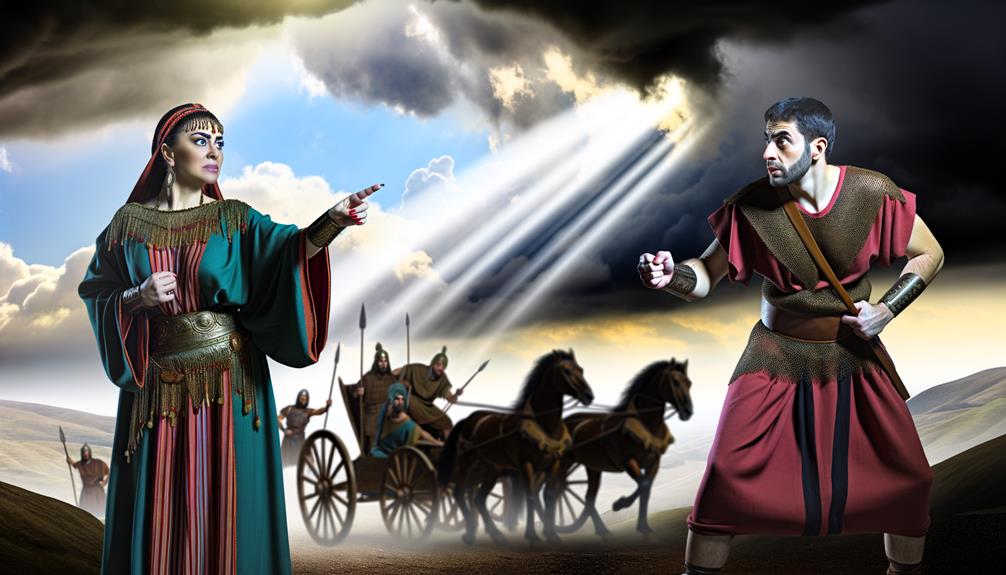
Barak and Deborah’s collaboration in Judges 4 epitomizes the synergy between military leadership and prophetic guidance, culminating in a decisive victory over the Canaanites.
The historical account highlights the dynamics of trust and obedience to divine instruction, as Barak’s insistence on Deborah’s presence underscores the importance of her prophetic authority (Judges 4:8-9).
This narrative not only underscores the theological theme of God’s deliverance through chosen leaders but also reflects the integral role of female leadership in Israel’s history.
Victory Over Canaanites
Rising to the call of divine guidance, Deborah, a prophetess and judge of Israel, summoned Barak to lead the Israelites into battle against the oppressive Canaanite forces commanded by Sisera. This pivotal event, recorded in Judges 4, underscores several key theological and historical insights:
- Divine Strategy: God’s plan was revealed through Deborah, showcasing that divine instructions often come through prophetic leadership (Judges 4:6-7).
- Human Obedience: Barak’s compliance with Deborah’s directive highlights the importance of human cooperation in achieving divine purposes (Judges 4:8-9).
- Miraculous Victory: The subsequent triumph over Sisera, aided by a supernatural storm, signifies God’s intervention in ensuring Israel’s deliverance (Judges 4:14-15).
This narrative emphasizes the synergy between divine guidance and human obedience.
Prophetic Leadership Dynamics
Frequently illustrated in the narrative of Judges 4, the dynamic interplay between Deborah’s prophetic leadership and Barak’s military execution reveals critical insights into the cooperative nature of divine and human agency in biblical history. As a prophetess, Deborah’s role was to convey God’s commands, while Barak’s military prowess actualized those divine directives. This collaboration underscores the necessity of both spiritual guidance and courageous action in achieving God’s purposes.
| Aspect | Deborah’s Role | Barak’s Role |
|---|---|---|
| Divine Command | Prophetess (Judges 4:4-7) | Receiver of command |
| Leadership | Judge and Leader | Military Leader |
| Execution | Strategic Planner | Battle Executor |
| Faith | Spiritual Insight | Trust in Divine Promise |
| Outcome | Victory Prophesied | Victory Realized |
This synergy between Deborah and Barak exemplifies the multifaceted dimensions of leadership in fulfilling God’s will.
Military Achievements
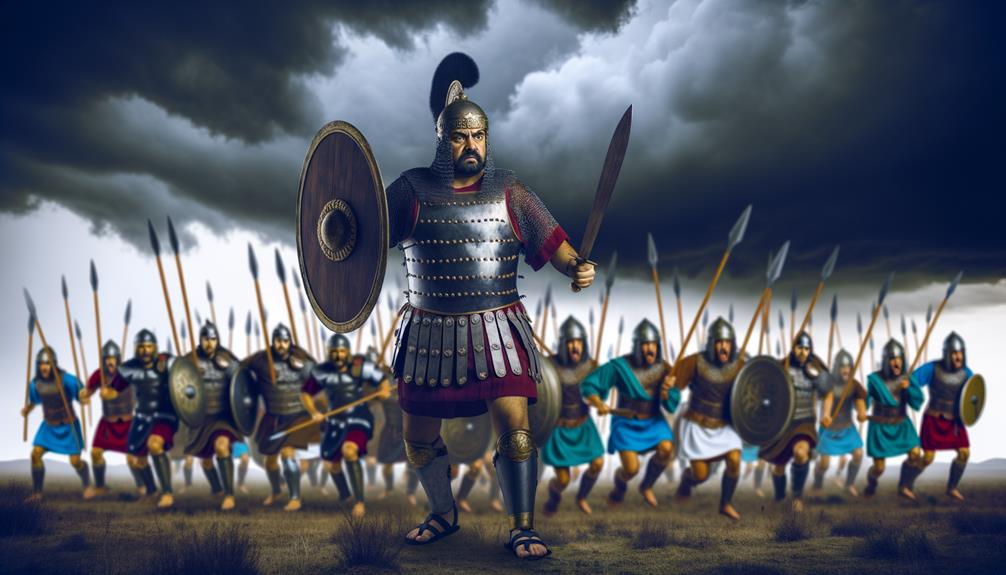
In the context of Israel’s turbulent period of the Judges, Barak’s military achievements are underscored by his decisive victory over the Canaanite forces led by Sisera, as chronicled in Judges 4-5. This victory, orchestrated by divine guidance, is pivotal in Israel’s deliverance.
Key facets of Barak’s military success include:
- Divine Command: Barak’s campaign was initiated by a divine directive given through the prophetess Deborah (Judges 4:6).
- Strategic Deployment: Barak mustered 10,000 men from the tribes of Naphtali and Zebulun, positioning them strategically on Mount Tabor (Judges 4:10).
- Divine Intervention: The Lord routed Sisera’s forces through a sudden downpour, causing the Kishon River to flood, which led to a Canaanite defeat (Judges 5:20-21).
Faith and Leadership

Barak’s faith and leadership are exemplified through his willingness to heed Deborah’s prophetic counsel, demonstrating both trust in God and the courage to lead despite initial hesitation (Judges 4:8-9).
Historically, the period of the Judges was tumultuous, requiring leaders to exhibit profound faith and resilience.
Barak’s request for Deborah’s presence underscores his recognition of divine authority and reliance on God’s guidance.
His eventual compliance not only highlights his submission to God’s will but also his strategic acumen in rallying ten thousand men from the tribes of Naphtali and Zebulun.
This episode underscores the interplay between divine instruction and human leadership, illustrating that true leadership in biblical context often involves humility, obedience, and the courage to act upon divine directives.
Symbolism of Lightning

The symbolism of lightning in the biblical narrative often represents divine power and revelation, encapsulating the might and authority of God as seen in various scriptural passages. This vivid imagery is not merely poetic but serves to underscore critical theological themes.
- Divine Presence: Exodus 19:16 describes lightning as part of God’s manifestation at Mount Sinai, symbolizing His overwhelming presence.
- Judgment: In Ezekiel 21:10, lightning represents the swift and decisive nature of divine judgment.
- Revelation: Psalm 18:14 portrays lightning as a medium through which God’s will and purposes are revealed to humanity.
These instances highlight the multifaceted role of lightning in conveying God’s power, justice, and communication, offering rich theological and historical insights for the devout reader.
Divine Favor and Blessings

Divine favor and blessings, often articulated through the Hebrew word ‘Barak,’ signify God’s gracious endowment of prosperity, protection, and spiritual enrichment as exemplified in numerous biblical accounts.
The term ‘Barak’ first appears in Genesis 1:28, where God blesses Adam and Eve, underscoring the sanctity of human life and divine provision. Similarly, in Genesis 12:2-3, God’s promise to Abraham includes blessings that extend through generations, illustrating a covenantal relationship.
This concept is central in Deuteronomy 28, where obedience to God’s commandments results in blessings encompassing every facet of life. Historically, ‘Barak’ conveys a profound theological message: divine favor is not merely material wealth but an all-encompassing grace that sustains and elevates the faithful.
Barak’s Legacy

Integral to understanding the profound impact of divine favor is examining how ‘Barak’ shaped the lives and spiritual journeys of key biblical figures, leaving a legacy that resonates through the annals of sacred scripture.
Barak’s legacy can be observed through:
- Leadership and Obedience: Barak, under the prophetess Deborah’s guidance, led Israel to victory against Canaanite oppression (Judges 4:6-16).
- Faith and Dependency on God: His reliance on God’s command demonstrates unwavering faith, as seen in his refusal to go into battle without Deborah (Judges 4:8).
- Inspiration for Future Generations: Barak’s story is a reflection of the power of divine partnership, inspiring future leaders to trust in God’s providence (Hebrews 11:32).
This legacy underscores the enduring importance of faith-led leadership.
Conclusion
The figure of Barak in the Bible, encompassing both etymological significance and historical context, highlights the complexities of faith and leadership.
Despite perceived weaknesses, Barak’s collaboration with Deborah and military triumphs underscore divine favor.
Critics may argue his dependency on Deborah diminishes his stature; however, it exemplifies the importance of communal leadership and divine guidance.
Ultimately, Barak’s narrative serves as a witness to collective faith and the fulfillment of divine promises, reflecting profound theological and symbolic dimensions.