
Meaning of Scroll in the Bible: Sacred Writings
In the Bible, scrolls signify divine revelation, spiritual guidance, and sacred covenants between God and humanity. Originating from ancient Near Eastern traditions, they were meticulously crafted and inscribed by skilled scribes on papyrus or parchment, ensuring the faithful preservation and dissemination of sacred texts.
Scrolls often contained prophetic messages and symbolized God’s unfolding plan, as seen in both Old Scriptures prophecies and the eschatological visions of Revelation, such as the unsealing of the seven seals. Their use in religious rituals and their enduring legacy underscore their profound significance, offering deeper insights into biblical theology and divine mysteries.

Key Takeaways
- Scrolls symbolize divine revelation, encapsulating God’s messages and prophecies.
- They serve as instruments for preserving and transmitting sacred texts across generations.
- Scrolls represent covenants between God and humanity, emphasizing divine agreements.
- They are central to religious rituals, including Torah readings and prophetic acts.
Origin of Biblical Scrolls
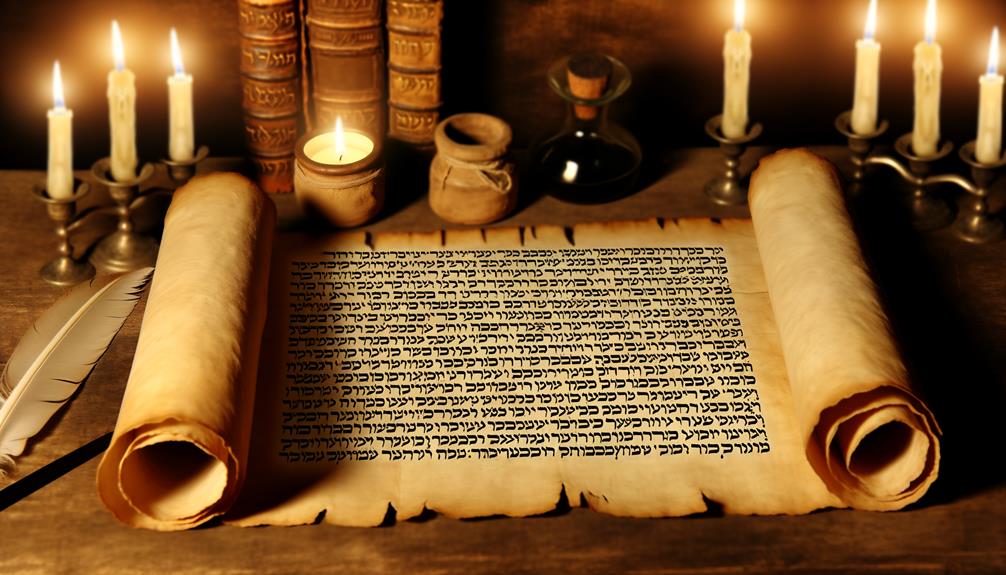
The origin of biblical scrolls can be traced back to ancient Near Eastern traditions, where texts were meticulously inscribed on papyrus and parchment.
These materials, derived from the papyrus plant and animal skins respectively, were chosen for their durability and accessibility.
The practice of writing on scrolls was integral to the preservation and dissemination of religious, legal, and literary texts.
Scribes, often highly trained and revered, played an essential role in this process, ensuring the fidelity of the texts through careful copying and transmission.
The format of the scroll itself, which allowed for lengthy texts to be stored compactly and read sequentially, greatly influenced the way these sacred writings were engaged with and understood within their historical and cultural contexts.
Scrolls in Old Testament
In the Old Scriptures, scrolls played an essential role in the preservation of sacred texts, ensuring the transmission of religious laws and historical records across generations.
Additionally, scrolls served as mediums for recording prophetic messages, which were integral to guiding the spiritual and moral direction of the Israelite community.
These functions underscore the scrolls’ significance in maintaining the theological and cultural continuity of ancient Israel.
Sacred Text Preservation
Throughout the Old Scriptures, scrolls served as essential instruments for preserving sacred texts, ensuring their transmission across generations.
These ancient manuscripts, often constructed from papyrus or parchment, were meticulously scribed by skilled scribes who adhered to strict protocols to maintain textual integrity. This meticulous process was not merely a matter of recording words; it was an act of devotion, underscoring the sanctity of the texts they preserved.
The scrolls were kept in sacred spaces, such as the Temple, symbolizing their divine significance. Furthermore, the scrolls’ physical durability and portability facilitated the dissemination of religious teachings, enabling communities to access, study, and internalize the divine laws and narratives that formed the cornerstone of their faith and identity.
Prophetic Messages Recorded
Prophetic messages inscribed on Old Scriptures scrolls encapsulate a profound confluence of divine revelation and historical narrative, offering insight into the spiritual and sociopolitical milieu of ancient Israel.
These scrolls, including those attributed to prophets like Isaiah, Jeremiah, and Ezekiel, served dual purposes: they were divine communications meant to guide and admonish, and historical records capturing the zeitgeist of their times.
For instance, the Book of Isaiah reflects the political turbulence and theological themes of justice and salvation.
Jeremiah’s writings chronicle the impending doom of Jerusalem and the Babylonian exile.
These texts are not merely religious artifacts but also windows into the dynamic interplay between divine intent and human experience, shaping the identity and destiny of Israel.
Prophetic Scrolls

Ancient scrolls bearing prophetic messages serve as essential artifacts for understanding the theological and eschatological frameworks within the Bible. These scrolls, often attributed to prophets such as Isaiah, Jeremiah, and Ezekiel, provide profound insights into divine intentions and future events.
Analyzing prophetic scrolls involves examining their historical context, literary structure, and theological implications.
Key aspects of prophetic scrolls include:
- Historical Context: Understanding the socio-political landscape during the time of writing.
- Literary Structure: Analyzing the composition, symbolism, and rhetoric used by the prophets.
- Theological Implications: Interpreting how these messages convey God’s will and future plans.
Such meticulous study illuminates the intricate tapestry of biblical prophecy and its enduring significance.
Scrolls in Revelation

The Book of Revelation presents scrolls as pivotal elements, encapsulating divine mysteries and future events.
Central to this theme is the scroll with seven seals, whose breaking reveals a series of prophetic visions that are rich in symbolism and theological significance.
This discussion will explore the intricate relationship between the scrolls, their symbolic meanings, and the eschatological revelations they contain.
Seven Seals Significance
When analyzing the significance of the seven seals in the Book of Revelation, it is essential to understand their role in revealing the apocalyptic visions and divine judgments. The seals, described in Revelation 5-8, encapsulate the unfolding of God’s eschatological plan, where each seal, when broken, discloses specific events leading to the ultimate fulfillment of divine will.
Their significance can be broken down into three key aspects:
- Progression of Judgments: Each seal’s breaking sequentially introduces escalating judgments, demonstrating a divine progression.
- Symbolic Representations: The seals symbolize various forms of tribulation, e.g., war, famine, and death, reflecting multifaceted divine retribution.
- Culmination of History: The seventh seal shifts into the seven trumpets, indicating the climax of human history and the establishment of God’s kingdom.
Prophetic Visions Explained
As the seven seals serve to disclose a sequence of divine judgments, the scrolls within the Book of Revelation encapsulate profound prophetic visions that reveal the intricate details of God’s eschatological narrative.
These scrolls, particularly in Revelation 5-6, are pivotal in conveying the unfolding of cosmic events and divine interventions. Each unsealing releases specific visions that portray the ultimate triumph of good over evil and the fulfillment of divine prophecy.
The narrative structure suggests a meticulously planned sequence where each vision builds upon the previous, offering believers insight into the culmination of history as orchestrated by divine will.
This textual composition underscores the scrolls’ role in communicating the transcendental and imminent aspects of God’s ultimate plan.
Symbolism of Scrolls
In the Book of Revelation, scrolls serve as profound symbols that encapsulate divine mysteries, judgments, and the unfolding of God’s ultimate plan for humanity. These scrolls are pivotal in revealing the eschatological narrative of the Christian faith.
- The Seven-Sealed Scroll: Representing God’s extensive plan, this scroll’s seals, revealed by the Lamb, depict successive judgments and cosmic upheavals (Revelation 5-8).
- The Little Scroll: Consumed by John, symbolizing the bittersweet nature of prophecy—both sweet in fulfillment and bitter in judgment (Revelation 10:9-10).
- The Scroll of Life: Listing the names of those granted eternal life, this scroll underscores the ultimate hope and justice bestowed upon believers (Revelation 20:12, 21:27).
These scrolls collectively convey the gravity of divine revelation and eschatological fulfillment.
Symbolism of Scrolls

Scrolls in the Bible often serve as potent symbols of divine revelation, authority, and the transmission of sacred knowledge. These scrolls, frequently mentioned in both the Old and New Testaments, encapsulate God’s covenant, prophetic visions, and eschatological secrets. The symbolism of scrolls extends beyond mere physical objects to embodying the eternal and unchanging nature of God’s word.
| Symbol | Meaning |
|---|---|
| Divine Revelation | Disclosure of God’s will |
| Authority | Divine mandate and law |
| Prophetic Visions | Future events and divine plans |
| Sacred Knowledge | Spiritual wisdom and guidance |
| Covenant | Binding agreements between God and humanity |
Through these symbols, scrolls underscore the intersection of the divine and human domains, emphasizing the importance of scripture in spiritual life.
Scrolls in Religious Rituals

Given their profound symbolic significance, scrolls also play a pivotal role in various religious rituals throughout biblical history. These sacred texts were often integral to ceremonies, reflecting the divine mandate and covenantal promises between God and His people.
Importantly, scrolls were used in:
- Temple Worship: Scrolls containing the Torah were read during temple services, reinforcing communal worship and legal adherence.
- Covenantal Renewals: Scrolls were central during covenant renewals, symbolizing a reaffirmation of faith and divine commitment (e.g., King Josiah’s reforms).
- Prophetic Acts: Prophets like Jeremiah and Ezekiel used scrolls to perform symbolic acts, conveying God’s messages and judgments.
Thus, scrolls not only encapsulated sacred writings but also facilitated the enactment of spiritual rites and divine communication.
Scrolls in Christian Theology
Within Christian theology, the concept of the scroll transcends its physical form, embodying divine revelation and eschatological promise as articulated in canonical texts such as the Book of Revelation.
In Revelation 5, the sealed scroll held by the Lamb symbolizes the culmination of God’s redemptive plan, awaiting unsealing to reveal divine judgment and salvation.
Furthermore, the scroll imagery underscores the authority of Christ and the ultimate fulfillment of prophetic scripture.
The act of unsealing signifies the shift from hidden mysteries to manifest realities, resonating with themes of divine sovereignty and ultimate justice.
Consequently, scrolls serve as metaphors for God’s inscrutable wisdom and the unfolding of His divine purposes within the theological framework of Christian eschatology.
Legacy of Biblical Scrolls
Building upon the theological significance of scrolls in Christian eschatology, the enduring legacy of biblical scrolls extends into their historical, cultural, and textual impact on religious scholarship and manuscript traditions.
This legacy can be observed through several key dimensions:
- Preservation of Texts: Biblical scrolls, such as the Dead Sea Scrolls, have provided invaluable insights into the textual variations and historical context of biblical scriptures.
- Cultural Transmission: The use of scrolls in ancient Judaism and early Christianity has influenced liturgical practices and the transmission of sacred texts across generations.
- Scholarly Research: Ongoing discoveries and studies of biblical scrolls continue to shape contemporary biblical exegesis and hermeneutics, enriching our understanding of ancient religious thought.
This multifaceted impact underscores the scrolls’ profound legacy.
Conclusion
Biblical scrolls, akin to ancient vessels, carried the divine narrative across millennia, shaping religious thought and practice.
Their presence in the Old Scripture, prophetic texts, and Revelation underscores their centrality in conveying spiritual truths.
Symbolically rich, scrolls epitomize the unfolding of divine will and the continuity of faith.
Integral to religious rituals and Christian theology, these scrolls leave an indelible legacy, illustrating the profound connection between sacred texts and the enduring journey of faith.