
Purple Sky Meaning In Bible: Prophetic Imagery
In biblical literature, the appearance of a purple sky is intertwined with themes of divine majesty and sovereign authority. Purple, often associated with royalty and repentance, underscores the significance of God’s ultimate reign (Judges 8:26, Daniel 5:29).
Such a phenomenon may signify eschatological events or divine revelations (Revelation 6:12-14), aligning with scriptural imagery of God’s presence in natural wonders (Ezekiel 1:26-28). This celestial hue calls believers to reflect on divine manifestations and prophetic visions (Joel 2:30-31), inviting deeper theological contemplation of God’s interconnectedness with creation.

Key Takeaways
- A purple sky symbolizes divine majesty and God’s royal authority.
- It may represent an eschatological sign of significant events.
- The phenomenon highlights Christ’s sovereignty and kingship.
- It suggests God’s majestic presence and potential divine intervention.
Symbolism of Colors in the Bible

The symbolism of colors in the Bible is deeply rooted in its theological narratives and scriptural references, providing profound insights into divine revelations and human experiences.
Throughout the Holy Scriptures, colors serve as metaphors that convey spiritual truths and divine attributes. For instance, white often symbolizes purity and holiness, as seen in Revelation 7:14, where the robes of the righteous are washed white in the blood of the Lamb.
Conversely, black frequently represents sin or judgment, as illustrated in Lamentations 4:8.
The use of color in biblical texts is not merely decorative but is imbued with theological significance, offering a visual language that enhances the understanding of God’s messages and the spiritual journey of believers.
Purple: Color of Royalty

In biblical literature, purple signifies royalty and sovereignty, often associated with the majesty of God and the nobility of kings, as evidenced by its recurrent mention in passages like Judges 8:26 and Daniel 5:29. This color’s rarity and cost made it a symbol of power and prestige.
- Judges 8:26: The purple garments taken from Midianite kings signify their royal status.
- Daniel 5:29: Daniel is clothed in purple, symbolizing his elevation to a position of authority.
- Mark 15:17: Jesus is mockingly dressed in purple, indicating the perceived irony of His kingship.
These scriptures underscore purple’s association with divine and earthly rule, reinforcing its theological symbolism of ultimate authority and sacred governance.
Purple and Repentance

Purple’s scriptural association with repentance emerges particularly in the context of its penitential use within the temple’s sacred rites and its symbolic representation of transformation and humility.
This color, seen in the priestly garments and temple veils (Exodus 28:5-6), signifies a heart turning towards God in humility and contrition.
The rich hue of purple suggests a deep, internal change, aligning with the psalmist’s plea for a ‘broken and contrite heart‘ (Psalm 51:17).
In the New Covenant, the prodigal son’s return and repentance is marked by the father dressing him in the best robe (Luke 15:22), often interpreted as purple, symbolizing his restored dignity.
Therefore, purple in the Bible encapsulates both the sorrow of repentance and the hope of spiritual renewal.
Purple in Biblical Narratives
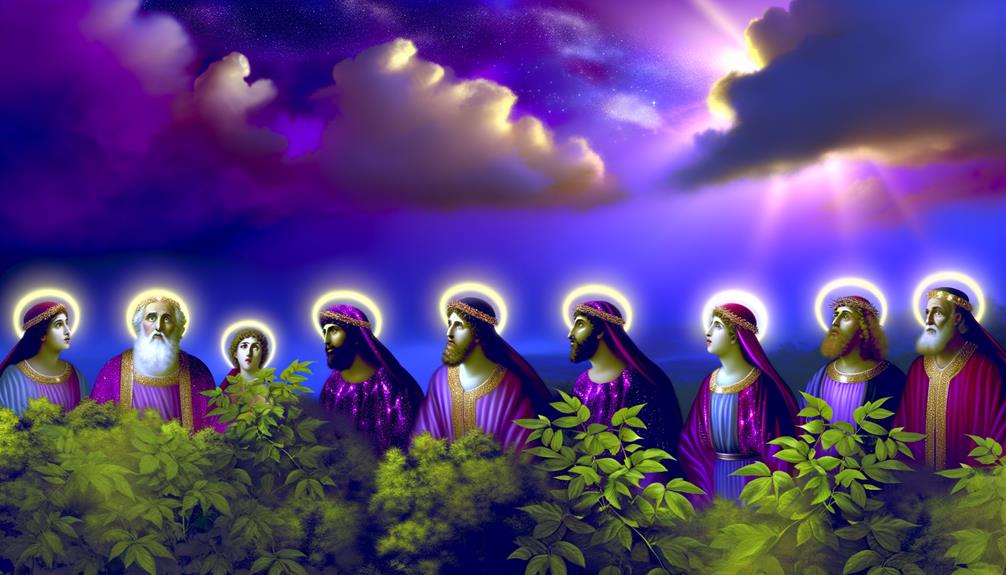
Building upon purple’s association with repentance and renewal, its presence in biblical narratives also underscores themes of royalty, wealth, and divine authority. The use of purple in Scripture serves as a symbol of God’s sovereignty and the elevated status of those chosen by Him.
Significantly:
- Royalty: In Esther 8:15, Mordecai is adorned in royal robes of blue and white, with a great crown of gold and a garment of fine linen and purple, signifying his elevated position.
- Wealth: Proverbs 31:22 describes the virtuous woman clothed in fine linen and purple, indicating prosperity.
- Divine Authority: In Mark 15:17, Jesus is draped in a purple robe by the soldiers, mockingly recognizing His divine kingship.
Such narratives enrich our understanding of purple’s profound biblical symbolism.
Theological Implications of a Purple Sky

Theological implications of a purple sky in biblical context invite contemplation on the symbolism of purple as a color of royalty and divine majesty, as evidenced in passages such as Esther 8:15.
This hue’s appearance in the sky may be interpreted as a divine omen, suggesting God’s sovereignty and presence.
Additionally, the biblical significance of colors invites a deeper understanding of how natural phenomena can serve as manifestations of divine messages.
Symbolism of Purple Sky
Interpreting the appearance of a purple sky through a theological lens often leads to profound insights into divine majesty and the eschatological themes present in biblical scripture. This celestial phenomenon can be seen as:
- Manifestation of Divine Glory: The purple sky may symbolize the splendor and grandeur of God, as depicted in Ezekiel 1:26-28, where the throne of God is described with vibrant, majestic colors.
- Herald of Eschatological Events: The purple sky might be interpreted as a herald of end times, echoing the apocalyptic imagery found in Revelation 6:12-14.
- Symbol of Kingship: Reflecting Christ’s sovereign reign, it aligns with the royal connotations of purple, underscoring Jesus’ ultimate authority as described in John 19:2-3.
Biblical Color Significance
In biblical scripture, the color purple holds significant theological implications, often representing themes of royalty, wealth, and divine authority. This is evidenced in passages like Exodus 28:5-6, where God commands the use of purple in the priestly garments, symbolizing sanctity and high status.
Similarly, in Mark 15:17, Roman soldiers mockingly dress Jesus in purple to signify His claim to kingship. Purple’s association with wealth is evidenced in Proverbs 31:22, where a virtuous woman is adorned in fine linen and purple.
Consequently, a purple sky might evoke these biblical themes, suggesting a manifestation of divine majesty and sovereignty. Such symbolism invites deeper reflection on the divine presence and its multifaceted nature within scripture.
Divine Omens Interpretation
A purple sky, when examined through the lens of biblical theology, can be perceived as an extraordinary omen that signifies divine intervention and celestial proclamation. Theological scholars often interpret such phenomena as laden with spiritual significance, pointing to the following insights:
- Revelation of Divine Majesty: The awe-inspiring purple sky can symbolize God’s majestic presence, reflecting the scriptural imagery found in Revelation 4:3, where divine glory is likened to precious stones.
- Prophetic Signs: In prophetic literature, unusual atmospheric conditions frequently herald significant events or divine messages, as seen in Joel 2:30-31.
- Covenantal Assurance: The purple hue may also evoke God’s covenantal promises, echoing the rainbow’s symbolism in Genesis 9:13-17, thereby reaffirming His enduring faithfulness.
This interpretive framework underscores the profound theological implications of a purple sky in biblical thought.
Modern Interpretations

While traditional interpretations of the Bible provide a foundation, contemporary scholars often investigate the symbolism of a purple sky to explore its potential theological implications and eschatological significance.
Modern exegetes suggest that a purple sky may symbolize the intersection of divine majesty and human perception, drawing from scriptural references such as Isaiah 1:18, which discusses transformation and redemption.
Additionally, the purple sky may be seen as a metaphor for prophetic visions, as in the apocalyptic imagery of Revelation 21:23, signifying the new heavens and new earth.
Scholars argue that such natural phenomena can serve as divine reminders of God’s omnipresence and the unfolding of His divine plan, urging believers to remain vigilant and faithful.
Conclusion
The symbolism of colors in the Bible, particularly purple, reveals profound theological insights, denoting royalty, repentance, and divine narratives.
What, then, might be the divine message of a purple sky?
Theologically, a purple sky could be interpreted as a celestial sign of God’s sovereignty and grace.
Through the lens of scripture and scholarly interpretation, such a phenomenon invites contemplation on the divine mysteries and the manifold ways in which God’s presence manifests in creation.