Schism Meaning in the Bible: Division in Faith
In the Bible, schism signifies a formal division within the Christian Church, primarily stemming from doctrinal or ecclesiastical disputes that fracture the unity of the body of Christ. In the Old Scriptures, this concept is mirrored in the split between Israel’s northern and southern kingdoms.
In the New Scriptures, Apostle Paul addresses schisms, urging unity among believers, as seen in his letters to the Corinthians. Early church history, such as the Arian controversy, further showcases theological divisions.
Today, schism continues to echo as denominations grapple with contemporary doctrinal debates. Understanding these nuances enriches comprehension of Christian unity’s profound significance.
Key Takeaways
- Schism in the Bible refers to divisions within the Church arising from doctrinal disputes or ecclesiastical disagreements.
- Old Testament schisms include Israel’s division into northern and southern kingdoms due to political and religious conflicts (1 Kings 12).
- Apostle Paul condemns factions within churches, urging unity in mind and thought (1 Corinthians 1:10; Ephesians 4:3-6).
- Early Church schisms involved debates on Gentile inclusion and Christ’s nature, addressed in councils like Jerusalem and Nicaea.
Definition of Schism

The term ‘schism‘ in a biblical context refers to a formal division or separation within the Christian Church, often stemming from doctrinal disagreements or ecclesiastical disputes.
Historically, schisms have emerged when factions within the Church find themselves at irreconcilable odds over theological interpretations, liturgical practices, or ecclesiastical authority. This phenomenon is not just a mere difference of opinion but a profound rupture that often leads to the establishment of distinct, independent congregations.
Theologically, schism is considered a grave matter as it disrupts the unity of the body of Christ, which is a central tenet in Christian ecclesiology.
Understanding schism requires an appreciation of its underlying causes, historical developments, and its impact on the wider Christian community.
Old Testament References
Examining Old Scriptures references, one finds that the concept of schism, though not explicitly named, is reflected in various narratives involving divisions among God’s people, such as the split between the northern and southern kingdoms of Israel.
This pivotal event, recorded in 1 Kings 12, resulted from Rehoboam’s harsh policies, leading ten tribes to form the northern kingdom of Israel under Jeroboam, while Judah and Benjamin remained loyal to Rehoboam in the south.
Theologically, this division signifies a breach in the unity that God intended for His chosen people, evidencing the consequences of straying from divine commandments.
Historically, this schism had profound implications, affecting political stability, religious practices, and the social fabric of ancient Israel.
New Testament Context
In the New Scripture, schism is more explicitly addressed within the epistles, where the Apostle Paul frequently admonishes early Christian communities to maintain unity and avoid divisions. His letters to the Corinthians, Galatians, and Philippians highlight the critical nature of communal harmony. Paul emphasizes that factions can undermine the foundational teachings of Christ and the witness of the church. The following table illustrates key themes:
| Epistle | Theme | Emotional Impact |
|---|---|---|
| 1 Corinthians | Unity in Diversity | Encourages community |
| Galatians | One in Christ | Fosters inclusivity |
| Philippians | Harmony and Humility | Promotes peace |
| Romans | Acceptance and Love | Inspires compassion |
Understanding these themes within their historical context deepens our appreciation of Paul’s urgent call for unity.
Paul’s Teachings on Unity

Through his epistles, Paul consistently underscores the imperative of unity within the early Christian communities, often linking it to the core tenets of faith and the overarching mission of the church.
In 1 Corinthians 1:10, Paul appeals for believers to be “perfectly united in mind and thought,” emphasizing doctrinal coherence and communal harmony.
Ephesians 4:3-6 further elaborates on maintaining the “unity of the Spirit in the bond of peace,” grounded in one body, one Spirit, and one hope.
Paul’s theological foundation for unity is deeply rooted in Christology, asserting that all believers are part of the body of Christ.
His teachings seek to mitigate division and promote a collective identity centered around faith, love, and common purpose.
Early Church Divisions

The early church faced significant divisions, often fueled by doctrinal disputes, cultural differences, and varying interpretations of Christ’s teachings.
These schisms were evident in debates over Gentile inclusion, as seen in the Jerusalem Council (Acts 15), and in disagreements on the nature of Christ, culminating in the Arian controversy of the 4th century.
Additionally, cultural rifts between Jewish and Gentile converts created tension, as Paul addressed in his epistles (Galatians 2:11-14).
The early church’s struggle to maintain doctrinal purity and unity amidst diverse backgrounds underscores the complexity of establishing a cohesive Christian identity.
These historical divisions illustrate the nascent church’s efforts in steering through theological and cultural challenges while endeavoring to embody the teachings of Christ.
Spiritual Implications
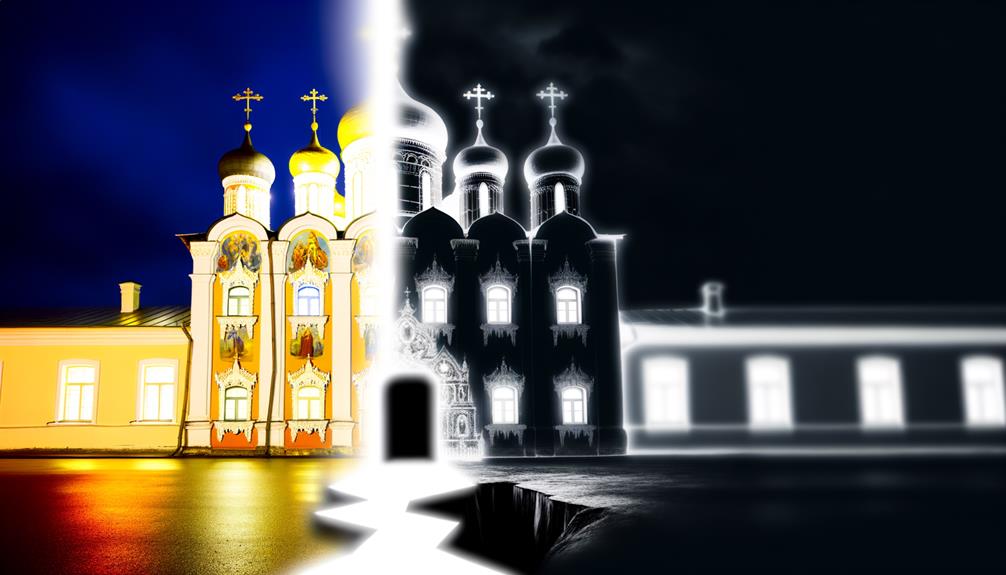
While early church divisions highlight historical and doctrinal challenges, they also bear profound spiritual implications that shaped Christian theology and practice.
The concept of schism underscores the intrinsic value of unity within the Body of Christ, as articulated in 1 Corinthians 12:25. Fragmentation not only disrupts communal harmony but also impedes collective spiritual growth and witness.
Theologically, schisms necessitated a deeper understanding of ecclesiology, prompting church leaders to delineate orthodoxy and heresy more clearly. Spiritually, these divisions compelled Christians to confront issues of authority, scriptural interpretation, and the nature of salvation.
The enduring quest for unity, despite historical schisms, reflects the biblical mandate to maintain the “bond of peace” (Ephesians 4:3), underscoring the essential interconnectedness of the Christian faith community.
Historical Examples
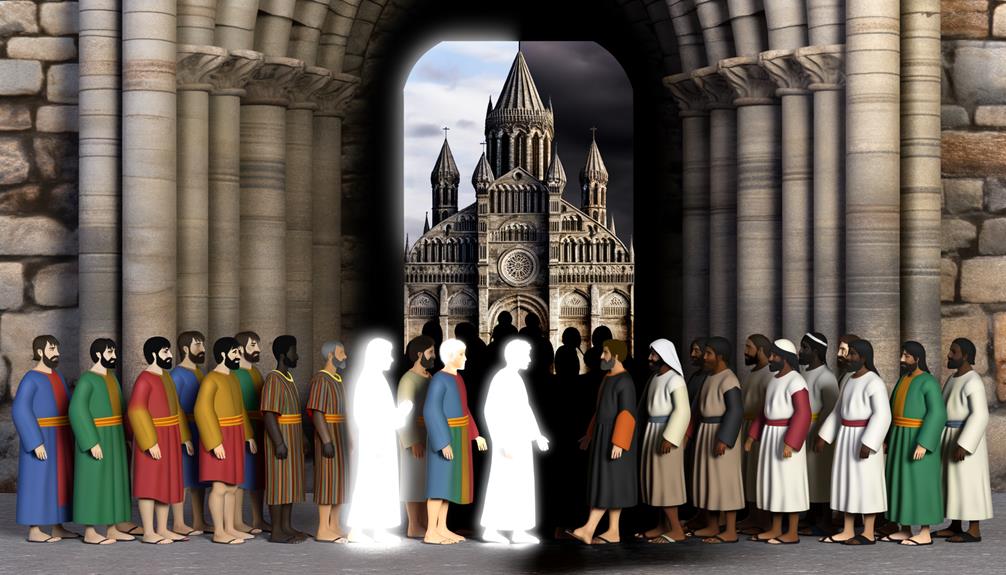
The concept of schism in the Bible finds historical resonance in early church divisions, such as the rifts between Jewish and Gentile Christians, which were addressed in the Council of Jerusalem.
Moreover, the Protestant Reformation exemplifies a monumental schism, driven by theological disputes and leading to profound ecclesiastical and cultural transformations.
These historical examples illustrate the enduring significance and complex ramifications of schisms within the Christian tradition.
Early Church Divisions
Early church divisions, such as the schism between the followers of Arius and the proponents of Nicene orthodoxy, underscore the theological and doctrinal conflicts that shaped the development of early Christian doctrine. These divisions were not merely academic disputes but involved significant ecclesiastical and political ramifications. The Arian controversy, for example, questioned the nature of Christ’s divinity, leading to the First Council of Nicaea in 325 AD. This council’s decisions aimed to unify Christian belief but also highlighted the persistent nature of theological discord.
| Division | Main Issue |
|---|---|
| Arianism | Nature of Christ’s divinity |
| Donatism | Validity of sacraments administered by sinners |
| Nestorianism | Christ’s dual nature |
| Monophysitism | Christ’s single divine nature |
| Montanism | Role of prophecy and charismatic gifts |
These schisms reveal how early Church leaders grappled with complex theological issues amidst growing diversity.
Protestant Reformation Impact
Emerging as a monumental event in Christian history, the Protestant Reformation greatly reshaped religious, political, and social landscapes across Europe.
Initiated by Martin Luther’s 95 Theses in 1517, the Reformation challenged Catholic doctrines and ecclesiastical authority, leading to the establishment of Protestant branches such as Lutheranism and Calvinism. This schism precipitated significant theological debates about salvation, sacraments, and scriptural authority.
Politically, it fragmented Christendom, giving rise to nation-states and altering power dynamics between church and state.
Socially, it influenced education and literacy through the proliferation of vernacular Bibles.
Historical examples include the Peace of Augsburg (1555), which recognized Lutheranism in the Holy Roman Empire, and the English Reformation, which saw Henry VIII establish the Church of England.
Modern Day Relevance

In light of contemporary religious dynamics, the concept of schism continues to hold significant relevance, reflecting ongoing divisions within and between modern Christian denominations.
These schisms often emerge from doctrinal disagreements, cultural differences, and varying interpretations of scriptural authority.
Historically, the term ‘schism’ denotes a formal separation within the ecclesiastical body, with roots in early Christian disputes, such as the Great Schism of 1054 and the Protestant Reformation.
Today, issues such as gender roles, LGBTQ+ inclusion, and theological liberalism versus conservatism perpetuate these divisions.
Understanding schism in its biblical context illuminates the persistent struggle for unity and doctrinal purity, emphasizing the need for continuous dialogue and reconciliation within the broader Christian community.
Promoting Unity in Faith
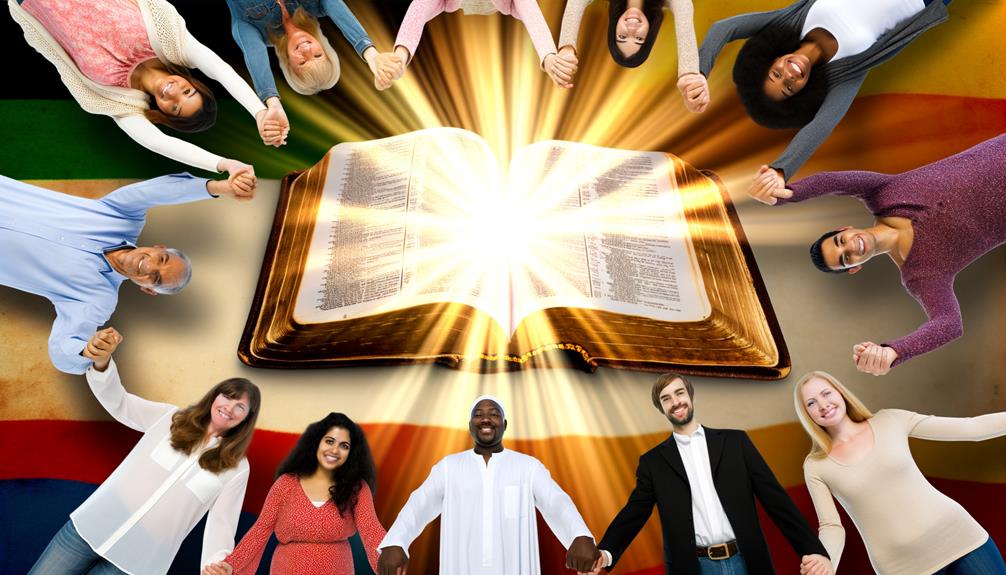
Promoting unity in faith necessitates a concerted effort to embrace shared beliefs that serve as fundamental pillars across diverse Christian traditions.
By historically examining how early Church Fathers addressed doctrinal divides, we can gain valuable insights into contemporary strategies for fostering ecclesiastical harmony.
This approach not only strengthens communal bonds but also aligns with the biblical mandate for unity within the body of Christ.
Embracing Shared Beliefs
To foster a sense of unity within the faith community, it is essential to focus on the foundational beliefs that bind believers together.
Historically, the early Church Fathers emphasized core tenets such as the divinity of Christ, the resurrection, and the doctrine of the Trinity to maintain cohesion among diverse congregations.
Theologically, shared beliefs serve as a cornerstone for communal worship and doctrinal instruction, creating a unified body of Christ.
In contemporary contexts, embracing these common convictions aids in transcending cultural and linguistic barriers, fostering a global fellowship centered on mutual faith.
Overcoming Doctrinal Divides
As the faith community seeks to embrace shared beliefs, it becomes imperative to address and overcome doctrinal divides that threaten to fragment the unity of the body of Christ.
Historically, the early Church faced significant theological disputes, as evidenced by the Council of Nicaea (325 AD) addressing Arianism.
To promote unity, theological dialogue and ecumenical councils have been instrumental in clarifying doctrine. Scriptural exegesis, emphasizing foundational truths such as the Nicene Creed, fosters common ground.
Additionally, contemporary movements, like the World Council of Churches, endeavor to bridge denominational gaps.
Conclusion
In the tapestry of Christian history, schism has woven threads of division that have frayed the fabric of communal faith.
Biblical teachings and historical precedents reveal the perilous consequences of disunity, as well as the clarion call for harmony within the body of Christ.
The pursuit of unity, anchored in theological understanding and historical awareness, remains paramount in fostering a robust and resilient faith community.
Consequently, the quest for ecclesiastical unity stands as both a sacred duty and a timeless endeavor.