
Till the Ground Bible Meaning
In the Bible, “till the ground” encapsulates humanity’s role in stewardship and cultivation, as initially depicted in Genesis 2:15 with Adam in the Garden of Eden. This act shifts from divine provision to human labor, symbolizing a broader theological mandate of human agency in shaping and sustaining the environment.
Beyond its agricultural context, tilling also metaphorically represents spiritual labor and growth, highlighting virtues like diligence and patience in both personal and communal faith journeys. Analyzing this concept further reveals deeper insights into ethical responsibilities, sustainable practices, and the spiritual parallels drawn by biblical prophets and teachings.

Key Takeaways
- Tilling the ground in Genesis signifies humanity’s stewardship and responsibility over creation, marking a shift to human labor post-Eden.
- It symbolizes the cultivation of spiritual growth, requiring diligence, patience, and ongoing self-improvement.
- Prophets used tilling as metaphors for spiritual renewal and justice, reflecting covenantal faithfulness.
- New Testament teachings link tilling to the spiritual labor of cultivating virtues like faith, hope, and love within the Christian community.
Genesis: The First Tilling

In the book of Genesis, the narrative of the first tilling of the ground presents a profound moment that signifies humanity’s initial interaction with the earth as stewards of creation.
This event occurs after the expulsion from Eden, marking a pivotal shift from divine provision to human labor. Adam’s responsibility to cultivate the soil underscores a new relational dynamic between humanity and nature, emphasizing stewardship and productivity.
This initial act of tilling is not merely agricultural but reflects a broader theological and existential mandate. It symbolizes the inception of human agency in shaping the environment, adhering to divine instruction, and ensuring sustenance.
The ground, once purely a divine gift, now requires human effort, symbolizing a partnership with the divine in the ongoing act of creation.
Symbolism of Tilling

The act of tilling the ground in biblical literature is rich with symbolic meanings, encompassing the cultivation of spiritual growth, the meticulous preparation for an eventual harvest, and the transformative process of breaking new ground.
These elements collectively underscore a journey of continuous self-improvement and readiness to receive divine blessings.
Analyzing these points can provide a deeper understanding of how physical labor in scripture often mirrors spiritual endeavors and responsibilities.
Cultivating Spiritual Growth
Tilling the ground in biblical symbolism represents the meticulous process of cultivating one’s spiritual growth, echoing the need for deliberate and sustained effort to nurture faith and moral integrity.
This metaphor underscores the necessity of breaking through the hardened layers of skepticism and sin, akin to tilling soil, to make way for spiritual nourishment and enlightenment.
Through prayer, study, and righteous living, individuals can remove spiritual impediments, allowing divine seeds to take root in their hearts.
Such cultivation requires consistency, patience, and an openness to transformation, reflecting the ongoing journey of spiritual maturation.
In this framework, the act of tilling becomes a profound metaphor for personal spiritual diligence, emphasizing the persistent commitment required for a thriving, faith-filled life.
Preparing for Harvest
As the meticulous process of cultivating one’s spiritual growth lays a foundation, the symbolism of tilling extends to preparing for the harvest, signifying the readiness to reap the fruits of sustained spiritual effort and transformation.
This preparation encompasses several key aspects:
- Anticipation: Recognizing the potential spiritual rewards that come from diligent practice and patience.
- Readiness: Ensuring one’s heart and mind are open and receptive, akin to fertile soil ready for planting.
- Discernment: Identifying the right time and conditions for spiritual breakthroughs and growth.
- Gratitude: Acknowledging the journey and the divine guidance that has led to this point of readiness.
Understanding these elements enriches the broader comprehension of spiritual tilling, emphasizing its vital role in the cycle of spiritual development.
Breaking New Ground
Engaging in the act of breaking new ground embodies the profound spiritual symbolism of initiating transformative change and venturing into unexplored depths of personal faith. This metaphorical tilling signifies a readiness to confront and clear away old habits, making space for fresh, divine insights. The Bible often uses agricultural imagery to illustrate spiritual growth, emphasizing the importance of cultivating one’s inner life to receive God’s word and blessings.
| Spiritual Concept | Biblical Reference |
|---|---|
| New Beginnings | Isaiah 43:19 |
| Transformation | Romans 12:2 |
| Spiritual Cultivation | Hosea 10:12 |
Understanding these analogies allows believers to embrace the spiritual labor required for genuine transformation, highlighting the significance of continual personal renewal in faith.
Stewardship and Responsibility

In the context of ’tilling the ground,’ the Bible emphasizes humanity’s role in stewardship and responsibility, underscoring the ethical imperative to care for creation.
This mandate involves not only the physical act of cultivating the land but also a broader commitment to ethical resource management.
Care for Creation
Understanding the biblical directive to ’till the ground’ requires a profound appreciation of the inherent responsibility humanity holds in stewarding and caring for creation. This stewardship is not merely agricultural but encompasses a holistic care for the earth.
Analyzing this mandate provides insights into:
- Ecological Balance: Ensuring sustainable interactions with natural ecosystems.
- Biodiversity Preservation: Protecting various species to maintain ecological health.
- Resource Renewal: Implementing practices that allow for the replenishment of natural resources.
- Environmental Ethics: Developing a moral framework that guides actions toward the environment.
These elements underscore a broader theological narrative that calls for thoughtful engagement with the world, reflecting a divine imperative to nurture and sustain the created order.
This profound duty shapes our understanding of humanity’s role within the broader context of creation.
Ethical Resource Management
Building upon the theological framework of care for creation, ethical resource management encompasses the principles of stewardship and responsibility, urging humanity to utilize natural resources in a manner that honors their intrinsic value and guarantees their availability for future generations.
Biblical teachings, such as Genesis 2:15, emphasize the dual mandate to ‘till and keep‘ the Earth, suggesting a balanced approach to resource use and conservation. This stewardship extends beyond mere exploitation to include the protection and restoration of ecosystems.
Ethical resource management requires an intentional, conscientious approach, integrating scientific understanding with moral imperatives. By aligning modern practices with these ancient principles, individuals and communities can foster sustainable development that respects both divine creation and the needs of all living beings.
Spiritual Cultivation

Spiritual cultivation, much like the meticulous process of tilling the soil, involves a deliberate and continual effort to nurture one’s inner life and align it with divine principles. This spiritual endeavor requires a multifaceted approach:
- Reflection: Regular self-examination to recognize and address personal shortcomings.
- Prayer: Consistent communication with the divine to seek guidance and strength.
- Study: In-depth engagement with sacred texts to gain wisdom and understanding.
- Community: Active participation in a faith community to foster mutual growth and accountability.
Each step mirrors the stages of agricultural cultivation, where careful preparation yields a fruitful harvest.
Consequently, spiritual cultivation demands intentionality and perseverance, aiming to produce a life that reflects divine virtues and spiritual maturity.
Toil and Reward

Just as spiritual cultivation requires diligent effort, the concept of ‘toil and reward‘ underscores the biblical principle that laborious work is often met with divine blessings.
This age-old maxim finds its roots in passages such as Genesis 3:19, where humanity is reminded that sustenance comes from the sweat of one’s brow.
The correlation between hard work and divine favor is further echoed in Proverbs 12:14, which states, ‘From the fruit of their lips people are filled with good things, and the work of their hands brings them reward.’
This dual focus on effort and subsequent reward highlights a fundamental biblical ethos: that God honors and blesses the laborious endeavors of the faithful, thereby reinforcing the virtue of industriousness.
Tilling in Old Testament
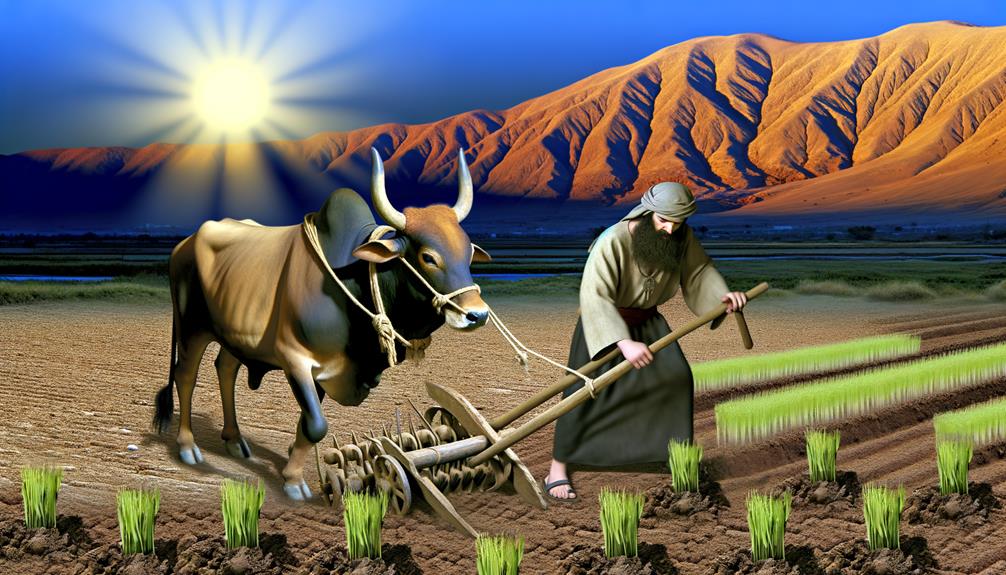
The concept of ’tilling the ground’ in the Old Scripture is imbued with profound theological and cultural significance, reflecting humanity’s relationship with the earth and God. This concept, deeply rooted in the Genesis narrative, encompasses:
- Divine Mandate: Genesis 2:15 portrays God placing Adam in Eden to ’till and keep’ it, symbolizing humanity’s stewardship.
- Post-Fall Toil: Post-Eden, tilling becomes arduous (Genesis 3:17-19), signifying human labor as both a curse and a means of subsistence.
- Covenantal Promise: Agricultural fertility is often linked to covenantal faithfulness (Deuteronomy 28:1-12).
- Prophetic Imagery: Prophets like Isaiah and Amos use tilling metaphors to convey spiritual renewal and justice (Isaiah 28:24-29, Amos 9:13).
These elements underscore the multifaceted role of tilling in biblical theology.
Tilling in New Testament
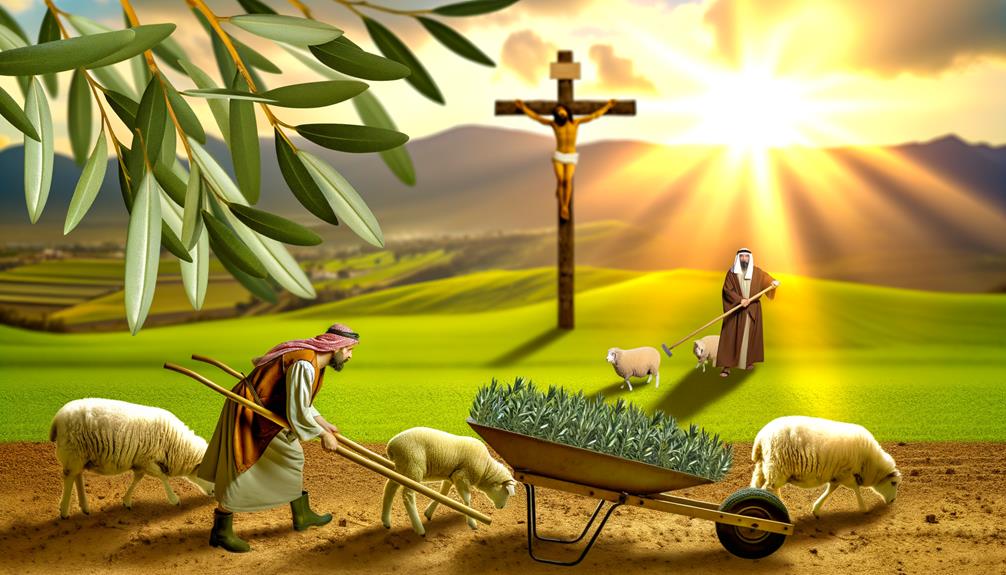
In the New Scripture, the metaphor of tilling the ground evolves to illustrate the spiritual labor and growth expected within the Christian community. This imagery underscores the transformation from mere physical labor to a profound spiritual endeavor.
Apostolic letters often emphasize cultivating virtues such as faith, hope, and love, akin to tending a field for a bountiful harvest. This cultivation requires diligence, patience, and resilience, reflecting the incremental nature of spiritual maturity.
Additionally, the metaphor signifies the collective responsibility of believers to nurture their communal and individual spiritual lives, ensuring a fertile environment for the seeds of the Gospel to flourish.
Consequently, tilling the ground becomes a powerful symbol of the ongoing, dynamic process of spiritual development.
Parables and Lessons

Examining the parables of Jesus, we observe that the act of sowing seeds is frequently employed as a metaphor for imparting spiritual truths, highlighting the necessity of preparing one’s heart and mind to receive divine teachings.
The concept of spiritual soil preparation underscores the importance of creating a receptive environment for the growth of faith and understanding.
Additionally, these parables elucidate principles of Kingdom growth, illustrating how small, initial efforts can lead to significant spiritual development and expansion.
Seed Sowing Symbolism
Seed sowing, a recurring motif in biblical parables, serves as a profound metaphor for spiritual teachings and divine truths. This symbolism is vividly illustrated in the Parable of the Sower, where Jesus elucidates the various receptions of God’s word.
The act of sowing seeds represents the dissemination of spiritual wisdom and the potential for growth in faith. Key aspects of this metaphor include:
- The Sower – Symbolizes God or His messengers, spreading divine teachings.
- The Seed – Represents the word of God or spiritual truth.
- The Ground – Depicts the hearts and minds of individuals who receive the word.
- The Harvest – Symbolizes the spiritual fruits and outcomes of accepting and nurturing the word.
This intricate symbolism underscores the transformative power of spiritual teachings.
Spiritual Soil Preparation
The concept of spiritual soil preparation, as illustrated through biblical parables, emphasizes the necessity of cultivating a receptive and fertile heart to fully embrace and nurture divine teachings.
In the Parable of the Sower, Jesus elucidates how different types of soil represent various states of human receptivity to God’s word. Rocky, thorny, and hardened soils symbolize hearts burdened with distractions, superficiality, and resistance. In contrast, good soil signifies a heart open to transformation and spiritual growth.
This allegory underscores the importance of self-reflection and intentional spiritual nurturing. Preparing one’s inner soil involves regular practices of prayer, meditation, and scriptural study, ensuring a conducive environment for the seeds of divine wisdom to take root and flourish.
Kingdom Growth Principles
Drawing from the rich tapestry of biblical parables, the principles of Kingdom growth are intricately woven through lessons that illustrate the dynamic interplay between divine providence and human responsibility.
Jesus’ teachings encapsulate these principles, emphasizing the necessity of spiritual readiness and diligent stewardship.
Key parables such as the Sower and the Mustard Seed provide profound insights:
- The Sower: Highlights the varying receptivity of human hearts to God’s Word.
- The Mustard Seed: Illustrates how small acts of faith can yield exponential growth.
- The Wheat and the Tares: Emphasizes discernment and patience in spiritual growth.
- The Talents: Underscores the importance of utilizing God-given gifts for Kingdom advancement.
These parables collectively underscore the synergy between divine grace and human effort in fostering Kingdom expansion.
Modern Interpretations

Contemporary scholars often explore the phrase ‘till the ground‘ by examining its implications in modern agricultural practices and ecological stewardship.
This biblical mandate is analyzed through the lens of sustainable farming techniques, emphasizing soil health, crop rotation, and organic methods. It underscores humanity’s responsibility not just to cultivate land for production, but to maintain the earth’s fertility and biodiversity.
Scholars also contextualize this phrase within the broader framework of environmental ethics, arguing that it calls for a balanced interaction with nature.
Consequently, ’till the ground’ is reinterpreted as an enduring directive to practice agriculture in ways that honor and preserve ecological systems, ensuring long-term sustainability and stewardship of the planet.
Tilling in Daily Life

Incorporating the principles of ’till the ground’ into daily life involves not only practical agricultural practices but also a deeper philosophical engagement with our role as caretakers of the earth. This concept extends beyond the physical act of tilling soil to encompass a broader stewardship that can be practiced in various forms:
- Sustainable Living: Adopting environmentally friendly habits, such as recycling and reducing waste, aligns with nurturing the earth.
- Community Involvement: Participating in local gardening initiatives fosters communal responsibility and connection to nature.
- Personal Growth: Just as tilling prepares the ground for new growth, individuals can cultivate personal development through continuous learning and self-improvement.
- Mindful Consumption: Making conscious choices about food and resources reflects a commitment to safeguarding the environment.
These practices collectively embody a holistic approach to ’tilling’ in daily life.
Divine Instruction

Examining the concept of ‘till the ground‘ through the lens of divine instruction reveals a profound theological framework that underscores humanity’s ordained responsibility to cultivate and steward the earth as a sacred trust.
In Genesis 2:15, God places Adam in the Garden of Eden ‘to work it and keep it,’ signifying a divine mandate. This act of tilling is not merely agricultural labor but a symbolic gesture of human partnership in God’s creative work.
Conclusion
The act of tilling the ground in biblical contexts serves as a multifaceted symbol, akin to a prism reflecting various theological and moral dimensions.
It underscores humanity’s stewardship, the intrinsic link between labor and spiritual growth, and the divine mandate for responsible living.
These layers of meaning, when examined through parables and modern interpretations, reveal a timeless relevance that speaks to both individual and communal responsibilities.
Consequently, tilling the ground encapsulates a profound, enduring spiritual and ethical imperative.