
Peridot Meaning in the Bible: Gem of Holiness
Peridot in the Bible is a gemstone that carries deep theological significance, particularly in its inclusion in the High Priest’s breastplate, as mentioned in Exodus 28:17-20. It is symbolically tied to the Tribe of Simeon, representing spiritual renewal and divine favor.
The stone’s vibrant green hue underscores themes of purity, moral integrity, and spiritual clarity. Its presence in sacred artifacts highlights its role in reflecting God’s glory and divine connection.
Through its biblical references, peridot serves as a theological emblem of divine protection, redemption, and righteousness. To explore its profound spiritual symbolism further, one should consider its varied depictions in scripture.

Key Takeaways
- Peridot symbolizes divine protection and guidance, reflecting the High Priest’s intercessory role.
- Represents spiritual renewal and divine favor, especially significant for the Tribe of Simeon.
- Its vibrant green hue signifies life, growth, and moral purity.
- Associated with divine radiance, underscoring God’s glory and transcendence.
Peridot in the High Priest’s Breastplate

Embedded within the High Priest’s breastplate, the peridot, often referred to as chrysolite in biblical texts, held significant theological and symbolic importance in ancient Israelite culture. This gemstone was among the twelve stones, each representing one of the tribes of Israel, embedded in the breastplate worn by the High Priest.
The inclusion of peridot symbolized divine protection and guidance. Its bright, verdant hue was believed to embody the perpetual renewal and divine favor bestowed upon Israel.
Theologically, it underscored the High Priest’s role as an intercessor between God and the people, reflecting the divine light and wisdom he was tasked to channel.
Consequently, the peridot in the breastplate was a profound emblem of spiritual clarity and divine connection.
Association With the Tribe of Simeon
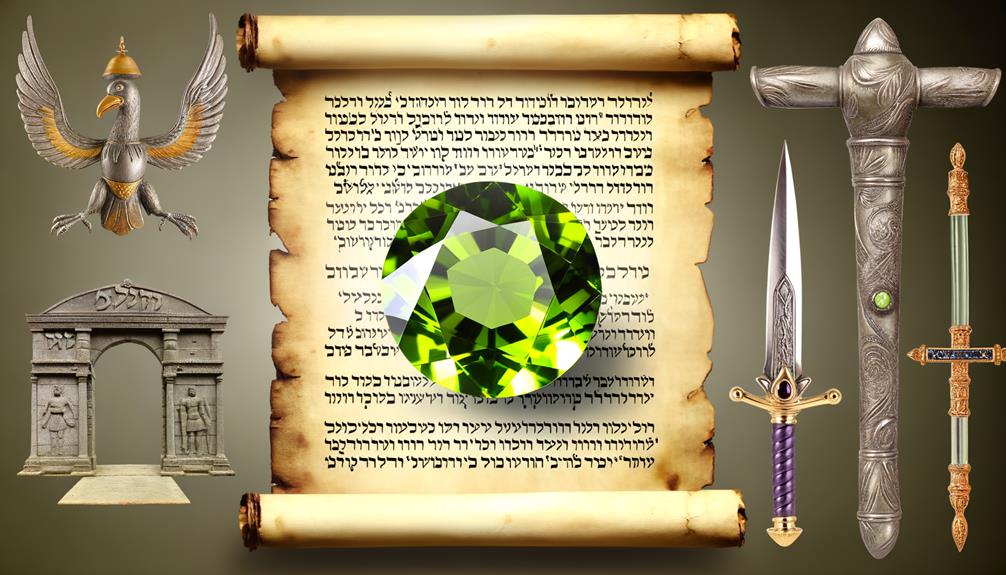
The association of peridot with the Tribe of Simeon is deeply rooted in its selection as the tribe’s representative gemstone on the High Priest’s breastplate.
This connection invites an exploration of the theological and symbolic implications, particularly how the stone’s attributes reflect Simeon’s biblical narrative.
Tribe’s Gemstone Significance
Intriguingly, the association of peridot with the tribe of Simeon in biblical texts invites a deeper exploration of its theological and cultural implications. This gemstone, mentioned in the High Priest’s breastplate, symbolizes the tribe’s unique role and attributes within the Israelite confederation.
Theologically, peridot’s vibrant green hue is often linked to notions of spiritual renewal and divine favor. Contextually, the placement of peridot for Simeon may signify the tribe’s tumultuous history and its quest for redemption, reflecting broader themes of repentance and divine justice.
Understanding this association enriches our comprehension of the ancient biblical worldview, where gemstones were not just ornamental but imbued with deep spiritual and communal significance, shaping the identity and destiny of tribes like Simeon.
Biblical Symbolism Insights
In the biblical context, peridot’s association with the tribe of Simeon invites a nuanced exploration of its symbolic resonance and theological significance.
The tribe of Simeon, known for its complex history of loyalty and strife, is often linked to themes of repentance and redemption.
Peridot, with its vibrant green hue, symbolizes renewal and growth, aligning with the transformative journey of Simeon’s descendants.
The gemstone’s placement on the High Priest’s breastplate underscores its spiritual importance, serving as a tangible reminder of divine grace and the potential for spiritual rejuvenation.
This alignment offers a profound commentary on the possibility of redemption and the enduring nature of divine promise within the biblical narrative, fostering deeper theological reflection.
Symbolism of Glory and Splendor

Frequently associated with divine radiance, peridot in the Bible symbolizes the glory and splendor of God’s presence. This verdant gem is often linked to visions of heavenly domains, reflecting the magnificence and brilliance of the divine.
In biblical texts, peridot’s luminous green hue is seen as a representation of God’s eternal light, illuminating the path for believers. Contextually, its appearance in scriptural descriptions aligns with moments of divine intervention and revelation, encapsulating the awe-inspiring nature of God’s majesty.
Theologically, peridot’s symbolism underscores the transcendence and immanence of God, offering believers a tangible connection to the divine splendor. This gem’s biblical significance therefore enriches the spiritual narrative, emphasizing God’s omnipotence and the radiant beauty of His creation.
Peridot as a Sign of Purity

Peridot’s association with purity in biblical texts is rooted in its vibrant green color, which symbolizes renewal, innocence, and moral integrity.
Theologically, green is often linked to life and growth, echoing themes of divine creation and rejuvenation.
Biblical references to peridot, particularly in the context of the high priest’s breastplate (Exodus 28:17-20), emphasize its role in reflecting the sanctity and moral uprightness expected of spiritual leaders.
This gemstone’s clarity and brilliance serve as metaphors for the transparency and unblemished nature of a life led in accordance with divine precepts.
Contextually, peridot’s purity aligns with the broader biblical narrative that underscores a life free from corruption and dedicated to spiritual and ethical excellence.
Representation of Righteousness

The vibrant green hue of peridot not only symbolizes purity but also serves as a profound emblem of righteousness within biblical texts.
This gemstone’s vivid coloration is often associated with divine light, reflecting the moral clarity and uprightness expected of the faithful. In biblical theology, righteousness encompasses both ethical conduct and alignment with God’s will.
Peridot’s presence in the priestly breastplate, as described in Exodus 28:17-20, underscores its role in symbolizing the righteousness required of spiritual leaders. Additionally, the stone’s enduring luster parallels the steadfastness of a righteous life.
Consequently, peridot becomes more than a mere ornamental gem; it is a theological symbol reinforcing the virtues of moral integrity and divine favor in biblical narrative.
Historical Context in Biblical Times
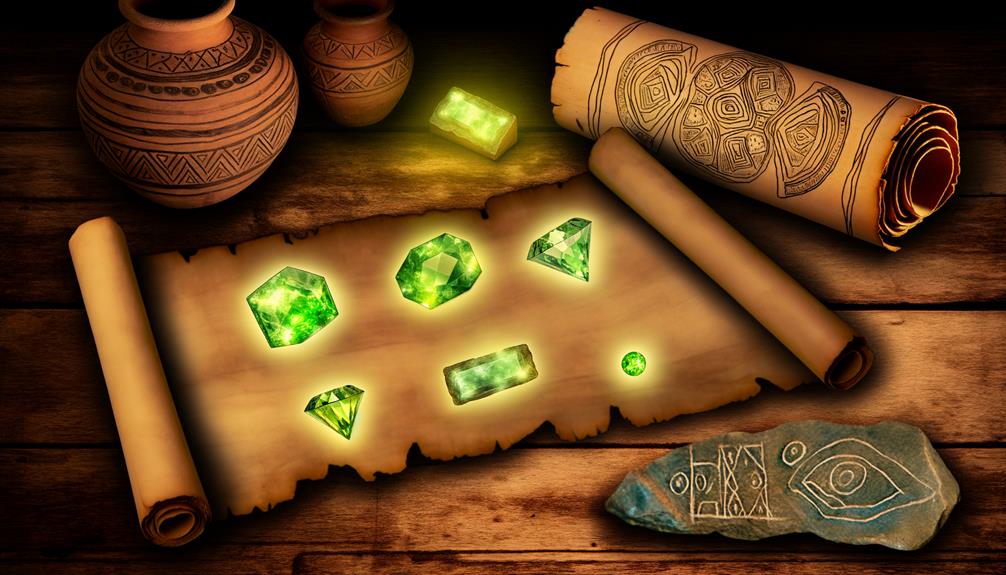
In the historical context of biblical times, peridot is referenced in several ancient texts, including its mention as a stone in the High Priest’s breastplate.
This gemstone’s symbolic significance is often tied to themes of purity and divine favor, reflecting its esteemed status within scriptural narratives.
Ancient Biblical References
References to peridot in ancient biblical texts reveal its esteemed status among precious stones and its symbolic significance within the theological and cultural framework of the time.
Found in several scriptural passages, peridot, often referred to as chrysolite, is prominently mentioned as one of the stones in the High Priest’s breastplate in Exodus 28:17-20. This inclusion underscores its sacred role within the religious rites of ancient Israel.
Additionally, the Book of Revelation (21:20) cites peridot among the twelve foundation stones of the New Jerusalem, symbolizing divine perfection and eternal glory.
Such references highlight peridot’s integral place in biblical cosmology, reflecting both its physical beauty and its deeper theological import in conveying divine truths.
Symbolic Significance Explained
Understanding the symbolic significance of peridot in biblical times requires examining its theological and cultural connotations within the ancient world.
Peridot, often referred to as chrysolite, was esteemed not merely for its beauty but for its perceived divine attributes. The green hue of peridot was thought to embody renewal, growth, and the eternal nature of spiritual truths.
Culturally, it was believed to possess protective qualities, warding off evil spirits and ensuring spiritual clarity. Theologically, this gemstone was linked to divine favor and was included in priestly garments, symbolizing purity and holiness.
Its inclusion in sacred artifacts and vestments underscored its role in facilitating a closer connection to the divine, reflecting the profound intersection of faith and tradition in biblical times.
Usage in Scriptures
The presence of peridot in biblical scriptures, referred to as chrysolite, highlights its theological importance and its role within the religious and cultural practices of ancient Israel.
Remarkably mentioned in the Book of Exodus (28:17-20) as one of the stones in the High Priest’s breastplate, peridot symbolized divine communication and protection. Its inclusion among the twelve stones representing the tribes of Israel underscores its significance.
Additionally, Revelation 21:19-20 describes peridot as part of the New Jerusalem’s foundation, indicating its eternal value.
The gemstone’s frequent association with light and purity in scriptures reflects its perceived ability to connect the earthly with the divine, thereby reinforcing its spiritual and ritualistic prominence in biblical times.
Spiritual Significance in Scriptures

Throughout the Bible, the gemstone peridot is often associated with themes of purity, spiritual renewal, and divine favor. This connection can be elucidated through various scriptural references and theological interpretations:
- Purity: Peridot’s green hue symbolizes life and purity, reflecting the cleansing and renewing power of faith.
- Spiritual Renewal: As a stone of new beginnings, peridot is emblematic of the transformative process inherent in spiritual rebirth.
- Divine Favor: The gem’s frequent mention in priestly garments signifies its role as a marker of God’s chosen and blessed individuals.
- Heavenly Representation: In apocalyptic literature, peridot is included among the twelve foundation stones of the New Jerusalem, symbolizing divine order and celestial beauty.
These elements underscore peridot’s profound spiritual significance in biblical context.
Peridot in Modern Faith Interpretations

Many contemporary theologians and spiritual leaders continue to explore and reinterpret the significance of peridot within the framework of modern faith practices, connecting its ancient biblical symbolism with current spiritual themes and rituals. This green gemstone, once associated with divine favor and protection, is now often seen as a symbol of spiritual renewal, emotional healing, and reconciliation. Modern interpretations emphasize its capacity to foster a deeper connection with the divine and to enhance personal spiritual growth.
| Aspect | Ancient Symbolism | Modern Interpretation |
|---|---|---|
| Divine Favor | Sign of God’s Approval | Spiritual Renewal |
| Protection | Shield from Harm | Emotional Healing |
| Reconciliation | Restoring Harmony | Enhancing Spiritual Growth |
Such reinterpretations bridge historical contexts with contemporary faith experiences.
Conclusion
Peridot’s multifaceted significance in biblical contexts encompasses its role in the High Priest’s Breastplate, its association with the Tribe of Simeon, and its symbolism of glory, splendor, purity, and righteousness.
Historically valued, peridot’s spiritual resonance is evident in both ancient scriptures and contemporary faith interpretations.
This gemstone’s enduring theological importance, akin to a spiritual ‘WiFi,’ continues to bridge past and present, reflecting the perpetual quest for divine connection and moral integrity.