
Perilous Times Meaning in the Bible: Last Days Warning
In biblical terms, ‘perilous times‘ refer to periods of profound moral decay, spiritual deception, and societal unrest. Derived from the Greek word ‘chalepos’, these times are marked by significant moral and ethical challenges, as highlighted in passages like 2 Timothy 3:1-5 and Matthew 24.
Early Christian texts contextualize these crises with the Roman oppression and internal church strife. Indicators include widespread self-centeredness, materialism, and disrespect for sacred principles.
Understanding these perilous times through Scripture and historical context reveals essential insights into moral steadfastness and spiritual resilience, inviting the reader to discover deeper theological perspectives.

Key Takeaways
- ‘Perilous times’ in the Bible refer to periods marked by moral decay, spiritual deception, and societal unrest.
- 2 Timothy 3:1-5 highlights characteristics of perilous times, including self-centeredness, materialism, and corruption.
- Matthew 24 and Revelation 6 depict wars, natural disasters, and cosmic disturbances as signs of perilous times.
- Early Christians faced significant persecution and societal upheaval, providing historical context for understanding perilous times.
Biblical References to Perilous Times

How does the Bible define perilous times, and what scriptural passages provide insight into this concept?
The term ‘perilous times’ finds its roots in various Biblical texts, delineating periods marked by moral decay, spiritual deception, and societal unrest.
The Greek word ‘chalepos,’ translated as perilous, appears in the New Covenant, capturing the gravity of such times.
Notable passages include Matthew 24, where Jesus describes end-time tribulations, and 2 Peter 3, warning of scoffers in the last days.
Historical context underscores these warnings, as the early church faced persecution and doctrinal challenges.
Scripturally, perilous times signify not just physical dangers but profound spiritual crises, urging believers to discern and steadfastly adhere to faith amidst adversity.
2 Timothy 3:1 Analysis

Examining Timothy 3:1, we find an explicit articulation of perilous times, where Paul warns that ‘in the last days perilous times shall come,’ encapsulating the essence of moral and spiritual crises that will challenge the faith and perseverance of believers.
Paul delineates these times through a forewarning of various societal and individual moral failures. This passage serves as a poignant reminder to uphold righteousness amidst adversity.
Key aspects highlighted include:
- Moral Decay: A decline in ethical behavior and integrity.
- Spiritual Apathy: A lack of genuine devotion and spiritual fervor.
This analysis underscores the importance of vigilance and spiritual readiness in the face of prophesied challenges.
Historical Context and Background
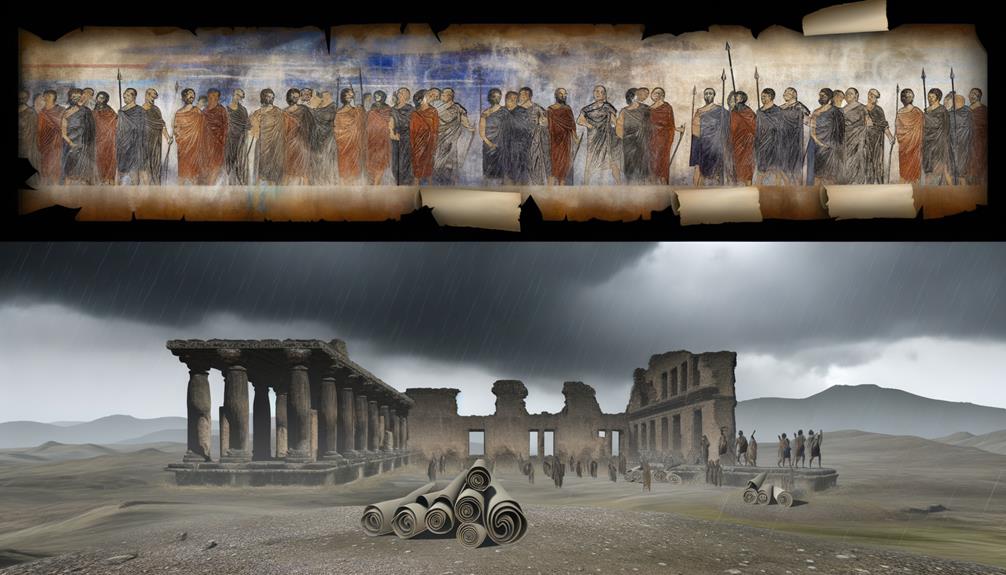
To fully understand the meaning of perilous times as mentioned in 2 Timothy 3:1, it is essential to contemplate the historical context in which this epistle was written.
During the first century, early Christians faced significant persecution and societal upheaval, which is reflected in Paul’s admonitions.
Analyzing these scriptural references within their historical setting provides deeper insight into the trials and tribulations anticipated by the early church.
Biblical Historical Setting
The concept of ‘perilous times’ in the Bible finds its roots in the socio-political and religious turbulence experienced by the early Christian communities. This period was marked by significant challenges:
- Roman Oppression: Christians faced severe persecution from Roman authorities, who viewed the new faith as a threat to imperial stability.
- Jewish Resistance: Early Christians often encountered hostility from Jewish leaders who saw them as heretical.
These historical pressures not only tested the faith of early believers but also shaped the apocalyptic literature of the New Covenant, giving rise to the notion of ‘perilous times’ as periods of trial and divine testing.
Scriptural References Analyzed
Many scriptural references to ‘perilous times’ are found within the New Covenant, particularly in the Pauline Epistles, which provide both a theological framework and historical context for understanding these periods of tribulation. Significantly, 2 Timothy 3:1-5 describes the characteristics of perilous times, highlighting moral decay and societal corruption. Understanding these scriptural insights requires examining the socio-political environment of the early Christian communities, often fraught with persecution and existential threats.
| Scripture | Contextual Significance |
|---|---|
| 2 Timothy 3:1-5 | Moral decay and societal corruption |
| 1 Timothy 4:1-3 | Apostasy and false teachings |
| Matthew 24:6-8 | Wars, famines, and natural disasters |
| Revelation 6:1-8 | The Four Horsemen of the Apocalypse |
| Luke 21:25-26 | Cosmic disturbances and fear |
Such passages underscore the trials faced by early Christians, emphasizing endurance and faith.
Signs of Perilous Times

The Bible provides several indicators of perilous times, especially characterized by an increase in wickedness and the escalation of natural disasters.
Scriptural references, such as those found in 2 Timothy 3:1-5 and Matthew 24:7-8, highlight these phenomena as harbingers of the end times.
Historically, these signs have been interpreted as both symbolic and literal manifestations of a world increasingly distanced from divine principles.
Increased Wickedness Everywhere
Scripture warns that an increase in wickedness and moral decay is a clear indicator of perilous times, as evidenced by passages such as 2 Timothy 3:1-5, which describe a society rife with selfishness, greed, and blasphemy.
This biblical perspective highlights the erosion of ethical standards and the prevalence of vice as harbingers of spiritual peril. Theologically, this aligns with the historical cycles of moral decline seen throughout scriptures.
Key indicators include:
- Self-centeredness: Individuals prioritizing personal desires over communal well-being.
- Materialism: An insatiable pursuit of wealth at the expense of spiritual values.
Such signs, both ancient and contemporary, underscore the urgent need for spiritual vigilance and moral fortitude.
Natural Disasters Escalating
An intensification of natural disasters serves as a poignant reminder of the perilous times foretold in biblical prophecy.
Scripture, particularly in the books of Matthew 24:7-8 and Luke 21:11, describes a world increasingly beset by earthquakes, famines, and pestilences as signs of the approaching end times.
Historical records show a notable rise in the frequency and severity of such calamities, aligning with these prophetic warnings.
These events compel believers to discern the spiritual implications and prepare for the eschatological fulfillment.
Moral and Ethical Challenges

Throughout biblical history, moral and ethical challenges have consistently confronted the followers of God, demanding unwavering integrity and steadfast faith. Scriptural narratives reveal numerous instances where believers were tested in their commitment to divine principles. From the temptations faced by Adam and Eve in Eden to the trials of the early Christians under Roman persecution, these ethical dilemmas serve as instructive paradigms for contemporary believers.
- Adam and Eve’s disobedience: A profound moral failure that introduced sin into the world.
- Joseph’s resistance to Potiphar’s wife: Exemplifies steadfastness in the face of temptation.
Understanding these challenges within their historical and theological contexts provides valuable insights into maneuvering the moral complexities of today’s perilous times.
Spiritual Implications for Believers

The moral and ethical challenges chronicled in biblical history underscore profound spiritual implications for believers, emphasizing the necessity of a resilient faith and adherence to divine principles amidst contemporary adversities.
Scriptural passages, such as 2 Timothy 3:1-5, detail the characteristics of perilous times, highlighting the erosion of godliness and the prevalence of self-centeredness. For the faithful, these descriptions serve as both a warning and a call to deeper spiritual commitment.
Historical context reveals that maneuvering such tumultuous periods requires unwavering trust in God’s sovereignty and a commitment to living out His precepts.
The spiritual discipline cultivated through prayer, scripture study, and communal worship fortifies believers, enabling them to remain steadfast and spiritually anchored regardless of external trials.
Lessons From Biblical Characters
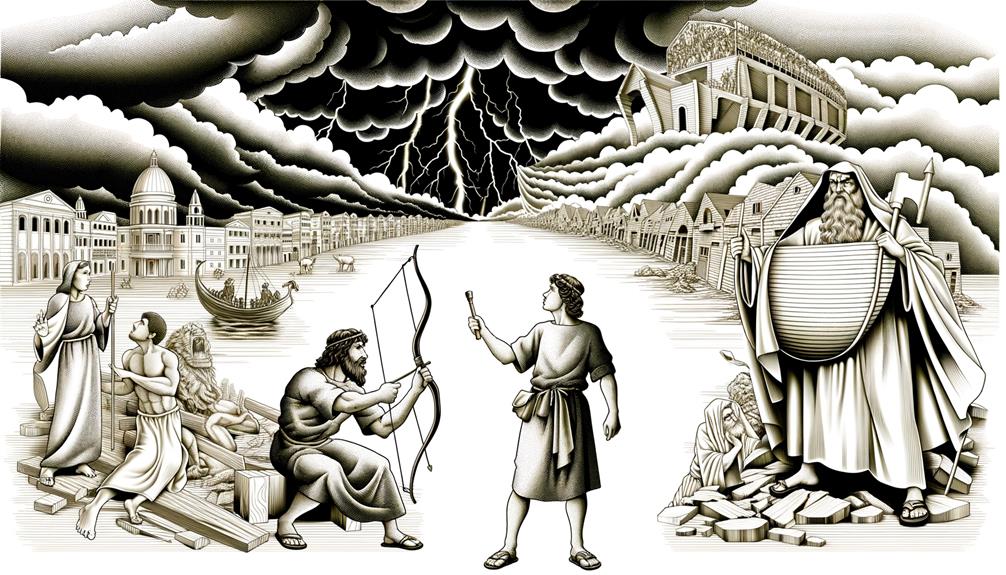
Biblical characters like Joseph, Daniel, and Esther provide timeless examples of faith and resilience, offering profound lessons for contemporary believers traversing perilous times. Their narratives, steeped in scriptural wisdom and historical context, reveal how God’s providence and steadfast faith can guide individuals through adversity.
Joseph: Sold into slavery, Joseph’s unwavering faith and integrity led to his rise as a powerful leader in Egypt, exemplifying trust in divine plans.
Daniel: Amidst Babylonian exile, Daniel’s commitment to God, even in the face of death, showcased the power of unwavering devotion.
Esther: By risking her life to save her people, Esther exemplified courage and divine purpose, demonstrating the impact of faith-driven action.
These accounts inspire believers to remain steadfast under duress.
Modern-Day Parallels

Often, contemporary believers find themselves maneuvering challenges that echo the trials faced by biblical figures, drawing on the same faith and resilience to endure and overcome modern-day adversities.
Economic instability, political turmoil, and social unrest resonate with the tribulations described in 2 Timothy 3:1-5, where perilous times are characterized by moral decay and widespread selfishness.
Historical context reveals that just as the early Christians faced persecution and societal upheaval, modern-day Christians encounter comparable pressures, requiring steadfastness and spiritual vigilance.
Theological insights from scripture offer timeless guidance, reminding believers of God’s sovereignty and the enduring power of prayer and community.
Modern parallels underscore that while the landscape may have changed, the spiritual principles remain profoundly relevant.
Coping Strategies for Christians

Steering through perilous times requires Christians to employ a multifaceted approach grounded in scriptural wisdom, historical precedent, and practical spirituality.
Biblical teachings offer a profound reservoir of coping strategies that have withstood the tests of time. By examining the lives of early Christians and the counsel provided in the Epistles, believers can find solace and direction.
Key strategies include:
- Prayer and Meditation: Immersing oneself in God’s presence through prayer and reflection on His word.
- Community Support: Engaging with fellow believers for mutual encouragement and accountability.
These methods collectively fortify Christians, enabling them to navigate turbulent times with resilience and hope.
Conclusion
In examining the concept of perilous times within the biblical framework, one sees a multifaceted phenomenon likened to a storm that tests the fortitude of both ancient and contemporary believers.
Scriptural analysis, historical context, and moral challenges present a thorough understanding.
By recognizing the spiritual implications and learning from biblical characters, believers can find solace and guidance.
Modern parallels accentuate the timeless relevance, while coping strategies rooted in faith offer resilience amidst adversity.