So Mote It Be Meaning in the Bible: Spiritual Affirmation
“So Mote It Be” is not explicitly found in the Bible, but its essence parallels the biblical term ‘Amen,’ which signifies truth and divine approval. Originating from medieval English and closely associated with Freemasonry, the phrase echoes biblical affirmations rooted in the Hebrew ‘Amen’ and the Psalms’ ‘Selah.’ These affirmations underscore the truth, reliability, and commitment to divine promises.
While ‘So Mote It Be’ reflects the intention and finality in various ritual contexts, its spiritual and historical layers intersect with biblical traditions in nuanced ways, offering deeper insights into its significance when exploring further.

Key Takeaways
- The phrase ‘So Mote It Be’ is not explicitly found in the Bible but reflects a similar affirmation as ‘Amen.’
- ‘So Mote It Be’ originates from medieval English, signifying assent and agreement, akin to biblical expressions of affirmation.
- In biblical terms, ‘Amen’ signifies truth and reliability, often translated as ‘so be it,’ used to confirm prayers and declarations.
- The phrase is historically linked to Freemasonry, emphasizing a desire for divine approval and confirmation in rituals and prayers.
Origins of ‘So Mote It Be’

The phrase ‘So Mote It Be’ finds its origins in medieval English vernacular, specifically within the rituals and liturgical language of Freemasonry.
This expression is commonly employed at the conclusion of prayers or formal statements, symbolizing assent or affirmation, akin to the word ‘Amen’ in Christian liturgical practices.
Its etymology can be traced to the Old English verb ‘motan,’ meaning ‘to be allowed’ or ‘must,’ thereby conveying a sense of inevitability or divine will.
Freemasonry, a fraternal organization that emerged in the late 16th to early 17th century, adopted this phrase to encapsulate its philosophical and spiritual ideologies.
The phrase underscores a profound respect for the mysteries of existence and the belief in a higher, guiding power.
Biblical Concept of Affirmation

Exploring the biblical concept of affirmation reveals a multifaceted approach to expressing agreement, confirmation, and faithful trust in God’s promises.
Within Scripture, affirmations often manifest through the Hebrew word ‘Amen,’ signifying truth and reliability. This term, frequently translated as ‘so be it,’ underscores a deep-rooted acceptance and endorsement of divine will.
The New Covenant further exemplifies affirmation through Christ’s use of ‘verily’ or ‘truly,’ reinforcing the certainty of His teachings.
Additionally, the Psalms and prophetic writings exhibit affirmation by highlighting God’s unwavering faithfulness and the believers’ steadfast trust.
Consequently, biblical affirmation is not merely verbal assent but a profound, holistic commitment to God’s covenantal assurances and an active participation in the realization of His divine plan.
Ancient Languages and Phrases

Understanding ancient languages and phrases provides critical insight into the cultural and historical contexts that shape biblical texts and their interpretations. The Bible, originally written in Hebrew, Greek, and Aramaic, contains numerous phrases whose meanings are deeply rooted in the lexicon and idiom of these languages. Recognizing these nuances allows for a more profound comprehension of the text.
| Language | Key Phrase |
|---|---|
| Hebrew | Shalom |
| Greek | Agape |
| Aramaic | Maranatha |
| Hebrew | Ruach |
| Greek | Logos |
Each term encapsulates complex theological and cultural connotations that are pivotal for accurate exegesis. For example, “Shalom” extends beyond simple peace to signify completeness and welfare, illustrating the multifaceted nature of biblical language.
‘Amen’ and Its Significance
In biblical contexts, the term ‘Amen’ signifies affirmation, truth, and agreement, often concluding prayers and declarations with a profound sense of solemnity and conviction.
Originating from the Hebrew root ‘aman,’ meaning ‘to confirm’ or ‘to be faithful,’ ‘Amen’ encapsulates the essence of reliability and steadfastness.
Its use in both the Old and New Scriptures underscores its theological importance, serving as a verbal seal of sincerity and trust in divine promises.
In liturgical practices, the utterance of ‘Amen’ by congregants not only ratifies the preceding words but also fosters a collective acknowledgment of faith.
This term, consequently, functions as both an individual and communal expression of unwavering belief and commitment to God’s will.
Parallels in Hebrew Scriptures
The concept of verbal affirmations akin to ‘So Mote It Be’ can be discerned within various passages of the Hebrew Scriptures, reflecting a similar function of ratifying solemn declarations and covenants. Words such as ‘Amen,’ ‘Selah,’ and phrases like ‘Therefore says the Lord’ serve to underscore the gravity and finality of divine pronouncements and human vows. These expressions underscore the cultural and theological significance of spoken affirmations in ancient Hebrew tradition. Consider the table below, which illustrates key examples:
| Hebrew Term | Scriptural Reference | Meaning/Function |
|---|---|---|
| Amen | Numbers 5:22 | Agreement, affirmation |
| Selah | Psalms 3:4 | Pause, reflection |
| Therefore says the Lord | Isaiah 43:1 | Divine proclamation |
| Verily | Genesis 22:16 | Assurance, truthfulness |
| So be it | Deuteronomy 27:15-26 | Consent, acceptance |
New Testament Reflections

Frequently, the New Covenant echoes the tradition of solemn affirmations found in the Hebrew Scriptures, illustrating continuity in the use of verbal endorsements to validate significant declarations and truths.
In the New Scriptures, phrases such as ‘Amen’ serve a similar function to ‘So mote it be,’ encapsulating a deep affirmation of the preceding statement. Jesus frequently employs ‘Amen, amen, I say to you’ (John 3:3) to underscore the veracity and importance of His teachings. This usage highlights the integral role of spoken affirmations in the transmission of divine truths.
Additionally, the apostolic letters often conclude with “Amen,” emphasizing the acceptance and sealing of spiritual truths, thereby reflecting a consistent tradition of verbal ratification within Christian Scriptures.
Symbolism in Christian Liturgy
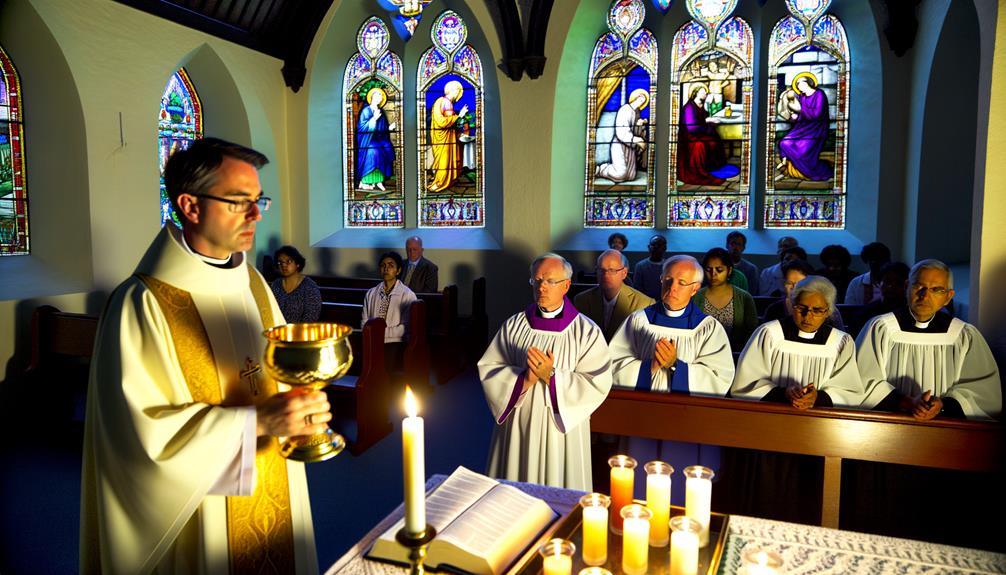
Christian liturgy abounds with rich symbolism that conveys theological truths and enhances the spiritual experience of the faithful. Symbols in liturgy serve as tangible representations of divine realities, fostering deeper understanding and engagement. Elements such as water, bread, wine, and light are imbued with profound meaning, each contributing to the narrative of salvation and divine grace.
| Symbol | Representation |
|---|---|
| Water | Baptism, cleansing from sin |
| Bread | Body of Christ, sustenance |
| Wine | Blood of Christ, covenant |
| Light | Christ as the Light of the World |
| Cross | Sacrifice, redemption |
This symbolic language communicates complex theological concepts in an accessible manner, enriching worship and fostering a sense of communal and individual sacred encounter.
Influence on Modern Faith Practices
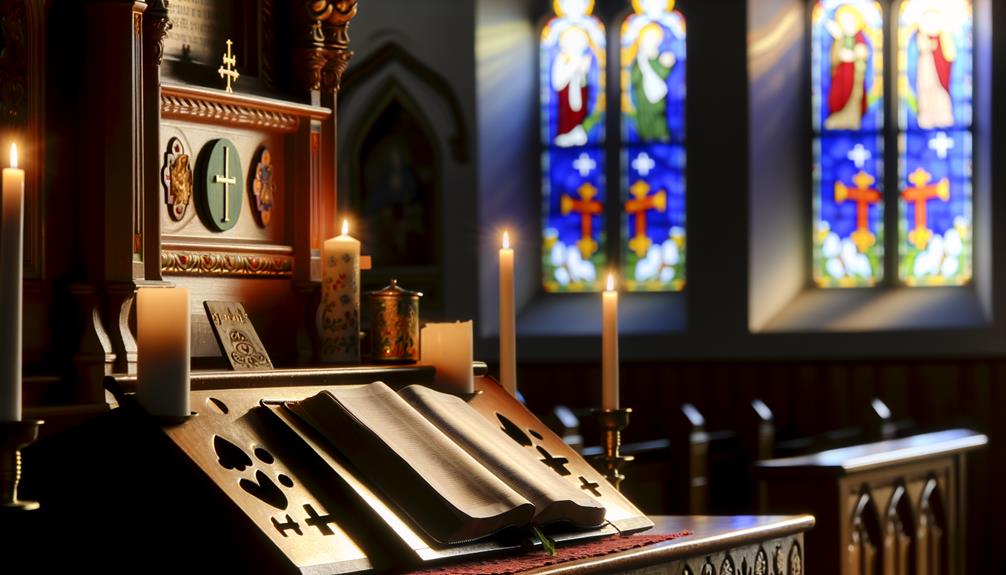
Building upon the rich symbolic traditions in Christian liturgy, modern faith practices continue to be profoundly shaped by these enduring representations, adapting them to contemporary contexts while preserving their theological significance.
The phrase ‘So mote it be,’ though not explicitly biblical, resonates with contemporary worship through its invocation of divine will and affirmation of prayer.
Churches and faith communities frequently incorporate such traditional expressions to evoke a sense of continuity and sacredness.
These practices underscore the importance of historical continuity in worship, reinforcing communal identity and spiritual depth.
Spiritual and Historical Impact

The phrase ‘So mote it be,’ despite its absence from biblical texts, carries significant spiritual and historical weight, influencing various religious traditions and practices. Its usage can be traced back to medieval rituals and has permeated various esoteric and fraternal organizations. This phrase signifies a solemn affirmation, akin to ‘Amen’ in Christian liturgy.
Its impact extends beyond mere linguistic expression, embedding itself in the following aspects:
- Freemasonry: Integral to Masonic rituals, symbolizing agreement and unity.
- Wicca: Often used in spell-casting and rituals, representing intent and finality.
- Literature: Found in historical texts, reflecting cultural and spiritual contexts.
Such historical continuity underscores its enduring relevance.
Conclusion
In summation, the phrase ‘so mote it be,’ while not explicitly found in the Bible, shares conceptual kinship with the term ‘Amen,’ both serving as affirmations of spiritual truth and divine will.
This parallel underscores the timeless nature of humanity’s pursuit of divine approval and the quest for spiritual affirmation.
As the saying goes, ‘Old habits die hard,’ illustrating that the enduring use of such affirmations reflects a deep-rooted continuity in religious traditions and practices.