Gilgal in the Bible Meaning: Place of Renewal
Gilgal, derived from the Hebrew term meaning ‘circle’ or ‘wheel,’ occupies a significant place in biblical narratives, especially in the book of Joshua. It was the first encampment of the Israelites after crossing the Jordan River, where they erected twelve memorial stones and renewed the Abrahamic covenant through circumcision.
Gilgal also served as the site for celebrating the Passover, marking the change from wilderness wandering to life in the Promised Land. Theologically, Gilgal symbolizes spiritual renewal and covenantal fidelity, while prophetically, it represents both judgment and hope for Israel.
Exploring further reveals its enduring impact on Israel’s spiritual journey.

Key Takeaways
- Gilgal means ‘circle’ or ‘wheel’ in Hebrew, symbolizing cycles and divine movements.
- It was the Israelites’ first encampment after crossing the Jordan River (Joshua 4:19-20).
- The site commemorates the renewal of the covenant through circumcision (Joshua 5:2-9).
- Gilgal is associated with both spiritual renewal and judgment in prophetic texts (Hosea 9:15, Amos 4:4).
Etymology of Gilgal

Deriving from the Hebrew root “gilgal,” which means ‘circle’ or ‘wheel,’ the name Gilgal is often associated with a circular or rolling motion, reflecting its significance in biblical narratives. The etymology underscores a symbolic representation of cycles, shifts, and divine movements.
In ancient Semitic languages, words derived from this root frequently denote rotational or cyclical activities, indicative of renewal or continuity. This linguistic background is essential for interpreting the term within its scriptural context.
Gilgal’s connotations extend beyond mere geography; they resonate with themes of spiritual renewal and covenantal milestones in Israelite history. In this way, understanding the etymology provides a foundational lens through which the name’s deeper theological and historical implications are discerned.
Gilgal in Joshua’s Time

Building upon the etymological significance, Gilgal emerges prominently in the biblical accounts of Joshua’s leadership, serving as a pivotal location for significant events in Israel’s early settlement in the Promised Land.
It is at Gilgal where the Israelites first camped after crossing the Jordan River (Joshua 4:19-20). Here, Joshua set up twelve stones taken from the Jordan as a memorial of their crossing.
Additionally, Gilgal served as the site for the renewal of the covenant through mass circumcision (Joshua 5:2-9), marking the cessation of the Israelites’ reproach from Egypt.
The Passover was also celebrated at Gilgal (Joshua 5:10-12), symbolizing the shift from wilderness wandering to the conquest and settlement of Canaan.
Prophetic Significance of Gilgal

The prophetic significance of Gilgal is underscored by its recurrent mention in the books of the prophets, particularly in relation to Israel’s faithfulness and covenantal relationship with God.
Gilgal is often depicted as a place where Israel’s spiritual condition is judged. In Hosea 9:15 and Amos 4:4, Gilgal is cited as a site of rebellion and idolatry, serving as a symbol of the nation’s departure from divine commands.
Conversely, it is also a place of renewal, where Joshua circumcised the Israelites, reinstating their covenant with God (Joshua 5:2-9).
This duality—both a place of judgment and renewal—emphasizes Gilgal’s role in reflecting Israel’s fluctuating fidelity to their covenant with Yahweh.
Gilgal and the Israelites’ Journey
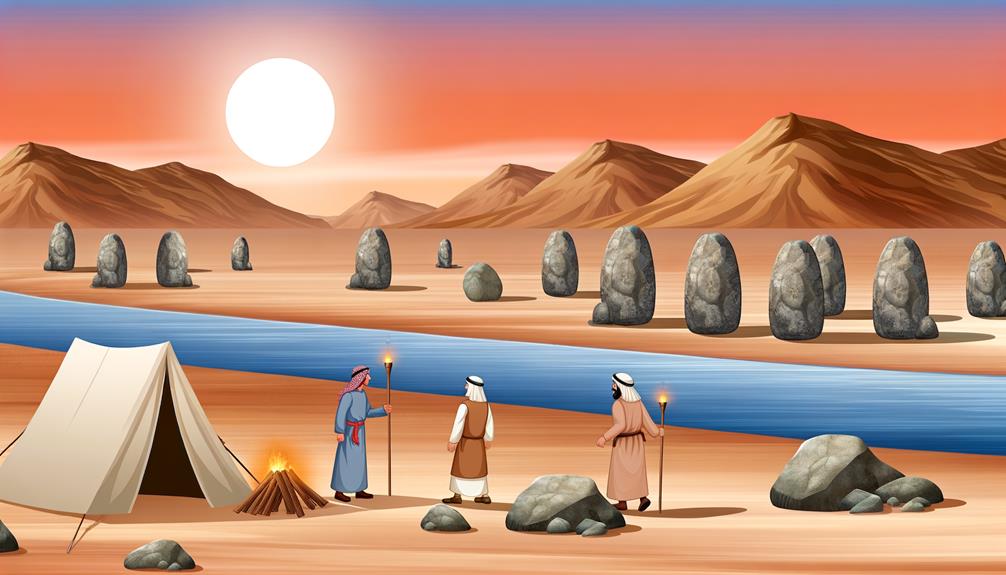
As the Israelites entered the Promised Land, Gilgal served as their initial encampment and strategic base, marking the commencement of their conquest and settlement in Canaan. This site, situated near the Jordan River, was where Joshua and the Israelites first camped after crossing the miraculously parted waters.
Biblically, Gilgal holds profound historical significance; it was here that Joshua erected twelve stones taken from the Jordan as a memorial (Joshua 4:20-24).
Additionally, Gilgal was the location where the Israelites circumcised the new generation born in the wilderness, reaffirming the Abrahamic Covenant (Joshua 5:2-9).
This act of consecration prepared them spiritually and physically for the battles ahead, underscoring Gilgal’s pivotal role in their journey.
Lessons From Gilgal
Drawing from the events at Gilgal, one can glean profound theological and historical lessons that highlight the importance of obedience, remembrance, and covenant in the Israelites’ faith journey. Gilgal served as a physical representation of God’s fulfillment of His promises, reinforcing the need for the Israelites to adhere to His commandments. The following table encapsulates the key lessons drawn from Gilgal:
| Lesson | Description | Biblical Reference |
|---|---|---|
| Obedience | Following God’s instructions leads to success | Joshua 5:2-9 |
| Remembrance | Memorial stones reminded Israel of God’s acts | Joshua 4:20-24 |
| Covenant | Renewal of the covenant through circumcision | Joshua 5:8-9 |
These lessons underscore the pivotal role Gilgal played in shaping the spiritual landscape of the Israelites.
Conclusion
Gilgal, a cornerstone in Biblical history, emerges as a multifaceted symbol. Its etymology roots it in a narrative of renewal and transformation.
In Joshua’s time, it served as a sacred landmark, while prophetic texts imbue it with further spiritual resonance. Integral to the Israelites’ journey, Gilgal encapsulates themes of faith and divine guidance.
Ultimately, Gilgal stands as a witness to the enduring lessons of obedience, perseverance, and the ever-present covenant between the Divine and humanity.