Tanner Meaning In The Bible: Symbol of Cleansing
In the Bible, tanners played an important yet socially marginalized role, transforming animal hides into usable leather through labor-intensive processes. Situated on the outskirts due to odors and ritual impurity from handling dead animals, tanners occupied a low social status despite their essential contributions.
Significantly, Simon the Tanner‘s home in Joppa is referenced in Acts 9:43, signaling evolving perspectives on purity and inclusion. This duality of practical necessity and religious uncleanliness underscores broader spiritual themes of transformation and redemption, encouraging a reevaluation of societal judgments.
The exploration of tanners reveals deeper insights into societal norms and divine expectations.

Key Takeaways
- Tanners worked with animal hides, making them ritually unclean according to biblical purity laws.
- Despite societal disdain, tanners provided essential goods like leather for clothing and religious artifacts.
- Simon the Tanner’s mention in Acts 9:43 signifies evolving perspectives on purity and inclusion.
- The transformation of hides into leather symbolizes spiritual and moral change in biblical teachings.
Historical Context of Tanners
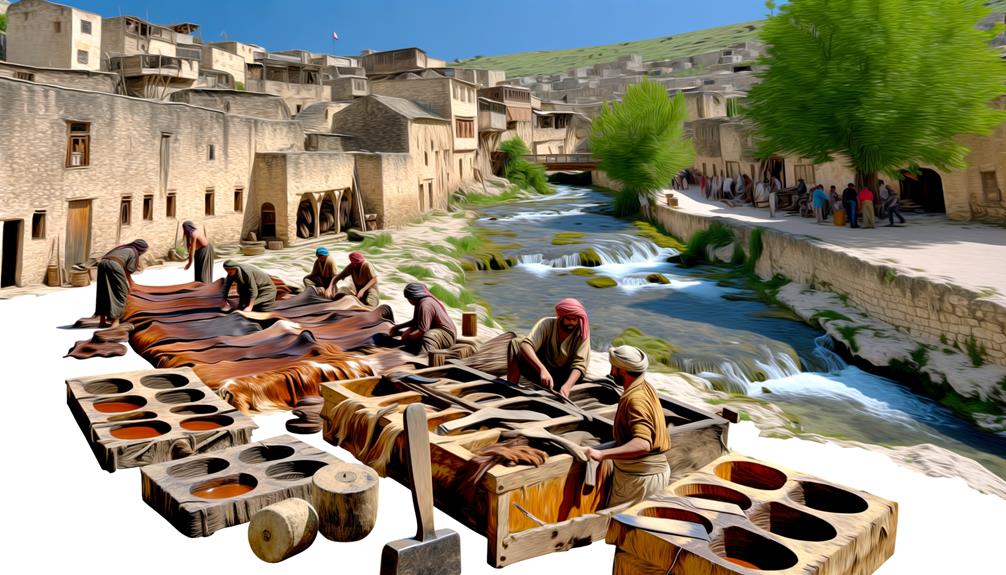
In ancient biblical times, tanners played a crucial role in society by processing animal hides into leather, a material essential for various daily and ritualistic uses.
The significance of tanners is underscored by their contributions to the production of goods such as clothing, footwear, and parchment. Leather was integral not only for practical items but also for religious artifacts, including scrolls and temple furnishings.
The tanning process itself was labor-intensive, requiring expertise in handling raw materials and knowledge of techniques to treat and preserve hides. This profession, often inherited through generations, necessitated a deep understanding of chemical processes involving tannins from plants.
Consequently, tanners were indispensable craftsmen whose skills supported both mundane and sacred aspects of life in biblical communities.
Societal Perceptions
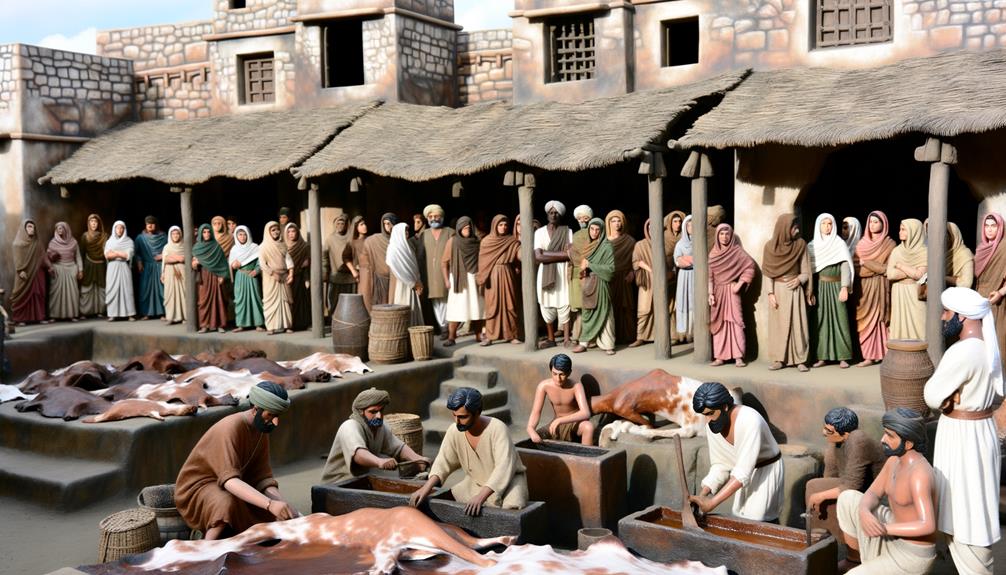
Despite their essential contributions to daily life and religious practices, tanners often faced societal disdain due to the malodorous and ritually impure nature of their work.
In ancient societies, the process of tanning animal hides involved the use of chemicals and organic materials that produced strong, unpleasant odors, leading to tanneries being situated on the outskirts of towns.
Additionally, handling dead animals was considered ritually unclean, further marginalizing tanners within the community.
This societal perception was compounded by the fact that tanners were frequently in contact with substances deemed impure by religious standards.
Consequently, tanners occupied a lower social status, despite the indispensable nature of their craft in producing leather for clothing, tools, and religious articles.
Biblical References
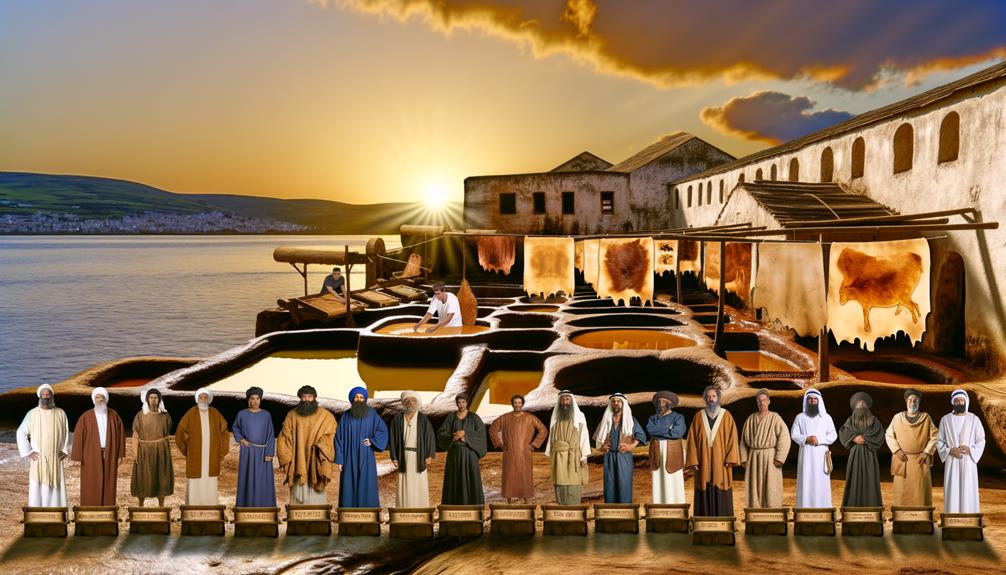
Examining biblical references to tanners reveals a complex interplay between their necessary societal role and their marginalization due to ritual impurity.
In Acts 9:43, Simon the Tanner‘s home in Joppa serves as a pivotal setting where Peter receives a vision that challenges Jewish dietary laws. Despite their essential function in providing leather goods, tanners were often ostracized for working with dead animals, which rendered them ritually unclean (Leviticus 11:39-40).
This duality underscores a tension between practical needs and religious purity. The New Covenant’s inclusion of a tanner’s household hints at an evolving understanding of purity laws and social inclusion, reflecting broader shifts in early Christian thought.
These references therefore offer a nuanced view of tanners within biblical narratives.
Symbolic Significance
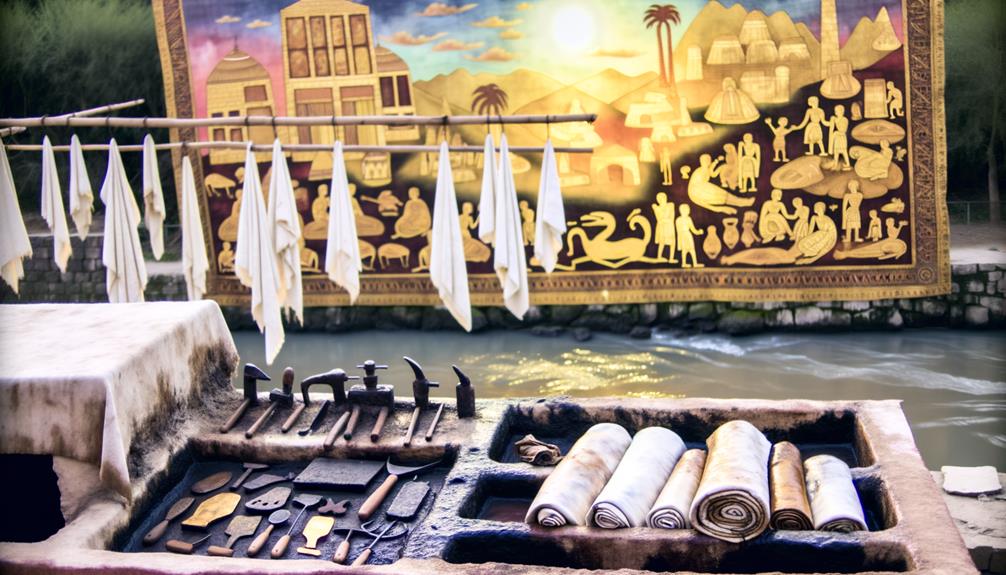
The symbolic significance of tanners in biblical texts often reflects the broader themes of transformation, purity, and societal boundaries. Tanners, dealing with animal hides, were engaged in a process that turned raw materials into useful products, symbolizing transformation. Their work with dead animals rendered them ritually impure according to Jewish law, highlighting the coexistence of purity and impurity.
- Transformation: The process of turning raw hides into leather symbolizes spiritual and moral transformation.
- Purity and Impurity: Tanners’ work involved ritually impure materials, contrasting with the pursuit of holiness.
- Societal Margins: Often marginalized, tanners’ roles highlight themes of inclusion and exclusion.
- Economic Necessity: Despite their impurity, tanners provided essential goods.
Spiritual Lessons
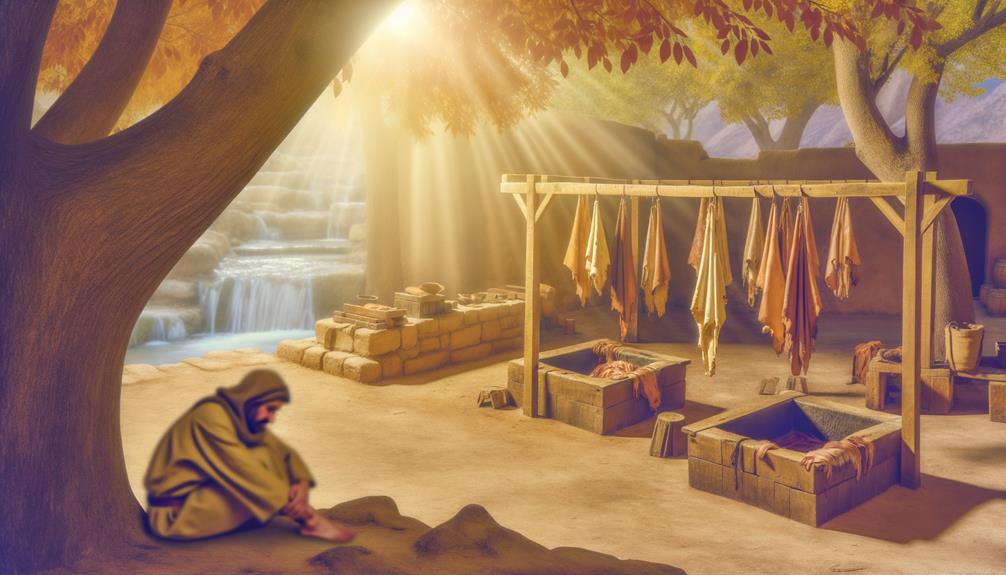
Spiritual lessons gleaned from the role of tanners in biblical narratives underscore the complex interplay between societal norms and divine expectations, revealing profound insights into notions of purity, redemption, and vocational purpose.
Tanners, often marginalized due to their work with animal hides, symbolized impurity in a ritualistic sense. Yet, their inclusion in biblical accounts, such as Peter’s stay with Simon the Tanner (Acts 10:6), challenges these societal norms. This juxtaposition illustrates that divine acceptance transcends human prejudices.
The work of tanners, transforming raw hides into useful materials, metaphorically aligns with spiritual transformation and redemption, emphasizing that every vocation holds inherent worth and potential for divine service. These narratives encourage a reevaluation of societal judgments in light of divine grace.
Conclusion
The role of tanners in biblical times, often marginalized due to the malodorous nature of their work, provides a lens through which societal norms and religious symbolism can be examined.
Remarkably, tanners are mentioned in Acts 9:43, highlighting their place within early Christian narratives.
A significant point of interest is that less than 1% of ancient professions were directly involved in such trades, underscoring the unique economic and cultural niche they occupied.
This contextualizes the broader theological and social implications of their inclusion in biblical texts.