
Unleavened Bread Meaning In The Bible: Redemption
Unleavened bread, known as matzah, is deeply rooted in biblical tradition, signifying Israel’s rapid exodus from Egyptian bondage as described in Exodus 12:39. Commanded by God for the Passover observance (Exodus 12:14-20), it represents purity, as leaven often symbolizes sin and corruption (1 Corinthians 5:7-8).
Its consumption during the Feast of Unleavened Bread (Leviticus 23:6) commemorates divine deliverance and calls for spiritual renewal and holiness. Incorporating this practice into worship, both in Jewish and Christian traditions, underscores adherence to divine commandments.
Understanding this profound symbol can enrich one’s grasp of its theological depth and historical significance.
Key Takeaways
- Unleavened bread symbolizes the haste of the Israelites’ departure from Egypt, as they had no time to let their bread rise (Exodus 12:39).
- It represents purity and separation from sin, with leaven often symbolizing corruption or sin in biblical texts (1 Corinthians 5:7-8).
- Consumed during Passover, it serves as a ritual remembrance of God’s deliverance and the covenantal relationship with the Israelites (Exodus 12:14-20).
- In Christian worship, unleavened bread signifies Jesus’ body and sacrifice, particularly during the Last Supper and Holy Communion (Matthew 26:26; Luke 22:19).
Biblical Origins
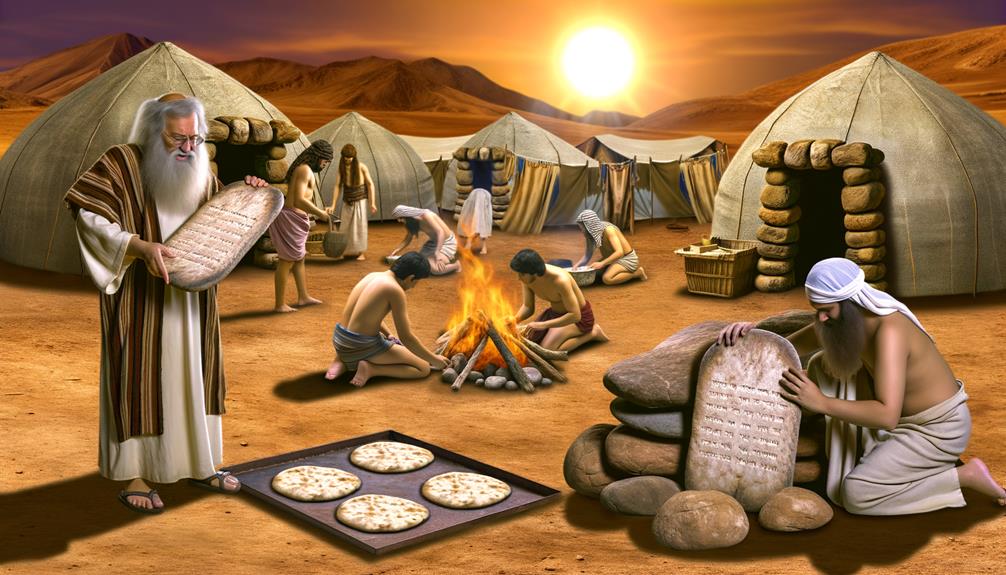
The origins of unleavened bread in the Bible are intricately tied to the narrative of the Exodus, where it symbolizes both the haste of Israel’s departure from Egypt and their subsequent reliance on divine provision (Exodus 12:39).
In the historical context, the Israelites left Egypt so quickly that they had no time to let their bread rise, resulting in unleavened bread.
Theologically, this bread—known as matzah—serves as a profound reminder of God’s swift deliverance and faithfulness.
Scripturally, its preparation and consumption were commanded by God as part of the Passover observance (Exodus 12:14-20).
Consequently, unleavened bread holds significant theological and historical weight, intertwining divine command with lived experience in the narrative of God’s people.
Symbolism in Passover

Frequently celebrated with deep reverence, the symbolism of unleavened bread in the Passover feast is profoundly rich, embodying themes of liberation and divine fidelity as outlined in scriptural texts like Exodus 12:17.
In the historical context of Israelite deliverance from Egyptian bondage, unleavened bread, or matzah, represents the haste in which the Israelites departed, leaving no time for leavening their dough (Exodus 12:39).
Theologically, it signifies purity and separation from sin, as leaven often symbolizes corruption in biblical literature (1 Corinthians 5:7-8).
Consequently, the consumption of unleavened bread during Passover is a ritual act of remembrance, connecting the faithful to God’s salvific acts and the covenantal relationship established through divine intervention and providence.
Exodus Connection
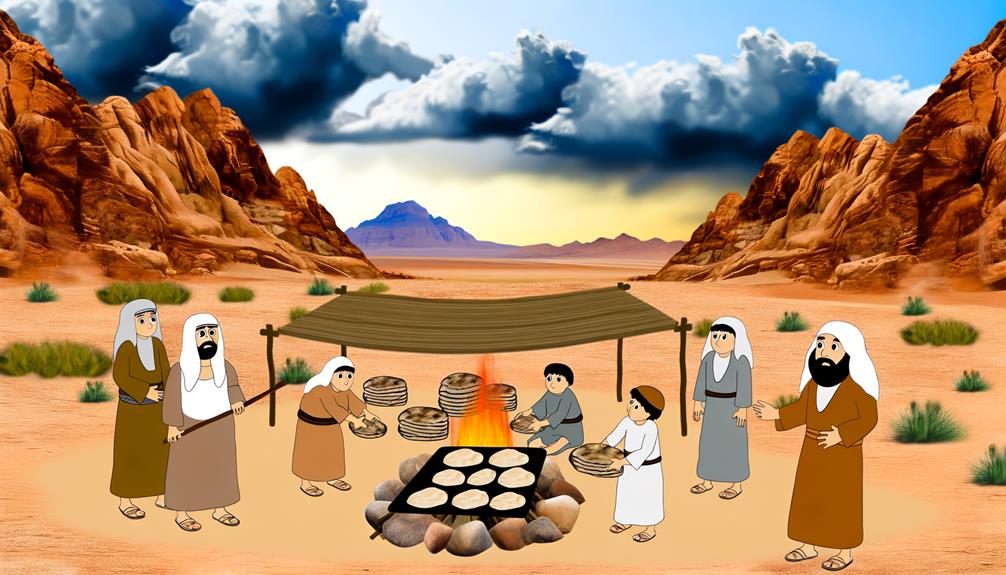
The Exodus narrative provides profound theological significance to the use of unleavened bread, particularly in Exodus 12:39, where it signifies the Israelites’ urgent departure from Egypt without time for their dough to rise.
This bread, a central element of the Passover feast, symbolizes both the haste of their liberation and the purity of God’s deliverance.
Through this lens, unleavened bread becomes a powerful emblem of God’s swift and decisive intervention in the lives of His chosen people.
Passover’s Symbolic Bread
Integral to the celebration of Passover, unleavened bread holds profound symbolic significance as described in the book of Exodus. This bread, known as matzah, is central to the remembrance of the Israelites’ deliverance from Egyptian bondage.
Exodus 12:15 instructs the Israelites to eat unleavened bread for seven days, symbolizing purity and the haste of their departure from Egypt, devoid of leaven’s corrupting influence. Theologically, unleavened bread represents a life free from sin and corruption, reflecting the sanctification process.
Historically, its preparation and consumption during Passover serve as a tangible connection to the Israelites’ forefathers. Scripturally, it underscores God’s command and the obedient response of His people, encapsulating a pivotal moment in Jewish religious history.
Israelites’ Hasty Departure
In the biblical narrative, the Israelites’ hasty departure from Egypt, as recounted in Exodus 12:39, underscores the urgency and divine orchestration of their liberation.
The scripture notes, ‘They baked unleavened cakes of the dough which they had brought out of Egypt, for it was not leavened because they were driven out of Egypt and could not wait.’
This hurried exodus, commanded by God through Moses, resulted in bread that lacked leaven, symbolizing purity and the swift action required to escape bondage.
Historically, this event reflects God’s immediate intervention, compelling the Israelites to leave without allowing their bread to rise, thereby instituting the Feast of Unleavened Bread as a perpetual reminder of their deliverance.
Purity and Obedience

Purity and obedience, as symbolized by the consumption of unleavened bread, hold profound theological significance in the biblical narrative.
In Exodus 12:15, God commands the Israelites to remove leaven from their homes and consume only unleavened bread during the Passover, signifying purification from sin and a commitment to divine commandments.
Historically, leaven represents corruption and moral decay, akin to sin’s pervasive influence (1 Corinthians 5:6-8). The unleavened bread, consequently, embodies the call to holiness and unwavering adherence to God’s statutes.
This act of eating unleavened bread is both an outward and inward reflection of Israel’s dedication to maintaining spiritual purity and obedience, reinforcing their covenant relationship with God and distinguishing them as His chosen people.
Ritual Practices
Ritual practices surrounding unleavened bread hold significant theological and historical weight, particularly within the context of the Passover observance as outlined in Exodus 12:15-20.
This practice symbolizes purity and readiness in worship, reflecting the Israelites’ swift departure from Egypt without time for their bread to rise.
Historically, the continued observance of this ritual underscores its importance in maintaining communal identity and spiritual discipline.
Passover Observance Details
How does the observance of Passover, with its intricate ritual practices, reflect the theological significance and historical context of unleavened bread as detailed in the Bible? The Passover, or Pesach, commemorates the Israelites’ exodus from Egypt, with unleavened bread (matzah) symbolizing their hasty departure (Exodus 12:39). This ritual practice underscores themes of divine deliverance and purity, eschewing leaven, which can symbolize sin (1 Corinthians 5:6-8). The Seder meal, integral to Passover, includes specific foods, prayers, and recitations that reflect these theological themes.
| Ritual Practice | Scriptural Reference |
|---|---|
| Eating Unleavened Bread | Exodus 12:15 |
| Removal of Leaven | Exodus 12:19 |
| Seder Meal | Exodus 12:8 |
| Recitation of Haggadah | Exodus 13:8 |
These practices collectively highlight the enduring legacy of God’s covenant.
Symbolism in Worship
In biblical worship practices, the use of unleavened bread serves as a profound symbol of spiritual purity and divine deliverance, deeply rooted in the historical context of the Israelites’ exodus from Egypt.
Exodus 12:17 mandates its use during Passover, representing haste and obedience, as there was no time for the bread to rise.
Theologically, unleavened bread signifies the removal of sin, as leaven often symbolizes corruption (1 Corinthians 5:7-8).
In addition, its consumption during the Feast of Unleavened Bread (Leviticus 23:6) underscores a period of reflection and sanctification.
This ritualistic practice not only commemorates God’s salvific acts but also calls believers to a life of holiness and unwavering faithfulness in their spiritual journey.
Historical Ritual Significance
Historically, the practice of using unleavened bread in biblical rituals frequently underscores the Israelites’ adherence to divine commandments and their collective memory of God’s deliverance, as mandated in Exodus 12:17.
This observance is rooted in the Passover, where unleavened bread symbolizes the haste in which the Israelites left Egypt, having no time for the dough to rise (Exodus 12:39).
Leviticus 23:6 further enshrines this tradition, instructing the Israelites to observe the Feast of Unleavened Bread for seven days.
This ritual not only commemorates liberation but also signifies purity and separation from sin, as leaven is often associated with corruption (1 Corinthians 5:7-8).
Consequently, the historical ritual significance of unleavened bread is deeply embedded in covenantal fidelity and spiritual purification.
Spiritual Significance
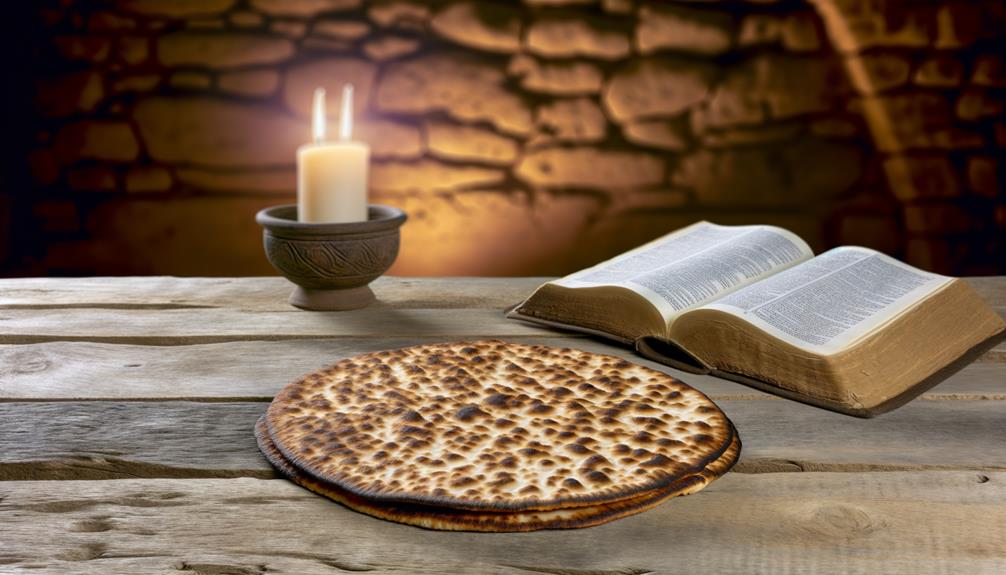
The spiritual significance of unleavened bread in the Bible is deeply rooted in its representation of purity, sanctification, and the believer’s journey towards holiness.
Biblically, leaven symbolizes sin and corruption (1 Corinthians 5:6-8). Consequently, unleavened bread, being free of yeast, signifies a state of sinlessness and moral integrity.
The Feast of Unleavened Bread, as observed in Exodus 12:15-20, emphasizes the necessity for the Israelites to remove all leaven from their homes, symbolizing the eradication of sin from one’s life.
This ritual underscores a call to spiritual renewal and commitment to God’s statutes. By partaking in unleavened bread, believers are reminded of their covenant relationship with God and the ongoing process of spiritual purification.
New Testament References

In the New Covenant, unleavened bread is prominently featured during the Passover and the Last Supper, where Jesus uses it to symbolize His body (Luke 22:19).
The apostle Paul later emphasizes its symbolism of purity and sincerity in 1 Corinthians 5:7-8, urging believers to live as unleavened in Christ.
These references further influenced early Church practices, underscoring the theological importance of unleavened bread in Christian liturgy and communal gatherings.
Passover and Last Supper
Frequently, the New Scripture recounts the significance of unleavened bread during the Passover and the Last Supper, particularly emphasizing its symbolic role in Jesus’ teachings and the establishment of the Eucharist. This sacred bread underscores several key theological insights:
- Commemoration of Exodus: Unleavened bread recalls the Israelites’ hasty departure from Egypt (Exodus 12:39), symbolizing deliverance and divine providence.
- Jesus as the Paschal Lamb: During the Last Supper, Jesus identifies the bread with His body, signifying His impending sacrifice (Matthew 26:26).
- Institution of the Eucharist: The breaking of unleavened bread becomes a central ritual in Christian worship (Luke 22:19).
- Unity and Purity: The shared experience of consuming unleavened bread fosters spiritual unity among believers (1 Corinthians 10:17).
This synthesis of theological and historical context enriches our understanding of its profound Biblical significance.
Symbolism of Purity
Unleavened bread in the New Covenant serves as a powerful symbol of purity, reflecting its integral role in the teachings of Jesus and the early Christian church. In 1 Corinthians 5:7-8, Paul exhorts believers to “keep the festival, not with the old bread leavened with malice and wickedness, but with the unleavened bread of sincerity and truth.” This metaphor underscores the call to live a life free from sin. During the Last Supper (Luke 22:19), Jesus breaks unleavened bread, instituting it as a symbol of His body, unblemished and pure.
| Symbolism | Scripture Reference |
|---|---|
| Purity | 1 Corinthians 5:7-8 |
| Sincerity and Truth | 1 Corinthians 5:8 |
| Christ’s Body | Luke 22:19 |
| Sinlessness | 1 Peter 2:22 |
| New Covenant | Matthew 26:26-28 |
This deepens our understanding of the spiritual significance of unleavened bread.
Early Church Practices
Building on the profound symbolism of purity associated with unleavened bread, the early Christian church incorporated this practice into their communal and liturgical life, as evidenced by various New Covenant references.
The use of unleavened bread is highlighted in:
- The Last Supper: Jesus institutes the Eucharist with unleavened bread (Matthew 26:26).
- Paul’s Letters: Paul admonishes the Corinthians to celebrate the feast with the unleavened bread of sincerity and truth (1 Corinthians 5:8).
- Acts of the Apostles: The breaking of bread, a likely reference to the Eucharist, is a central practice (Acts 2:42).
- Early Church Fathers: Writings from early Christian leaders confirm the use of unleavened bread in worship.
These references affirm the continuity of this practice from the Hebrew tradition into Christian worship.
Modern Observances
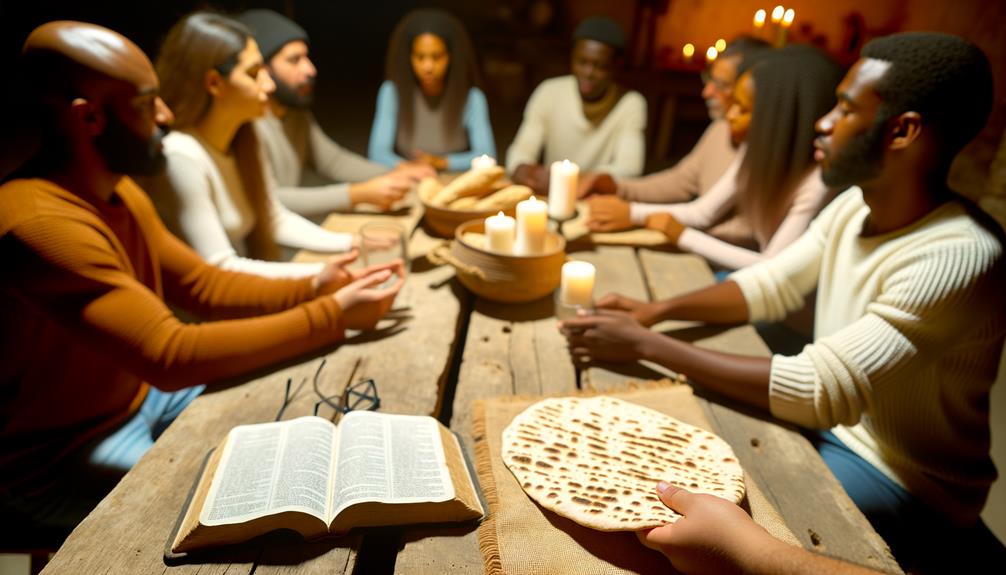
In contemporary times, the practice of consuming unleavened bread during religious observances continues to hold significant theological and cultural importance, particularly within Jewish and Christian communities. For Jews, unleavened bread, or matzah, is a central element of the Passover Seder, symbolizing the hasty exodus from Egypt (Exodus 12:39). Christians, especially during Holy Communion, use unleavened bread to commemorate the Last Supper, reflecting Jesus’ fulfillment of the Passover sacrifice (1 Corinthians 11:23-26).
| Community | Occasion | Scriptural Reference |
|---|---|---|
| Jewish | Passover Seder | Exodus 12:39 |
| Christian | Holy Communion | 1 Corinthians 11:23-26 |
| Messianic | Passover & Communion | Matthew 26:17-30; Luke 22:7-20 |
These observances underscore the enduring relevance of unleavened bread in both faith traditions.
Cultural Impact
Across centuries, the consumption and symbolism of unleavened bread have profoundly influenced religious practices, social customs, and cultural identity within Jewish and Christian communities. This bread, known as matzah in Judaism, commemorates the Israelites’ swift exodus from Egypt (Exodus 12:39). In Christianity, it represents purity and the body of Christ in the Eucharist (1 Corinthians 5:7-8).
The cultural impact of unleavened bread is evident in several ways:
- Ritual Observances: Integral to Passover and Easter traditions.
- Culinary Practices: Influences recipes and dietary laws.
- Symbolism: Represents humility and readiness in both faiths.
- Community Identity: Reinforces a shared heritage and religious continuity.
These elements underscore the enduring significance of unleavened bread.
Comparative Analysis
A comparative analysis of unleavened bread within Judaism and Christianity reveals distinct theological interpretations and ritual uses that underscore its profound religious significance.
In Judaism, unleavened bread, or matzah, is central to the Passover (Exodus 12:15-20), symbolizing the haste of the Israelites’ exodus from Egypt and their subsequent freedom from bondage.
In Christianity, unleavened bread is integral to the Eucharist, representing the body of Christ (Luke 22:19) and signifying purity and sinlessness.
Historically, both traditions emphasize the bread’s role in memorializing divine intervention and covenantal relationships.
Scripturally, the absence of leaven is a metaphor for purity and spiritual readiness, highlighting its importance in communal worship and personal reflection within both faiths.
Lessons for Today
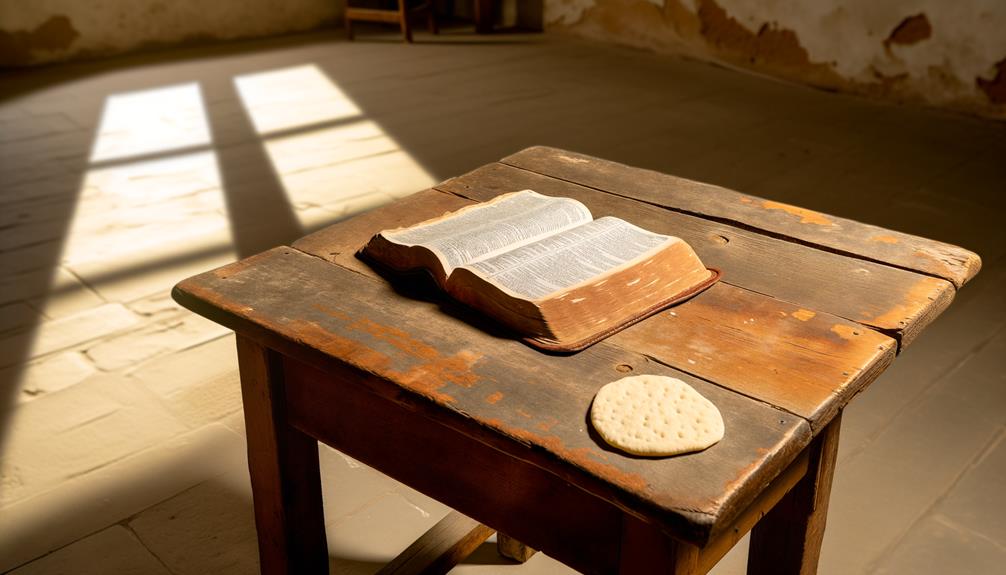
Contemplating the enduring symbolism of unleavened bread offers profound spiritual insights for contemporary faith communities, emphasizing themes of purity, obedience, and divine presence.
Historically, unleavened bread—free from yeast—symbolizes the swift exodus (Exodus 12:39) and a call to holiness (1 Corinthians 5:7-8). For today’s believers, it serves as a reminder of spiritual integrity and devotion.
Key lessons include:
- Purity: Just as unleavened bread is free from yeast, Christians are called to live lives free from sin (1 Corinthians 5:8).
- Obedience: The Israelites’ adherence to God’s commands during Passover underscores the importance of following divine directives (Exodus 12:17).
- Divine Presence: Unleavened bread in the Tabernacle symbolizes God’s continual presence (Leviticus 24:5-9).
- Renewal: Celebrating the Feast of Unleavened Bread invites spiritual reflection and renewal (Deuteronomy 16:3).
Conclusion
Unleavened bread, juxtaposed between ancient ritual and modern practice, encapsulates the essence of purity and obedience as mandated in biblical texts.
Its role in the Passover underscores a profound connection to the Exodus, symbolizing liberation and divine covenant.
While ancient traditions emphasized ritual purity, contemporary observances continue to honor this sacred emblem.
Consequently, the theological and historical significance of unleavened bread remains a potent reminder of faith’s enduring legacy across generations.