Bullocks Meaning in the Bible: Sacrificial Offering
In the Bible, bullocks are integral to both agricultural and sacrificial contexts, symbolizing strength, atonement, and divine devotion. Central to Old Covenant rituals, they were used in various offerings such as burnt, sin, peace, and guilt, reflecting ritual purity and obedience to God.
The blood and flesh of bullocks were potent symbols of purification and wholehearted devotion. With the advent of the New Covenant, the sacrificial role of bullocks shifted to the ultimate sacrifice of Jesus Christ, emphasizing inner spirituality over ritual.
This underscores the continuity and evolution of worship practices across biblical narratives. To further understand their significance, deeper exploration is essential.

Key Takeaways
- Bullocks were used in various Old Testament sacrificial offerings, symbolizing atonement, devotion, and purification.
- They represented strength, wealth, and communal devotion in ancient Israelite culture.
- Bullocks’ sacrificial use emphasized ritual purity and obedience to divine commandments.
- The New Testament views Jesus Christ’s sacrifice as fulfilling the symbolism of bullocks’ atonement.
Historical Context of Bullocks

Historically, bullocks, also known as young bulls, played a significant role in the agrarian and sacrificial practices of ancient Near Eastern cultures, including those described in the Bible.
These animals were integral to agricultural economies, serving as primary labor for plowing and transportation. Their economic value extended beyond the field; bullocks were also central to religious rituals and ceremonies.
Sacrificing a bullock was seen as an offering of significant worth, symbolizing the community’s devotion and reverence. This dual role of bullocks as both labor assets and sacrificial offerings underscores their importance in ancient societies.
The presence of bullocks in various ancient texts highlights their multifaceted utility and the deep cultural significance attributed to them within agrarian and religious contexts.
Bullocks in Old Testament
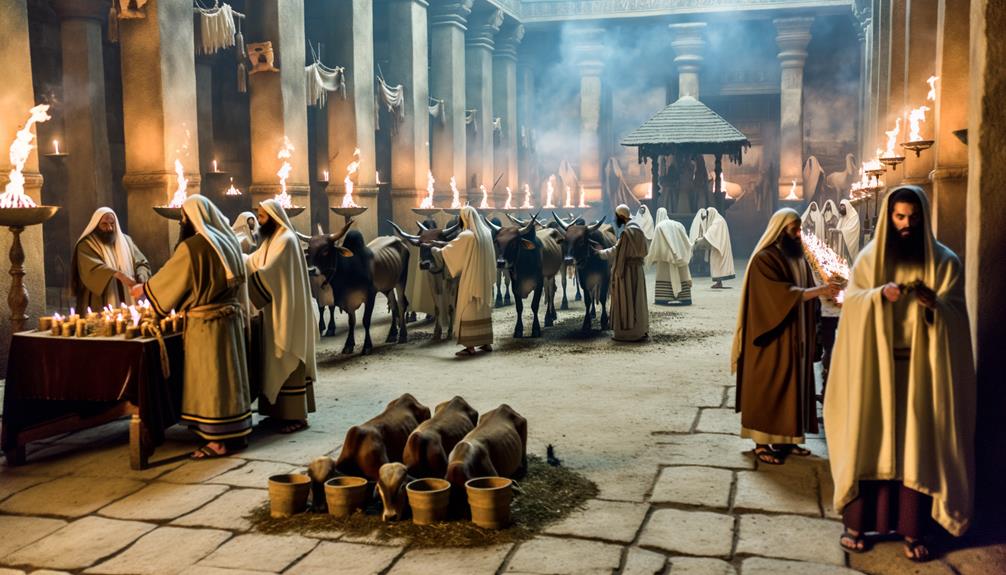
In the Old Scripture, bullocks were integral to sacrificial offerings, underscoring their importance in rites of atonement and worship.
Their repeated use in various ceremonies highlights the deep symbolism and spiritual significance attributed to them within the religious practices of ancient Israel.
Examining these practices reveals how bullocks were not merely ritualistic elements but also profound symbols of obedience, repentance, and covenantal relationships with God.
Sacrificial Offerings and Bullocks
The role of bullocks in Old Covenant sacrificial offerings is deeply rooted in the religious and cultural practices of ancient Israelite society. Bullocks, or young bulls, were often used in various forms of sacrifices, including burnt offerings, sin offerings, and peace offerings. These offerings served multiple purposes, from seeking atonement to expressing gratitude. The following table outlines key sacrificial offerings involving bullocks:
| Sacrifice Type | Purpose | Biblical Reference |
|---|---|---|
| Burnt Offering | Atonement, Devotion | Leviticus 1:3-9 |
| Sin Offering | Purification from Sin | Leviticus 4:3-12 |
| Peace Offering | Fellowship, Thanksgiving | Leviticus 3:1-5 |
| Guilt Offering | Restitution, Atonement | Leviticus 5:14-19 |
| Daily Offering | Continuous Atonement | Numbers 28:3-8 |
These practices underscored the importance of ritual purity and obedience to divine commandments in maintaining a covenantal relationship with God.
Symbolism and Spiritual Significance
Beyond their practical roles in sacrificial rituals, bullocks also carry profound symbolic and spiritual significance within the Old Scriptures narrative.
In ancient Israelite culture, bullocks often symbolized strength, liveliness, and wealth. Their use in sacrifices underscored the importance of offering one’s best to God, reflecting a deeper spiritual commitment.
The bullock’s sacrifice was seen as a means to atone for sins and seek divine favor, encapsulating themes of redemption and obedience. Additionally, their role in covenantal ceremonies, such as those in Leviticus, highlighted the communal and personal aspects of worship.
Consequently, bullocks in the Old Scriptures serve not only as ritualistic elements but also as potent symbols of faith, dedication, and divine communion.
Sacrificial Significance

The sacrificial significance of bullocks in biblical texts is multifaceted, encompassing deep symbolic meanings and intricate ritualistic practices.
These offerings were not merely acts of devotion but were imbued with rich symbolism, representing atonement, purification, and covenantal fidelity.
Symbolism in Offerings
In the context of biblical offerings, bullocks (young bulls) hold profound sacrificial significance, symbolizing atonement, purification, and dedication to God.
Bullocks are frequently mentioned in Levitical texts, underscoring their role in sin offerings and burnt offerings. Their use reflects the gravity of sin and the necessity of a valuable, unblemished sacrifice to restore the covenantal relationship between humanity and the divine.
Additionally, the bullock’s strength and value epitomize the worshiper’s total commitment and submission to God’s will. This symbolism extends to communal and individual purification rituals, where the sacrifice of a bullock acts as a conduit for divine grace and cleansing.
Consequently, bullocks encapsulate the profound theological themes of repentance, reconciliation, and sanctification in biblical tradition.
Ritualistic Practices Explained
Exploring the ritualistic practices surrounding bullock sacrifices reveals a structured and deeply symbolic system that underscores their sacrificial significance in biblical tradition.
These practices often involved meticulous procedures, from the selection of an unblemished bullock to the specific manner in which it was slaughtered.
The blood of the bullock, representing life, was a vital element, often sprinkled on the altar to signify purification and atonement.
Additionally, the burning of the bullock’s flesh on the altar was seen as a pleasing aroma to God, symbolizing complete devotion and obedience.
Such rituals were not arbitrary but were imbued with rich theological meanings, reflecting the covenantal relationship between God and His people, emphasizing atonement, repentance, and reconciliation.
Symbolism of Strength

Biblical references to bullocks often emphasize their representation of physical strength and crucial energy, signifying resilience and power in various spiritual and cultural contexts.
This symbolism is evident in passages such as Psalm 22:12, where strong bulls of Bashan embody formidable adversaries. Similarly, in Proverbs 14:4, the presence of oxen correlates with increased productivity and abundance, underscoring their essential role in agrarian society.
Such imagery not only highlights the bullock’s physical capabilities but also serves as a metaphor for divine strength and sustenance. This duality of meaning enriches the biblical narrative, offering a multifaceted symbol that communicates both the tangible and spiritual dimensions of strength, consequently deepening our understanding of its thematic significance.
Rituals and Atonement

Throughout the scriptures, bullocks have been integral to various rituals and acts of atonement, symbolizing purification and reconciliation with the divine. In Leviticus, the sacrificial bullock is paramount in the sin offerings, especially for the high priest and the congregation (Leviticus 4:3, 13-14). These rituals underscore the gravity of sin and the necessity of atonement through blood sacrifices, highlighting the bullock’s role in the covenantal relationship between God and Israel.
The following table illustrates key references:
| Scripture Reference | Ritual/Act | Significance |
|---|---|---|
| Leviticus 4:3 | Sin Offering | Atonement for High Priest |
| Numbers 8:8 | Purification | Cleansing of Levites |
| Exodus 29:10-14 | Consecration | Dedication of Priests |
Such practices emphasize the theological framework of divine justice and mercy.
Bullocks in New Testament

While the Old Scripture extensively details the significance of bullocks in rituals and acts of atonement, the New Scripture presents a change in sacrificial paradigms, where the focus moves from animal sacrifices to the ultimate sacrifice of Jesus Christ. This change underscores several critical theological points:
- Fulfillment of Prophecy: Jesus’ sacrifice is seen as the fulfillment of Old Scriptures prophecies, rendering animal sacrifices obsolete (Hebrews 10:1-10).
- Spiritual Atonement: Christ’s atonement is spiritual and eternal, contrasting with the temporal efficacy of bullock sacrifices (Hebrews 9:12).
- Shift in Worship: Worship practices change from temple-based rituals to a more personal and communal faith (John 4:21-24).
- Moral Imperative: The New Scriptures emphasizes ethical living over ritualistic animal sacrifice (Romans 12:1).
Conclusion
The role of bullocks in biblical writings serves as a multifaceted symbol, encompassing strength, sacrifice, and atonement.
In both the Old and New Scriptures, their presence underscores a deeper theological narrative, acting as a bridge between humanity and the divine.
Much like keystones in an arch, bullocks hold significant weight in biblical rituals, symbolizing the foundational importance of sacrifice and redemption in the spiritual edifice of Judeo-Christian tradition.