Meaning of Trumpets in the Bible: Prophetic Sound
In biblical discourse, trumpets symbolize divine authority, intervention, and communication. They play a pivotal role in signaling religious ceremonies, alerting communities during warfare, and heralding significant events, as seen in Numbers 10:2-10 and Exodus 19:16-19.
The fall of Jericho (Joshua 6:4-20) exemplifies the connection between trumpet blasts and miraculous divine acts, reinforcing themes of faith and obedience. In the prophetic landscape of Revelation, trumpets announce apocalyptic judgments, structuring the narrative of end-time events.
Their use in Jewish traditions, such as Rosh Hashanah and Yom Kippur, underscores their enduring spiritual significance. Explore further to uncover the intricate layers of this symbolism.

Key Takeaways
- Trumpets signaled divine presence and interventions, marking significant biblical events (Exodus 19:16-19).
- They were used in religious ceremonies to announce holy festivals and call assemblies (Numbers 10:2-10).
- Trumpets symbolized victory through faith, as seen in the fall of Jericho’s walls (Joshua 6:4-20).
- In Revelation, trumpets herald apocalyptic judgments and divine warnings (Revelation 8-11).
Trumpets in the Old Testament
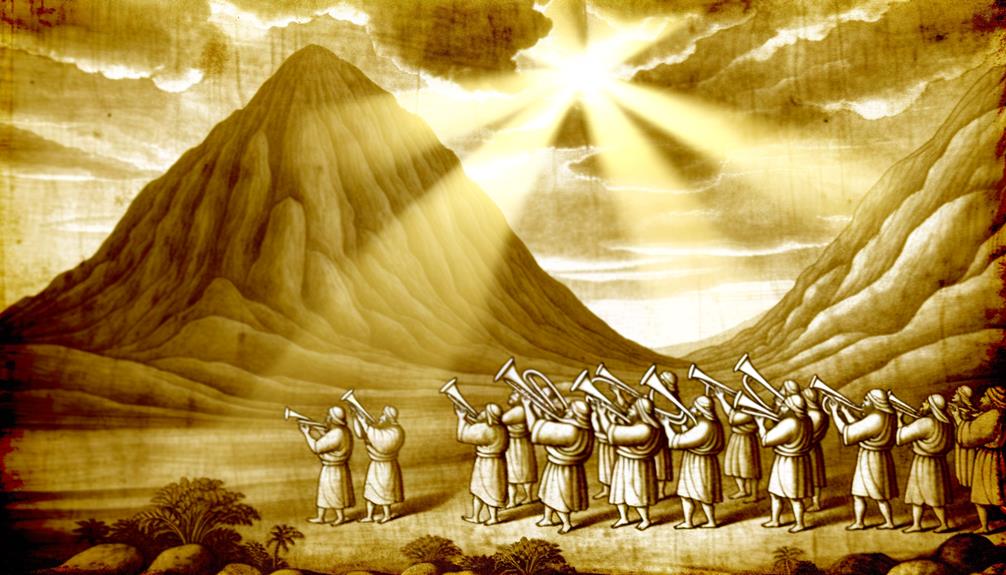
The use of trumpets in the Old scripture is deeply interwoven with religious ceremonies, communication, and divine interventions, serving as a critical instrument in conveying both sacred and practical messages to the people of Israel.
In the context of religious ceremonies, trumpets were integral in calling assemblies, announcing holy festivals, and signaling the start of sacrifices (Numbers 10:2-10).
From a communicative standpoint, they functioned as tools for signaling movements during warfare and alerting the community of imminent threats (Joshua 6:4-5).
Theologically, trumpets were often seen as heralds of divine presence, symbolizing God’s immediate intervention or judgment (Exodus 19:16-19).
This multifaceted role underscores their significant status within the cultural and spiritual life of ancient Israel.
Jericho and the Trumpet Call

The narrative of Jericho and the trumpet call is a potent illustration of Joshua’s unwavering obedience to divine instructions and the subsequent triumph achieved through faith.
By meticulously adhering to God’s commands to march around the city and sound the trumpets, Joshua exemplified the vital intersection of faith and action.
This episode not only underscores the spiritual significance of trumpets in biblical texts but also highlights the theological principle that victory is attained through steadfast faith and compliance with divine will.
Joshua’s Obedience Tested
Joshua’s faith and leadership were profoundly tested during the siege of Jericho, particularly through the symbolic act of the trumpet call.
The narrative in the Book of Joshua underscores this event as a pivotal moment where obedience to divine command was paramount.
The trumpets, blown by the priests, served not merely as instruments of sound but as catalysts for divine intervention.
Joshua’s adherence to God’s unusual strategy—marching around the city for seven days and culminating with trumpet blasts—demonstrates his unwavering commitment to divine instruction.
This episode emphasizes the role of faith in achieving victory, as the physical act of blowing trumpets was intrinsically linked to spiritual obedience, which ultimately led to the miraculous fall of Jericho’s walls.
Divine Instructions Followed
In accordance with God’s precise commands, the Israelites’ methodical adherence to the trumpet call ritual during the siege of Jericho exemplifies the profound link between divine directives and miraculous outcomes in biblical narratives.
The meticulous execution of marching around the city once daily for six days, followed by seven circuits on the seventh day, underscores a disciplined obedience.
The sounding of trumpets by the priests, as mandated in Joshua 6:4-5, served not merely as a battle cry but as a sacred act of faith and submission.
This ritualistic adherence highlights the theological principle that divine instructions, when faithfully followed, facilitate extraordinary events, thereby reinforcing the centrality of obedience in achieving God’s purposes within the biblical framework.
Victory Through Faith
Through the lens of the Jericho narrative, the trumpet call serves as a profound symbol of victory achieved through unwavering faith in divine promises.
In the Book of Joshua, the Israelites faced the formidable fortress of Jericho. Their triumph, under Joshua’s leadership, was not through conventional warfare but through obedience to God’s instructions, including the pivotal sounding of trumpets.
Faith in Divine Strategy: The Israelites’ adherence to a seemingly irrational plan underscores their faith.
Symbol of Divine Presence: Trumpets signified God’s presence and power.
Act of Worship: The trumpet call was also an act of worship, acknowledging God’s supremacy.
Community Unity: The collective action of the Israelites unified them in faith.
Historical Precedent: This event set a precedent for faith-led victories in biblical history.
This narrative highlights the profound connection between faith and divine intervention.
Trumpets in Worship Practices
In biblical texts, trumpets serve as both sacred ceremonial instruments and potent symbols within worship practices.
Their ritual significance extends to various religious observances, where they mark sacred times and divine interventions.
Analyzing these practices reveals the deeper theological implications of trumpet sounds in the context of communal and spiritual life.
Sacred Ceremonial Sounds
As integral components of ancient worship practices, trumpets served as powerful instruments to signal divine presence and coordinate communal religious activities. The use of trumpets in sacred ceremonies is well-documented in biblical texts, illustrating their significance in various religious observances.
These instruments were not merely for musical embellishment but carried profound symbolic meanings and practical functions. For instance, trumpets were employed to:
- Announce festivals and holy days, marking them as special times designated for worship.
- Signal the start of important events, such as the beginning of sacrifices or offerings.
- Call the congregation together for communal worship and instruction.
- Accompany the Ark of the Covenant, signifying the presence of God.
This multifaceted role underscores the trumpets’ centrality in Israelite worship.
Ritual Significance Explained
The ritual significance of trumpets in worship practices is deeply rooted in their function as instruments of divine communication and communal unity within the biblical narrative.
Trumpets, often depicted in texts such as Numbers 10:1-10, served as a means to signal important events, including convocations, offerings, and battles. Their sound was not merely auditory but symbolic, representing divine intervention and guidance.
In the context of worship, trumpets were employed to sanctify assemblies, thereby enhancing ritual purity and reinforcing collective identity. The use of trumpets consequently transcended mere ceremonial roles; it facilitated an experiential encounter with the divine, fostering a sense of reverence and cohesion among the worshippers.
This dual role underscores their indispensable place in biblical worship contexts.
Prophetic Trumpets in Revelation
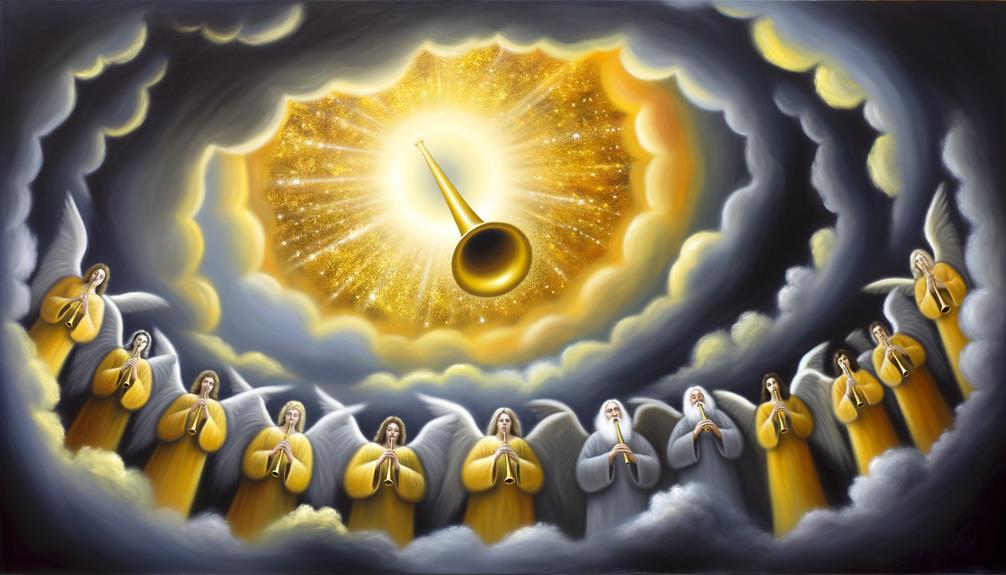
Scholars often interpret the prophetic trumpets described in the Book of Revelation as symbolic harbingers of divine judgment and eschatological events. These trumpets encapsulate a series of catastrophic occurrences, each intensifying the narrative of the apocalypse. Theologically, they are seen as instruments that signal God’s direct intervention in human affairs, urging repentance and heralding ultimate redemption.
Key elements associated with the prophetic trumpets include:
- Judgment: Each trumpet blast corresponds to specific judgments released upon the earth.
- Warning: They serve as divine warnings to humanity about impending doom.
- Eschatological Significance: They are central to the unfolding of end-time prophecies.
- Symbolism: Rich in symbolic meaning, often linked to Old Testament precedents.
This interpretation underscores the profound theological and eschatological import of the trumpets.
Trumpets and Divine Announcements

Throughout the biblical narrative, trumpets frequently serve as divine instruments to announce significant events or divine interventions.
For instance, in Exodus 19:16-19, the sound of a trumpet signaled God’s presence on Mount Sinai, preluding the giving of the Ten Commandments.
Similarly, in Joshua 6:4-20, trumpets heralded the fall of Jericho’s walls, signifying God’s direct action in Israel’s conquest.
The trumpet blasts in these contexts are more than mere sounds; they are symbolic of divine authority and the unfolding of God’s will.
This auditory symbolism underscores the gravity of the events, ensuring they are perceived as manifestations of divine power.
Consequently, the use of trumpets as divine heralds imbues the narrative with a profound sense of the sacred and the momentous.
Trumpets in Jewish Tradition

In Jewish tradition, trumpets hold a multifaceted role, encompassing ritualistic, celebratory, and eschatological dimensions. Historically, the shofar, a ram’s horn, has been integral to various practices and ceremonies. Its varied uses reflect its significance in Jewish culture and religion.
Rosh Hashanah: The shofar is blown to mark the Jewish New Year, symbolizing a call to repentance.
Yom Kippur: The conclusion of this solemn day of atonement is signified by a final shofar blast.
Jericho: Trumpets famously brought down the walls of Jericho, demonstrating divine intervention.
Temple Worship: Trumpets were used in the ancient Temple for sacrificial offerings and festivals.
Messianic Expectations: Trumpets herald the coming of the Messiah, a future hope in Jewish eschatology.
Symbolism of Trumpets Today
Extending beyond their historical and ritualistic roles, trumpets today embody a rich tapestry of symbolic meanings that resonate in both religious and secular contexts.
In contemporary religious settings, trumpets often signify divine intervention, annunciation, and the heralding of significant spiritual events.
Secularly, they are emblematic of triumph, celebration, and solemn ceremonies, such as military honors or state functions.
The auditory clarity of the trumpet’s sound continues to evoke responses ranging from alertness and readiness to reverence and reflection.
Scholarly examinations reveal that this enduring symbolism is rooted in the instrument’s historical connotations of power and communication.
Therefore, the trumpet remains a potent symbol, bridging ancient traditions with modern interpretations of authority, celebration, and sacred proclamation.
Conclusion
The use of trumpets in biblical texts carries profound religious and symbolic significance, spanning various contexts from Old Covenant events to prophetic revelations in the New Covenant.
One notable statistic is the mention of trumpets over 60 times in the Bible, underscoring their importance in divine communication and worship practices.
This frequency highlights the trumpet’s role not only as a ritualistic instrument but also as a herald of significant divine announcements and eschatological events.