
Meaning of Vine in the Bible: Christ’s Connection
In the Bible, the vine symbolizes profound theological concepts. In the Old Scripture, it represents Israel’s relationship with God, highlighting divine expectations and the consequences of moral failings (Isaiah 5:1-7, Psalm 80:8-16).
Prophets like Jeremiah depict Israel as a choice vine gone wild, reflecting covenant breaches. In the New Scripture, Jesus as the True Vine signifies the intimate union between Christ and believers, emphasizing spiritual growth and dependence (John 15:1-8).
This metaphor, rich with historical agrarian imagery, underscores themes of divine judgment, hope, and righteousness. Those exploring this further will uncover deeper spiritual insights woven through biblical narrative.

Key Takeaways
- The vine symbolizes Israel’s relationship with God, highlighting both privilege and divine expectations (Isaiah 5:1-7, Psalm 80:8-16).
- Jesus as the True Vine signifies the intimate and sustaining relationship between Christ and believers (John 15:1-8).
- Fruitfulness in the vine metaphor represents spiritual growth, divine blessing, and virtues produced by the Holy Spirit (Galatians 5:22-23).
- Israel, as God’s vineyard, is depicted to illustrate covenantal faithfulness and the consequences of moral failure (Isaiah 5:1-7, Jeremiah 2:21).
The Vine in the Old Testament

In the Old Scripture, the vine is frequently employed as a potent symbol representing Israel, illustrating the nation’s relationship with God and its spiritual condition, as seen in passages such as Isaiah 5:1-7 and Psalm 80:8-16.
In Isaiah 5, the ‘Song of the Vineyard‘ portrays God as a diligent vinedresser who cultivates Israel, expecting righteousness but finding injustice.
Similarly, Psalm 80 speaks of a vine brought out of Egypt, symbolizing Israel’s deliverance and subsequent divine nurturing.
These vivid imageries underscore Israel’s privileged status and God’s expectations of fruitfulness and fidelity.
The vine metaphor serves as a theological tool to communicate divine judgment and hope, encapsulating the covenantal dynamics between God and His chosen people throughout the Old Covenant narrative.
Israel as God’s Vineyard

How does the imagery of Israel as God’s vineyard elucidate the nation’s covenantal relationship with the Divine, as depicted in prophetic literature such as Isaiah and Jeremiah?
Isaiah 5:1-7 portrays Israel as a vineyard planted and cared for by God, but yielding wild grapes, symbolizing Israel’s unfaithfulness.
Similarly, Jeremiah 2:21 describes Israel as a ‘choice vine’ that becomes ‘a wild vine,’ emphasizing the breach in the covenant.
This metaphor underscores God’s expectations for righteousness and justice from Israel, juxtaposed with their moral failures.
Historically, this imagery reflects Israel’s unique role as God’s chosen people, bound by a covenantal relationship that demands faithfulness and obedience.
The vineyard motif consequently serves as a poignant reminder of divine judgment and the call for repentance.
Jesus as the True Vine
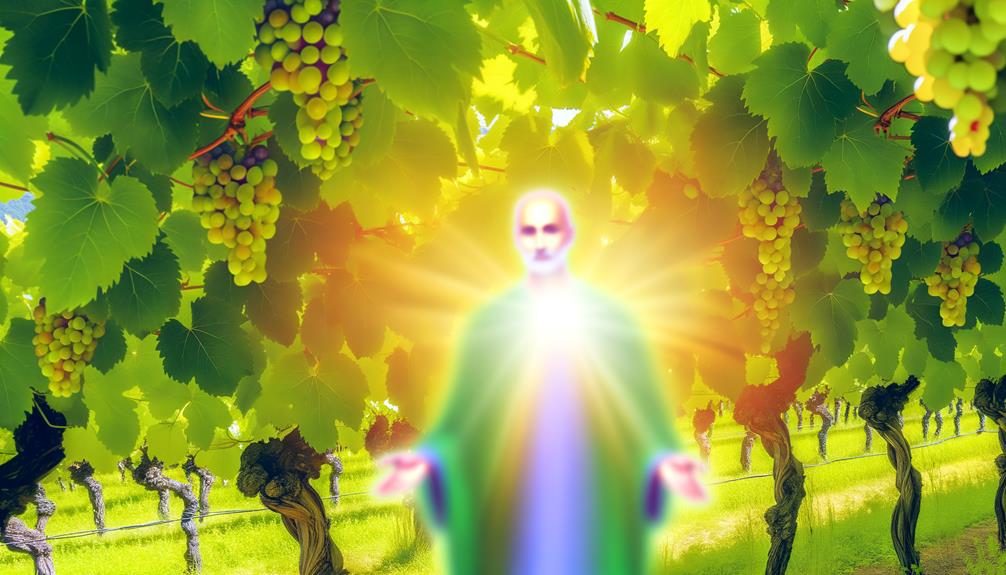
Jesus as the True Vine, as articulated in John 15:1-8, encapsulates the profound theological truth of the believers’ organic and essential union with Christ, highlighting the necessity of abiding in Him to bear spiritual fruit.
In this passage, Jesus positions Himself as the ultimate source of life and spiritual energy, contrasting the Old Covenant portrayal of Israel as God’s vineyard (Isaiah 5:1-7).
The metaphor underscores the intimate relationship between Christ and His followers, where He is the vine, and believers are the branches.
Historical context reveals that vineyards were central to the agrarian society of ancient Israel, making the imagery deeply resonant.
Scripturally, the imperative “abide in me” (John 15:4) emphasizes continual dependence on Christ for spiritual growth and sustenance.
Symbolism of Fruitfulness

The concept of fruitfulness in biblical theology is multifaceted, symbolizing spiritual growth, divine blessing, and the manifestation of a Christ-centered life, as evidenced by the frequent scriptural exhortations to bear good fruit (e.g., Galatians 5:22-23).
Historically, the vine was a critical agricultural symbol in ancient Israel, representing prosperity and divine favor (Psalm 128:3).
In the New Covenant, fruitfulness becomes a metaphor for the virtues produced by the Holy Spirit, such as love, joy, and peace. This imagery underscores the believer’s connection to Christ, the true source of spiritual energy (John 15:5).
Additionally, the Parable of the Sower (Matthew 13:1-23) illustrates the varying degrees of fruitfulness based on the receptiveness of one’s heart to God’s Word.
Spiritual Lessons From the Vine

Building on the rich symbolism of fruitfulness, the vine also imparts profound spiritual lessons about dependence on God, communal identity, and the transformative power of abiding in Christ. Historically, vineyards were central to the agrarian life of ancient Israel, symbolizing divine blessing and covenantal relationship (Isaiah 5:1-7). Spiritually, Jesus’ metaphor in John 15:1-5 illustrates the necessity of remaining connected to Him for spiritual significance and growth. This allegory highlights that believers, like branches, must rely on the True Vine for sustenance and fruitfulness.
| Theme | Biblical Reference | Spiritual Lesson |
|---|---|---|
| Dependence on God | John 15:5 | Connection to Christ for sustenance |
| Communal Identity | Romans 12:4-5 | Unity in the Body of Christ |
| Transformation | 2 Corinthians 5:17 | New creation in Christ |
| Divine Blessing | Isaiah 5:1-7 | Covenant relationship with God |
| Spiritual Growth | Galatians 5:22-23 | Fruit of the Spirit |
Conclusion
The vine, as depicted in the Bible, serves as a metaphorical tapestry woven through both Old and New Scriptures.
Representing Israel as God’s vineyard and Jesus as the True Vine, it underscores themes of divine care, covenantal relationship, and spiritual fruitfulness.
This profound imagery invites a deeper understanding of faith and obedience, where believers are called to bear fruit in alignment with divine will, much like branches drawing sustenance from the eternal Vine.