
Meaning of Virgin in the Bible: Purity and Promise
In the Bible, the term ‘virgin‘ primarily arises from the Hebrew words ‘bethulah‘ and ‘almah,’ and the Greek ‘parthenos,’ each carrying distinct nuances. ‘Bethulah’ underscores purity and covenantal fidelity, often beyond mere physical virginity, while ‘almah’ denotes a young marriageable woman, sometimes implying virginity.
‘Parthenos’ in the New scripture succinctly means an untouched woman, central to the Virgin Mary’s narrative. The theological and cultural contexts bestow these terms with deep significance, reflecting moral integrity, divine favor, and prophetic fulfillment, particularly in Isaiah 7:14 and the birth of Jesus.
Exploring further reveals intricate layers of biblical interpretation and doctrine.

Key Takeaways
- ‘Bethulah’ emphasizes purity, marital status, and moral integrity in Hebrew texts.
- ‘Almah’ refers to a young woman of marriageable age, not explicitly indicating virginity.
- Virginity symbolizes spiritual and moral cleanliness, obedience to divine will, and familial honor in biblical contexts.
- In prophetic texts, ‘almah’ is debated, notably in Isaiah 7:14’s prophecy about a virgin bearing Immanuel.
Hebrew Terms for Virgin

The Hebrew Bible employs two primary terms to denote a virgin: ‘bethulah‘ and ‘almah,’ each carrying distinct connotations and implications within the theological and cultural contexts of ancient Israel.
‘Bethulah’ is more commonly associated with a virgin in the strictest sense, often used in legal and ritualistic texts to emphasize purity and marital status. This term is pivotal in discussions of betrothal and marriage laws.
Conversely, ‘almah’ is less explicit in its reference to virginity, typically describing a young woman of marriageable age without direct emphasis on her sexual status.
These linguistic nuances are critical for interpreting key biblical passages and understanding the socio-religious milieu of the ancient Hebrew community.
Almah: Young Woman

The term ‘almah,’ often translated as ‘young woman,’ carries significant implications within its linguistic and cultural context.
In examining the biblical instances where ‘almah’ appears, it is essential to understand how this term functions differently from other Hebrew words for virginity and womanhood.
This exploration provides theological insights into how the concept of virginity was perceived in ancient scriptural narratives.
Linguistic Context of Almah
Almah, a Hebrew term often translated as ‘young woman,’ possesses significant theological and linguistic implications within biblical texts. The understanding of ‘almah’ is nuanced, often leading to debates about its exact meaning. While traditionally interpreted as ‘virgin’ in some contexts, its primary connotation aligns more closely with ‘maiden’ or ‘young woman’ of marriageable age. This distinction is essential for interpreting prophetic and narrative passages accurately.
| Term | Translation | Contextual Meaning |
|---|---|---|
| Almah | Young Woman | Maiden, marriageable age |
| Betulah | Virgin | Emphasizes physical virginity |
| Na’arah | Girl/Young Woman | Often denotes youthfulness |
Understanding these linguistic nuances enriches theological interpretations and clarifies biblical narratives involving young women.
Biblical Instances of Almah
In examining the biblical instances where ‘almah‘ appears, it becomes evident that the term plays a vital role in understanding the socio-religious status of young women in ancient Israelite society.
The term ‘almah’ is found in passages such as Isaiah 7:14, Genesis 24:43, and Exodus 2:8, where it describes young women of marriageable age, often without explicit reference to their sexual status.
Theologically, ‘almah’ emphasizes the cultural significance of youth and potential motherhood, rather than virginity per se.
This term’s usage reflects societal norms and expectations, highlighting the importance of familial and communal roles.
Such understanding is essential for interpreting scriptural contexts and the nuanced implications of ancient Hebrew terminology.
Bethulah: Virginity and Purity

Bethulah, often translated as ‘virgin,’ carries profound implications beyond mere physical state, symbolizing purity and moral integrity within ancient texts.
This term’s usage reflects deep cultural and religious significance, underscoring a community’s value system and theological constructs.
Symbolism in Ancient Texts
The term ‘bethulah’ in ancient Hebrew texts is often imbued with connotations of virginity and purity, symbolizing an untouched and sanctified state. This term extends beyond mere physical virginity, representing a broader spiritual symbolism within the biblical narrative. Bethulah is frequently associated with Israel, portraying the nation’s covenantal relationship with God in its purest form.
| Symbol | Representation | Contextual Significance |
|---|---|---|
| Bethulah | Virginity and Purity | Spiritual integrity |
| Israel | Nation of God | Covenantal faithfulness |
| Sanctified | Set apart for holiness | Divine relationship |
| Untouched | Unblemished state | Sacred commitment |
Such symbolism underscores the theological emphasis on purity and devotion, reflecting the profound connection between physical and spiritual sanctity in ancient texts.
Cultural and Religious Significance
Understanding the term ‘bethulah’ within its cultural and religious context reveals intricate layers of meaning that extend beyond mere physical virginity to encompass spiritual and communal dimensions of purity and holiness. In ancient Israelite society, ‘bethulah’ signified more than an untouched maiden; it embodied an ideal of sanctity, a vessel of untainted potential and divine favor. This concept was closely tied to communal expectations and theological doctrines.
Symbol of Covenant: Reflecting Israel’s covenantal purity with God.
Ritual Purity: Essential for participation in sacred rites.
Moral Integrity: Representing inner moral cleanliness.
Social Status: Indicator of familial honor and societal value.
Prophetic Imagery: Used metaphorically in prophetic literature to describe Israel’s faithfulness.
Thus, ‘bethulah’ weaves together complex notions of physical, spiritual, and communal purity.
Greek Term Parthenos

In the context of biblical Greek, the term ‘parthenos‘ specifically denotes a young woman who has not engaged in sexual relations, often translated as ‘virgin.’
This term is pivotal in understanding various New Covenant passages, particularly in relation to the Virgin Mary. Theologically, ‘parthenos’ underscores the purity and consecration of certain figures, aligning with themes of divine intervention and fulfillment of prophecy.
Contextually, the use of ‘parthenos’ is not merely biological but also imbued with cultural and religious connotations, signifying a state of spiritual and moral integrity.
This term’s nuanced application illuminates the broader narrative of sanctity and divine purpose, as seen in texts like the Gospel of Matthew, where Mary’s virginity is a cornerstone of Christological doctrine.
Virgin in Old Testament

In the Old Scripture, the Hebrew term ‘almah‘ is frequently translated as ‘virgin,’ although its precise meaning can vary depending on the context.
The term is particularly employed in Isaiah 7:14, a verse with significant prophetic implications that scholars often interpret in light of later Christian theological developments.
Understanding ‘almah’ within its historical and cultural framework is essential for grasping its role in both Jewish and Christian exegetical traditions.
Hebrew Term ‘Almah’
The Hebrew term ‘almah,’ often translated as ‘virgin’ in the Old Scripture, carries significant theological and contextual nuances that have sparked extensive scholarly debate. This term is found in several key Old Scriptures passages, and its interpretation influences theological understandings profoundly.
Linguistic Analysis: ‘Almah’ is derived from a root meaning ‘to be hidden,’ suggesting youth and unmarried status.
Biblical Context: Used in contexts implying purity, but not explicitly sexual status.
Cultural Implications: Reflects ancient Near Eastern social norms regarding young women.
Comparative Translations: Septuagint translates ‘almah’ to ‘parthenos,’ Greek for ‘virgin.’
Textual Instances: Significantly appears in Isaiah 7:14, raising interpretative challenges.
This nuanced term requires careful examination within its scriptural and cultural milieu.
Prophetic Significance
Exploring the prophetic significance of the term ‘virgin’ in the Old Scriptures necessitates an examination of its theological implications and the interpretative challenges it presents within key prophetic texts.
Central to this discussion is Isaiah 7:14, where the Hebrew term ‘almah’ is used, often translated as ‘virgin.’ This verse prophesies a virgin conceiving and bearing a son named Immanuel.
The theological implications are profound, as this prophecy is interpreted in Christian theology as foretelling the virgin birth of Jesus Christ, thereby linking Old Covenant prophecy with New Covenant fulfillment.
However, the term ‘almah’ itself has sparked extensive debate among scholars regarding its precise meaning and the nature of its prophetic intent, necessitating careful hermeneutical analysis.
Virgin in New Testament

Examining the term ‘virgin’ within the New Scriptures reveals its profound theological implications, especially in the context of the Virgin Birth of Jesus Christ. The Greek term ‘parthenos’ is pivotal in understanding this concept. The narrative of Mary, a virgin, conceiving Jesus through the Holy Spirit underscores foundational Christian doctrines. This miraculous birth signifies divine intervention and introduces Jesus as both fully divine and fully human.
- Divine Fulfillment: Aligns with Old Covenant prophecies.
- Christological Significance: Establishes Jesus’ divine origin.
- Doctrinal Foundations: Central to Christian creeds.
- Theological Symbolism: Represents purity and divine selection.
The Virgin Birth narrative is therefore essential for comprehending the inception of Christian theology.
Virginity and Prophecy

Isaiah’s prophecy in the Old Scriptures, particularly Isaiah 7:14, is a cornerstone for understanding the theological significance of virginity in biblical narratives. This verse proclaims, ‘Behold, a virgin shall conceive, and bear a son,’ a seminal prophecy that Christians interpret as foretelling the birth of Jesus Christ.
The term ‘virgin’ here is translated from the Hebrew word ‘almah,’ which can mean a young woman of marriageable age. Theologically, this prophecy underscores divine intervention and the miraculous nature of Jesus’ birth, emphasizing purity and fulfillment of divine promise.
Contextually, it illustrates how early Christian writers saw Jesus as the ultimate realization of Old Covenant prophecies, thereby bridging Jewish expectations with Christian revelation.
Virginity and Symbolism

The concept of virginity in biblical texts serves as a profound symbol of purity, obedience, and divine favor, reflecting broader theological themes within the Judeo-Christian tradition. This symbolism is deeply embedded in the narratives and teachings of both the Old and New Scriptures, where it often embodies spiritual ideals and eschatological promises.
- Purity: Virginity is frequently associated with moral and spiritual cleanliness.
- Obedience: Virgin figures often exemplify adherence to God’s will.
- Divine Favor: Biblical virgins are often recipients of God’s special grace and blessings.
- Covenantal Relationship: Virginity symbolizes the unblemished relationship between God and His people.
These aspects collectively underscore the intricate layers of meaning ascribed to virginity within biblical theology.
Cultural Contexts of Virginity
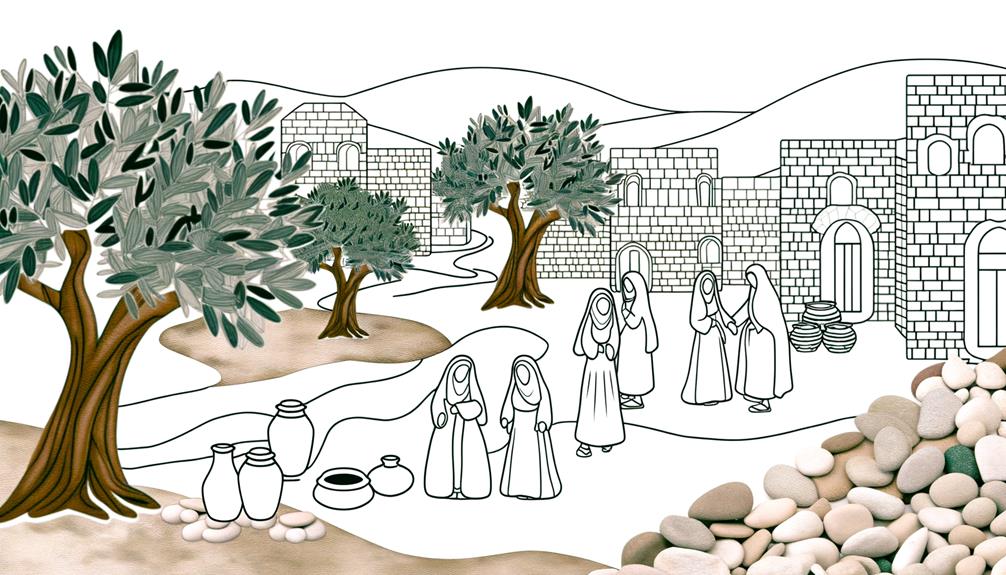
Understanding the cultural contexts of virginity in biblical times requires an examination of the societal norms and religious practices that shaped perceptions of purity and moral conduct.
In ancient Israelite society, virginity was closely linked to family honor and social status. The preservation of a woman’s virginity until marriage was deemed essential, reflecting not only personal purity but also communal integrity.
Religious laws, such as those found in Deuteronomy, emphasized the importance of virginity, prescribing severe consequences for its violation. This cultural emphasis extended beyond individual behavior, influencing marital practices and inheritance rights.
Theological implications of virginity were further reinforced by its symbolic representation of Israel’s covenantal relationship with God, underscoring themes of fidelity and sanctity.
Impact on Christian Doctrine

In examining the impact of virginity on Christian doctrine, it becomes evident that the concept has been profoundly shaped by both scriptural interpretations and theological traditions.
Virginity is often associated with purity and spiritual dedication, influencing various aspects of Christian thought and practice.
Theological emphasis on the Virgin Mary as a paradigm of holiness underpins numerous doctrinal developments.
Additionally, early church teachings on celibacy and monasticism reflect the high value placed on virginity.
- Theological significance of the Virgin Mary
- Celibacy and religious vows in monastic life
- Symbolism of purity in Christian ethics
- Interpretations of biblical texts regarding virginity
These elements collectively underscore the profound doctrinal impact virginity holds within Christianity.
Conclusion
In biblical texts, the concept of virginity serves as a multifaceted prism, reflecting theological, cultural, and prophetic dimensions.
The Hebrew terms ‘almah’ and ‘bethulah,’ along with the Greek ‘parthenos,’ reveal layers of meaning from mere youth to purity and divine prophecy.
This symbolism is akin to a tapestry, intricately woven with threads of cultural context and doctrinal significance, ultimately impacting Christian theology and its interpretation of sacred narratives.