
Meaning of Zechariah in the Bible: Prophet and Vision
The name Zechariah, translating to ‘Yahweh has remembered’ in Hebrew, reflects the profound biblical theme of God’s unwavering faithfulness and commitment to His covenant. As a post-exilic prophet around 520-518 BCE, Zechariah’s ministry, marked by night visions and oracles, encouraged the rebuilding of the Jerusalem Temple (Zechariah 1:1), and emphasized divine restoration, spiritual renewal, and messianic hopes (Zechariah 9:9; 12:10).
His prophecies link divine memory to Israel’s future redemption, offering both historical and eschatological insights. Exploring further reveals the rich tapestry of hope and divine action woven through Zechariah’s messages.

Key Takeaways
- The name ‘Zechariah’ means ‘Yahweh has remembered’ in Hebrew.
- It signifies God’s faithfulness and His commitment to His covenant.
- Zechariah’s name reinforces the prophetic assurances of divine fidelity.
- His ministry emphasized divine support for rebuilding the Temple and spiritual renewal.
Meaning of Zechariah’s Name

The name ‘Zechariah,’ derived from the Hebrew ‘Zəḥaryāh’ (זְכַרְיָה), means ‘Yahweh has remembered,’ signifying a profound theological assertion about divine faithfulness and memory in the Hebrew Scriptures.
This etymology underscores a recurrent biblical theme: God’s unwavering commitment to His covenant and His people.
The concept of remembrance (‘zāḥar’ in Hebrew) is pivotal, as it often entails divine action prompted by a covenantal promise, as seen in Genesis 8:1 and Exodus 2:24.
Zechariah’s name embodies a reminder of God’s assurance and fidelity, reinforcing the prophetic messages he delivered.
This theological nuance enriches our understanding of the prophetic literature, situating Zechariah within a broader narrative of divine intervention and redemption.
Zechariah’s Life and Ministry
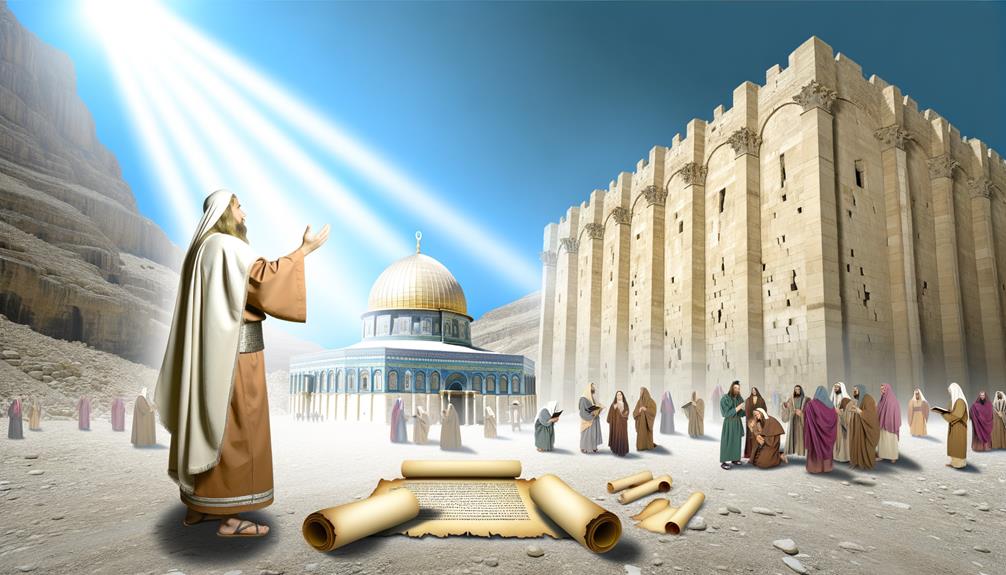
Zechariah, a post-exilic prophet contemporaneous with Haggai, played a vital role in encouraging the Israelites to rebuild the Temple in Jerusalem, as documented in Zechariah 1:1 and Ezra 5:1.
His ministry, spanning from 520 to 518 BCE, was marked by a series of night visions and prophetic oracles aimed at motivating the Jewish community during a period of profound discouragement.
Zechariah’s messages emphasized divine support for the rebuilding efforts and the establishment of a purified priesthood.
- Zechariah’s lineage as the son of Berechiah and grandson of Iddo (Zechariah 1:1).
- His visionary experiences, including eight significant visions (Zechariah 1-6).
Zechariah’s life and ministry therefore underscore his essential role in post-exilic restoration.
Key Themes in Zechariah’s Prophecies

Central to Zechariah’s prophecies is the theme of divine restoration, as exemplified by the return of God’s favor upon Israel and the eschatological promise of a messianic kingdom (Zechariah 1:16-17; 9:9-10).
This restoration includes the physical rebuilding of Jerusalem and the Temple, symbolizing renewed divine presence (Zechariah 2:10-11).
In addition, Zechariah emphasizes the purification and spiritual renewal of the people, urging them to return to righteousness (Zechariah 3:4; 7:9-10).
The prophet also foresees the ultimate triumph of good over evil, with visions of God’s judgment against oppressors and the establishment of universal peace (Zechariah 14:9, 16).
These themes collectively highlight a thorough vision of hope and divine intervention.
Messianic Expectations in Zechariah

Building upon the themes of divine restoration and renewal, Zechariah’s prophecies also intricately weave together a vivid anticipation of a messianic figure who embodies and enacts God’s ultimate plan for salvation and justice (Zechariah 9:9; 12:10).
This anticipated Messiah is portrayed as:
- Humble yet victorious: Entering Jerusalem on a donkey, symbolizing peace and humility (Zechariah 9:9).
- Suffering yet exalted: Pierced and mourned by the people, reflecting a profound sorrow and subsequent redemption (Zechariah 12:10).
These prophetic elements not only underscore the eschatological hopes of Israel but also frame the messianic expectations that resonate throughout biblical theology.
Modern Relevance of Zechariah’s Prophecies

The timeless nature of Zechariah’s prophecies continues to offer profound insights into contemporary spiritual and theological discourse, particularly in understanding the enduring themes of divine justice, redemption, and eschatological hope (Zechariah 9:9; 12:10). These themes resonate deeply within modern contexts, providing a framework for interpreting current events through a biblical lens.
| Theme | Scriptural Reference | Modern Relevance |
|---|---|---|
| Divine Justice | Zechariah 7:9-10 | Social Justice Movements |
| Redemption | Zechariah 9:11 | Personal and Communal Salvation |
| Eschatological Hope | Zechariah 14:9 | Future Peace and Restoration |
| Messianic Expectation | Zechariah 6:12-13 | Christological Fulfillment |
| Covenant Renewal | Zechariah 8:8 | Spiritual Revival |
This table exemplifies how Zechariah’s prophecies bridge ancient revelations with contemporary spiritual aspirations.
Conclusion
Zechariah’s prophecies, rich in messianic expectations and profound theological insights, hold enduring relevance. The name ‘Zechariah,’ meaning ‘The Lord remembers,’ encapsulates the essence of his messages.
Contemporary believers might find solace in Zechariah 9:9, foretelling a humble king, which Christians interpret as Jesus’ triumphal entry into Jerusalem.
Imagine a community beset by despair, drawing hope from these ancient promises, finding renewed faith in the belief that divine remembrance and redemption are ever-present.