
Meaning of Hephzibah in Bible: My Delight Is in Her
Hephzibah, meaning ‘My delight is in her’ in Hebrew, signifies profound divine pleasure and approval in biblical literature. It is mentioned in Isaiah 62:4 to symbolize God’s renewed favor and covenant with Israel, reflecting a shift from desolation to divine delight and offering prophetic assurance of future blessings.
Additionally, Hephzibah is linked to the royal lineage of Judah, as the mother of King Manasseh and wife of King Hezekiah, highlighting both theological and historical significance. Exploring Hephzibah’s narrative can provide a deeper understanding of divine favor, restoration, and the transformative power of God’s covenant with His people.

Key Takeaways
- Hephzibah means ‘My delight is in her’ in Hebrew.
- Symbolizes God’s delight and favor towards Israel (Isaiah 62:4).
- Associated with Queen Hephzibah, wife of King Hezekiah (2 Kings 21:1).
- Represents a shift from desolation to divine pleasure and restoration.
Origin of the Name Hephzibah

The name Hephzibah, derived from the Hebrew language, holds significant historical and religious connotations within biblical texts. Etymologically, Hephzibah translates to ‘My delight is in her,’ reflecting a profound sense of favor and affection.
This name encapsulates a particular cultural and theological sentiment prevalent in ancient Hebrew society. It suggests the notion of divine pleasure and approval, often associated with a person or entity that embodies grace and virtue.
The linguistic roots of Hephzibah are deeply intertwined with the socio-religious context of ancient Israel, where names were not merely identifiers but carried intrinsic meanings and expectations.
Understanding the origin of Hephzibah consequently provides insight into the broader narrative and values of the biblical tradition.
Biblical References to Hephzibah

Hephzibah is mentioned in the Bible primarily in the framework of Isaiah 62:4, where it symbolizes God’s renewed delight and covenantal relationship with the land of Israel. This name, which means ‘My delight is in her,’ signifies a transformative promise of restoration and favor.
Additionally, Hephzibah is referenced in 2 Kings 21:1 as the mother of King Manasseh and the wife of King Hezekiah. In this framework, Hephzibah’s identity connects to the royal lineage of Judah, underscoring her significance within the biblical narrative.
These references collectively underscore the theological and historical weight of the name, illustrating its dual importance in conveying both divine pleasure and royal heritage within the biblical tradition.
Hephzibah in Isaiah 62:4

Isaiah 62:4 introduces the name Hephzibah as a prophetic declaration of God’s renewed favor and covenantal relationship with Israel, encapsulating a profound promise of restoration and delight. This verse signifies a shift from desolation to divine favor, where Israel is no longer termed ‘Forsaken’ but is called ‘Hephzibah,’ meaning ‘My delight is in her.’
The contextual implications are substantial:
- Covenantal Restoration: Reflects God’s commitment to reestablish His covenant with Israel.
- Transformative Renewal: Indicates a transformative shift from abandonment to celebration.
- Divine Favor: Symbolizes the bestowal of divine pleasure and approval upon Israel.
- Prophetic Assurance: Offers a prophetic assurance of future blessings and prosperity.
This profound renaming underscores a pivotal change in Israel’s spiritual and communal identity.
Symbolism of Delight

In biblical literature, the concept of ‘delight’ often serves as a nuanced symbol of divine favor and relational intimacy between God and His people. This symbol is epitomized in the name Hephzibah, which translates to “My delight is in her.” The underlying message conveys God’s unwavering pleasure in His covenant relationship with Israel, signifying a spiritual renewal and restoration. To elucidate this further, consider the following table:
| Symbolic Element | Meaning |
|---|---|
| Hephzibah | Divine Delight |
| Israel | Chosen People |
| Covenant | Relational Intimacy |
The usage of ‘delight’ underscores a mutual, heartfelt connection, reflecting God’s deep affection and commitment. This profound symbolism not only reinforces Israel’s identity but also exemplifies the transformative power of divine love.
Hephzibah and King Hezekiah

Although often overlooked, the connection between the name Hephzibah and King Hezekiah provides a rich context for understanding the spiritual and historical dimensions of Judah’s monarchy.
Hephzibah, mentioned as the queen mother in II Kings 21:1, played a pivotal role in the reign of her son, King Manasseh. Her name, meaning ‘My delight is in her,’ reflects a period of significant religious transformation in Judah.
- Genealogical Importance: Hephzibah was the wife of King Hezekiah, a reforming king who sought to restore the worship of Yahweh.
- Religious Influence: As queen mother, her influence extended to the spiritual upbringing of Manasseh.
- Political Context: Her era marked a shift from Hezekiah’s reforms to Manasseh’s initial apostasy.
- Cultural Significance: The name symbolizes the divine delight and favor upon Judah during her tenure.
Restoration and Hope

The narrative surrounding Hephzibah extends beyond the immediate historical context, offering a profound message of restoration and hope that reverberates through biblical prophecy and theological discourse.
In Isaiah 62:4, the name Hephzibah, which means ‘My delight is in her,’ symbolizes God’s renewed favor toward Jerusalem, reflecting divine promises of restoration.
This prophetic vision portrays a transformative shift from desolation to joy, underscoring a theological motif where God reclaims and cherishes His people.
The invocation of Hephzibah serves as a powerful emblematic reassurance, illustrating the enduring covenantal relationship between God and His chosen community amid adversity.
Consequently, Hephzibah’s narrative embodies a timeless optimism rooted in divine fidelity and future renewal.
Hephzibah’s Relevance Today
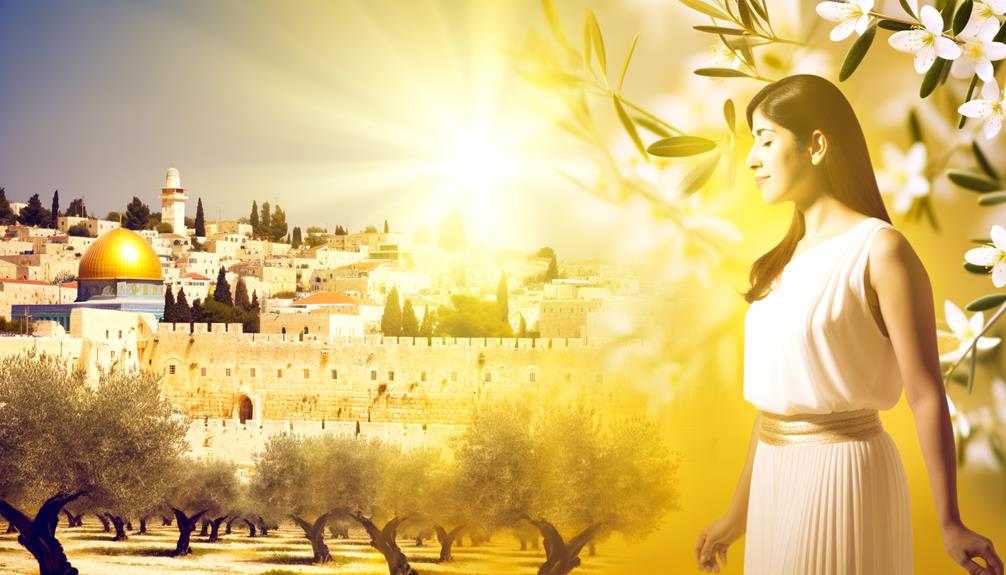
Hephzibah’s enduring symbolism of divine favor and restoration continues to resonate in contemporary theological discourse, offering insights into the nature of spiritual renewal and communal identity. This ancient name, meaning ‘My delight is in her,’ serves as a reminder of the transformative power of divine love and acceptance.
Today, Hephzibah’s relevance can be observed in several key areas:
- Personal Spiritual Renewal: Individuals find inspiration in the promise of being cherished by the Divine.
- Community Restoration: Faith communities draw parallels between Hephzibah and collective rejuvenation.
- Theological Reflection: Scholars examine Hephzibah to understand the dynamics of divine-human relationships.
- Cultural Identity: The name influences contemporary Christian naming practices and cultural expressions.
Through these lenses, Hephzibah continues to offer profound meaning and relevance.
Spiritual Lessons From Hephzibah

Building upon Hephzibah’s relevance in contemporary theological discourse, several spiritual lessons emerge from the name’s biblical context, illuminating the profound nature of divine favor and transformative renewal.
Hephzibah, meaning ‘My delight is in her,’ signifies God’s unwavering love and pleasure towards His people, transcending human frailty and sin. This name underscores the theme of restoration, where God transforms desolation into delight, as seen in the prophetic promise to Israel (Isaiah 62:4).
Additionally, Hephzibah embodies the concept of identity transformation, where divine favor redefines status and purpose. For believers, embracing their identity as beloved of God fosters a deeper relationship with the divine, encouraging a life of faith, hope, and spiritual renewal.
Conclusion
The name Hephzibah, shimmering through the biblical tapestry, embodies divine delight and restoration.
Rooted in sacred texts, it emerges as a beacon of hope in Isaiah 62:4, symbolizing God’s renewed relationship with His people.
Hephzibah’s association with King Hezekiah further anchors it in a narrative of redemption.
Today, the name continues to resonate, offering spiritual lessons of hope and divine favor, like a perennial light guiding the faithful through the annals of time.