Theophany Meaning In The Bible: God’s Revelation
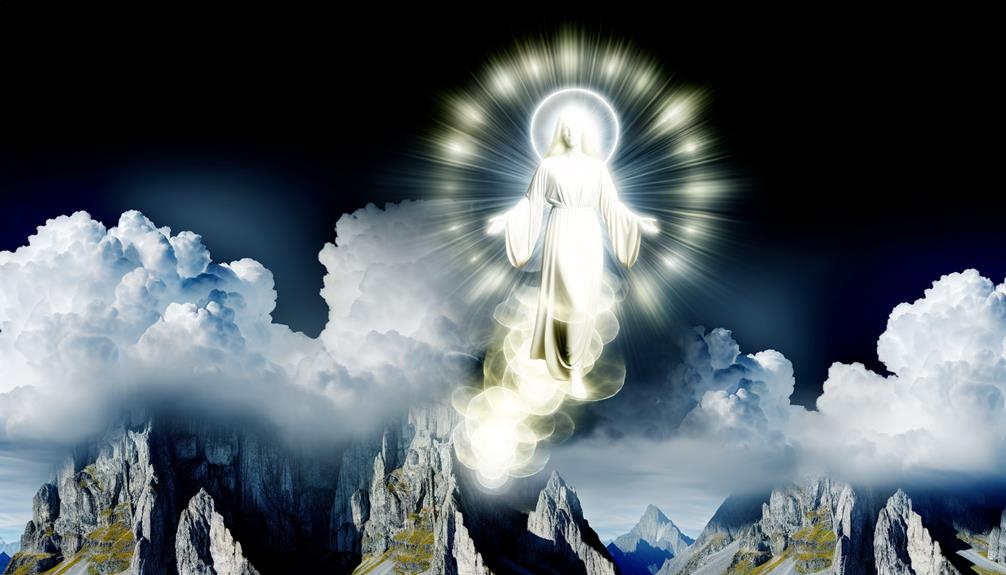
Theophany in the Bible denotes the visible manifestations of God to humanity. It encapsulates critical moments where divine presence intersects with the temporal domain, often accompanied by extraordinary phenomena such as fire, clouds, or thunder.
Old covenant examples include the burning bush encountered by Moses (Exodus 3), Jacob’s wrestling with God (Genesis 32), and the divine appearances on Mount Sinai (Exodus 19). New Testament theophanies primarily manifest through Jesus Christ, particularly during His baptism (Matthew 3) and Transfiguration (Matthew 17).
These encounters underscore God’s relational nature and are instrumental in understanding His character and redemptive history. Further insights await.
Key Takeaways
- Theophany refers to visible manifestations of God to humanity, revealing God’s presence and character.
- In the Old Testament, theophanies include significant events like the burning bush (Exodus 3) and Mount Sinai (Exodus 19).
- New Testament theophanies center on Jesus Christ, manifesting divine presence, such as during the Transfiguration (Matthew 17).
- Theophanies often involve extraordinary phenomena like fire, clouds, or thunder, symbolizing divine power and holiness.
Definition of Theophany
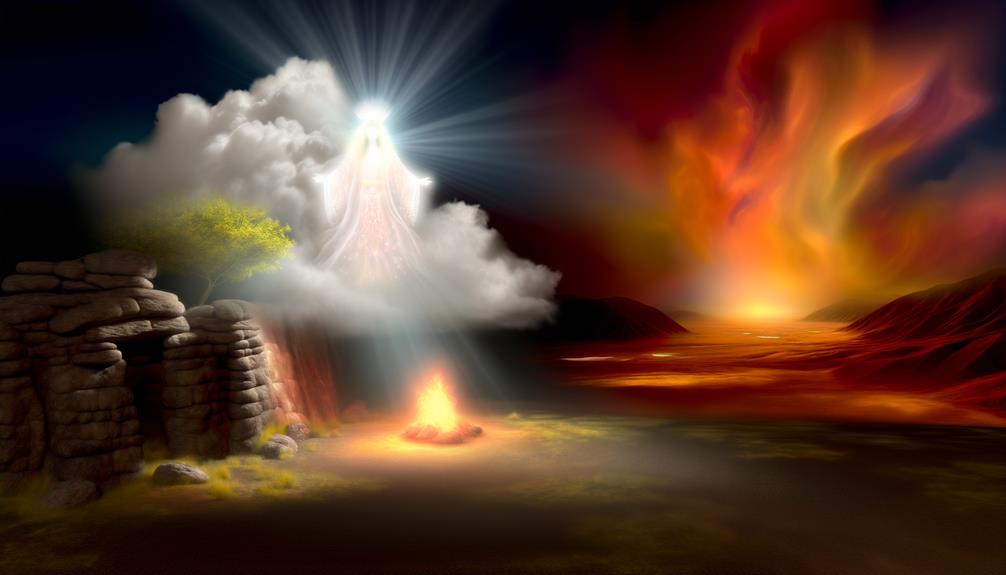
In theological discourse, a theophany is defined as a visible manifestation of God to humankind, often accompanied by extraordinary phenomena. The term derives from the Greek words ‘theos’ (God) and ‘phaino’ (to appear), indicating an event where the divine intersects with the human domain in a perceptible way.
Historically, theophanies have been significant in various religious traditions, serving as pivotal moments where divine will and presence are revealed. These manifestations are not merely visual but are often accompanied by awe-inspiring signs such as fire, clouds, or thunder, underscoring the transcendence and otherness of the divine.
Theologically, theophanies are essential for understanding how the divine engages with the temporal world, offering insight into the nature and character of God.
Old Testament Appearances
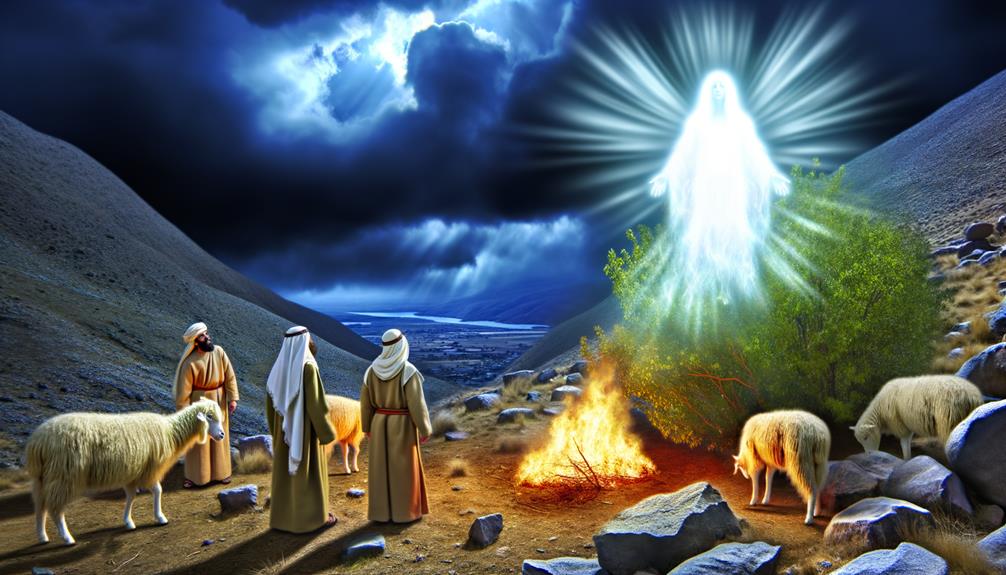
Throughout the Old Scriptures, numerous theophanies are recorded, each serving as a profound encounter between God and individuals or groups, thereby shaping the narrative and theological framework of the Hebrew Scriptures. These divine manifestations hold significant historical and theological implications.
Key instances include:
- Burning Bush (Exodus 3:1-4:17): God’s revelation to Moses, symbolizing divine calling and guidance.
- Mount Sinai (Exodus 19:16-25): God’s appearance to Israel, establishing the covenant and the Law.
- Pillar of Cloud and Fire (Exodus 13:21-22): God’s presence guiding the Israelites during their exodus from Egypt.
- Vision of Isaiah (Isaiah 6:1-13): A divine encounter that commissions Isaiah as a prophet, reflecting God’s holiness and judgment.
These theophanies profoundly impact theological understanding and the narrative progression within the Old Covenant.
New Testament Manifestations

The New Scripture presents theophanies primarily through the person of Jesus Christ, whose incarnation is considered the ultimate divine revelation within Christian theology.
The Gospels detail numerous instances where Christ reveals divine attributes, such as his transfiguration (Matthew 17:1-8), where his divine glory is visibly manifested to Peter, James, and John.
Additionally, the baptism of Jesus (Matthew 3:16-17) serves as a Trinitarian theophany, with the Father’s voice and the Spirit descending as a dove.
Post-resurrection appearances, such as those on the road to Emmaus (Luke 24:13-35), further underscore Jesus as the divine presence.
These manifestations underscore the New Scripture’s theological assertion of Jesus as the incarnate Word, making God known to humanity in a tangible form.
Moses and the Burning Bush
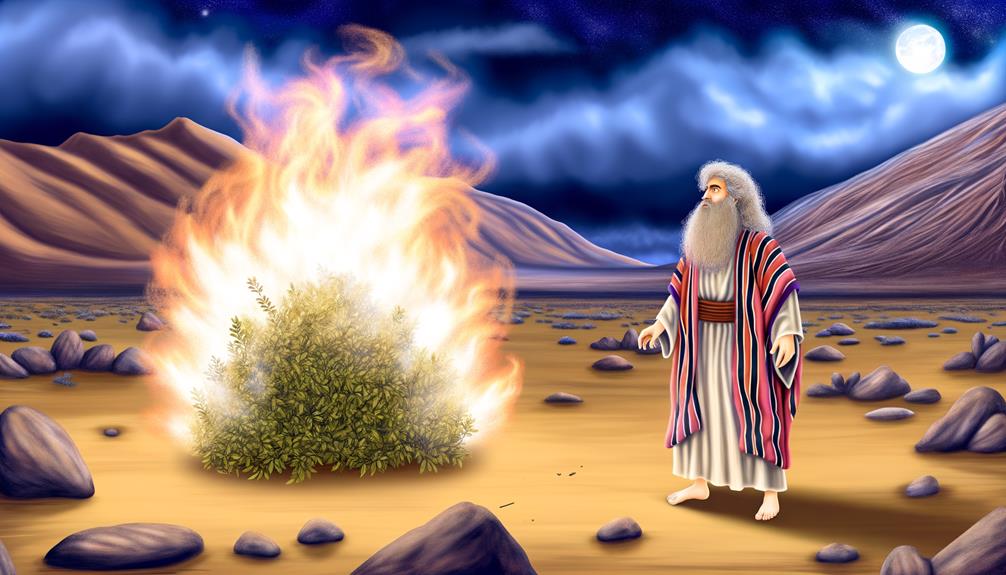
While the New Covenant highlights theophanies through the person of Jesus Christ, the Hebrew Bible offers profound instances of divine encounters, one of the most notable being Moses’ experience with the burning bush. This theophany is significant for several reasons:
- Divine Revelation: God reveals His name, ‘I AM WHO I AM’ (Exodus 3:14), signifying eternal self-existence.
- Commissioning: Moses is tasked with leading the Israelites out of Egyptian bondage.
- Holy Ground: The encounter emphasizes the sanctity of God, as Moses is instructed to remove his sandals.
- Sign of Wonders: The burning bush, unconsumed by fire, symbolizes God’s power to transcend natural laws.
This event not only marks Moses’ prophetic mission but also establishes a foundational moment in Israelite theology and identity.
Jacob’s Wrestling Encounter

Jacob’s wrestling encounter with a mysterious figure, traditionally understood as a divine being, profoundly illustrates the significance of struggle in the human-divine relationship.
This pivotal moment not only results in Jacob’s name being changed to Israel, symbolizing his transformation and covenantal role, but also marks a deep spiritual impact that underscores themes of persistence and divine blessing.
Analyzing this encounter reveals critical insights into the nature of theophany and its implications for understanding biblical narratives.
Divine Struggle Significance
In the biblical narrative, the account of Jacob’s wrestling with a mysterious divine figure provides profound theological insights into the nature of divine-human encounters and the transformative power of struggle. This episode, found in Genesis 32:22-32, underscores several key themes:
- Human Vulnerability: Jacob’s physical struggle symbolizes the vulnerability inherent in human encounters with the divine.
- Divine Mystery: The enigmatic nature of the opponent highlights the often incomprehensible aspects of divine revelation.
- Perseverance in Faith: Jacob’s persistence reflects the necessity of steadfast faith in the face of adversity.
- Spiritual Transformation: The encounter signifies how divine struggle can lead to profound personal and spiritual transformation.
These elements collectively reveal the intricate dynamics between human frailty and divine strength.
Jacob’s Name Change
The transformative encounter culminates in the renaming of Jacob to Israel, a significant act that symbolizes a new identity and mission bestowed upon him by the divine.
Historically, this event is pivotal, as it marks a profound shift in Jacob’s destiny. The name ‘Israel,’ meaning ‘one who struggles with God,’ encapsulates the essence of the nocturnal wrestling match described in Genesis 32:22-32.
This theophany not only alters Jacob’s personal trajectory but also serves as a foundational moment for the nation of Israel. Theologically, the renaming signifies divine approval and covenantal promise, underscoring God’s active role in guiding human history.
This encounter therefore stands as a witness to the intricate interplay between human agency and divine will.
Encounter’s Spiritual Impact
Engaging in a profound nocturnal struggle with the divine, Jacob’s wrestling encounter serves as a transformative spiritual experience that profoundly reshapes his understanding of self and God. This theophany, described in Genesis 32:22-32, offers rich theological insights into human-divine interaction.
The encounter’s spiritual impact can be delineated into four key areas:
- Identity Transformation: Jacob receives a new name, Israel, symbolizing a new identity and mission.
- Divine Blessing: The encounter culminates in a divine blessing, affirming God’s favor.
- Physical Mark: Jacob’s limp serves as a perpetual reminder of his divine encounter.
- Theological Significance: This event underscores the persistence and vulnerability inherent in seeking God.
Jacob’s wrestling encounter consequently stands as a paradigm for spiritual transformation.
Theophanies in Prophetic Visions
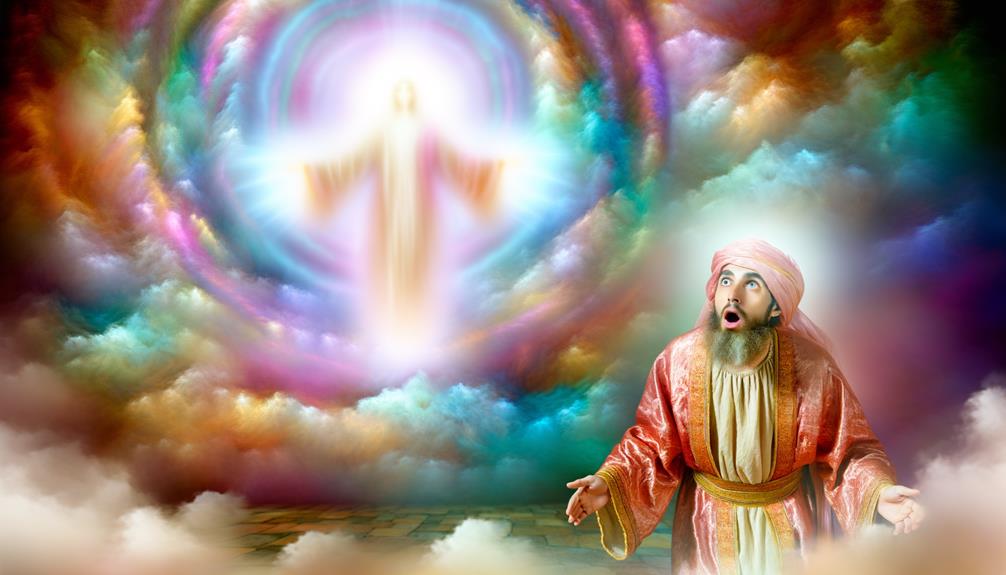
Theophanies in prophetic visions represent critical junctures where prophets encounter the divine, often through symbolic imagery that conveys profound theological truths.
These encounters, as recorded in texts such as Ezekiel and Isaiah, utilize vivid and complex symbols to communicate God’s presence and will.
The impact of these visions on the faith communities is substantial, reinforcing divine authority and guiding spiritual understanding.
Prophets’ Divine Encounters
Prophetic visions in the Bible often feature theophanies, where prophets experience direct encounters with the divine, providing profound theological insights and shaping the narrative of sacred scripture.
These divine encounters are pivotal for understanding the prophetic tradition and its significant impact on biblical theology. Notable instances include:
- Isaiah’s Vision: In Isaiah 6, the prophet sees the Lord seated on a high and lofty throne, which underscores God’s majesty and holiness.
- Ezekiel’s Visions: Ezekiel 1 describes a complex vision of God’s chariot, symbolizing divine mobility and omnipresence.
- Jeremiah’s Call: Jeremiah 1:4-10 details Jeremiah’s divine commissioning, emphasizing God’s sovereignty and purpose.
- Daniel’s Revelations: In Daniel 10, a heavenly being reveals future events, illustrating divine foreknowledge and intervention.
Symbolic Imagery Explained
The rich tapestry of symbolic imagery in prophetic visions serves to communicate profound theological truths about the nature and actions of the divine. These theophanies often employ vivid symbols to convey complex messages, reflecting the divine’s transcendence and immanence. For instance, Ezekiel’s vision of the chariot (Ezekiel 1) encapsulates divine sovereignty and omnipresence through elaborate, otherworldly images. Similarly, Daniel’s vision of the Ancient of Days (Daniel 7) utilizes majestic and awe-inspiring imagery to illustrate God’s eternal authority and judgment.
| Symbol | Biblical Reference | Theological Significance |
|---|---|---|
| Chariot | Ezekiel 1 | Divine sovereignty, omnipresence |
| Ancient of Days | Daniel 7 | Eternal authority, judgment |
| Burning Bush | Exodus 3 | Divine presence, holiness |
| Ladder | Genesis 28:12 | Connection between heaven and earth |
Visions’ Impact on Faith
Frequently, the impact of visionary theophanies on faith is profound, shaping theological understanding and personal devotion throughout biblical history. These divine manifestations in prophetic visions serve not only as revelatory experiences but also as foundational pillars for religious beliefs.
Key examples include:
- Isaiah’s Vision (Isaiah 6): Confronted with God’s holiness, Isaiah’s prophetic mission is solidified.
- Ezekiel’s Vision (Ezekiel 1): The vision of God’s glory underscores divine sovereignty and fuels Israel’s hope during exile.
- Daniel’s Vision (Daniel 7): Apocalyptic imagery reveals God’s ultimate dominion and the coming of the Son of Man.
- John’s Revelation (Revelation 1): Theophanies in Revelation strengthen Christian eschatological expectations.
These events not only guide theological discourse but also inspire enduring faith in believers.
Significance in Christian Theology

In Christian theology, theophany holds profound significance as it denotes the instances where God manifests Himself to humanity in a perceptible form.
These divine encounters are pivotal, serving as direct interactions between the divine and the mortal, thereby reinforcing faith and divine authority. Historical examples include the burning bush witnessed by Moses (Exodus 3) and the Transfiguration of Jesus (Matthew 17:1-9).
Theophanies bridge the finite and infinite, illustrating God’s immanence and transcendence. Theologically, they affirm God’s active involvement in human history, revealing His character, will, and covenantal promises.
Such manifestations are not mere historical events but are foundational to understanding God’s relational nature and the unfolding of redemptive history within the Christian narrative.
Conclusion
Theophanies, as divine manifestations, serve as celestial bridges between the finite and the infinite, casting light upon the divine nature and purpose within biblical narratives.
From Moses’ burning bush to Jacob’s wrestling, these sacred encounters underscore the profound interaction between humanity and the divine.
In both Scriptures, theophanies illuminate the path to understanding God’s will and presence, symbolizing a beacon of theological significance that has shaped Christian thought and continues to inspire spiritual reflection.