
Chapiter Meaning in the Bible: Architectural Detail
In biblical literature, a chapiter denotes the topmost part of a pillar, integral to ancient temple architecture, particularly in Solomon’s Temple, where it graced the bronze pillars Jachin and Boaz. These ornate capitals, elaborately designed with motifs like pomegranates and lilies, symbolize fertility, purity, and divine providence, embodying a theological interstice between the earthly and the heavenly.
Emerging from Near Eastern artistic traditions, chapiters reflect both the technical advancements and the rich cultural exchange of the period. Their inclusion in scripture underscores their dual role as both structural components and profound symbols of divine craftsmanship, inviting a deeper exploration of their spiritual and historical context.

Key Takeaways
- Chapiters are the ornate capitals or topmost parts of pillars and columns, notably in Solomon’s Temple.
- They symbolize fertility and purity, often adorned with motifs like pomegranates and lilies.
- Represent a divine connection, serving as intermediaries between earthly and heavenly realms.
- Reflect the grandeur and sanctity of sacred spaces, emphasizing spiritual and artistic significance.
Definition of Chapiter

The term ‘chapiter‘ in the Bible refers to the capital or topmost part of a pillar or column, often intricately designed and symbolically significant in biblical architecture.
This architectural feature is mainly mentioned in the context of Solomon’s Temple, where chapiters crowned the bronze pillars named Jachin and Boaz (1 Kings 7:15-22). These capitals were ornately adorned with motifs such as pomegranates and lilies, symbolizing fertility and purity.
Theologically, chapiters represent a divine connection, serving as an intermediary between the earthly and the heavenly. The meticulous craftsmanship and elaborate decoration underscore their importance, reflecting the grandeur and sanctity of sacred spaces.
Consequently, chapiters are not merely structural elements but bear profound spiritual and artistic significance.
Historical Context
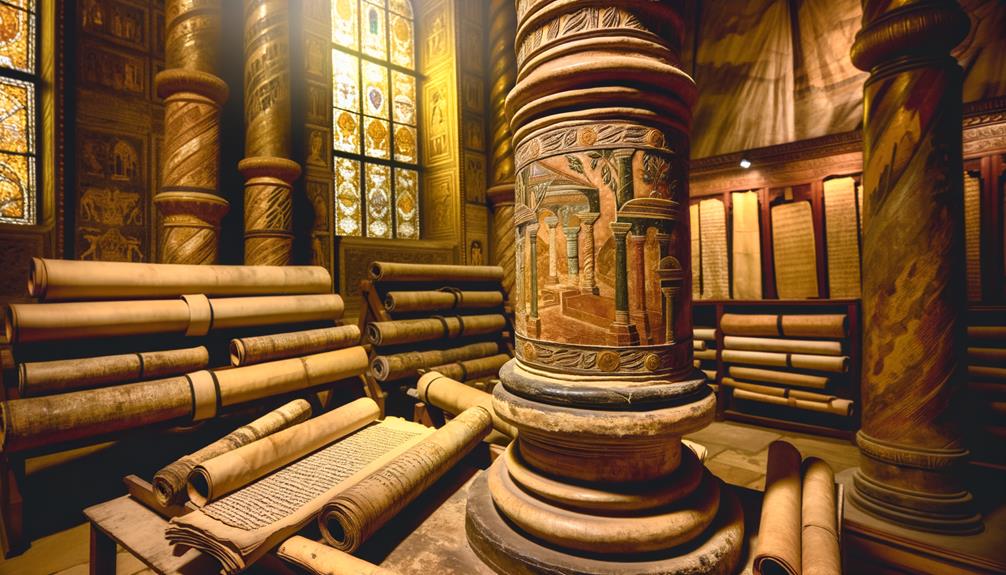
Examining the historical context of chapiters in the Bible reveals their origins and development within ancient Near Eastern architectural traditions.
Often found atop columns, chapiters were integral to the structural and aesthetic design of temples and palaces.
The Hebrew term ‘kaphtor’ appears in descriptions of Solomon’s Temple, reflecting influences from Phoenician artistry, known for elaborate and ornamental designs.
By incorporating chapiters, biblical architecture not only showcased technical advancement but also was imbued with cultural exchange and religious significance.
They symbolized divine craftsmanship, reinforcing theological themes of beauty and order.
Understanding their historical roots enhances comprehension of their functional and symbolic roles within the sacred spaces described in biblical texts.
Symbolism in Scripture

In Scripture, chapiters serve as profound symbols, embodying theological concepts of divinity, order, and beauty within the sacred architecture.
These ornate capitals atop columns are not merely structural elements but also convey deeper spiritual meanings.
In the construction of Solomon’s Temple, chapiters adorned with intricate designs like pomegranates and lilies symbolize fertility, purity, and divine providence (1 Kings 7:18-20).
Their elevated position signifies the transcendence of God and the aspiration of the faithful towards heavenly domains.
Through such symbolism, chapiters reflect the meticulous order of divine creation and the aesthetic harmony in worship spaces, fostering a sense of reverence and awe.
This theological richness underscores their integral role in biblical narratives and spiritual life.
Architectural Significance

Building upon the symbolic richness of chapiters, their architectural significance in biblical structures like Solomon’s Temple also warrants thorough examination.
Chapiters, the decorative capitals atop columns, were not mere ornamental features but held profound theological and aesthetic importance.
In Solomon’s Temple, described in 1 Kings and 2 Chronicles, chapiters crowned the two pillars, Jachin and Boaz, standing at the temple’s entrance.
These adorned capitals, often featuring intricate carvings of pomegranates and lilies, symbolized fertility, divinity, and eternal life.
Architecturally, they served to elevate the overall grandeur and sanctity of the temple, reflecting the divine presence.
Understanding chapiters in their historical and architectural contexts offers deeper insights into their roles, transcending mere structural support to embodying spiritual and cultural significance.
Biblical References

Numerous biblical passages highlight the significance of chapiters, particularly in the detailed descriptions of sacred structures such as Solomon’s Temple in 1 Kings and 2 Chronicles.
These ornate capitals adorned the top of the temple’s pillars, symbolizing divine craftsmanship and artistic beauty.
1 Kings 7:16-22 describes the intricate designs of the chapiters, featuring motifs such as lilies and pomegranates, which emphasize themes of fertility and divine blessing.
Similarly, 2 Chronicles 3:15-17 recounts the impressive height and elaborate decorations of these elements.
Such depictions underscore the chapiters’ role not only as architectural components but also as theological symbols, reflecting the grandeur and sanctity of God’s dwelling place.
These references provide rich insight into the religious and cultural milieu of ancient Israel.
Conclusion
In sum, the term ‘chapiter’ encapsulates an architectural marvel imbued with profound symbolism and historical context within biblical scripture.
Its presence in sacred texts is not merely decorative but serves as a monumental tribute to divine artistry and craftsmanship.
Understanding the chapiter’s multifaceted significance offers an unparalleled glimpse into the theological and cultural milieu of ancient times.
Truly, the chapiter stands as an eternal cornerstone in the edifice of biblical literature and religious heritage.