Trilogy Meaning in the Bible
The concept of trilogy in the Bible encompasses various profound theological and scriptural elements. Central to this is the Holy Trinity, a cornerstone of Christian doctrine, encapsulating God in three persons: Father, Son, and Holy Spirit, as articulated in the Nicene Creed.
Moreover, creation is depicted in a triadic structure of forming, ordering, and filling. Additionally, Jesus’ three temptations, Peter’s three denials, and His resurrection on the third day all emphasize completeness and divine intent.
The threefold office of Christ and the patterns of blessings and curses further illustrate this theological depth. Unpacking these elements reveals a richer understanding of biblical teachings.

Key Takeaways
- The Holy Trinity represents one God in three persons: Father, Son, and Holy Spirit.
- The Genesis creation narrative unfolds in three stages: formless void, separation and order, and filling and blessing.
- Jesus faced three key temptations in the wilderness, highlighting aspects of physical need, divine power, and spiritual fidelity.
- Peter’s three denials and subsequent reinstatement symbolize human weakness and divine forgiveness.
The Holy Trinity

The concept of the Holy Trinity, central to Christian doctrine, encapsulates the understanding of one God in three distinct persons: the Father, the Son, and the Holy Spirit.
This theological construct, formalized in the Nicene Creed of 325 AD, emerged from early Church efforts to articulate the divine nature and resolve theological disputes.
Scriptural foundations for the Trinity are found in passages like Matthew 28:19, where Jesus commands baptism ‘in the name of the Father and of the Son and of the Holy Spirit.’
The Johannine prologue (John 1:1-18) further elucidates the pre-existence and divinity of Christ, underscoring a complex unity.
The Trinity, consequently, represents a profound mystery, harmonizing monotheism with the relational aspects of God.
Creation in Three Parts

The concept of creation in three parts is clearly reflected in the Genesis narrative, where the formation of the world proceeds through distinct stages: the creation of the heavens and the earth, the establishment of order and life, and the culmination with the creation of humanity.
This triadic structure not only mirrors the theological symbolism of completeness but also emphasizes the ordered sequence inherent in God’s creative work.
Analyzing these stages provides deeper insight into the scriptural portrayal of a purposeful and methodical divine process.
Creation’s Three Stages
In the biblical narrative, creation unfolds in three distinct stages, each illuminating a unique aspect of God’s omnipotence and divine plan. These stages provide a structured framework, guiding believers through the profound intricacies of divine creation:
- Formless and Void: Genesis 1:2 describes the Earth as without form and empty, setting the stage for divine intervention.
- Separation and Order: God separates light from darkness, water from sky, and land from sea, establishing order in Genesis 1:3-10.
- Filling and Blessing: The Earth is populated with plants, animals, and humankind, as detailed in Genesis 1:11-31.
- Rest and Sanctification: On the seventh day, God rests, sanctifying the Sabbath, as noted in Genesis 2:2-3.
These stages underscore God’s meticulous design and purposeful creation.
Symbolic Triad in Genesis
A deeper examination of Genesis reveals a symbolic triad that mirrors the three-part structure of creation, highlighting the theological significance of tripartite patterns in the biblical text. Genesis outlines creation in three distinct phases: the formation of the heavens and earth, the establishment of life, and the creation of humanity. This triadic structure underscores the completeness and divine order inherent in God’s creative work.
| Creation Phase | Scriptural Reference | Significance |
|---|---|---|
| Heavens and Earth | Genesis 1:1-10 | Foundation of all creation |
| Establishment of Life | Genesis 1:11-25 | Introduction of flora and fauna |
| Creation of Humanity | Genesis 1:26-31 | Culmination of divine purpose |
Understanding this triad enriches our grasp of Genesis’ theological depth and historical context.
Jesus’ Three Temptations

In the narrative of Jesus’ three temptations, as recorded in the Synoptic Gospels, the first temptation addresses physical hunger, reflecting Jesus’ human vulnerability after fasting for forty days.
The second temptation challenges Jesus’ reliance on divine power, urging Him to demonstrate His authority by leaping from the pinnacle of the temple.
These temptations not only illustrate the duality of Jesus’ nature but also underscore the spiritual and ethical dimensions of relying on God’s provision and authority.
Temptation of Hunger
The Temptation of Hunger, as described in the Gospels, reveals profound theological insights into Jesus’ human vulnerabilities and divine mission during His forty-day fast in the wilderness.
This event highlights Jesus’ reliance on God’s word and His rejection of physical sustenance as the ultimate source of life. The narrative unfolds in four significant elements:
- Setting: Jesus’ isolation in the arid wilderness, symbolizing spiritual desolation and human frailty.
- Hunger: The physical craving after an extended period of fasting, emphasizing natural human needs.
- Temptation: Satan’s challenge to turn stones into bread, representing a test of divine power and faith.
- Response: Jesus’ citation of Deuteronomy 8:3, affirming that man lives not by bread alone but by every word of God.
This episode underscores the importance of spiritual sustenance over physical needs.
Test of Power
Jesus’ confrontation with Satan during His forty-day fast encapsulates a profound examination of divine authority and human obedience through three distinct temptations.
The second temptation, the ‘Test of Power,’ involved Satan urging Jesus to throw Himself from the pinnacle of the temple, quoting Psalm 91:11-12 to suggest divine angelic protection.
This temptation not only tested Jesus’ trust in God but also His refusal to misuse divine power for self-glorification.
Jesus responded with Deuteronomy 6:16, ‘You shall not put the Lord your God to the test,’ emphasizing His unwavering submission to God’s will.
Historically, this encounter highlights Jesus’ rejection of exploiting divine authority for personal validation, reaffirming His mission rooted in humility and obedience to the Father.
Peter’s Three Denials
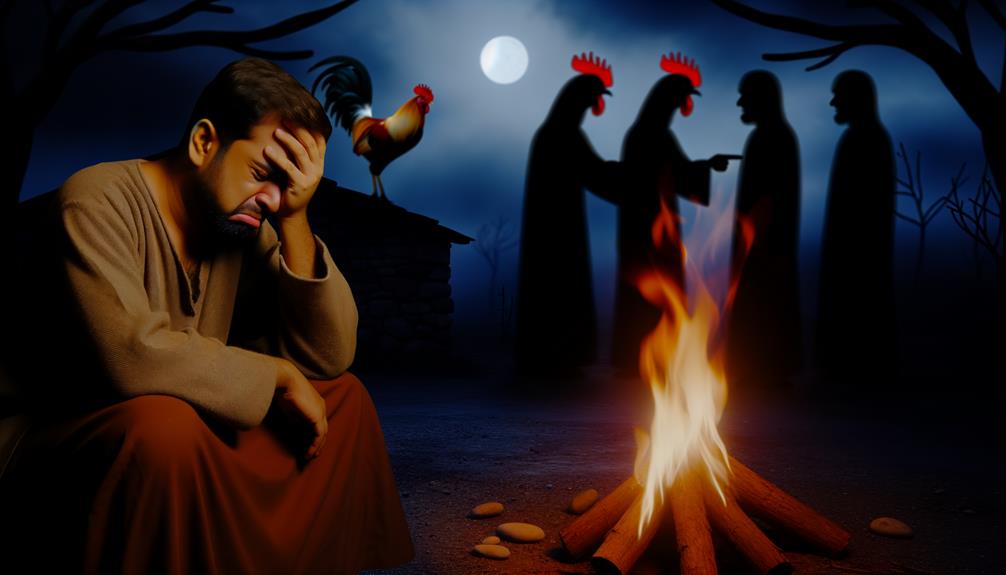
Among the most poignant moments in the New Scripture, Peter’s three denials of Christ serve as a profound narrative on human frailty and divine forgiveness. This episode, found in all four Gospels, underscores the vulnerability of even the most devout followers.
The symbolic weight of Peter’s actions is best understood through:
- Historical Context: Peter’s fear of association with Jesus during His arrest.
- Scriptural Analysis: The fulfillment of Jesus’ prediction, ‘Before the rooster crows, you will disown me three times’ (Matthew 26:34).
- Theological Insight: The triadic pattern reflecting the completeness of Peter’s repentance.
- Divine Forgiveness: Jesus’ reinstatement of Peter in John 21:15-19, emphasizing restoration and grace.
These elements illuminate the depth of Peter’s experience and its spiritual significance.
The Threefold Office
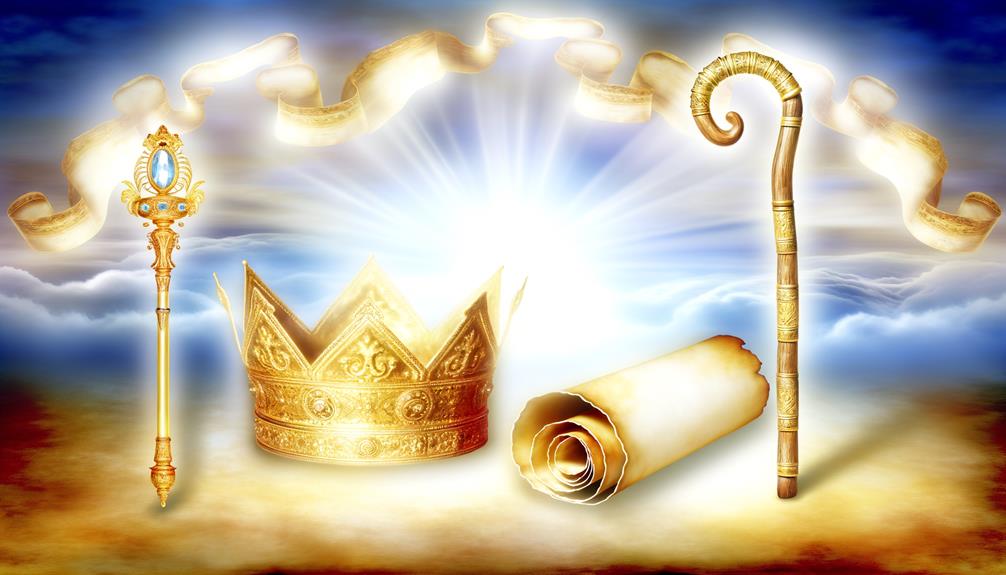
Just as Peter’s three denials and subsequent restoration highlight the dynamics of human weakness and divine grace, the concept of the Threefold Office illuminates the multifaceted roles of Christ as Prophet, Priest, and King. This theological framework underscores Christ’s mission to fulfill Israel’s expectations and God’s eternal plan. Historically, the roles are rooted in Old Testament precedents, fulfilled in Christ through New Testament revelation. Prophetically, Christ declares God’s word (John 1:1), as Priest, He mediates the new covenant (Hebrews 4:14-16), and as King, He reigns eternally (Revelation 19:16).
| Office | Role | Scriptural Basis |
|---|---|---|
| Prophet | Declare God’s Word | John 1:1 |
| Priest | Mediate New Covenant | Hebrews 4:14-16 |
| King | Reign Eternally | Revelation 19:16 |
This triad encapsulates His all-encompassing salvific work.
Resurrection on the Third Day

The resurrection on the third day stands as a cornerstone of Christian faith, symbolizing not only the defeat of death but also the fulfillment of prophetic scriptures and the inauguration of a new covenant. This pivotal event is deeply rooted in both theological significance and historical context.
Scriptural analysis reveals:
- Prophetic Fulfillment: Hosea 6:2 intimates a revival on the third day.
- Jesus’ Predictions: Multiple Gospel accounts (Matthew 16:21, Mark 8:31) highlight Jesus foretelling His resurrection.
- Early Christian Testimony: 1 Corinthians 15:4 asserts Christ’s resurrection “on the third day according to the Scriptures.”
- New Creation: The third day signifies new beginnings, echoing Genesis where life sprang forth on the third day of creation.
These elements collectively underscore its profound theological impact.
Threefold Blessings and Curses
In the biblical narrative, the motif of threefold blessings and curses often underscores the gravity of divine judgment and favor, reflecting a pattern of completeness and divine orchestration.
Scriptural examples like the Aaronic blessing in Numbers 6:24-26, which invokes a tripartite blessing of protection, grace, and peace, illustrate God’s extensive favor.
Conversely, the threefold curse in Deuteronomy 28 emphasizes the full extent of divine retribution for disobedience, affecting every aspect of life—city, field, and body.
Historically, these triadic forms resonate with ancient Near Eastern customs where repetition signified intensity and totality.
Theologically, they reveal God’s meticulous governance over creation, ensuring that blessings and curses are dispensed with perfect justice and thoroughness, reminding believers of the profound consequences of their choices.
Conclusion
The trilogy theme in biblical texts traverses theological insights, historical context, and scriptural analysis, underscoring divine design and doctrinal depth.
The Holy Trinity, creation’s tripartite structure, Jesus’ trio of temptations, Peter’s triple denials, the threefold office, resurrection on the third day, and triadic blessings and curses collectively constitute a consistent motif.
Such scriptural symmetry serves to signify spiritual significance, emphasizing completeness and divine perfection within the biblical narrative.
This tripartite paradigm elucidates profound patterns of faith, failure, and fulfillment.