
Shacking Up Meaning in the Bible: Moral Implications
In biblical theology, ‘shacking up,’ or cohabitation without marriage, lacks explicit mention but is addressed through overarching principles of sexual morality and the sanctity of marriage. The Old Scripture underscores marriage as a divine covenant with strict moral codes against premarital relations.
In the New Scripture, teachings reinforce the honor and purity of marriage, with Jesus and Paul emphasizing marital fidelity and avoiding sexual immorality (Hebrews 13:4, 1 Corinthians 7:2). Ancient and early Christian practices prioritized formal, sacred unions, reflecting God’s covenant with humanity.
To gain deeper insights into this subject, further exploration into these teachings and historical contexts is essential.

Key Takeaways
- Cohabitation without marriage contradicts biblical principles of sexual purity and marital fidelity.
- The Bible emphasizes marriage as a divine covenant, essential for moral and spiritual integrity.
- Both the Old and New Testaments advocate for formalized marriage and condemn premarital relations.
- Jesus’ teachings highlight the sanctity and indissolubility of marriage, condemning sexual immorality.
Biblical Definition of Cohabitation
The biblical definition of cohabitation, often termed as ‘shacking up’ in modern parlance, necessitates a thorough examination of scriptural teachings, historical contexts, and theological insights pertaining to the relationships and living arrangements of unmarried individuals.
Scriptural analysis reveals that the Bible does not explicitly address cohabitation as understood today but underscores principles of sexual morality, commitment, and covenant.
Historical context shows that in ancient times, marriage was not merely a private affair but a community-recognized covenant.
Theological insights emphasize the sanctity of marriage as a divine institution designed for procreation, mutual support, and spiritual growth.
Consequently, the biblical perspective on cohabitation is framed within broader teachings on purity, fidelity, and the sacredness of marital unions.
Old Testament Views

In the Old Scripture, the concept of cohabitation was deeply intertwined with ancient Hebrew practices that emphasized covenantal relationships.
Scriptural narratives, such as those found in Genesis, illustrate that unions were not merely personal arrangements but were seen as divine covenants, sanctified by God.
This theological framework underscored the importance of formalized commitments, contrasting sharply with modern interpretations of cohabitation.
Ancient Hebrew Practices
Ancient Hebrew practices regarding cohabitation, as reflected in Old Scriptures, reveal complex social, legal, and theological dimensions that shaped community norms and individual behaviors.
Scriptural texts, such as those found in the Torah, present a structured framework for relationships and living arrangements. These texts highlight:
- Marriage Contracts: Legal agreements, often formalized through elaborate ceremonies (Genesis 24).
- Patriarchal Authority: Household decisions, including cohabitation, were typically governed by male figures (Exodus 21:7-11).
- Moral Codes: Strong moral imperatives influenced cohabitation practices, with prohibitions against premarital relations (Deuteronomy 22:13-21).
These elements underscore the intricate interplay between faith, law, and everyday life in ancient Hebrew society, impacting both individual actions and communal standards.
Covenant and Relationships
Covenants in the Old Scriptures, particularly those involving relationships, encapsulate profound theological commitments and societal regulations that defined the moral and spiritual fabric of ancient Hebrew life. These covenants were not mere agreements but sacred bonds often sanctioned by divine authority. Marital covenants, for example, were seen as reflections of God’s covenant with Israel, demanding fidelity and mutual respect. The Old Canon, through various books like Genesis and Deuteronomy, underscores the sanctity and responsibilities embedded in these relationships.
| Covenant Type | Scriptural Reference | Key Elements |
|---|---|---|
| Marital Covenant | Genesis 2:24 | Unity, Fidelity |
| Abrahamic Covenant | Genesis 17 | Promise, Circumcision |
| Mosaic Covenant | Exodus 19-24 | Law, Obedience, Worship |
Such covenants were foundational to Israel’s identity and communal ethos.
New Testament Teachings

How does the New Scripture address the concept of cohabitation outside of marriage in its teachings and writings? The New Covenant provides several references that indirectly speak to this issue through its discussions on sexual morality and sanctity of marriage.
Hebrews 13:4 states, “Marriage should be honored by all, and the marriage bed kept pure, for God will judge the adulterer and all the sexually immoral.”
1 Corinthians 7:2 highlights Paul’s urging for believers to avoid sexual immorality by advocating marriage: “But since sexual immorality is occurring, each man should have sexual relations with his own wife.”
Ephesians 5:3 further reinforces this message, stating, “But among you there must not be even a hint of sexual immorality, or any kind of impurity.”
These scriptures collectively emphasize a commitment to marital fidelity and purity, reflecting early Christian values.
Jesus on Marriage

Jesus’ teachings on marriage, as recorded in the Gospels, emphasize the sanctity and indissolubility of the marital union, reflecting a divine covenant rather than a mere social contract.
He refers to Genesis to underscore that marriage is an institution ordained by God, intended for a lifetime of mutual fidelity (Matthew 19:4-6).
This perspective shapes the biblical principles of marriage, highlighting a commitment that transcends cultural norms and aligns with the theological understanding of a holy and binding union.
Jesus’ Marriage Teachings
In his teachings, Christ emphasized the sanctity and indissolubility of marriage, grounding his perspective in both theological principles and scriptural exegesis. He cited Genesis, highlighting the divine creation of male and female and their union as one flesh (Mark 10:6-9). His discourse further underscored the permanence of marriage, condemning divorce except on the grounds of sexual immorality (Matthew 19:9).
Key aspects of Jesus’ marriage teachings include:
- Divine Institution: Marriage is ordained by God, reflecting His covenant relationship with humanity.
- Unity: The marital bond signifies an inseparable unity, akin to the unity within the Trinity.
- Moral Commitment: Upholding marital vows is presented as a moral imperative, integral to community and individual holiness.
Biblical Marriage Principles
Central to Jesus’ teachings on marriage are the principles of covenant fidelity, sacrificial love, and the reflection of divine unity.
Covenant fidelity underscores Jesus’ emphasis on the indissolubility of marriage, as seen in Matthew 19:6 where He states, ‘What God has joined together, let no one separate.’
Sacrificial love is highlighted in Ephesians 5:25, urging husbands to love their wives as Christ loved the church, embodying selflessness and devotion.
Finally, marriage as a reflection of divine unity is illustrated in the unity of husband and wife, mirroring the intimate relationship within the Trinity.
Historically, Jesus’ teachings countered contemporary views, reaffirming marriage’s sanctity as a divine institution rooted in creation and reflective of God’s eternal covenant with humanity.
Christ’s View on Union
Examining Christ’s teachings on union reveals a profound theological foundation that underscores the sacredness and permanence of marriage. Jesus’ perspective is deeply rooted in scriptural tradition and offers timeless insights. In the Gospels, Christ emphasizes the divine origin and indissolubility of marital bonds.
- Divine Origin: Jesus points to Genesis, affirming that marriage is instituted by God (Matthew 19:4-6).
- Indissolubility: He teaches that what God has joined, no one should separate (Mark 10:9), highlighting marriage’s permanence.
- Mutual Commitment: Jesus promotes love and fidelity, drawing parallels with His relationship to the Church (Ephesians 5:25-32).
These teachings collectively affirm that marriage, in Christ’s view, is a sacred covenant reflecting divine intentions.
Paul’s Epistles

Paul’s epistles provide profound insights into early Christian teachings and community practices, including directives on moral conduct and personal relationships. His letters frequently address issues of sexual immorality, urging believers to honor their bodies as temples of the Holy Spirit (1 Corinthians 6:19-20).
Paul emphasizes the sanctity of marriage, admonishing against fornication and advocating for marital fidelity (Hebrews 13:4). He articulates a vision of Christian relationships grounded in mutual respect and purity, reflecting a commitment to holy living (Ephesians 5:3).
Paul’s counsel is not merely prescriptive but also deeply rooted in theological principles, underscoring the transformative power of Christ’s love and the call to live in accordance with divine will (Romans 12:1-2).
Historical Context of Relationships
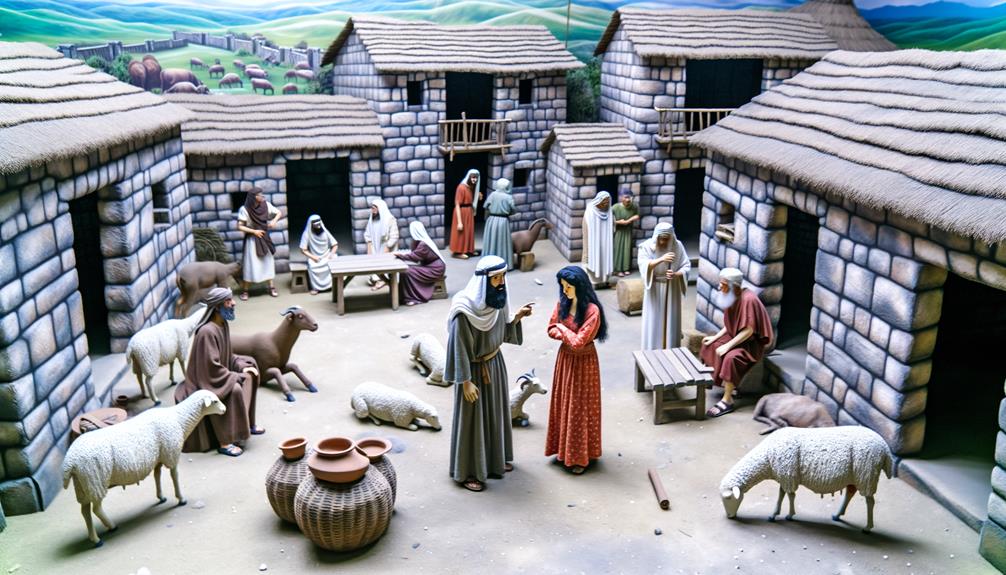
Understanding the historical context of relationships in biblical times is imperative to fully grasp the theological and moral teachings presented in Paul’s epistles. Biblical relationships were governed by societal norms and religious laws that shaped interactions and commitments.
To comprehend these nuances, consider:
- Marriage Customs: Marriages were often arranged and served to unite families and secure social alliances.
- Patriarchal Society: Men held dominant roles in both family and societal structures, influencing relational dynamics.
- Moral and Legal Expectations: Adultery and fornication were not only personal sins but also social offenses, with severe consequences.
Moral Implications

The moral implications of cohabitation, or ‘shacking up,’ in the biblical context are deeply intertwined with the scriptural mandates on sexual purity and the sanctity of marriage.
The Bible consistently underscores the importance of marriage as a covenantal bond (Ephesians 5:31-33) and warns against sexual immorality (1 Corinthians 6:18-20).
Historically, Jewish and early Christian communities upheld marriage as a sacred institution, essential for societal stability and spiritual integrity.
Cohabitation without marriage is viewed as contravening divine principles, potentially leading to moral and spiritual consequences.
By prioritizing marital commitment, the scriptures aim to foster an environment of fidelity, trust, and spiritual growth, reflecting God’s design for human relationships.
Understanding these moral imperatives can guide contemporary believers in aligning their lives with biblical teachings.
Theological Interpretations

Theological interpretations of cohabitation in the Bible often contrast the sacred covenant of marriage with non-marital unions.
Scriptural analysis reveals that texts such as Hebrews 13:4 and 1 Corinthians 7:2 emphasize the sanctity of marriage and the moral concerns associated with cohabitation.
Understanding these perspectives within their historical context sheds light on the biblical stance that elevates marriage as a divinely instituted foundation for human relationships.
Biblical Cohabitation Context
Although the Bible does not explicitly mention modern cohabitation, theological interpretations often derive principles from scriptural teachings on marriage, sexual morality, and communal living. Scholars analyze these themes to provide contextual insight for contemporary issues:
- Marriage Sacredness: Biblical texts, such as Genesis 2:24 and Ephesians 5:31, emphasize the sanctity of marriage as a divine covenant, suggesting that cohabitation outside this bond might undermine its sacred nature.
- Sexual Morality: Passages like 1 Corinthians 6:18-20 address sexual purity, advocating for sexual relations within the committed framework of marriage.
- Communal Living: Early Christian communities, as seen in Acts 2:44-47, demonstrate a model of collective living rooted in mutual respect and shared values, influencing perspectives on cohabitation.
These interpretations help frame the biblical context surrounding cohabitation.
Marriage Vs. Cohabitation
Scriptural teachings often delineate marriage as a covenantal relationship ordained by God, contrasting it with cohabitation, which lacks this divine sanction and formal commitment.
Genesis 2:24 establishes marriage as a divine institution where ‘a man shall leave his father and his mother and hold fast to his wife.’ This covenant is further underscored in Ephesians 5:31-32, portraying marriage as a profound mystery reflecting Christ and the Church.
Historically, the Christian tradition has upheld marriage as a sacrosanct union, while cohabitation is seen as lacking the theological and sacramental gravitas.
Contemporary theological interpretations continue to affirm the sanctity of marriage, viewing cohabitation as incompatible with biblical principles due to its absence of covenantal solemnity and divine blessing.
Modern Relevance

In today’s society, understanding the biblical perspective on cohabitation without marriage requires a nuanced approach that considers both historical context and contemporary moral frameworks.
Biblical texts reflect an era when social, economic, and spiritual norms were vastly different from today. Yet, their moral imperatives continue to resonate. To grasp their modern relevance, consider the following:
- Scriptural Guidance: Traditional interpretations often cite passages like Hebrews 13:4, emphasizing the sanctity of marriage.
- Historical Context: Ancient societies viewed marriage as essential for social stability and lineage continuity.
- Contemporary Application: Modern believers must navigate these teachings while addressing current societal norms, which may include varying views on cohabitation.
Understanding these aspects aids in harmonizing ancient scriptural values with today’s ethical landscape.
Comparative Biblical Perspectives

Examining comparative biblical perspectives on cohabitation reveals a diversity of interpretations and emphases across different scriptural texts and traditions.
The Old Covenant, particularly in Levitical laws, emphasizes marriage as a covenantal relationship, framing cohabitation outside this bond as morally and legally problematic.
In contrast, the New Covenant, while upholding the sanctity of marriage, introduces themes of grace and forgiveness, as seen in Jesus’ interactions with individuals like the Samaritan woman (John 4).
Early Church Fathers, interpreting these texts, often reinforced stringent views against cohabitation.
However, contemporary theological discourse sometimes adopts a more nuanced approach, considering historical context and shifts in societal norms.
This comparative analysis underscores the evolving understanding of cohabitation within the biblical and ecclesiastical tradition.
Conclusion
The biblical tapestry woven around the concept of cohabitation reveals a complex interplay of divine mandates and human relationships.
From the Old Scriptures’ stringent laws to the New Scriptures’ nuanced teachings, the scriptural narrative underscores the sanctity of marriage.
Jesus’ affirmations and Paul’s epistles stand as beacons, guiding believers through the moral labyrinth.
Theological interpretations and historical contexts converge, illuminating the ancient wisdom that continues to resonate in contemporary discourse.
Like an eternal flame, these teachings persist, shedding light on modern relationships.