
150 Meaning in the Bible: Psalms and Symbolism
In biblical numerology, the number 150 signifies divine completeness and spiritual fulfillment. Significantly, Psalm 150 acts as a climax to the Book of Psalms, calling for universal praise and illustrating the fulfillment of spiritual devotion.
The 150 days of floodwaters in Genesis encapsulate divine judgment and renewal, while the 150 Levites in Chronicles highlight structured worship. These occurrences collectively reflect a holistic closure and divine orchestration in biblical texts, underlying God’s purposeful design and fulfillment of His plans.
This thematic depth extends further into theological and liturgical traditions, encompassing a rich tapestry of spiritual and eschatological revelations.

Key Takeaways
- The number 150 symbolizes divine completeness and spiritual fulfillment in biblical numerology.
- Psalm 150 represents ultimate praise and worship, marking the climax of the Book of Psalms.
- The floodwaters prevailed for 150 days, signifying divine judgment and renewal.
- The Psalter’s 150 chapters denote a full cycle of spiritual expression and worship.
The Significance of Numbers in the Bible
The use of numbers in the Bible often carries profound symbolic meanings and theological significance that contribute to the rich tapestry of biblical narratives and doctrines.
Numbers such as seven, twelve, and forty recur frequently and are laden with symbolic import.
Seven, for example, represents completeness or divine perfection, as seen in the seven days of creation.
Twelve often denotes governmental perfection or divine authority, evident in the twelve tribes of Israel.
Forty symbolizes periods of testing or judgment, exemplified by the forty days and nights of rain during the Flood.
Such symbolic use of numbers enriches the biblical text, offering layers of meaning that resonate with theological and cosmological concepts foundational to Judeo-Christian beliefs.
Overview of the Psalms

Comprising 150 individual poems, the Book of Psalms serves as an essential component of the biblical canon, offering a diverse collection of hymns, prayers, and meditations that reflect the spiritual and emotional breadth of human experience. Spanning themes of praise, lamentation, thanksgiving, and supplication, the Psalms encapsulate the myriad ways humans seek connection with the divine. Authored by various figures, including King David, these texts provide profound insights into the theological and liturgical practices of ancient Israel.
| Theme | Example Psalms | Description |
|---|---|---|
| Praise | Psalm 100, 150 | Expressions of adoration and worship |
| Lamentation | Psalm 13, 22 | Cries for help in times of distress |
| Thanksgiving | Psalm 30, 118 | Gratitude for God’s deliverance and mercy |
This compilation conveys timeless truths that resonate across generations.
The Symbolism of 150

Examining the symbolism of the number 150 in the Bible necessitates an exploration of its significance within biblical numerology, as well as an understanding of its historical context.
Scholarly interpretations by theologians further illuminate the profound meanings attributed to this number.
Together, these perspectives provide a thorough analysis of its theological and spiritual implications.
Biblical Numerology Significance
In biblical numerology, the number 150 often symbolizes divine completeness or spiritual fulfillment, reflecting its intricate role within scriptural contexts. This symbolic interpretation is derived from its occurrences and patterns within biblical texts, where it frequently conveys a sense of holistic closure and divine orchestration.
- Psalm 150: The final chapter in the Book of Psalms, encapsulating ultimate praise and worship.
- The Flood: Genesis mentions that the floodwaters prevailed upon the earth for 150 days, marking a period of divine judgment and renewal.
Understanding these elements reveals the profound layers of meaning imbued in the number 150 within biblical literature.
Historical Context Explained
The historical context surrounding the number 150 in biblical texts reveals a profound interplay of religious tradition, cultural significance, and theological symbolism. Unlike numbers such as 7 or 40, which have overt symbolic meanings, 150’s relevance is more nuanced.
This number often appears in contexts related to completeness and divine order, particularly in the Book of Psalms, where it denotes the totality of the Psalms. Historically, the compilation of 150 Psalms was not arbitrary but reflected a structured framework rooted in ancient Israelite worship practices.
This numerical structure offered a thorough spiritual and liturgical guide, encapsulating a holistic approach to divine praise and human experience. Consequently, 150 symbolizes a divinely ordained completeness in spiritual expression.
Interpretations by Theologians
Renowned theologians have long explored the intricate significance of the number 150, often interpreting it as emblematic of completeness and divine order within the biblical canon. This interpretation is particularly evident in the context of the Psalms, where the Book of Psalms culminates in a total of 150 chapters, symbolizing a thorough spiritual journey.
Psalm Structure: The division into five books parallels the Pentateuch, suggesting a divine symmetry.
Liturgical Use: The 150 Psalms collectively represent the full range of human emotions, from lamentation to exultation, embodying a holistic spiritual experience.
Numerological Analysis: Some scholars argue that the number 150, being a product of 10 and 15, signifies a confluence of divine law (10) and divine grace (15).
This multi-faceted interpretation enriches our understanding of biblical numerology.
150 in Biblical Contexts

Examining the number 150 in Biblical contexts reveals its rare yet significant appearances, often symbolizing completeness or divine order.
Importantly, Psalm 150 serves as a resounding climax to the Book of Psalms, encapsulating a call to universal praise. This Psalm’s position as the final chapter underscores a thematic completion, aligning with the symbolic interpretation of 150 as a capstone of spiritual expression.
Additionally, the number 150 appears in the genealogies and various historical recounts, highlighting periods of change or fulfillment. Such instances are not merely numerical but carry profound implications, reflecting a divine orchestration of events.
Consequently, in Biblical contexts, 150 emerges as a multifaceted symbol, interwoven with themes of divine purpose and cosmic harmony.
Theological Implications of 150

Examining the theological implications of the number 150 in the Bible necessitates an exploration of its symbolic significance, its role within divine numerical patterns, and its prophetic interpretations.
The recurrence of this number may not only denote completeness and spiritual maturity but also reflect God’s intentional design within scriptural texts.
Symbolic Biblical Significance
The number 150 in the Bible carries profound symbolic significance, often associated with divine completeness and the fulfillment of God’s purposes. This numeric value encapsulates themes of spiritual wholeness and divine order, evidenced through various scriptural references and theological interpretations. Scholarly analysis reveals its layered meanings:
- Psalms Structure: The Book of Psalms contains 150 chapters, symbolizing a full cycle of spiritual expression from lamentation to praise.
- Jubilee Connection: 150 years can be seen as three Jubilee cycles, each representing a period of liberation and restoration.
These elements underline the number’s theological importance in conveying God’s overarching plan.
Divine Numerical Patterns
Building upon the symbolic significance, the theological implications of the number 150 reveal divine numerical patterns that underscore God’s intricate design and purposeful orchestration in biblical narratives.
The number 150 often symbolizes completeness, serving as a quantitative extension of the number 15, which in itself signifies divine grace multiplied.
For instance, the Psalms, a central liturgical and theological book, comprises 150 chapters, denoting a thorough spiritual journey. This numerical pattern emphasizes the totality of human experience and divine interaction encapsulated within the text.
Additionally, such patterns invite deeper contemplation on how God’s sovereignty is reflected through structured numerical designs, thereby offering a profound insight into the sacred symmetry inherent in biblical literature.
Prophetic Interpretations Explained
Prophetic interpretations of the number 150 in biblical theology often reveal its profound significance in forecasting divine plans and events. This numeric symbol is intricately linked with various dimensions of spiritual insight and eschatological revelations. Scholars have identified several key aspects:
- Symbolism of Completeness: The number 150 often symbolizes a period of divine completion, marking the culmination of specific divine cycles.
- Divine Judgment and Mercy: It is frequently associated with themes of judgment followed by mercy, reflecting God’s overarching plan of redemption.
These insights underscore the multifaceted role of 150 in biblical prophecy and theology.
Literary Analysis of Psalm 150
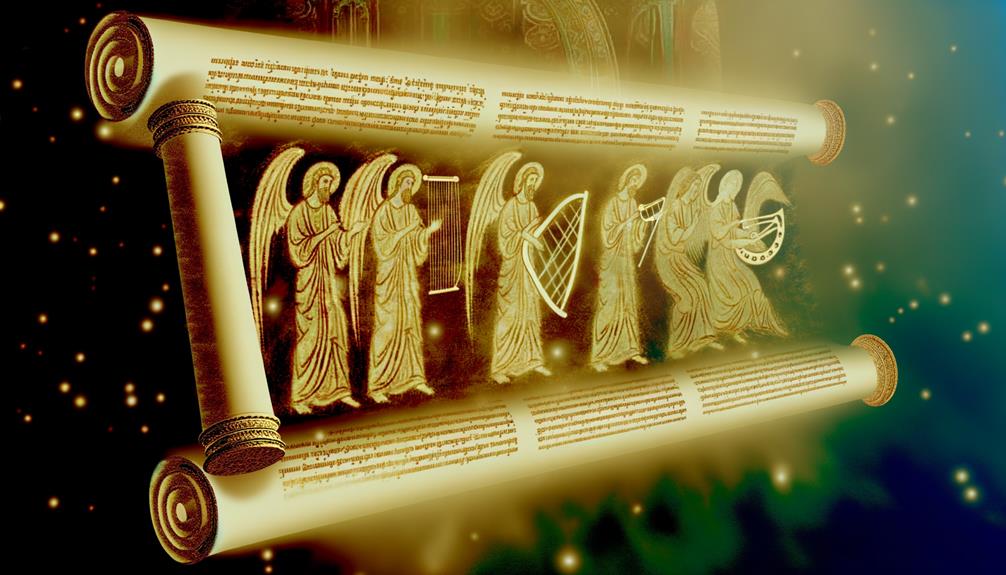
Examining the structure and themes of Psalm 150 reveals a crescendo of universal praise, encapsulated through its vigorous call for worship using an array of musical instruments.
The psalm’s poetic form is characterized by its repetitive imperative ‘Praise him,’ creating a rhythmic and emphatic tone. This liturgical hymn categorically lists various instruments—trumpet, lute, harp, tambourine, strings, pipe, and cymbals—emphasizing a communal, multisensory worship experience.
The final verse, ‘Let everything that has breath praise the Lord,’ broadens the scope of worship to all living beings, thereby highlighting an inclusivity that transcends human boundaries.
The psalm’s brevity and intensity serve to magnify the omnipresence and omnipotence of the divine, culminating in an exaltation of unreserved adoration.
Historical Significance of 150

In the context of biblical numerology, the number 150 holds profound historical significance, particularly when considering its symbolic representation of divine completeness and the culmination of spiritual journeys. This number appears most prominently in the Psalms, where the final chapter, Psalm 150, serves as an ultimate hymn of praise, encapsulating the essence of worship and divine adoration.
- Biblical Psalms: The 150th Psalm serves as a conclusive celebration of God’s sovereignty, highlighting the spiritual journey from lament to praise.
- Historical Context: The structure of the Psalter, comprising 150 chapters, reflects an extensive collection of religious experiences and theological reflections.
Conclusion
The number 150 in the Bible, akin to a finely woven tapestry, intertwines with themes of divine completeness, spiritual culmination, and harmonious worship.
Its presence in texts such as Psalm 150—an exuberant finale celebrating God’s omnipotence—underscores its symbolic resonance.
Through theological exploration and literary exegesis, 150 emerges not as a mere numeral, but as a beacon illuminating the convergence of sacred history, divine praise, and spiritual fulfillment within the biblical narrative.