Meaning of Reuben in the Bible: Behold, a Son
Reuben, the firstborn son of Jacob and Leah, holds significant historical and theological importance in the Bible. His name originates from the Hebrew phrase ‘Re’uven’ meaning ‘behold, a son,’ symbolizing Leah’s desire for divine recognition and her husband’s affection (Genesis 29:32).
Reuben demonstrated protective leadership by attempting to save Joseph (Genesis 37:21-22) yet tarnished his legacy through his transgression with Bilhah, Jacob’s concubine (Genesis 35:22). Although he lost his birthright (Genesis 49:4), his descendants maintained a fluctuating yet crucial role within Israelite history, including settlements and military contributions.
To uncover the intricate details of Reuben’s story, further exploration awaits.

Key Takeaways
- Reuben means “behold, a son” in Hebrew, reflecting Leah’s acknowledgment of God’s awareness of her misery (Genesis 29:32).
- As Jacob’s firstborn, Reuben held significant familial responsibility and influence, demonstrated by his protective actions towards Joseph (Genesis 37:21-22).
- Reuben’s illicit relationship with Bilhah resulted in the loss of his privileged firstborn status (Genesis 35:22; Genesis 49:4).
- His descendants formed one of the twelve tribes of Israel, initially settling in Transjordan (Numbers 32:1-5).
Etymology of Reuben

The etymology of the name Reuben is rooted in the Hebrew language, where it is derived from the phrase ‘רְאוּב־ן’ (Re’uven), which translates to ‘behold, a son.’
This name is significant within the context of the Hebrew Bible, particularly in the Book of Genesis. Reuben is the firstborn son of Jacob and Leah, and his name is emblematic of Leah’s deep desire for her husband’s affection (Genesis 29:32).
The etymological construction of ‘Re’uven’ combines ‘ra’ah’ (רָאָה), meaning ‘to see,’ and ‘ben’ (בֵּן), meaning ‘son,’ suggesting a divine acknowledgment of Leah’s plight.
This linguistic and scriptural background underscores the profound narrative and emotional layers embedded within Reuben’s name.
Birth and Early Life
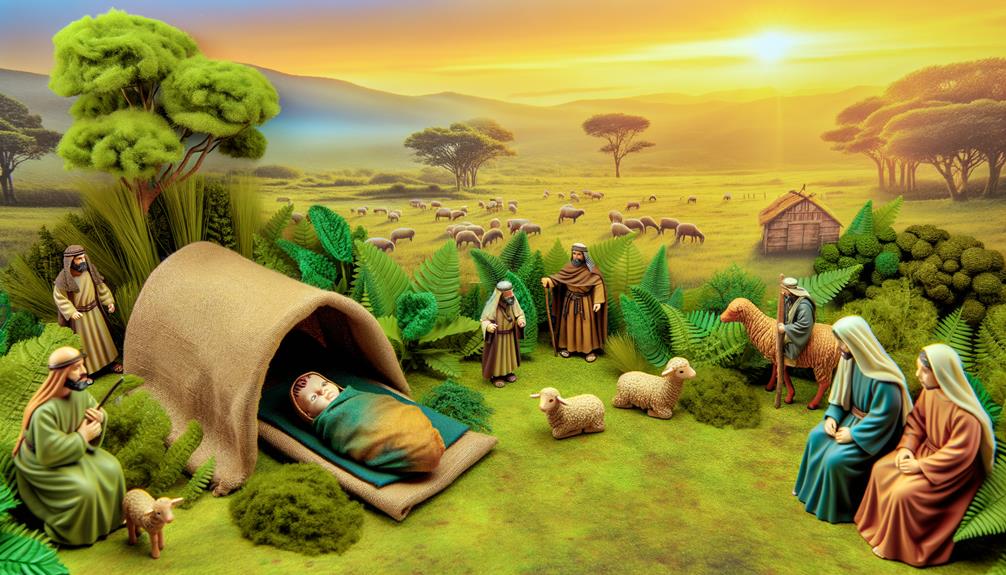
Reuben’s birth, as recounted in Genesis 29:32, marked not just the arrival of Jacob and Leah’s firstborn son but also a pivotal moment that embodied Leah’s struggle for her husband’s love and recognition. Leah named her son Reuben, saying, “Because the Lord has seen my misery. Surely my husband will love me now.” This underscores her hope for Jacob’s affection through the birth of their son. Reuben’s early life was framed by these familial tensions, reflecting Leah’s ongoing quest for validation within her marriage. The significance of Reuben’s birth is not merely personal but also theological, as it illustrates God’s attention to Leah’s plight.
| Aspect | Detail |
|---|---|
| Mother’s Hope | Leah sought Jacob’s love through Reuben’s birth. |
| Scriptural Reference | Genesis 29:32 |
| Theological Insight | God’s attention to Leah’s suffering. |
| Familial Dynamics | Reuben’s birth highlighted underlying marital tensions. |
Reuben’s Role in the Family
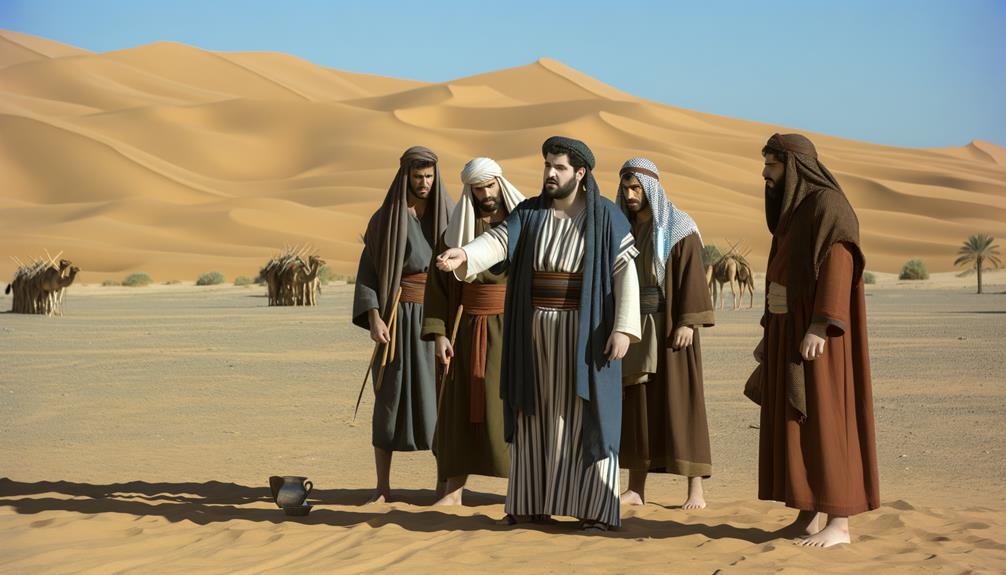
Within Jacob’s household, Reuben’s role as the eldest son carried significant responsibility and influence, as detailed in various scriptural accounts such as Genesis 37:21-22 and Genesis 42:22.
In Genesis 37:21-22, Reuben intervenes to save Joseph from being killed by his brothers, suggesting an attempt to fulfill his protective duties as the firstborn.
Additionally, Genesis 42:22 reveals Reuben’s awareness of familial accountability, as he reminds his brothers of their past misdeeds against Joseph.
His actions reflect the weight of leadership and moral guidance expected from the eldest son in ancient Hebrew culture.
Reuben’s decisions and their repercussions underscore his complex position within the family hierarchy, balancing his authority with his responsibility.
The Incident With Bilhah

Amidst his responsibilities as the eldest son, Reuben’s actions took a controversial turn when he had an illicit relationship with Bilhah, his father Jacob’s concubine, as recorded in Genesis 35:22. This act was not merely a personal indiscretion but held profound implications within the familial and cultural context of ancient Israel.
Reuben’s transgression was seen as a direct challenge to his father’s authority and a violation of the sanctity of Jacob’s household. Scripturally, this event contributed to Reuben losing his privileged status as the firstborn, as highlighted in Genesis 49:4, where Jacob rebukes him for being ‘unstable as water.’
This incident underscores the gravity of Reuben’s actions and their lasting impact on his legacy within biblical narratives.
Reuben’s Relationship With Joseph
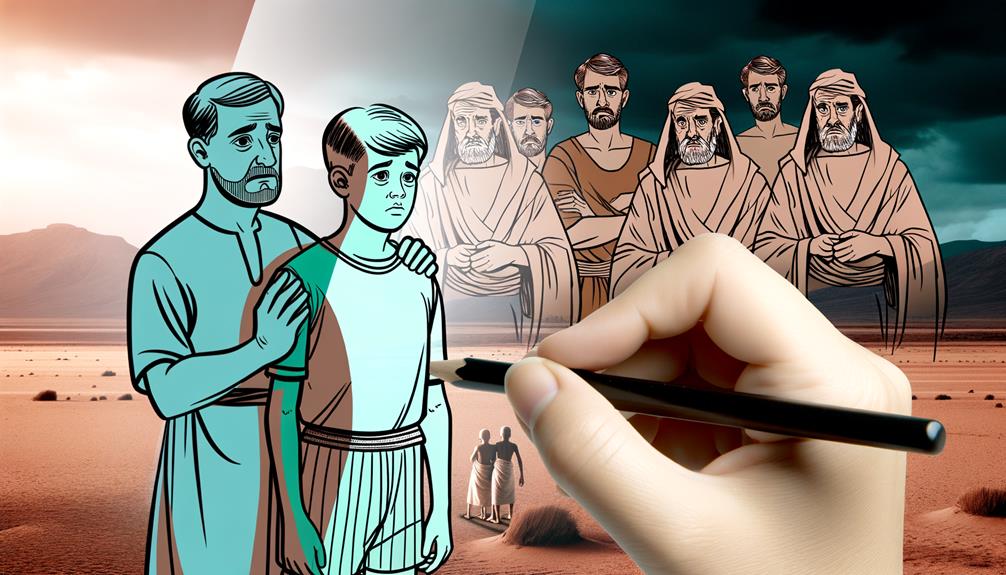
As the eldest brother, Reuben played a complex and often contradictory role in the narrative of Joseph’s life, particularly evident in Genesis 37:21-22 where he intervened to prevent Joseph’s murder by his other brothers.
Reuben’s attempt to save Joseph by suggesting they throw him into a cistern, intending to rescue him later, highlights his wavering authority and moral struggle.
Historically, Reuben’s actions reflect the turbulence within Jacob’s family dynamics, where jealousy and favoritism led to severe consequences.
Scripturally, his failure to guarantee Joseph’s safe return demonstrates his limited influence and foreshadows his diminished standing.
Yet, his intercession underscores a vestige of familial duty, providing a glimpse into the complexities of brotherly relationships in biblical narratives.
Legacy and Tribal Significance

Reuben’s legacy is intricately tied to the historical role of his descendants, who formed one of the twelve tribes of Israel.
Scriptural references, such as those in Numbers 32:1-5 and Deuteronomy 33:6, highlight the tribe’s early settlement in the Transjordan region and their contributions to Israelite society.
Despite the tribe’s initial prominence, later historical accounts in 1 Chronicles 5:1-2 suggest a decline in influence, underscoring the complex narrative of Reuben’s descendants.
Tribe’s Historical Role
The tribe of Reuben, one of the twelve tribes of Israel, holds a complex legacy marked by both its pivotal contributions and moments of decline, as evidenced in various scriptural accounts and historical records. Positioned east of the Jordan River, Reuben’s territory played a strategic role. Importantly, Reuben joined the coalition against Sisera (Judges 5:15-16), demonstrating its initial military influence. However, subsequent periods saw diminished prominence, partly due to internal conflicts and declining leadership (Genesis 49:3-4).
| Aspect | Details | Scriptural Reference |
|---|---|---|
| Territory | East of Jordan River | Numbers 32:1-42 |
| Military Role | Coalition against Sisera | Judges 5:15-16 |
| Leadership Decline | Loss of preeminence | Genesis 49:3-4 |
| Significant Acts | Early contributions in battles | Judges |
This duality underscores Reuben’s nuanced historical role.
Reuben’s Descendants’ Contributions
Although the tribe of Reuben experienced a decline in leadership and prominence, its descendants continued to play notable roles in the history and legacy of Israel, contributing to the cultural, spiritual, and military fabric of the nation.
According to Numbers 32:1-5, Reuben’s descendants settled east of the Jordan River, in the land of Gilead. They participated in significant battles, as depicted in Judges 5:15-16, demonstrating their martial prowess. Despite their initial transgressions, the tribe’s contributions to Israel’s defense were substantial.
Furthermore, Reuben’s descendants were involved in King David’s reign, as indicated in 1 Chronicles 12:37-38. Their integration into Israel’s broader narrative underscores their enduring, albeit fluctuating, importance in the collective history of the Israelites.
Conclusion
Reuben, as the firstborn of Jacob, stands as a multifaceted figure woven into the intricate tapestry of biblical history.
His actions, from the transgression with Bilhah to his attempt at saving Joseph, reflect a character marked by complexity and contradiction.
Reuben’s legacy, encapsulated within the tribe that bore his name, reveals a lineage marred by moral struggles yet integral to Israel’s narrative.
Hence, Reuben embodies the paradox of human frailty intertwined with divine purpose.