
Meaning of Sheba in the Bible: Land of Wealth
In the Bible, ‘Sheba’ carries diverse meanings, signifying both genealogical roots and geographical importance. Etymologically derived from the Hebrew ‘Sheva’, meaning ‘oath’ or ‘seven’, it embodies notions of completeness and promise.
Sheba is linked to genealogies in Genesis, representing descendants of Ham and Shem, and appears as a region renowned for wealth and trade. The Queen of Sheba‘s visit to King Solomon highlights cultural and diplomatic exchanges.
Prophetic texts further associate Sheba with prosperity and divine blessings, while archaeological insights reveal its historical influence. Exploring these contexts sheds light on Sheba’s multifaceted biblical significance.

Key Takeaways
- Sheba is derived from Hebrew ‘Sheva’, meaning ‘oath’ or ‘seven’, symbolizing promise and completeness.
- In Genesis, Sheba is linked to descendants of Ham and Shem, highlighting ancient tribal affiliations.
- The Queen of Sheba’s visit to Solomon represents wisdom, wealth, and cultural exchanges.
- Biblically, Sheba symbolizes wealth, trade, and divine blessings, as seen in Isaiah 60:6 and Psalm 72:10-15.
The Etymology of Sheba

The etymology of the name ‘Sheba’ in the Bible reveals a complex tapestry of linguistic roots and cultural significance, shedding light on its historical and theological contexts.
The name ‘Sheba’ likely derives from the Hebrew word ‘Sheva’, meaning ‘oath’ or ‘seven’, suggesting notions of promise or completeness. This dual meaning reflects the multifaceted nature of biblical narratives where names often embody deeper symbolic meanings.
Additionally, the name appears in various Semitic languages, indicating interactions among ancient Near Eastern cultures. The geographical and genealogical references associated with Sheba further emphasize its importance, as they provide insights into the interconnectedness of tribes and regions in biblical accounts.
This linguistic analysis underscores the rich, layered significance embedded within the name ‘Sheba’.
Sheba in Genesis
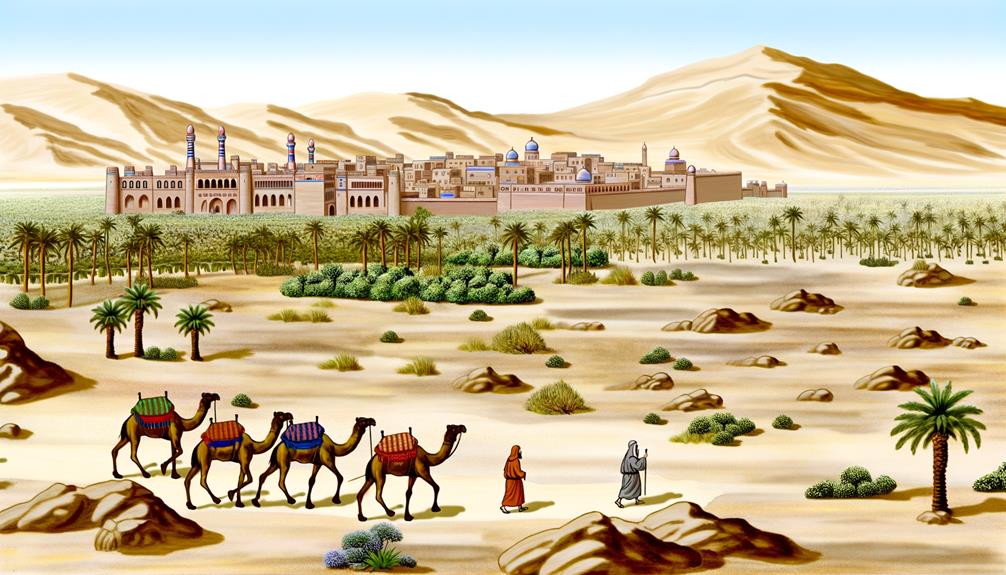
Appearing early in the biblical narrative, Sheba in Genesis is intricately linked to the genealogies and territorial expansions that define the early patriarchal era.
The name Sheba appears in the genealogical records of Genesis 10, associated with both the descendants of Ham and Shem. These references highlight the ancient and complex lineage, illustrating Sheba’s significance in the broader context of tribal affiliations and territorial claims.
Additionally, in Genesis 25, Sheba is mentioned within the descendants of Abraham through Keturah, underscoring its recurring relevance.
The mention of Sheba in these genealogical contexts reflects its importance in representing both a people and a region, contributing to the multifaceted narrative of the early biblical world.
The Queen of Sheba
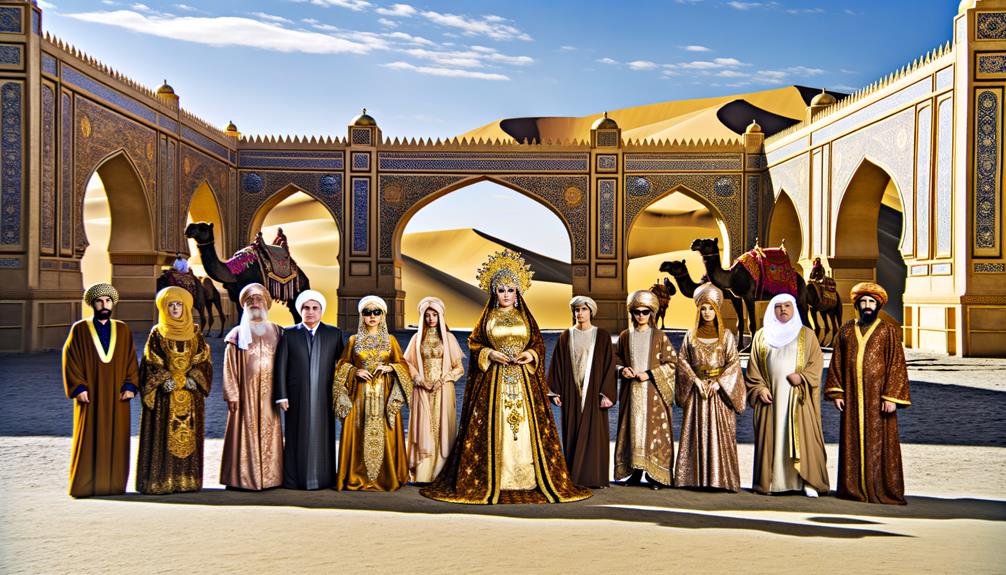
Renowned for her wisdom and wealth, the Queen of Sheba‘s visit to King Solomon is a pivotal narrative that underscores the exchange of culture, knowledge, and political diplomacy in the ancient world.
Her journey, depicted in 1 Kings 10 and 2 Chronicles 9, highlights a momentous encounter between two powerful, sovereign entities.
The Queen of Sheba, often identified with the Sabean kingdom in present-day Yemen or Ethiopia, brought lavish gifts, including gold, spices, and precious stones, symbolizing her domain’s prosperity.
This visit not only illustrates the interconnectedness of ancient civilizations but also showcases the mutual respect and recognition of intellectual and material wealth.
Her story reflects the broader geopolitical and cultural dynamics of the time, enriching biblical historiography.
Solomon’s Encounter With Sheba

King Solomon’s encounter with the Queen of Sheba, marked by her arrival in Jerusalem, serves as a profound demonstration of the interchange of wisdom and wealth between two eminent monarchs of the ancient world.
The biblical account, found in 1 Kings 10 and 2 Chronicles 9, details her journey to test Solomon with hard questions, underscoring her quest for knowledge and validation of his famed wisdom.
Upon her arrival, she was astounded by Solomon’s answers, his wealth, and the grandeur of his court.
This encounter not only highlights the mutual respect and recognition between the two rulers but also symbolizes the broader exchange of culture, trade, and diplomacy in the ancient Near East, contributing greatly to our understanding of biblical narratives.
Sheba as a Region

Sheba, often identified with the ancient kingdom of Saba in southwestern Arabia, was a region known for its significant influence on trade and cultural exchanges in the ancient Near East. This area, encompassing parts of modern-day Yemen and Ethiopia, was strategically positioned along key maritime and overland routes.
Consequently, it became a nexus for the exchange of spices, gold, and other valuable commodities. Archaeological evidence suggests that Sheba possessed advanced agricultural techniques, including the famous Marib Dam, which facilitated irrigation and sustained dense populations.
The region’s wealth and stability fostered a rich cultural milieu, featuring interactions with neighboring civilizations. Biblical texts frequently allude to Sheba’s opulence and wisdom, solidifying its prominence in historical and religious narratives.
Sheba’s Role in Trade
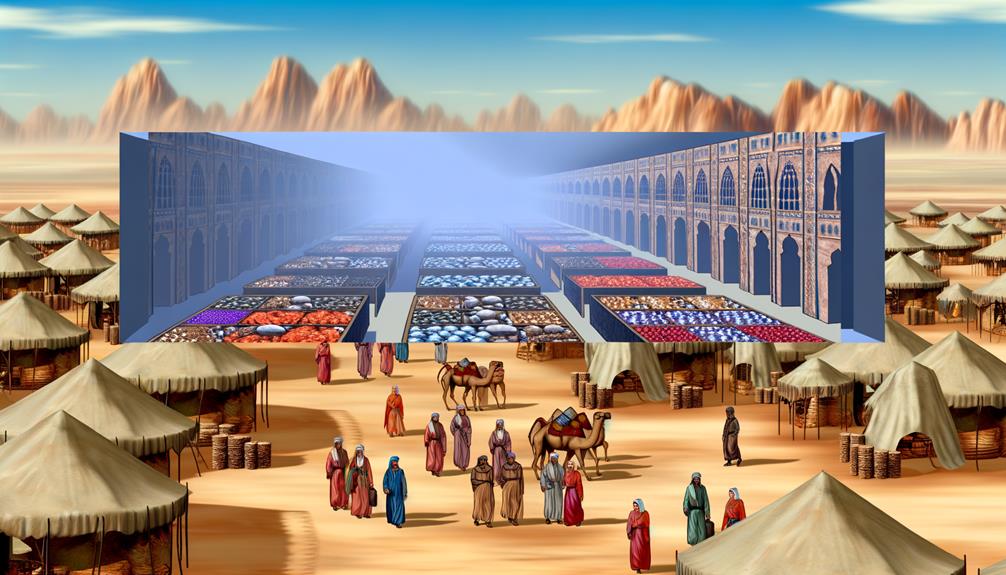
Sheba’s strategic positioning along ancient trade routes considerably bolstered its economic prowess, enabling the region to become a pivotal hub for commerce.
The wealth of Sheba was largely derived from its trade in precious commodities and goods, such as gold, spices, and incense.
This economic influence not only brought prosperity to Sheba but also facilitated cultural exchanges and diplomatic relations with surrounding nations.
Ancient Trade Routes
The ancient kingdom of Sheba played a pivotal role in the intricate network of trade routes that connected the Arabian Peninsula with the broader regions of Africa, Asia, and Europe.
Situated strategically at the crossroads of these major trade arteries, Sheba facilitated the exchange of goods, culture, and ideas. Its geographic location enabled it to control and influence the flow of commodities along the famed Incense Route, which was essential for transporting luxury items and spices.
This control not only enriched Sheba economically but also bolstered its political clout. The kingdom’s involvement in these routes underscored its significance in the ancient world, making it a focal point for traders maneuvering the complex web of intercontinental commerce.
Commodities and Goods
Facilitating the exchange of luxury commodities and essential goods, the kingdom of Sheba capitalized on its strategic position to dominate trade in precious items such as frankincense, myrrh, and gold. The region’s wealth was greatly augmented through the meticulous management of caravan routes and seaports, linking Africa, Arabia, and India. The commodities traded by Sheba were not only valuable but also held cultural and religious significance, enhancing Sheba’s reputation as a key player in ancient commerce.
| Commodity | Origin | Significance |
|---|---|---|
| Frankincense | Southern Arabia | Religious rituals, medicinal use |
| Myrrh | East Africa | Embalming, perfumery |
| Gold | Africa, Arabia | Currency, jewelry, status symbols |
| Spices | India | Culinary use, preservation |
This trade facilitated economic prosperity and robust intercultural exchanges.
Economic Influence
Leveraging its control over lucrative trade routes, the kingdom of Sheba considerably impacted the economic landscape of the ancient world. Positioned strategically along the incense and spice routes, Sheba facilitated the flow of highly sought-after commodities, such as frankincense and myrrh.
This economic influence can be analyzed through:
- Trade Networks: Sheba’s extensive trade connections spanned across Arabia, Africa, and the Mediterranean, fostering economic interdependence.
- Wealth Accumulation: The kingdom amassed substantial wealth, evidenced by its luxurious goods and monumental architecture.
- Cultural Exchange: Trade interactions promoted cross-cultural exchanges, impacting art, language, and religious practices.
These factors underscore Sheba’s pivotal role in shaping the commercial and cultural dynamics of the ancient world.
Sheba in Prophecy

Examining biblical prophecies reveals that Sheba often symbolizes wealth, trade, and divine blessings in eschatological contexts.
Isaiah 60:6 prophesies that multitudes from Sheba will bring gold and incense, signifying abundance and reverence to the Lord. This imagery underscores Sheba’s role as a harbinger of prosperity and spiritual renewal in the Messianic age.
In addition, Psalm 72:10-15 envisions kings from Sheba presenting gifts, correlating with the establishment of a just and righteous reign. These prophetic texts suggest that Sheba’s participation in future events is pivotal, reflecting God’s overarching plan for global harmony and divine order.
Such passages not only highlight Sheba’s historical significance but also its expected influence in fulfilling divine prophecies.
Sheba in New Testament
In the New Covenant, the legacy of Sheba is referenced in the context of Jesus’ teachings, particularly highlighting the Queen of Sheba’s visit to King Solomon as an exemplar of wisdom-seeking and recognition of divine authority.
This narrative appears prominently in Matthew 12:42 and Luke 11:31, where Jesus underscores her journey as a demonstration to genuine pursuit of truth.
Key aspects include:
- Recognition of Wisdom: The Queen acknowledges Solomon’s God-given wisdom.
- Symbol of Gentile Faith: Her actions prefigure the inclusion of Gentiles in God’s salvific plan.
- Contrast with Contemporary Unbelief: Jesus uses her example to critique the lack of faith among His contemporaries.
These references underscore the enduring significance of Sheba within the broader biblical narrative.
Archaeological Insights on Sheba
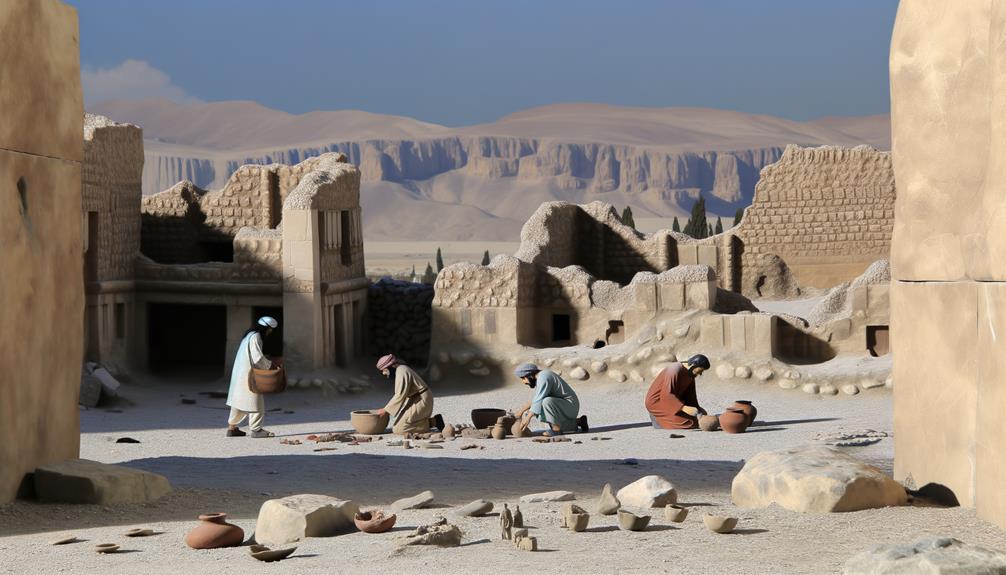
Uncovering the archaeological evidence of Sheba offers profound insights into the historical and cultural context behind its biblical mentions.
Excavations in modern-day Yemen and Ethiopia have revealed substantial remains of ancient kingdoms, including the Sabaean civilization, often linked to Sheba.
Key findings, such as inscriptions, artifacts, and architectural structures, suggest a society thriving on trade, particularly in frankincense and myrrh.
The Marib Dam, a monumental engineering feat, underscores the advanced technological capabilities of Sheba’s people.
Additionally, temple ruins and royal inscriptions provide evidence of a structured, polytheistic religion and a sophisticated governance system.
These discoveries not only corroborate biblical accounts but also enrich our understanding of the geopolitical significance of Sheba in antiquity.
Sheba’s Cultural Legacy
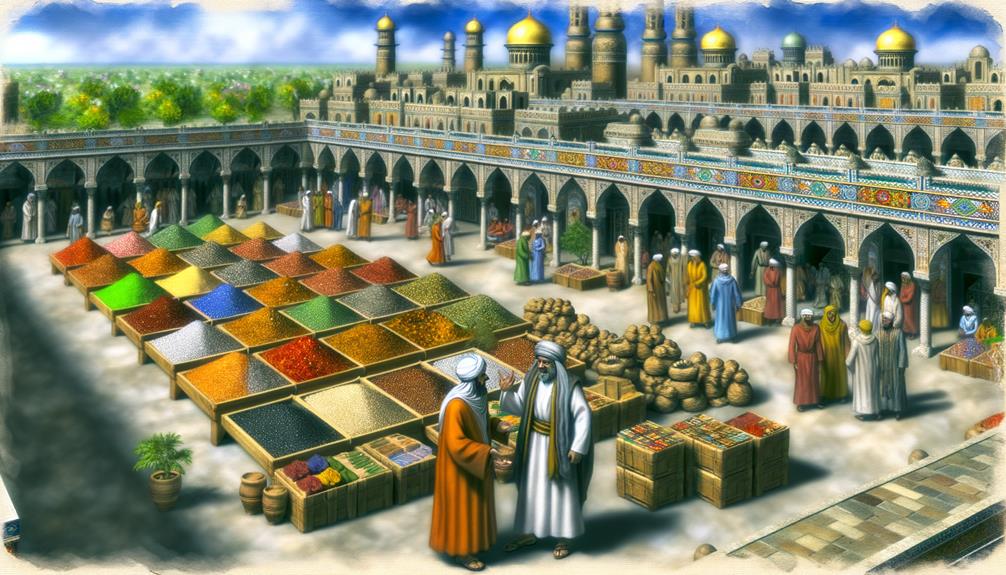
Sheba’s cultural legacy is multifaceted, encompassing historical influence and modern cultural representations.
Historically, Sheba’s wealth and trade networks greatly impacted regional economies and intercultural exchanges in the ancient world.
In contemporary times, Sheba continues to captivate the imagination, featuring prominently in literature, film, and art, thereby sustaining its enduring legacy.
Historical Influence of Sheba
The historical influence of Sheba extends beyond its biblical roots, permeating various aspects of cultural, economic, and political life in ancient civilizations. Situated in the Arabian Peninsula, Sheba’s legacy is notable for several reasons:
- Trade Networks: Sheba was a pivotal player in ancient trade, connecting Africa, Asia, and the Middle East through its prosperous incense and spice trade routes.
- Political Alliances: Historical records suggest alliances and interactions with powerful neighboring kingdoms, enhancing its regional influence.
- Cultural Exchange: Sheba facilitated cross-cultural interactions, evident in the amalgamation of art, architecture, and religious practices observed in archaeological findings.
These elements underscore Sheba’s significant role in shaping historical narratives and fostering interconnected ancient societies.
Sheba in Modern Culture
How has the enigmatic allure of Sheba persisted into modern culture, manifesting in various domains such as literature, art, and popular media?
The Queen of Sheba, with her legendary wisdom and wealth, continues to captivate contemporary imagination. In literature, she appears in works ranging from historical novels to speculative fiction, symbolizing intersectional themes of power and mystery.
Art has immortalized her through paintings and sculptures, reflecting her timeless appeal.
Popular media, including films and television series, often reimagine her narrative, reinforcing her status as a cultural icon.
This enduring legacy underscores the Queen of Sheba’s role as a multifaceted symbol, bridging ancient history and modern cultural expressions, and highlighting humanity’s perennial fascination with enigmatic figures.
Conclusion
The significance of Sheba in biblical texts is nothing short of monumental, serving as a linchpin for understanding ancient geopolitical landscapes, religious narratives, and cultural exchanges.
From its etymological roots to its depiction in prophecy and the New Covenant, each mention of Sheba weaves an intricate tapestry of historical and theological import.
Archaeological findings further illuminate Sheba’s grandeur, solidifying its legacy as an indispensable cornerstone in the annals of biblical history.