
Satiated Meaning In The Bible: Divine Fulfillment
In the Bible, the notion of satiation encompasses both physical nourishment and spiritual fulfillment, deeply tied to God’s covenantal faithfulness. The Hebrew term ‘saba’ signifies being filled, evident in instances like manna provided to Israelites during their exodus (Exodus 16) and the eschatological abundance in Isaiah 25:6.
Psalms reflect God’s intervention, as seen in Psalm 107:9, narrating how He satisfies the longing soul. The New scripture reaffirms this through Jesus’ miracles and teachings, such as His role as the ‘bread of life‘ (John 6:35).
To grasp the thorough biblical worldview on divine satiation, further insights await.

Key Takeaways
- The Hebrew word ‘saba’ in the Old Testament signifies being filled or satisfied, both physically and spiritually.
- Manna symbolizes God’s daily provision and faithfulness during the Israelites’ journey through the wilderness.
- Psalms, like Psalm 107:9, highlight God’s ability to satisfy both physical hunger and spiritual longing.
- Prophetic visions, such as Isaiah 25:6, foretell a future of divine abundance and fulfillment of all needs.
Satiation in the Old Testament

Exploring the concept of satiation in the Old Covenant reveals a multifaceted understanding deeply rooted in the historical and cultural contexts of ancient Israel, often symbolized through divine provision and blessings.
Central to this theme is the Hebrew word ‘saba,’ which signifies being filled or satisfied, frequently appearing in contexts of God’s covenantal faithfulness.
For instance, Deuteronomy 8:10 portrays a land of abundance where the Israelites, after eating, ‘shall bless the Lord your God for the good land He has given you.’
The notion of satiation extends beyond physical nourishment to encompass spiritual fulfillment, as seen in Psalms 107:9, ‘For He satisfies the longing soul, and the hungry soul He fills with good things,’ encapsulating the holistic nature of divine satiation.
Manna and Divine Provision

Central to understanding divine provision in the context of the Old Covenant is the miraculous supply of manna, which served as both a physical sustenance and a profound symbol of God’s unwavering commitment to the Israelites during their wilderness journey, as detailed in Exodus 16. Manna’s daily appearance exemplified God’s consistent care, providing nourishment in an otherwise barren desert. This divine sustenance, described as bread from heaven (Exodus 16:4), highlighted the relationship between obedience and provision, as the Israelites were instructed to gather only enough for each day.
| Scriptural Reference | Description | Symbolism |
|---|---|---|
| Exodus 16:4 | Manna as bread from heaven | God’s daily provision |
| Exodus 16:18 | Gathering without excess | Trust and reliance on God |
| Exodus 16:35 | Sustenance for 40 years | God’s faithfulness |
This analysis underscores manna as a demonstration of divine provision, emphasizing trust and obedience.
Psalms on Fulfillment

Drawing from the rich poetic and theological traditions of the Old Scriptures, the Book of Psalms provides profound insights into the theme of fulfillment, often portraying it as a direct result of divine intervention and steadfast faithfulness.
Psalms such as Psalm 23:1, ‘The Lord is my shepherd; I shall not want,’ highlight a state of spiritual and material sufficiency granted by God.
The historical context reveals that these expressions emerged from periods of both prosperity and adversity, reflecting the Israelites’ reliance on divine providence.
Psalm 107:9 further underscores this, stating, ‘For He satisfies the longing soul, and the hungry soul He fills with good things.’
Consequently, fulfillment in the Psalms is intricately linked to God’s grace and provision.
Prophets’ Visions of Abundance

The prophetic literature of the Old Scriptures, particularly in books such as Isaiah and Ezekiel, envisions a future state of divine abundance, where both physical and spiritual needs are met through the direct intervention of God.
This eschatological vision is characterized by:
- Isaiah 25:6: A feast of rich food for all peoples.
- Ezekiel 34:26-27: Showers of blessing and fruitful yield.
- Isaiah 35:1-2: The desert blooming like a rose.
- Ezekiel 47:12: Trees bearing fruit every month.
These images reveal a profound hope for restoration and fulfillment, portraying a world transformed by divine providence and reflecting God’s ultimate sovereignty and benevolence.
New Testament Insights
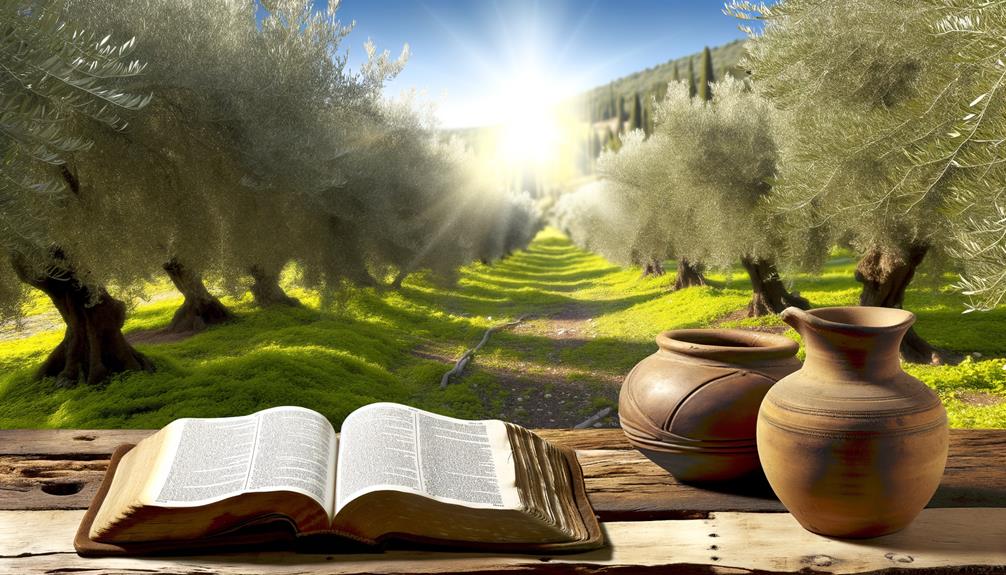
Building on the prophetic visions of abundance in the Old Scripture, the New Scripture further elucidates the theme of divine satiation through the teachings and miracles of Jesus Christ, emphasizing both physical nourishment and spiritual fulfillment.
In John 6:35, Jesus declares, ‘I am the bread of life. Whoever comes to me will never go hungry.’ This statement reflects a dual promise: the provision of daily sustenance and the assurance of eternal life.
The miracles of feeding the 5,000 (Matthew 14:13-21) and turning water into wine at Cana (John 2:1-11) illustrate the tangible aspects of God’s provision.
Historically, these acts not only met immediate physical needs but also signified the deeper, spiritual satiation offered through Christ’s redemptive mission.
Conclusion
The concept of satiation in the Bible, spanning from the Old Covenant with manna and divine provision to the New Covenant insights, symbolizes a spiritual banquet prepared by the Divine.
Scriptural references across Psalms and prophetic visions reflect a recurring theme of divine fulfillment and abundance.
The biblical narrative presents satiation not merely as physical fulfillment but as a profound spiritual nourishment, akin to a river that quenches the soul’s deepest thirst.