
Gargoyles Meaning in the Bible: Myth vs. Scripture
Gargoyles, while not explicitly mentioned in the Bible, serve as theological symbols in medieval church architecture representing divine guardianship and the ongoing spiritual battle between good and evil. Often depicting grotesque creatures, their apotropaic presence aligns with the biblical notion of protection, resonating with passages like Psalm 91:11 and Ephesians 6:12, which highlight divine guardianship and spiritual warfare.
These stone figures merge practicality with profound religious symbolism, reinforcing the sanctity and defense of sacred spaces. Exploring their historical and spiritual significance offers deeper insights into their role within ecclesiastical contexts and biblical symbolism.

Key Takeaways
- Gargoyles symbolize divine guardianship, reflecting God’s protection as per Psalm 91:11.
- They embody the struggle against evil forces, resonating with Ephesians 6:12.
- Gargoyles represent constant vigilance against malevolent forces in spiritual contexts.
- Their grotesque visages serve as reminders of spiritual warfare highlighted in biblical texts.
Origins of Gargoyles
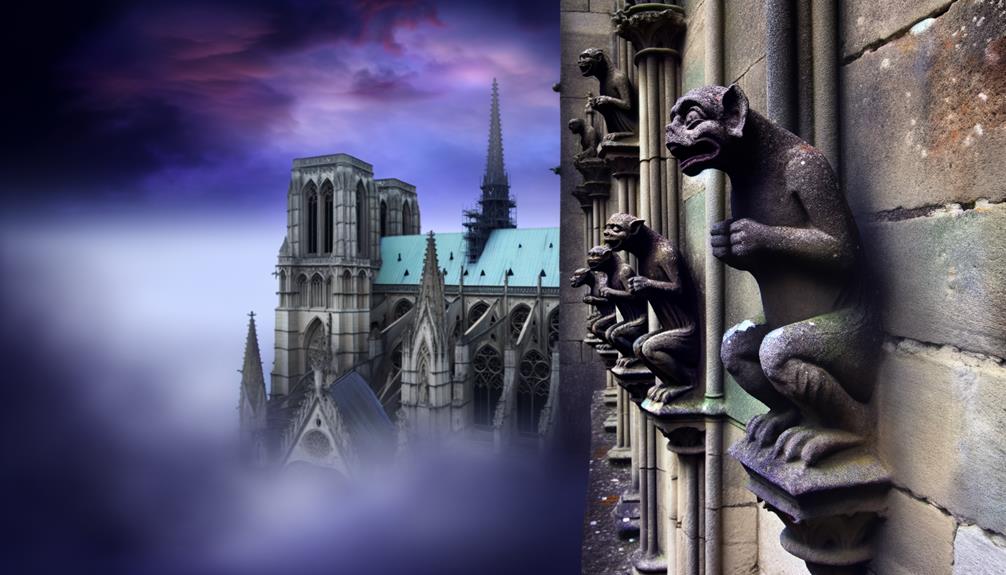
The origins of gargoyles can be traced back to ancient civilizations, where they served both functional and symbolic purposes.
Functionally, gargoyles acted as water spouts to divert rainwater from building foundations, an architectural innovation seen in ancient Egypt and Greece.
Symbolically, they embodied protective qualities, warding off malevolent spirits and preserving the sanctity of sacred spaces.
This duality is evident in their elaborate designs, which often depicted grotesque creatures, thereby merging utility with mysticism.
Such multifaceted roles underscore the complex interplay between practicality and spirituality in ancient architecture.
As these traditions evolved, the conceptual essence of gargoyles persisted, finding renewed expression in later periods, particularly within medieval ecclesiastical structures.
This historical continuity reflects their enduring significance across cultures and epochs.
Symbolism in Medieval Architecture
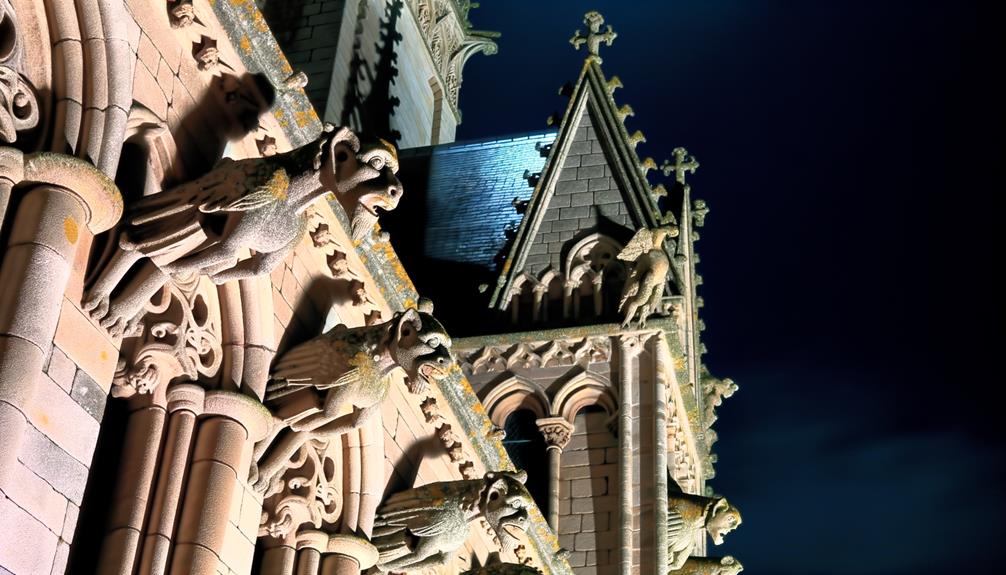
Medieval architecture often incorporated intricate symbolic elements, reflecting the era’s deep intertwining of religious and cultural ideologies. This period saw the proliferation of Gothic cathedrals adorned with elaborate stone carvings, each element meticulously chosen to convey specific theological narratives and moral lessons.
Gargoyles, for example, served dual purposes: as functional waterspouts and as apotropaic symbols designed to ward off evil spirits. These grotesque figures embodied the medieval understanding of the battle between good and evil, acting as guardians of sacred spaces.
Additionally, the intricate use of iconography, such as biblical scenes and saints, aimed to educate an often illiterate populace, reinforcing the church’s teachings through visual storytelling. Consequently, every architectural detail held profound symbolic significance, enriching the spiritual experience.
Biblical References to Stone Creatures

Intriguingly, the Bible contains various references to stone creatures, though their interpretations often require careful exegetical analysis.
One prominent example is the vision of Nebuchadnezzar in Daniel 2:31-45, depicting a statue constructed from diverse materials, including stone. This vision symbolizes successive kingdoms and divine intervention with a ‘stone cut out without hands’ that destroys the statue, signifying God’s ultimate sovereignty.
Additionally, Ezekiel 36:26 metaphorically refers to a ‘heart of stone,’ highlighting spiritual transformation.
While these instances do not explicitly describe gargoyles, they emphasize the symbolic potency of stone imagery.
Such biblical narratives employ stone creatures and elements to convey profound theological themes, demanding an astute interpretive approach to grasp their full significance.
Gargoyles as Protectors
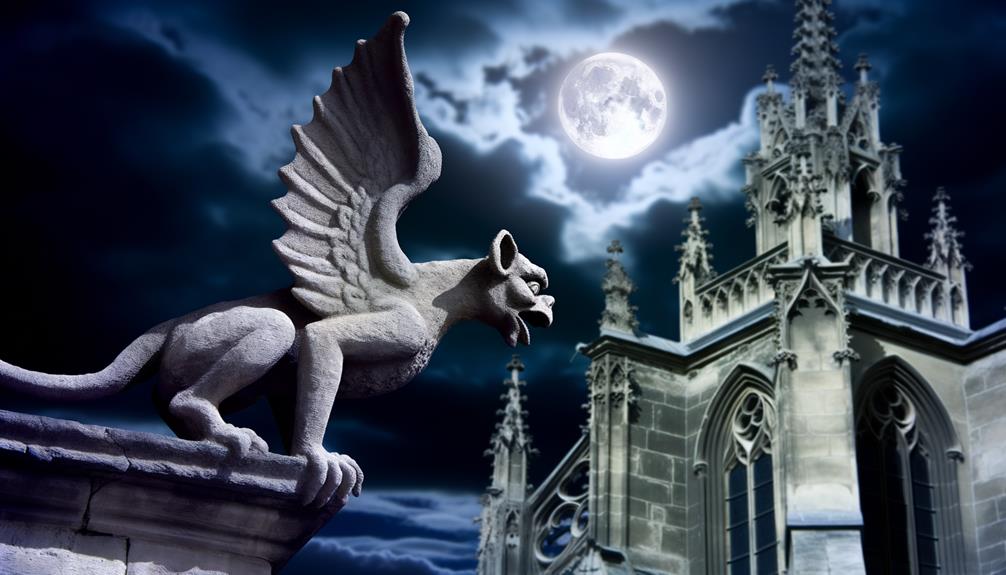
Gargoyles, often perceived as protectors, have historically been imbued with apotropaic qualities, believed to ward off malevolent spirits and safeguard sacred spaces.
These stone effigies, typically found adorning ecclesiastical architecture, served a dual purpose: practical water spouts and spiritual guardians.
The belief that gargoyles could repel evil aligns with ancient traditions of using grotesque imagery to protect holy grounds.
While not explicitly mentioned in the biblical texts, their presence in church architecture suggests an interpretive extension of biblical themes of divine protection and the battle against evil.
Such imagery exemplifies humanity’s enduring quest for security through tangible symbols, merging functional design with metaphysical assurances, thereby reinforcing the sanctity and inviolability of spiritual environments.
Theological Interpretations
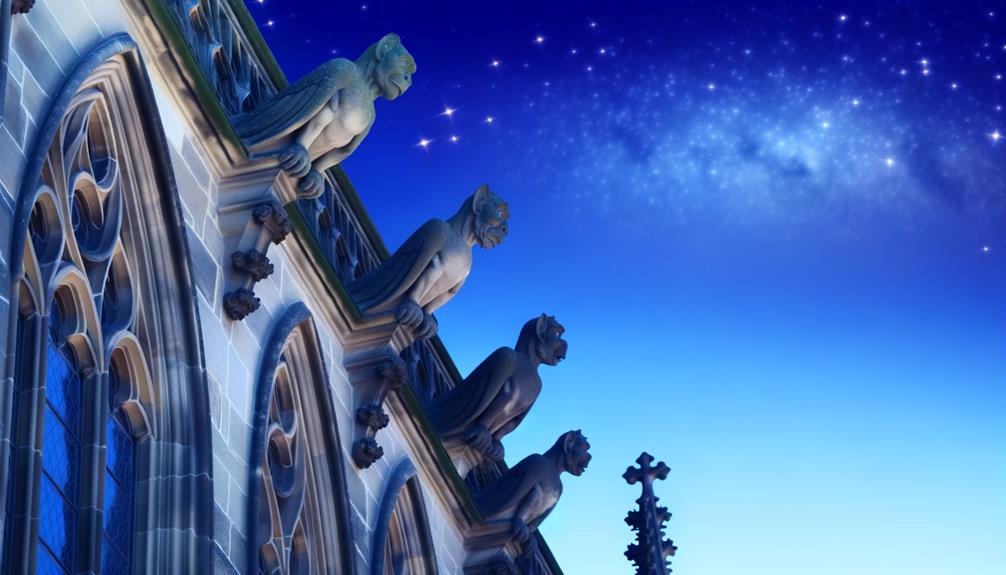
The symbolic role of gargoyles as protectors naturally invites theological interpretations that seek to understand their alignment with biblical themes of divine guardianship and spiritual warfare. Gargoyles, often perched on sacred edifices, can be seen as manifestations of the Psalmist’s assurance of God’s protection (Psalm 91:11). Theologically, they may symbolize the vigilance against evil forces, resonating with Ephesians 6:12’s emphasis on spiritual battles.
| Biblical Theme | Gargoyle Symbolism |
|---|---|
| Divine Guardianship | Reflects God’s angelic watchfulness, akin to Psalm 91:11. |
| Spiritual Warfare | Embodies the struggle against demonic entities as described in Ephesians 6:12. |
| Sacred Architecture | Integration with holy structures signifies the sanctity and defense of the church. |
| Vigilance | Represents constant watchfulness against malevolent forces. |
This theological lens enriches our understanding of gargoyles in a biblical context.
Angels and Demons Imagery
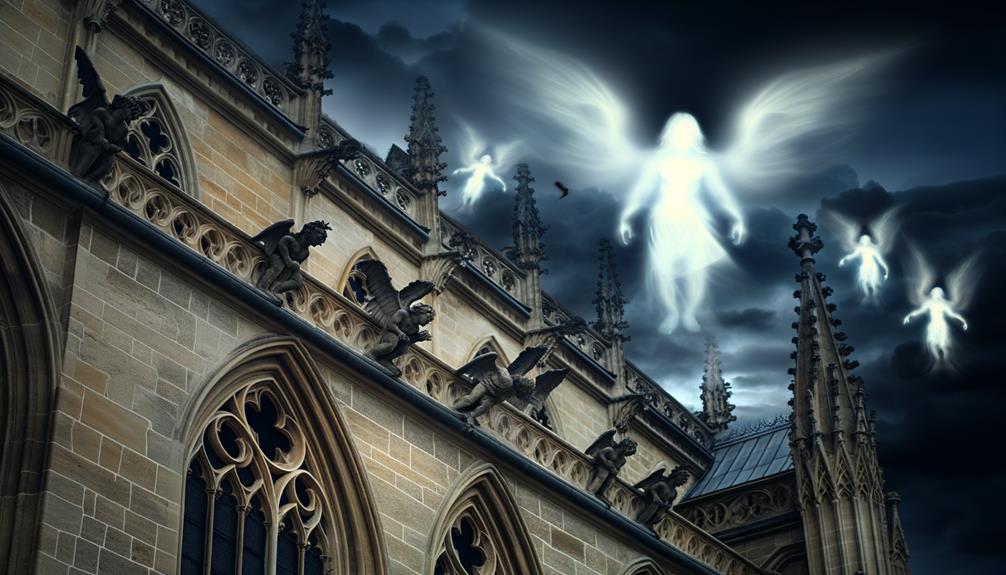
Drawing from iconographic traditions, the imagery of angels and demons in gargoyles can be explored as a reflection of biblical narratives that depict the cosmic struggle between good and evil.
Angels, often portrayed with serene visages and ethereal wings, symbolize divine protection and moral righteousness. Conversely, demon-like gargoyles, characterized by grotesque and fearsome features, embody chaos and malevolence.
These dichotomous representations serve as visual exegesis of scriptural themes, such as the battles between archangels and demonic forces found in texts like Revelation 12:7-9.
Therefore, gargoyles become a tangible medium through which abstract theological concepts are rendered accessible, reinforcing the omnipresent spiritual warfare central to Christian doctrine.
This iconography underscores the perpetual vigilance required in the faith journey.
Gargoyles in Christian Art
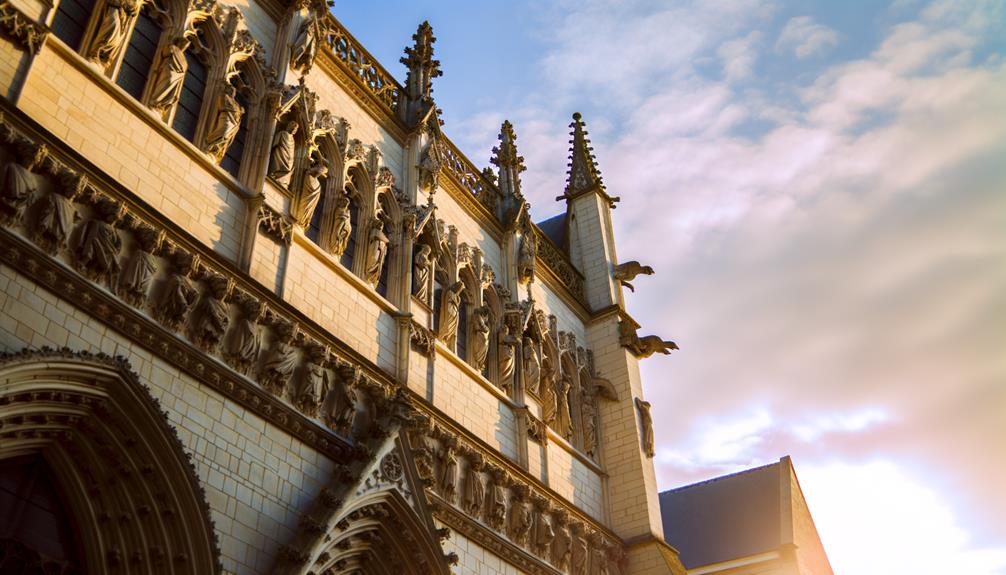
In Christian art, particularly within Gothic architecture, gargoyles serve as both functional and symbolic elements, often interpreted as guardians against evil spirits.
These grotesque figures embody a dual role: they are practical architectural features designed to divert rainwater, while simultaneously representing the struggle between good and evil.
Analyzing their incorporation in ecclesiastical settings reveals a complex interplay of theological symbolism and medieval superstition.
Symbolism in Gothic Architecture
Exploring the symbolism of gargoyles in Gothic architecture reveals their multifaceted role in Christian art as both protectors of sacred spaces and embodiments of moral allegories.
These stone figures often depict grotesque creatures, merging the sacred with the profane to convey theological insights. Architecturally, they serve as water spouts, directing rainwater away from the building, thereby preserving the sanctity of churches.
Symbolically, their menacing forms represent the battle between good and evil, reminding congregants of the perils of sin and the need for spiritual vigilance. The grotesque nature of gargoyles also functions to evoke fear, compelling the faithful towards repentance and moral rectitude.
Consequently, gargoyles are integral to the didactic and protective role of Gothic ecclesiastical architecture.
Guardians Against Evil Spirits
Numerous historical analyses suggest that gargoyles in Christian art were believed to serve as vigilant guardians against evil spirits, symbolically warding off malevolent forces from sacred spaces.
This apotropaic function is rooted in medieval Christian iconography, where grotesque figures were strategically placed on cathedrals and churches. Scholars argue that these stone sentinels acted as both physical and spiritual protectors, their menacing visages serving to deter demonic entities.
Theologically, gargoyles may be interpreted as manifestations of the church’s protective power, aligning with biblical themes of divine guardianship.
Spiritual Significance
Examining the spiritual significance of gargoyles within the biblical context involves understanding their symbolic representations and potential theological implications.
Often considered as protectors, gargoyles may be perceived as spiritual guardians against malevolent forces. Analyzing their function through a biblical lens invites parallels with angelic beings who serve as divine protectors.
In addition, gargoyles’ grotesque visages might symbolize the triumph of spiritual vigilance over evil, resonating with the biblical motif of God’s sovereignty over chaos and darkness.
Their presence on sacred edifices could be interpreted as a visible reminder of the spiritual warfare described in Ephesians 6:12, where believers are urged to remain vigilant against spiritual adversaries.
Therefore, gargoyles embody a multifaceted symbol of spiritual guardianship and divine protection.
Modern Perspectives on Gargoyles
In contemporary scholarship, gargoyles are often re-evaluated not only as architectural features but also as cultural artifacts reflecting evolving societal and theological interpretations. This reevaluation underscores their role in embodying medieval ecclesiastical aims and societal beliefs.
Scholars argue that gargoyles served more than functional purposes; they were visual sermons that reinforced doctrinal teachings and moral guidance. Modern perspectives also explore gargoyles as symbols of apotropaic magic, meant to ward off evil spirits.
This dual functionality—practical and symbolic—reveals a complex interplay between art, theology, and daily life. By analyzing these grotesques through a modern lens, researchers gain insights into the medieval psyche, societal fears, and the church’s influence, thereby enriching our understanding of historical religious practices.
Conclusion
In sum, gargoyles, with roots tracing back to medieval architecture, serve as multifaceted symbols blending protection and spiritual significance.
Their depiction in Christian art and theological interpretations often evokes biblical imagery of angels and demons, reinforcing their role as guardians against malevolent forces.
While not explicitly mentioned in scripture, these stone creatures invite contemplation reminiscent of Augustine’s reflections on the visible and invisible domains, consequently continuing to intrigue both scholars and modern observers.