
Babel in the Bible Meaning: Confusion and Division
The Tower of Babel narrative in Genesis 11:1-9 examines human ambition and divine intervention, illustrating how a unified effort to build a monumental city and tower was thwarted by God’s deliberate disruption. This act introduced linguistic diversity, which fragmented communication and scattered populations, serving as a divine check on human pride.
The story, set against the Mesopotamian backdrop of burgeoning city-states and ziggurats, symbolizes the limits of overreaching aspirations. It highlights how language can both unite and divide societies, reshaping cultural identities and power structures.
Exploring this narrative further reveals its enduring relevance in modern global dynamics.

Key Takeaways
- The Tower of Babel story in Genesis 11:1-9 illustrates human ambition and divine intervention.
- God confounded human language, causing communication breakdown and scattering people, leading to linguistic diversity.
- The narrative highlights themes of unity and fragmentation, emphasizing the impact of language on societal cohesion.
- It serves as a cautionary tale about the limits of human pride and the consequences of overreaching ambition.
The Genesis Account
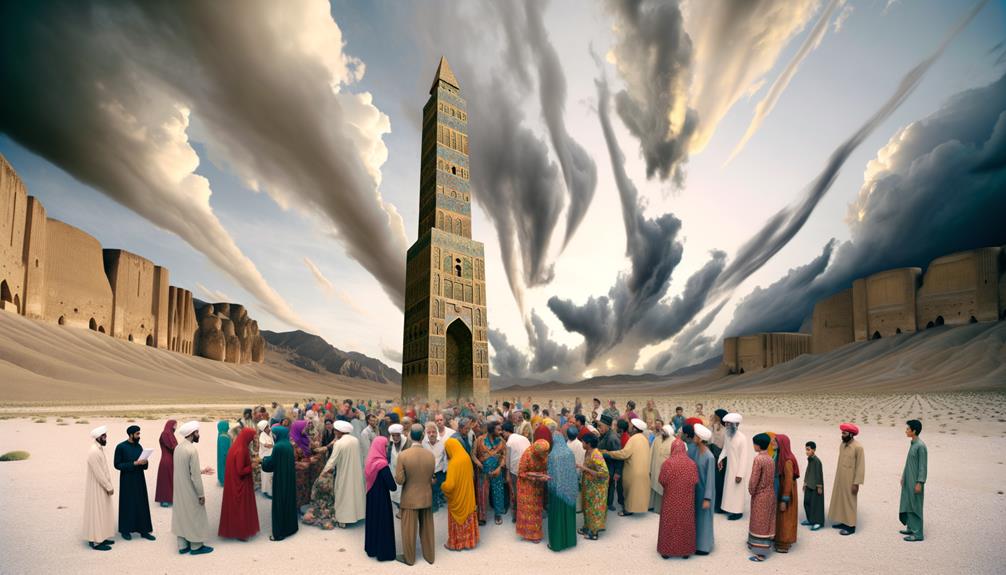
In the Genesis account, the story of the Tower of Babel is intricately detailed in Genesis 11:1-9, offering a profound narrative that explores themes of human ambition, divine intervention, and the origins of linguistic diversity.
The passage describes humanity’s unified effort to build a city and a tower ‘with its top in the heavens,’ symbolizing their collective aspiration for greatness and autonomy.
This endeavor, however, invokes divine scrutiny as God perceives it as an act of defiance. Consequently, God confounds their language, causing communication breakdown and scattering them across the earth.
This act not only halts their construction but also signifies the divine imposition of limits on human pride and the genesis of diverse languages, shaping cultural and linguistic boundaries.
Historical Context
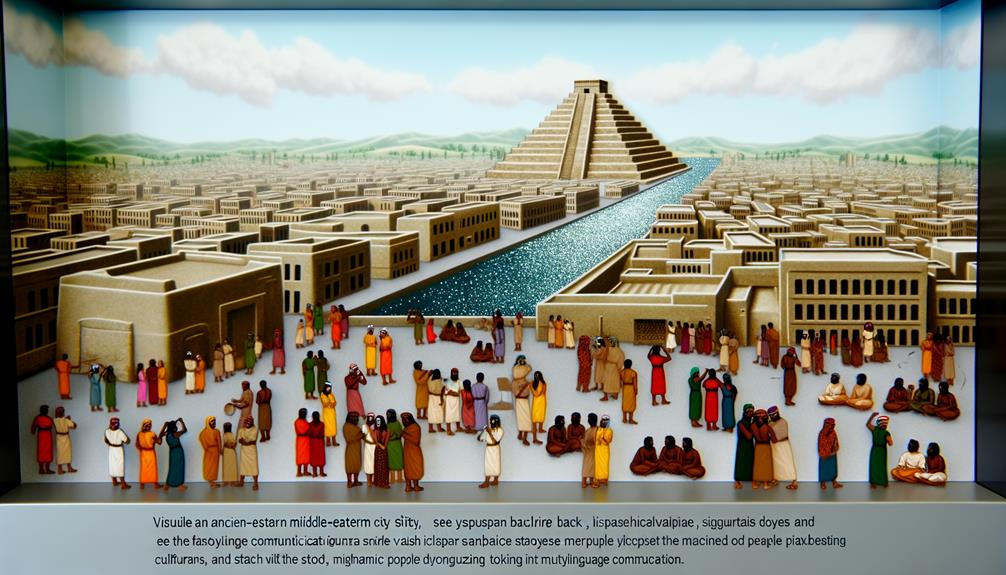
Understanding the historical context of the Tower of Babel narrative requires examining the broader Mesopotamian civilization, where the story likely finds its roots and reflects the sociopolitical dynamics of the era.
Mesopotamia, often termed the ‘cradle of civilization,’ was a region marked by the rise of city-states, ziggurats, and sophisticated urban planning. The narrative mirrors the ambition of these ancient societies to build monumental structures reaching the heavens.
The Tower of Babel can be seen as an allegory for the centralized power and technological advancements prevalent at the time.
Additionally, linguistic diversity and the subsequent scattering of peoples may reflect historical events of population dispersal and cultural divergence, integral to understanding the cultural and political landscape of early Mesopotamia.
Themes of Unity
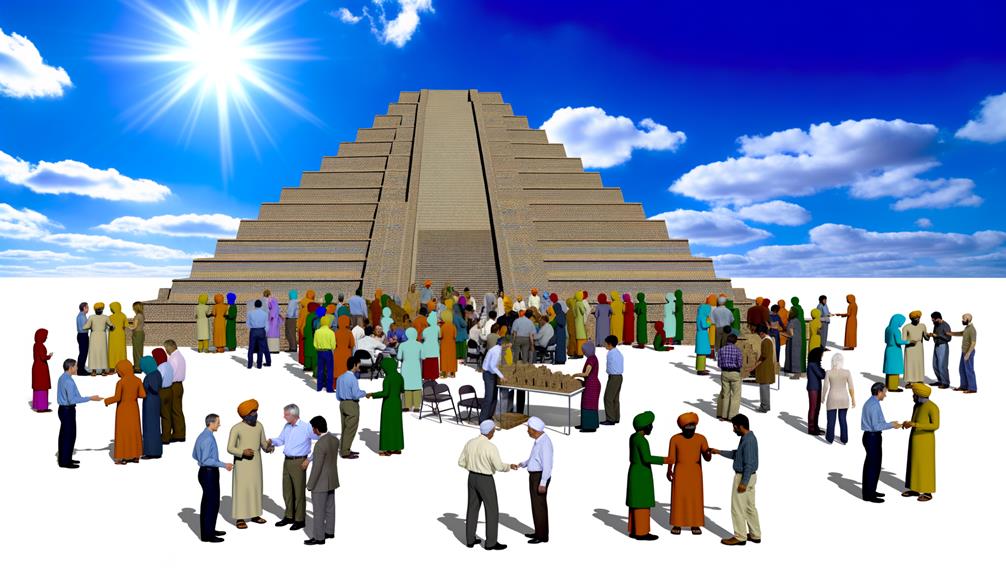
The narrative of Babel in the Bible intricately explores themes of unity and its eventual fragmentation through the motif of language as a divider.
This account highlights humanity’s collective aspirations to reach divine heights, which paradoxically leads to their dispersal and the splintering of a once-unified society.
Language as a Divider
Frequently, the story of Babel in the Bible is cited as a profound allegory illustrating how language can serve not only as a tool for communication but also as a formidable barrier that fragments human unity.
The narrative reveals several key aspects of language’s divisive potential:
- Cultural Isolation: Different languages create distinct cultural identities.
- Miscommunication: Diverse languages often lead to misunderstandings and conflict.
- Social Fragmentation: Language barriers can segregate communities and hinder social cohesion.
- Economic Inequality: Language differences can limit access to opportunities and resources.
Through these dimensions, the Babel story underscores the dual-edged nature of language, highlighting its capacity to both unify and divide humanity.
Aspirations and Dispersal
Examining the aspirations behind the construction of the Tower of Babel reveals a profound human desire for unity and collective achievement, which contrasts sharply with the resulting divine intervention and subsequent dispersal. The builders aimed to create a monumental symbol of human ingenuity and solidarity, aspiring to reach the heavens. However, their unified ambition triggered a divine response that fragmented this cohesion. The dispersal not only scattered people across the earth but also introduced linguistic divisions, forever altering human interaction.
| Aspiration | Outcome |
|---|---|
| Unity | Dispersal |
| Collective Achievement | Fragmentation |
| Monumental Symbol | Diverse Languages |
| Reaching Heavens | Scattered Populations |
| Human Ingenuity | Divine Intervention |
This juxtaposition of aspirations and outcomes underscores a pivotal biblical theme: the limits of human ambition against divine will.
Human Pride
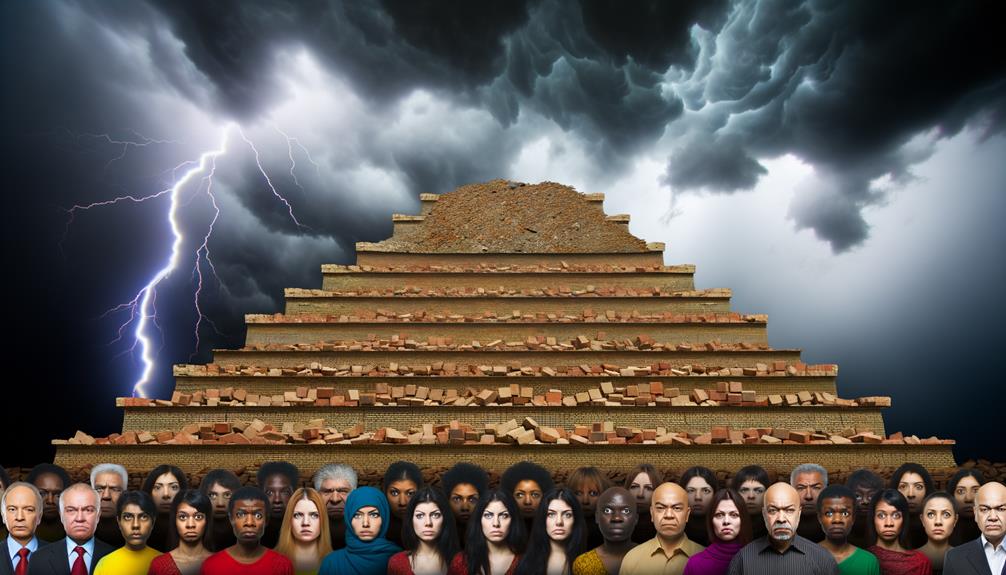
Human pride, as depicted in the story of the Tower of Babel, serves as a cautionary tale about the perils of overestimating one’s own abilities and disregarding divine boundaries.
The narrative illustrates how collective human arrogance can lead to downfall and chaos. The builders of Babel aimed to construct a tower reaching the heavens, symbolizing their desire for god-like status and independence from divine authority. Their unified yet misguided ambition ultimately resulted in their fragmentation.
- Overestimation of human capabilities: The builders believed they could rival divine power.
- Disregard for divine limits: They ignored God’s established boundaries.
- Unified hubris: Collective pride led to a false sense of invincibility.
- Moral lesson: Highlights the dangers of unchecked ambition.
Divine Intervention
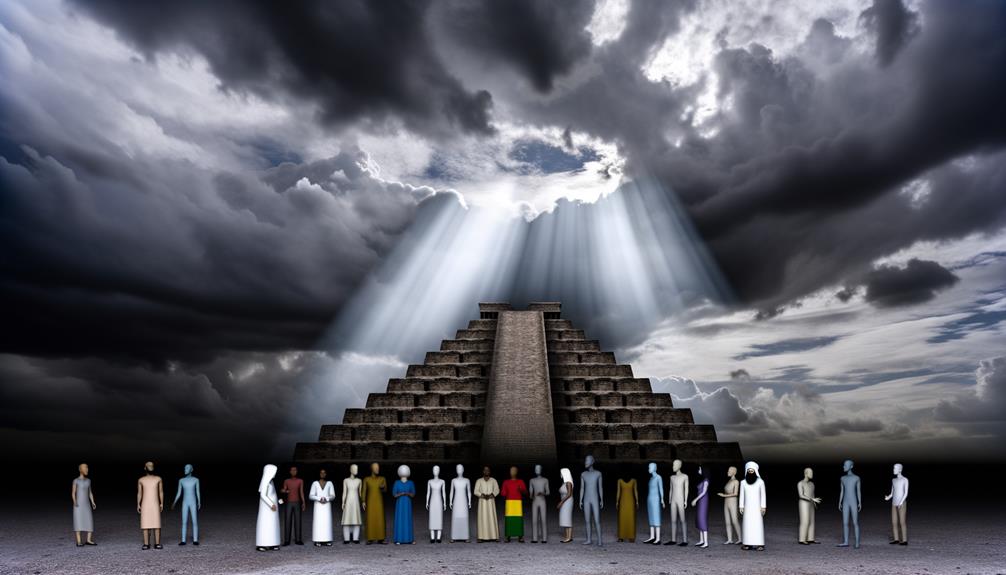
Divine intervention in the story of the Tower of Babel serves as a pivotal moment, underscoring the limits of human endeavor and the sovereignty of divine will.
As humanity’s collective ambition led them to construct a tower reaching the heavens, God perceived their unified language and purpose as a potential threat to divine order.
In response, He confounded their speech, causing immediate disarray and halting the construction.
This act not only emphasized God’s ultimate authority over human aspirations but also demonstrated that any attempt to rival divine power would be futile.
The intervention serves as a reminder of the inherent boundaries set by divine decree, reinforcing the idea that human pride and ambition must remain subservient to God’s overarching plan.
Linguistic Diversity
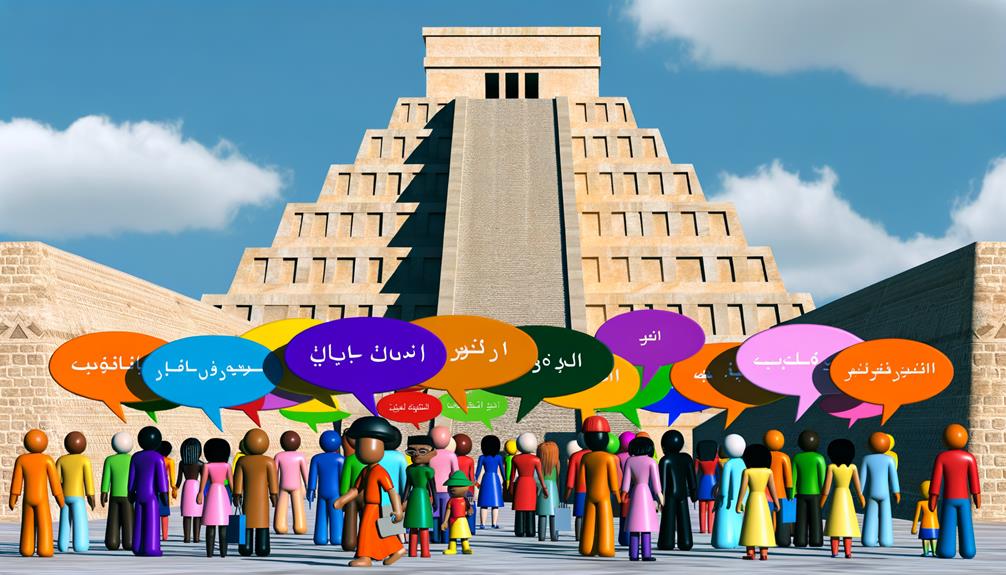
The fragmentation of a once-unified language at Babel catalyzed the emergence of linguistic diversity, profoundly altering the course of human communication and cultural development. This dispersion of languages laid the foundation for the rich tapestry of dialects and tongues that define human civilization today.
Linguistic diversity has impacted numerous facets of societal evolution:
- Cultural Identity: Languages shape cultural norms, values, and heritage.
- Technological Advancements: Varied linguistic frameworks have influenced technological progress and communication tools.
- Cognitive Development: Multilingualism affects cognitive processes and intellectual growth.
- Social Integration: Language plays a pivotal role in social cohesion and interaction.
These aspects underscore the profound implications of linguistic diversity on human history and development.
Symbolic Interpretations
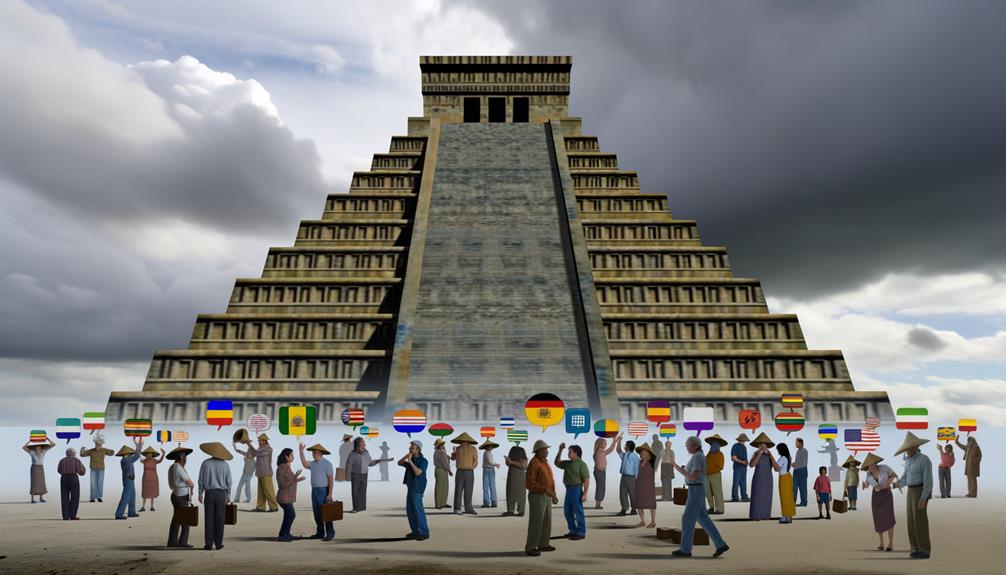
The story of Babel serves as a profound allegory for the dual themes of unity and division, illustrating how collective human ambition can lead to both remarkable achievements and significant consequences.
Symbolically, the construction of the tower epitomizes the potential of unified endeavors, while its ultimate downfall underscores the perils of overreaching ambition.
Unity and Division
Though often regarded primarily as a tale of linguistic fragmentation, the story of Babel in the Bible also serves as a profound commentary on the dual forces of unity and division within human society. This narrative illustrates how collective human effort can achieve remarkable feats, signifying unity’s potential. However, it simultaneously warns of the dangers of a unified front driven by misguided ambitions.
Unity: The people’s shared language and purpose initially fostered unparalleled cooperation.
Division: The eventual fragmentation underscores diversity’s inevitability and necessity.
Power Dynamics: The story reflects the tension between centralized control and decentralized diversity.
Cultural Identity: The emergence of multiple languages symbolizes the birth of distinct cultures.
Divine Intervention: The dispersal reflects a divine check on human hubris, advocating balance.
Human Ambition Consequences
Examining the consequences of human ambition within the Babel narrative reveals profound symbolic interpretations that extend beyond mere linguistic fragmentation to encompass themes of hubris, divine boundaries, and the inherent limitations of human endeavor.
The Tower of Babel stands as a metaphor for the dangers of overreaching human aspirations, illustrating how collective pride and the desire to transcend divine limits can lead to downfall.
This ambition, manifest in the attempt to build a tower reaching the heavens, symbolizes humanity’s perpetual struggle against its finite nature.
The divine intervention, scattering people and confounding their language, underscores the futility of human efforts that challenge celestial order.
Consequently, Babel serves as a timeless cautionary tale about the repercussions of excessive human ambition.
Modern Implications

In contemporary society, the story of Babel serves as a poignant metaphor for the challenges and complexities inherent in global communication and cultural diversity. Our interconnected world necessitates traversing linguistic and cultural barriers, mirroring the confusion at Babel. This ancient narrative underscores the importance of collaborative efforts and mutual understanding in overcoming these obstacles.
Consider the following modern implications:
- Globalization: Increased interaction among diverse cultures.
- Multilingualism: Necessity of mastering multiple languages.
- Intercultural Competence: Developing skills to interact effectively across cultures.
- Digital Communication: Overcoming language barriers through technology.
These factors highlight the enduring relevance of Babel’s lessons in addressing contemporary global challenges.
Lessons From Babel
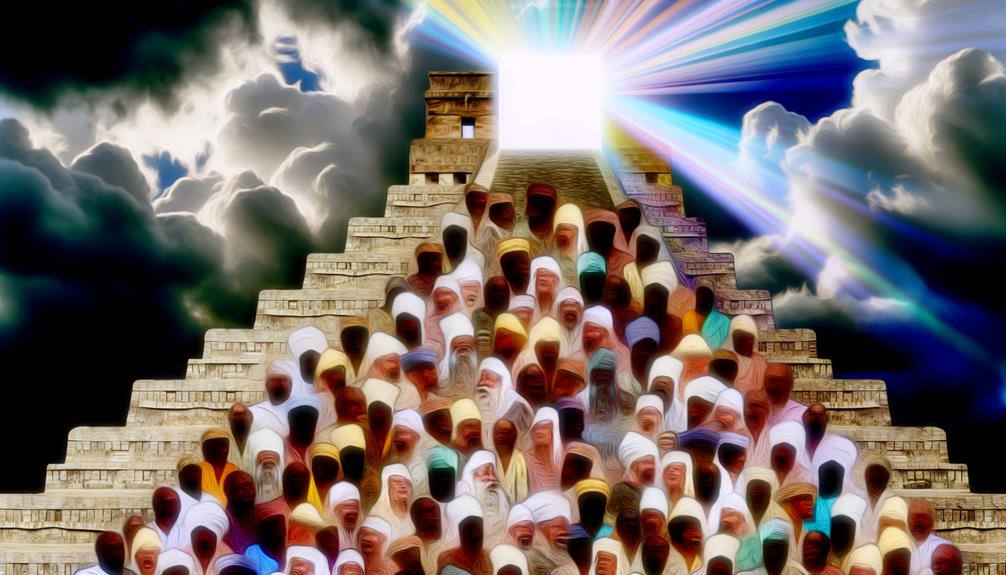
Understanding the inherent lessons from the Babel narrative provides profound insights into the dynamics of human cooperation and the pivotal role of communication in fostering societal cohesion.
The story illustrates the potential and peril of unified human endeavor. When people work together towards a common goal, their collective achievements can be monumental. However, without effective communication, even the most ambitious projects can falter.
Babel serves as a cautionary tale about the dangers of hubris and the limits of human ambition when devoid of divine guidance. It emphasizes the necessity of humility and the importance of seeking harmony rather than domination.
This narrative underscores that true progress relies on shared understanding and the respectful integration of diverse perspectives.
Conclusion
The Tower of Babel narrative stands as an extraordinary allegory of humanity’s audacious ambition and the cataclysmic consequences of overreaching pride.
This ancient tale, steeped in rich symbolism and profound themes, elucidates the origins of linguistic diversity while offering timeless lessons on the perils of hubris and divine retribution.
In its grandeur, it compels reflection on the enduring complexity of human unity and the intricate tapestry of cultural and linguistic plurality that defines the human experience.