Black Onyx Meaning in the Bible: Symbolic Stone
Black onyx, mentioned in the Bible, carries deep spiritual and symbolic meanings. In Genesis 2:12, it signifies divine abundance in the land of Havilah.
Exodus 28:20 places it in the high priest’s breastplate, symbolizing sacred worship and divine connection. King David’s collection of onyx for the temple in 1 Chronicles 29:2 speaks to its purity and dedication.
Biblical references like Job 28:16 and Ezekiel 28:13 illuminate its value and association with divine craftsmanship. Theological interpretations and its use in religious artifacts further underscore its spiritual significance and enduring relevance.
For a fuller insight into its biblical and spiritual dimensions, continue exploring.

Key Takeaways
- Divine Provision: Black onyx symbolizes divine provision and abundance as mentioned in Genesis 2:12.
- Sacred Worship: It signifies sacred worship and divine connection, particularly in the high priest’s breastplate (Exodus 28:20).
- Spiritual Fortitude: The stone represents resilience, protection, and spiritual fortitude, aligning with biblical themes of perseverance.
- Divine Authority: Onyx is emblematic of divine authority and spiritual protection, reflecting God’s covenant with His people.
Biblical References to Onyx
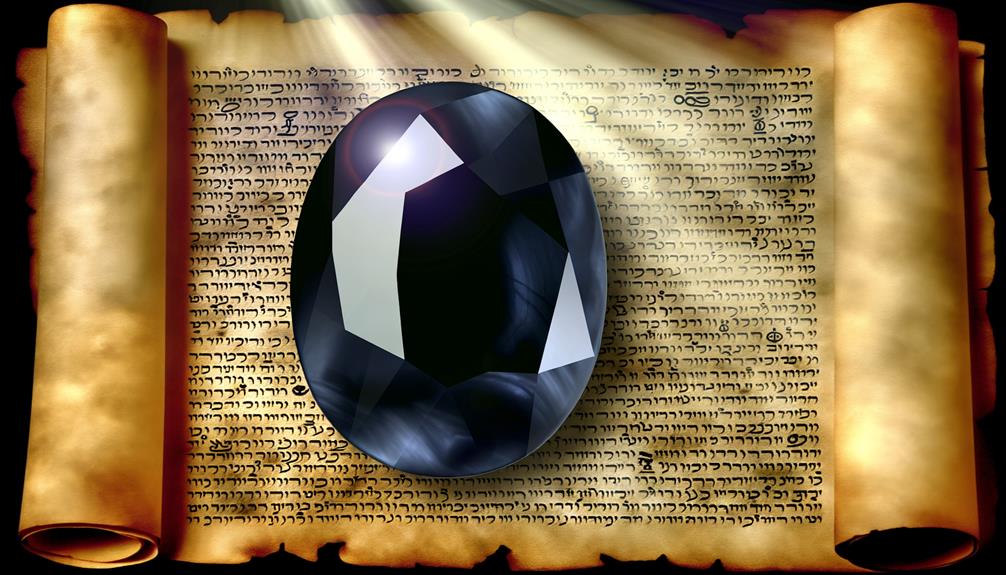
The onyx stone is mentioned multiple times in the Bible, often symbolizing beauty and divine craftsmanship.
Found first in Genesis 2:12, it describes the land of Havilah where gold, bdellium, and onyx are present, suggesting a locale of divine provision.
The high priest’s breastplate, detailed in Exodus 28:20, includes an onyx stone, signifying its sacred role in worship.
Additionally, in 1 Chronicles 29:2, King David amasses onyx for the temple’s construction, symbolizing purity and dedication to God’s house.
These references underscore onyx’s esteemed status in biblical times, reflecting its value and the divine significance attributed to it by the ancient Hebrews.
The stone consistently represents both material wealth and spiritual reverence throughout Scripture.
Symbolism in Ancient Scripture
In ancient scripture, black onyx holds profound symbolic significance, often associated with divine craftsmanship and spiritual fortitude.
Genesis 2:12 and Exodus 28:20 reference onyx as part of the High Priest’s breastplate, highlighting its sacred role.
Additionally, its presence in the biblical narrative underscores the gemstone’s importance in religious rites and divine covenant symbols.
Sacred Gemstone Significance
Ancient scriptural texts often imbue black onyx with profound symbolic significance, representing strength, protection, and divine wisdom.
Historically, black onyx was regarded as a sacred stone, intricately woven into the fabric of ancient religious beliefs. Its deep, dark hue symbolizes the depth of the divine mysteries and the protective nature of God’s wisdom.
Theologically, the stone’s steadfast nature embodies resilience, while its usage by high priests and kings suggests a divine endorsement of its protective properties.
For instance, in various ancient Judaic traditions, black onyx was believed to shield its bearer from negative energies and adversities, thereby reinforcing the notion of divine safeguarding and moral fortitude.
This sacred gemstone remains a powerful emblem within biblical symbolism.
Biblical References Explained
Scriptural exegesis reveals that black onyx is emblematic of divine authority and spiritual protection, frequently cited in biblical passages to underscore themes of resilience and sanctity.
In the Book of Exodus (28:9-12), onyx stones are set in the high priest’s ephod, symbolizing the tribes of Israel and their enduring covenant with God.
Additionally, in Genesis 2:12, the land of Havilah is described as rich in onyx, indicating a place of divine favor and abundance.
The black onyx, with its profound depth, often represents strength amidst trials, aligning with the biblical narrative of perseverance through faith.
Such references highlight the gemstone’s integral role in communicating divine messages and spiritual fortitude throughout ancient scripture.
Onyx in the Book of Genesis

The Book of Genesis first mentions onyx in the context of the Garden of Eden, where it is listed among the precious stones found in the land of Havilah (Genesis 2:12). This early reference situates onyx within the paradisiacal narrative, underscoring its value and significance.
The land of Havilah, rich in gold and precious stones, symbolizes abundance and divine provision. Theologically, onyx’s inclusion highlights the material beauty bestowed by God in creation.
Historically, its mention reflects the ancient Near Eastern appreciation for gemstones. Scripture consequently elevates onyx as a symbol of divine craftsmanship and natural splendor, setting a precedent for its esteemed status in subsequent biblical texts.
This early mention establishes onyx’s enduring spiritual and cultural relevance.
The High Priest’s Breastplate
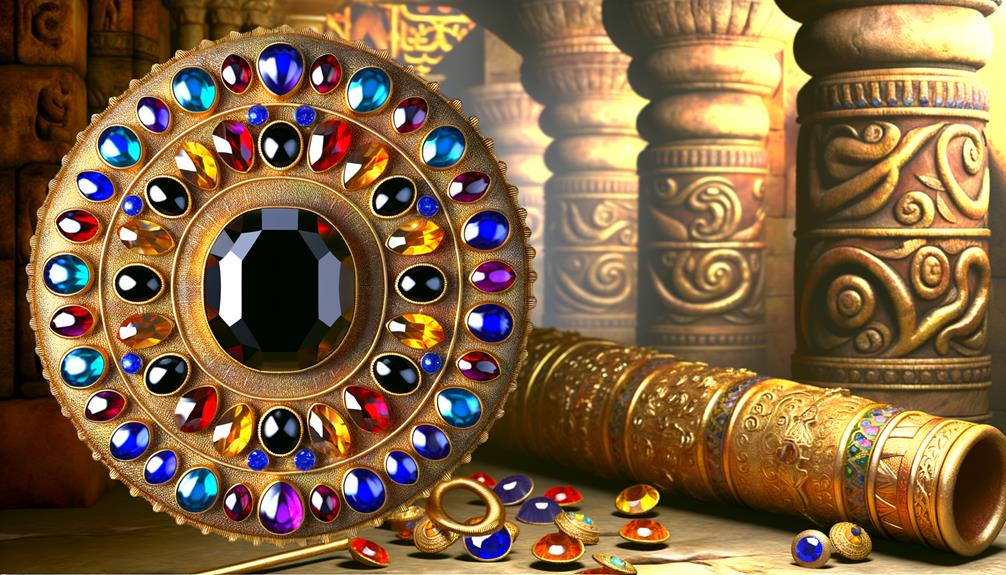
The High Priest’s breastplate, described in Exodus 28:17-20, held immense significance in ancient Israelite worship, featuring twelve gemstones representing the twelve tribes of Israel.
Among these, onyx held a prominent place, symbolizing divine connection and covenantal promises.
This sacred garment, rich in historical and religious context, underscores the theological importance of gemstones in conveying spiritual truths and divine authority.
Biblical Gemstone Significance
How does the High Priest’s breastplate, adorned with various gemstones including onyx, reflect the deep spiritual and symbolic meanings attributed to these stones in biblical texts?
The breastplate, described in Exodus 28:15-21, features twelve stones, each representing one of the twelve tribes of Israel.
Onyx, specifically mentioned in Exodus 28:20, is emblematic of strength and endurance, qualities essential for the spiritual leaders of Israel.
The precise arrangement and divine instructions underscore the significance of each stone, not merely as ornamental but as a conduit for divine communication and remembrance.
Historically, the breastplate served as a tangible manifestation of God’s covenant, emphasizing the integral role of gemstones in maintaining a sacred connection between the divine and the Israelites.
Symbolism and Representation
Integral to understanding the High Priest’s breastplate is recognizing how the specific arrangement of gemstones, including onyx, encapsulates profound theological symbolism and serves as a visual representation of the divine covenant with the twelve tribes of Israel. Each stone, meticulously chosen and placed, signifies one of Israel’s tribes, fostering a tangible connection to divine promises. Onyx, particularly, is engraved with tribal names, affirming identity and divine favor. This sacred vestment, detailed in Exodus 28:9-12 and 39:6-7, underscores the High Priest’s mediatory role between God and His people.
| Gemstone | Tribe |
|---|---|
| Onyx | Joseph |
| Sardius | Reuben |
| Topaz | Simeon |
| Carbuncle | Levi |
Each gem, including the onyx, is a reflection of Israel’s unity and God’s enduring covenant.
Historical and Religious Context
Rooted in ancient Israelite tradition, the High Priest’s breastplate, or ‘breastplate of judgment,’ served not only as a sacred vestment but also as a tangible symbol of divine authority and guidance.
Described in Exodus 28:15-30, this intricate artifact was adorned with twelve stones, each representing the tribes of Israel. While black onyx is not explicitly mentioned among the stones, onyx itself appears in the Bible, symbolizing strength and resilience.
The breastplate’s design facilitated the High Priest’s role in seeking God’s will, particularly during critical decisions. Each gem’s placement underscored the intimate relationship between the divine and His people, reflecting a profound theological and historical significance within the religious framework of ancient Israel.
Onyx and Spiritual Strength

In biblical texts, onyx is often associated with spiritual fortitude, symbolizing strength and resilience in the face of trials.
Importantly, the Book of Exodus mentions the onyx stones set in the ephod of the High Priest (Exodus 28:9-12), representing the tribes of Israel and their collective endurance. The onyx’s placement on the ephod signifies a divine endowment of steadfastness, essential for spiritual leadership.
Historically, onyx has been revered for its ability to bolster one’s inner resolve, aligning with scriptural themes of perseverance. Additionally, Ezekiel 28:13 lists onyx among the precious stones in Eden, underscoring its intrinsic value and spiritual significance.
Consequently, onyx serves as a biblical metaphor for unwavering spiritual strength amidst adversity.
Symbol of Protection

The onyx stone is frequently regarded as a powerful symbol of protection in biblical scripture, embodying divine safeguarding and spiritual armor.
Historically, onyx is mentioned in Exodus 28:9-12, where it adorns the High Priest’s breastplate, signifying God’s protection over Israel. This stone, inscribed with the names of the twelve tribes, symbolizes a covenantal shield.
In Job 28:16, onyx is listed among precious stones, underlining its esteemed value and protective connotations. The Book of Ezekiel 28:13 also references onyx within the Garden of Eden, illustrating its divine association.
Consequently, the biblical portrayal of onyx intertwines its physical strength with spiritual fortification, reflecting a multi-faceted emblem of God’s protective grace over His people.
Interpretations by Theologians

Renowned theologians have explored the multifaceted symbolism of black onyx in biblical texts, elucidating its roles beyond mere protection to encompass themes of divine authority and spiritual resilience. Historical interpretations often reference Exodus 28:9-12, where onyx stones were used in the High Priest’s garments, symbolizing God’s chosen intermediaries. Augustine considered onyx a metaphor for the steadfastness in faith, while Aquinas linked it to moral fortitude. Modern scholars emphasize its association with spiritual warfare and perseverance.
| Theologian | Interpretation | Scriptural Reference |
|---|---|---|
| Augustine | Steadfastness in Faith | Exodus 28:9-12 |
| Aquinas | Moral Fortitude | Job 28:16 |
| Modern | Spiritual Warfare | Revelation 21:19-20 |
| Historical | Divine Authority | Exodus 39:6 |
| Traditional | Intermediary Role | Genesis 2:12 |
Onyx in Christian Art
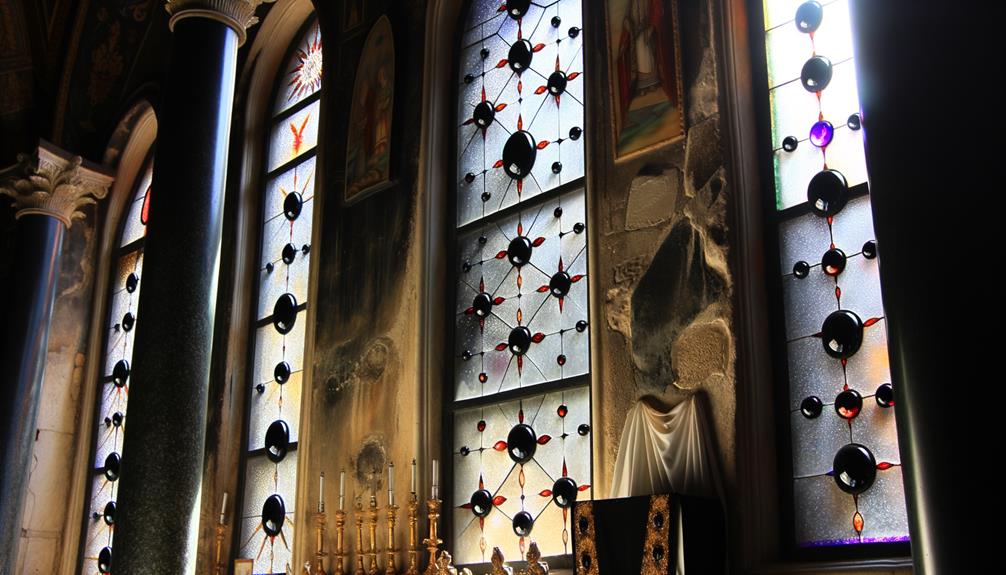
Christian art has long incorporated black onyx to symbolize spiritual resilience and divine authority, reflecting its profound theological significance.
Historically, this gemstone appears in various ecclesiastical artifacts such as chalices, crosses, and altars, underscoring its sacred connotations.
The use of black onyx in Christian art can be traced back to its mention in the Bible, particularly in the description of the High Priest’s breastplate (Exodus 28:20), where it represented the tribe of Joseph. This scriptural reference imbues onyx with a sense of divine protection and eternal strength.
Additionally, medieval and Renaissance artists employed black onyx to convey themes of piety and steadfast faith, thereby enriching the visual and spiritual experience of worship through its profound symbolism.
Modern Spiritual Significance

In contemporary spirituality, black onyx continues to be revered for its attributes of protection, grounding, and inner strength, echoing its ancient biblical significance.
Historically contextualized, black onyx is referenced in the Bible, especially in the book of Exodus (28:20) as part of the High Priest’s breastplate, symbolizing divine protection.
Modern spiritual practices uphold these qualities, often employing black onyx in meditation and rituals for fostering resilience and spiritual fortitude.
Theologically, its enduring significance is not merely ornamental but serves as a tangible reminder of God’s safeguarding presence.
This connection to biblical heritage and scriptural reverence underscores black onyx’s role in bridging ancient wisdom with contemporary spiritual practices, affirming its sacred and enduring legacy.
Conclusion
In summation, the study of onyx within biblical texts reveals a multifaceted symbol imbued with spiritual fortitude, divine protection, and profound theological significance.
From its mention in Genesis to its placement in the High Priest’s Breastplate, onyx emerges as a cornerstone of religious iconography.
The interpretations by theologians and its representation in Christian art further underscore its enduring relevance.
Consequently, onyx serves as an emblem of enduring faith and divine safeguarding, resonating through both ancient scripture and contemporary spiritual practice.