
Colt Meaning in the Bible: Humility and Kingship
In biblical scripture, the colt embodies rich symbolic meaning, representing humility, peace, and purity. Its mention especially in Zechariah 9:9 and Genesis 49:11 ties it to Old Covenant prophecies, emphasizing divine favor and messianic themes.
The colt’s unassuming nature and its association with Jesus’ triumphal entry into Jerusalem highlight a stark contrast between worldly power and divine humility, underscoring Jesus as the peaceful Messiah. This act of humility not only fulfills prophecy but also provides a profound commentary on transformative leadership and divine plans, offering deeper insights into the theological significance of humility and servant leadership.

Key Takeaways
- The colt symbolizes humility and peace, contrasting with warhorses, as seen in Jesus’ triumphal entry.
- Zechariah 9:9 prophesies a humble king riding a colt, which Jesus fulfills.
- The colt represents purity, being an unbroken and unused vessel, highlighting divine purpose.
- Jesus riding a colt signifies servant leadership and the rejection of worldly power.
The Colt in Prophecy
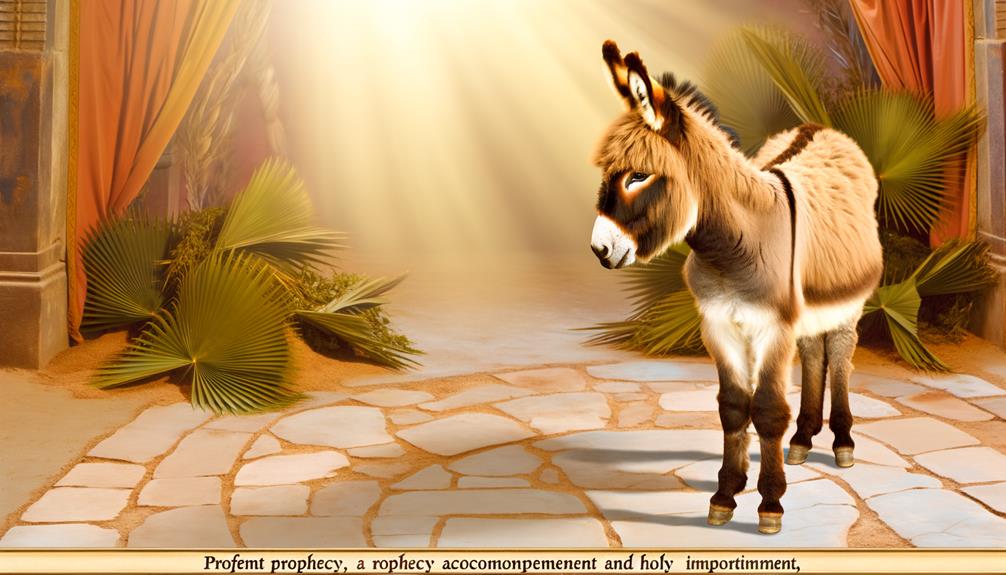
In biblical prophecy, the colt is often depicted as a symbol of humility and peace, particularly in the context of messianic predictions. This imagery is drawn from key scriptural texts, especially Zechariah 9:9, which foretells a king arriving ‘humble and riding on a donkey, on a colt, the foal of a donkey.’
This prophetic vision is widely interpreted as a foreshadowing of Jesus Christ’s triumphal entry into Jerusalem, an event recounted in the New Covenant Gospels. The choice of a colt, rather than a warhorse, underscores a distinct contrast between worldly power and divine humility.
This act fulfilled prophetic expectations and reinforced the themes of gentleness and salvation, integral to the messianic mission.
Symbolism of the Colt

The colt, as depicted in biblical texts, serves as a multifaceted symbol embodying themes of humility, peace, and the fulfillment of divine prophecy. Its presence in scripture denotes several key symbolic meanings:
- Humility: The colt, an unassuming and modest animal, reflects the humility of Christ, particularly during His triumphal entry into Jerusalem.
- Peace: Unlike a warhorse, a colt signifies a peaceful mission, aligning with Christ’s message of peace and reconciliation.
- Fulfillment of Prophecy: The colt fulfills specific Old Covenant prophecies, particularly in Zechariah 9:9, signifying divine orchestration.
- Purity: Often unbroken and unused, the colt represents purity and a vessel prepared for holy purposes.
These symbolic interpretations collectively enrich the theological and contextual understanding of the colt in biblical narratives.
Old Testament References
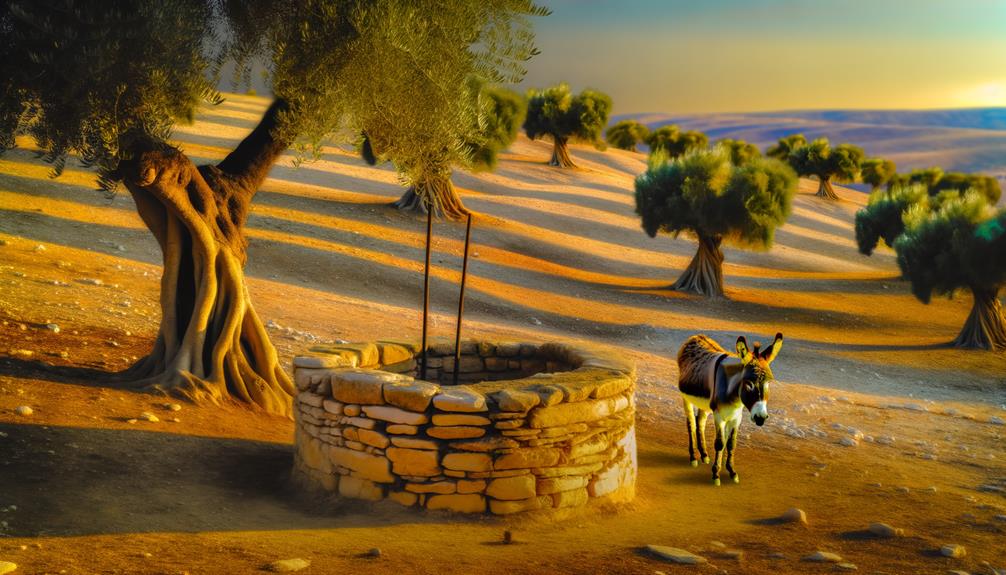
Biblical references to the colt in the Old Scriptures, particularly in prophetic texts, establish its role in the unfolding of divine plans and messianic expectations.
The colt is particularly mentioned in Zechariah 9:9, which foretells a king coming in humility, riding on a colt, the foal of a donkey. This imagery symbolizes peace and humility, contrasting with the warhorses of earthly kings.
Additionally, Genesis 49:11 speaks of Judah’s lineage binding a colt to a choice vine, signifying prosperity and divine favor.
These references encapsulate the colt’s significant emblematic role, prefiguring a ruler who embodies both humility and divinely ordained authority.
Therefore, the Old Scriptures position the colt as a harbinger of a peaceful, providential kingdom.
Jesus’ Triumphal Entry
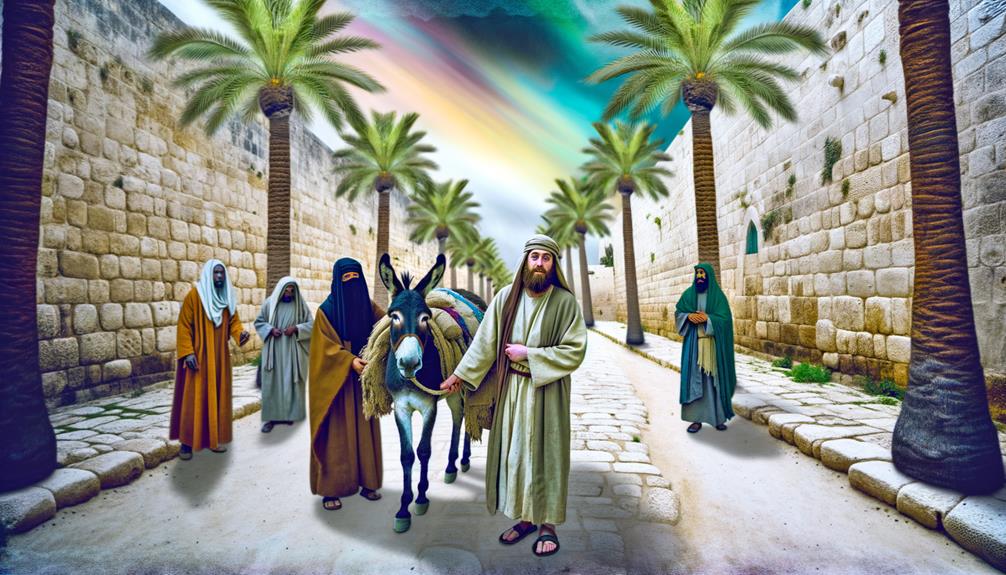
Jesus’ triumphal entry into Jerusalem, as chronicled in the New Scriptures, serves as a pivotal fulfillment of Old Covenant prophecy, particularly highlighting the significance of the colt in this messianic event. The colt, as mentioned in the Gospels, is not a mere detail but a profound symbol.
This event can be analyzed through several key aspects:
- Prophetic Fulfillment: Jesus riding a colt fulfills Zechariah 9:9, underscoring divine foreordination.
- Symbol of Peace: Unlike a warhorse, the colt signifies Jesus as the Prince of Peace.
- Public Declaration: This act openly declares Jesus’ messianic identity to the people.
- Cultural Context: In ancient Near Eastern cultures, riding a colt indicated a royal and peaceful entry.
Through these points, the colt’s significance in Jesus’ entry becomes evident.
Messianic Implications
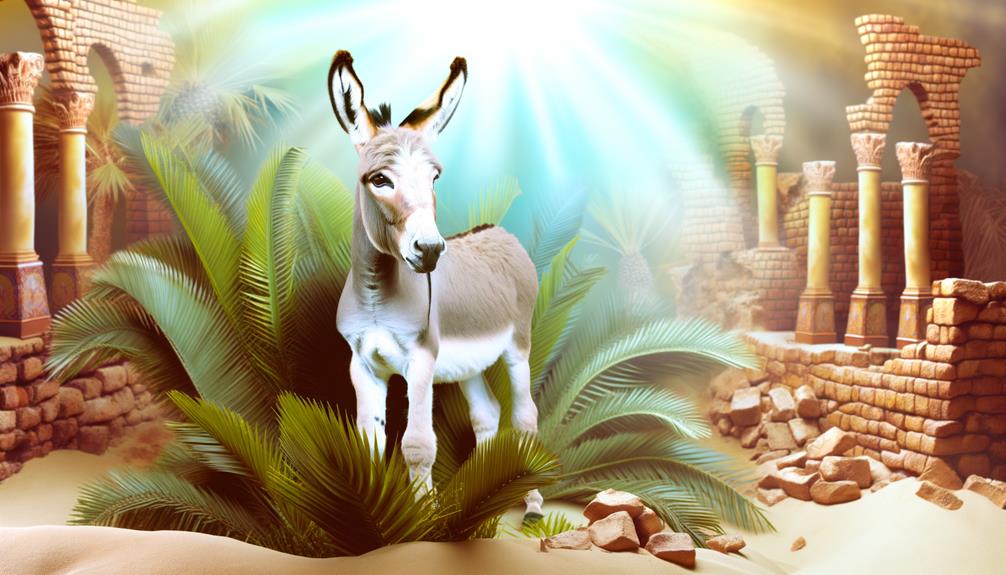
The choice of a colt for Jesus’ triumphal entry into Jerusalem carries profound Messianic implications, rooted in prophetic symbolism from the Old Scriptures.
This act fulfills the prophecy in Zechariah 9:9, highlighting the arrival of a humble yet righteous king.
Prophetic Symbolism Explained
One of the most compelling instances of prophetic symbolism in the Bible is the use of a colt to signify the messianic arrival, particularly illustrated in Zechariah 9:9 and its fulfillment in the New Covenant. This image is laden with profound meanings:
- Humility and Peace: Unlike a warhorse, a colt represents a humble, peaceful king.
- Fulfillment of Prophecy: Zechariah’s prophecy, written centuries before, is a demonstration of divine foresight.
- Messianic Identity: The colt underscores the Messiah’s unique role, distinct from earthly kings.
- Divine Timing: The specific use of a colt at a precise moment highlights the orchestrated fulfillment of divine plans.
This analysis elucidates the multifaceted symbolism, providing insight into the messianic themes imbued within biblical narratives.
Fulfillment in New Testament
In the New Scripture, the fulfillment of the colt’s prophetic symbolism is vividly manifested during the Triumphal Entry, as described in the Gospels.
Jesus’ deliberate choice to ride a colt into Jerusalem (Matthew 21:1-7, Mark 11:1-10, Luke 19:29-38, John 12:12-15) explicitly fulfills Zechariah 9:9, which prophesies the arrival of a humble king on a colt.
This act not only signifies His messianic identity but also subverts traditional expectations of a militant messiah. The colt, a symbol of peace and humility, underscores Jesus’ role as a peacemaker, contrasting with earthly kings who often ride warhorses.
Consequently, the colt’s presence in the New Covenant intricately weaves together prophecy and fulfillment, underscoring the divine orchestration of messianic revelation.
Symbol of Peace

Within biblical narratives, the colt is often depicted as a symbol of peace, particularly in its association with the humble and peaceful entry of Jesus into Jerusalem. This imagery is significant in several ways:
- Fulfillment of Prophecy: Jesus riding a colt fulfills the prophecy in Zechariah 9:9, symbolizing a king who comes in peace rather than war.
- Contrasts with War Horses: Unlike war horses, the colt represents a non-violent approach, emphasizing serenity and reconciliation.
- Messianic Symbolism: The colt underscores Jesus’ messianic role as a peaceful savior.
- Public Reception: The crowds receiving Jesus on a colt signify acceptance of a peaceful king, aligning with the spiritual kingdom he proclaimed.
This peaceful symbolism contrasts with militaristic expectations of a messianic figure.
Humility and Servanthood

In the context of humility and servanthood, the colt in the Bible symbolizes the unassuming nature and inherent humility expected of true servant leaders.
This imagery is poignantly illustrated by Jesus’ choice to ride a colt during His triumphal entry into Jerusalem, serving as an embodiment of servant leadership and fulfilling divine prophecy.
Such a choice underscores the alignment of humble actions with the fulfillment of a greater divine purpose.
Symbol of Humility
While often overlooked, the colt in biblical narratives serves as a profound symbol of humility and servanthood, particularly exemplified in the account of Jesus’ triumphal entry into Jerusalem. This seemingly modest animal underscores critical themes:
- Simplicity: The choice of a colt, rather than a grand steed, illustrates a preference for humility over grandeur.
- Fulfillment of Prophecy: Jesus riding a colt fulfills Zechariah 9:9, emphasizing the importance of divine plans realized through humble means.
- Accessibleness: A colt, unadorned and common, is accessible to all, symbolizing inclusivity and servanthood.
- Contrast to Earthly Power: The colt contrasts with the warhorses of earthly rulers, highlighting a kingdom founded on peace and humility rather than domination.
This symbolism enriches the understanding of humility in biblical contexts.
Servant Leadership Example
The symbolism of the colt as an emblem of humility naturally extends into the broader theme of servant leadership exemplified in biblical narratives.
Jesus’ choice of a colt for His triumphal entry into Jerusalem underscores a deliberate rejection of worldly grandeur in favor of meekness and service. This act vividly illustrates the essence of servant leadership: leading by serving others and prioritizing their needs above one’s own.
Biblical figures like Moses and King David also exemplify this paradigm, embodying humility and dedication to divine will. Their leadership, marked by selflessness and compassion, reinforces the theological premise that true greatness lies in servanthood.
Consequently, the colt becomes a tangible representation of the humility and service integral to biblical leadership.
Divine Purpose Fulfilled
How does the biblical narrative of the colt not only reflect humility but also illustrate the fulfillment of divine purpose through servanthood? The colt’s role in Jesus’ entry into Jerusalem encapsulates profound theological themes.
To begin with, the choice of a colt, an unassuming animal, signifies humility.
In addition, it fulfills the prophecy in Zechariah 9:9, demonstrating divine orchestration.
Furthermore, the colt’s submission to being ridden by Jesus exemplifies servanthood.
Finally, this act inaugurates Jesus’ journey to the crucifixion, underscoring the ultimate servanthood and sacrifice.
- Humility: Choice of a simple colt.
- Prophecy Fulfillment: Zechariah 9:9.
- Servanthood: Colt’s submission.
- Sacrificial Journey: Prelude to crucifixion.
This narrative intertwines humility with divine purpose, reinforcing key theological principles.
The Colt in Zechariah

In the book of Zechariah, the colt is symbolically significant, representing humility and peace in the prophetic vision of a coming king.
Zechariah 9:9 portrays a ruler who arrives ‘gentle and riding on a donkey, on a colt, the foal of a donkey.’ This imagery contrasts with the warhorses typically associated with kingship and military power.
Instead, the colt emphasizes a peaceful and humble reign, aligning with the broader Messianic expectations of a leader who brings salvation through gentleness rather than force.
The use of a colt consequently serves as a profound metaphor, signaling a transformative approach to leadership and kingdom, deeply embedded in the context of Israelite hope and divine promise.
Modern Interpretations

Building upon the symbolic significance of the colt in Zechariah, modern interpretations explore how contemporary theological and cultural contexts continue to find relevance in this imagery.
Scholars and theologians observe that the colt represents:
- Humility: Emphasizing Christ’s humble entrance into Jerusalem, challenging contemporary understandings of power and leadership.
- Peace: Contrasting with the warhorse, the colt signifies a kingdom founded on peace and reconciliation, resonating with current calls for nonviolence.
- Fulfillment of Prophecy: Reinforcing the continuity of biblical prophecy, thereby offering a lens through which modern believers can see divine promises realized.
- Youth and New Beginnings: Symbolizing renewal and fresh starts, the colt invites reflections on regeneration and spiritual rebirth pertinent to personal and communal faith journeys.
These interpretations underscore the timeless relevance of biblical symbols.
Conclusion
The colt in biblical texts serves as a multifaceted symbol, embodying prophecy, peace, and humility.
Its presence in Jesus’ triumphal entry into Jerusalem not only fulfills Old Covenant prophecies but also underscores messianic implications and the essence of servanthood.
Like a vessel carrying profound truths through the annals of time, the colt enriches theological understanding and invites modern readers to explore its layered meanings within both historical and contemporary contexts.