
Daleth Meaning in the Bible: Door to Humility
Daleth, the fourth letter of the Hebrew alphabet, is phonetically equivalent to the English ‘D’ and symbolically represents a door. In biblical texts, Daleth signifies humility, access, and transformation.
Significantly, Psalm 119:25-32 features a Daleth stanza focusing on a plea for divine intervention and spiritual revival. Its shape resembles a doorframe, emphasizing passages and thresholds, while its numerical value (four) connects to creation and worldly elements.
Verses like Deuteronomy 6:4 underscore Daleth’s role in divine revelation. By exploring its deeper meanings, one can gain insight into the multifaceted symbolism and spiritual teachings embedded in the biblical narrative.

Key Takeaways
- Daleth means ‘door’ in Hebrew, symbolizing access and change.
- It represents humility and servitude, being the fourth letter of the Hebrew alphabet.
- Daleth in Psalm 119:25-32 emphasizes a plea for divine guidance and spiritual revival.
- Symbolizes pathways and transitions, reflecting personal and spiritual growth.
Daleth in Hebrew Script

In Hebrew script, the letter Daleth is the fourth character of the Hebrew alphabet, represented by the symbol ד and holds significant historical and linguistic importance within biblical texts.
Originating from ancient Semitic scripts, Daleth is phonetically equivalent to the English ‘D.’
In the context of the Hebrew Bible, Daleth appears frequently, contributing to the language’s rich morphological and syntactic structure.
For instance, in Psalm 119, each stanza corresponds to a letter of the Hebrew alphabet, and the Daleth stanza (verses 25-32) reflects themes of humility and seeking divine guidance.
Understanding Daleth’s role in scriptural texts provides deeper insight into the linguistic intricacies that shape biblical narratives, enhancing comprehension of its theological and cultural relevance.
Symbolism of Daleth
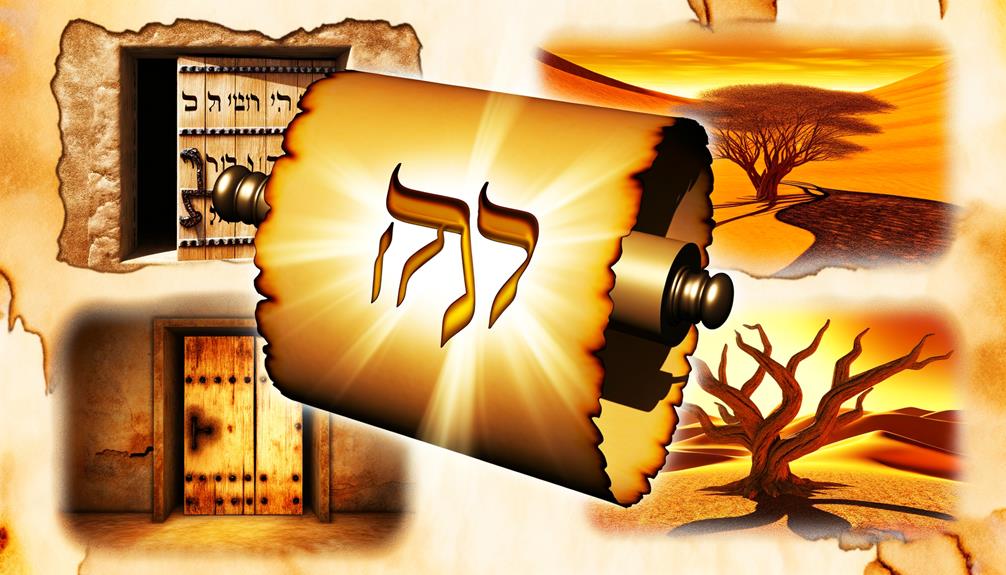
Building upon its linguistic significance, the letter Daleth also embodies profound symbolic meaning within biblical exegesis, often representing themes of humility, pathways, and doors.
Historically, Daleth, which translates to ‘door’ in Hebrew, is seen as a metaphor for access and change, echoing in scriptural narratives about spiritual journeys. In biblical context, the door symbolizes both entry and revelation, offering insights into divine mysteries.
Daleth’s shape, reminiscent of a doorframe, underscores its association with thresholds and passages. Additionally, its humble position as the fourth letter in the Hebrew alphabet signifies modesty and servitude, reflecting the virtue of humility.
This multifaceted symbolism of Daleth enriches our understanding of its role within the broader tapestry of biblical literature.
Daleth in Biblical Texts

Although often overlooked, Daleth’s presence in biblical texts is pivotal, as it frequently appears in key passages that underscore themes of divine access and revelation. In Psalm 119, Daleth is the fourth stanza, where the psalmist pleads for spiritual revival and guidance, highlighting the letter’s symbolic gateway to divine wisdom. Historically, Daleth’s numerical value (four) is significant in Hebrew culture, often associated with creation and the world.
Several key references illustrate Daleth’s importance:
- Psalm 119:25-32 – The stanza begins with ‘Daleth,’ emphasizing a cry for life according to God’s word.
- Genesis 1:1 – The fourth word in Hebrew is ‘God,’ aligning with Daleth’s numerical value.
- Deuteronomy 6:4 – The Shema’s pivotal declaration reflects Daleth’s role in revealing divine unity.
Spiritual Lessons From Daleth

The spiritual lessons derived from Daleth are deeply intertwined with its symbolism as a doorway to divine insight and transformation, reflecting its integral role in guiding believers towards a profound understanding of spiritual truths. Historically, Daleth, the fourth letter of the Hebrew alphabet, signifies humility and the tangible existence. Scripturally, it is seen in Psalm 119:25-32, where it represents the soul’s plea for divine intervention. This letter’s form, an open door, invites believers to seek and receive divine wisdom, emphasizing the importance of openness to God’s presence.
| Symbol | Meaning | Scriptural Reference |
|---|---|---|
| Daleth | Doorway | Psalm 119:25-32 |
| Humility | Earthly Domain | Deuteronomy 6:4-9 |
| Insight | Divine Wisdom | Isaiah 22:22 |
| Transformation | Renewal | Romans 12:2 |
| Openness | Receptiveness | Matthew 7:7-8 |
Daleth and Personal Growth

In exploring Daleth and personal growth, one must consider how the symbolic representation of Daleth as a doorway underscores the transformative journey from spiritual humility to profound enlightenment, as illustrated in biblical passages such as Psalm 119:25-32 and Isaiah 22:22.
Historically, Daleth signifies:
- Transition: Daleth as a doorway symbolizes the passage from one state of being to another, highlighting the importance of change and growth in one’s spiritual journey.
- Humility: Psalm 119:25-32 emphasizes the importance of humility, reminding believers to open their hearts to divine guidance.
- Authority: Isaiah 22:22 represents the granting of authority and access, suggesting that personal growth involves accepting new responsibilities and opportunities.
Thus, Daleth encapsulates the stages of spiritual progression essential for personal development.
Conclusion
In summation, the Hebrew character Daleth, rich in historical and scriptural significance, serves as a profound symbol within biblical texts.
Its representation of humility, spiritual doorways, and personal transformation is entwined with numerous biblical narratives, offering valuable insights into human growth and divine interaction.
Through careful examination of its scriptural appearances and symbolic meanings, Daleth emerges as a pivotal element that encourages introspection and spiritual development, thereby subtly guiding adherents towards a deeper understanding of their faith.