
Diva Meaning in the Bible: Spirit of Pride
The term ‘diva’ is not explicitly mentioned in the Bible, but its essence can be aligned with traits displayed by key female figures such as Queen Esther, Deborah, Ruth, and Mary, mother of Jesus. These women demonstrated exceptional leadership, bravery, and devotion, akin to the modern ‘diva’ characterized by strength and influence.
Historically, ‘diva’ evolved from the Latin ‘diva,’ meaning goddess, to describe celebrated women with commanding presence. The initial biblical focus was on humility and community, contrasting with contemporary views of artistic excellence and assertiveness.
Further exploration can reveal deeper insights into these scriptural heroines.

Key Takeaways
- The term ‘diva’ is derived from the Latin word ‘diva,’ originally meaning ‘goddess.’
- Biblical figures like Queen Esther and Deborah exemplify traits of courage, leadership, and wisdom.
- The modern notion of ‘diva’ contrasts with biblical values of humility and communal roles for women.
- Media has reshaped ‘diva’ to imply demanding behavior, diverging from biblical examples of exceptional women.
Origins of the Term ‘Diva’

The term ‘diva‘ originates from the Latin word ‘diva,’ meaning ‘goddess,’ and historically referred to a celebrated female opera singer. However, its usage and connotations have evolved greatly over time.
Initially, the term denoted exceptional talent and commanding stage presence in the operatic domain. However, it has since transcended its operatic roots to describe individuals in various entertainment industries who exhibit extraordinary skill and often demanding or temperamental behavior.
The semantic shift reflects broader cultural changes, where ‘diva’ now implies both admiration and critique. This duality underscores the complexity of societal attitudes towards powerful women, blending reverence with scrutiny.
Understanding these origins provides a foundation for exploring how ‘diva’ traits are perceived in diverse contexts, including biblical narratives.
Biblical Figures and ‘Diva’ Traits

Examining biblical narratives reveals several figures whose actions and characteristics align with modern interpretations of ‘diva’ traits, blending extraordinary abilities with assertive, and at times, contentious behavior.
For instance, Queen Esther exemplifies courage and influence, using her position to save her people, embodying assertiveness.
Similarly, the prophet Elijah commands authority and performs miracles, often challenging the status quo with unparalleled conviction.
Even King David, with his poetic talent and military prowess, exhibits a blend of charisma and decisive action.
These figures, while complex and multi-dimensional, share a common thread of exceptionalism and assertiveness, characteristics often associated with the term ‘diva’ in contemporary understanding, albeit within the sacred and historical context of biblical scripture.
Cultural Contexts in Scripture

Understanding the concept of ‘diva’ within biblical texts necessitates an exploration of the cultural and historical contexts in which these scriptures were written.
The term ‘diva’, with its contemporary connotations of fame and demanding behavior, does not directly translate to the ancient Near Eastern ethos. Biblical societies were patriarchal, often emphasizing humility and communal values over individual exaltation.
Women’s roles were largely defined by familial and societal expectations, making the notion of a ‘diva’ in the modern sense incongruent with the cultural realities of the time.
However, examining influential female figures within this framework can provide insights into how traits associated with ‘diva’ behavior, such as assertiveness and leadership, were perceived and manifested in a biblical context.
Evolving Meanings Over Time

The term ‘diva’ exhibits significant shifts in meaning when examined through historical and cultural lenses.
Initially rooted in religious contexts, its interpretation has evolved considerably, reflecting broader cultural changes and varying societal values.
Modern usage often diverges from its original connotations, highlighting the fluidity of language and the impact of contemporary perspectives.
Historical Contextual Shifts
Throughout history, the term ‘diva’ has undergone significant semantic transformations, evolving from its origins in the Latin word ‘diva’ meaning ‘goddess’ to its contemporary connotations. Initially, ‘diva’ referred to deified figures, signifying reverence and sanctity. Over centuries, its usage expanded, particularly in the sphere of opera, where it denoted a leading female singer of exceptional talent. The term later permeated broader cultural contexts, often implying a mix of artistic excellence and demanding behavior. Such shifts reflect broader societal changes in the perception of female authority and talent.
| Historical Period | Meaning of ‘Diva’ |
|---|---|
| Ancient Rome | Goddess |
| Operatic Era | Leading Female Singer |
| Modern Usage | Talented but Demanding |
These transformations illustrate the dynamic nature of language and societal values.
Cultural Interpretations Evolve
Cultural interpretations of the term ‘diva’ have continually evolved, reflecting nuanced shifts in societal attitudes towards female empowerment and artistic expression. Historically rooted in the divine and theatrical domains, ‘diva’ initially denoted a distinguished female opera singer. Over time, its connotations have broadened and diversified, mirroring broader cultural transformations.
Artistic Influence: From opera to popular music, the term’s application has expanded to encompass various forms of high artistic achievement.
Empowerment and Agency: ‘Diva’ now often signifies a woman who exudes confidence, independence, and strength.
Cultural Tropes: The term has also interwoven with stereotypes, sometimes implying temperamental or demanding behavior.
These evolving interpretations underscore the term’s complex cultural and historical layers.
Modern Usage Variances
Examining modern usage, ‘diva’ has undergone significant semantic shifts, reflecting broader societal changes and the evolving landscape of gender dynamics. Traditionally associated with female opera stars, the term now encompasses a broader range of meanings, spanning from high-maintenance individuals to strong, independent women. This evolution mirrors the progressive redefinition of female power and assertiveness in contemporary culture. The modern ‘diva’ can denote both positive attributes of talent and leadership, as well as negative connotations of arrogance.
| Context | Traditional Meaning | Modern Meaning |
|---|---|---|
| Opera | Female lead singer | Same |
| Pop Culture | Not applicable | High-maintenance individual |
| Feminist Lens | Not applicable | Empowered, assertive woman |
The table above illustrates these nuanced modern interpretations.
Modern Interpretations and Misconceptions

In modern discourse, the term ‘diva’ is frequently misinterpreted and detached from its original biblical connotations, leading to a myriad of misconceptions about its historical and scriptural significance.
This divergence has resulted in a skewed understanding of the term, often associating it with negative or superficial traits.
Analyzing these modern interpretations reveals:
- Cultural Shift: The term has evolved to describe individuals, particularly women, perceived as demanding or temperamental.
- Media Influence: Popular culture and media have played a significant role in reshaping the term’s meaning, often highlighting its more flamboyant aspects.
Understanding these deviations is essential for a thorough interpretation.
Spiritual Lessons From Biblical ‘Divas
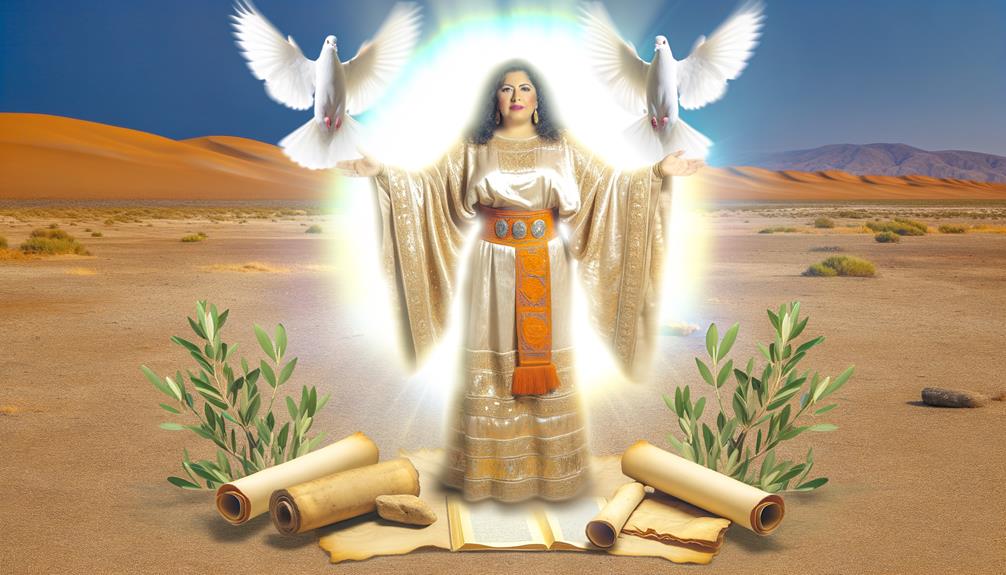
Drawing from the lives of prominent women in the Bible, the term ‘diva’ can be re-examined to uncover profound spiritual lessons and virtues that transcend its modern-day misinterpretations. Biblical figures like Esther, Ruth, and Deborah exemplify strength, courage, and unwavering faith. Their stories provide a framework for understanding how divine purpose and moral integrity shape their leadership and influence.
| Biblical Figure | Spiritual Lesson |
|---|---|
| Esther | Courage in adversity |
| Ruth | Loyalty and devotion |
| Deborah | Leadership and wisdom |
| Mary (Mother of Jesus) | Humility and obedience |
| Hannah | Faith and perseverance |
These women demonstrate that true ‘divas’ embody virtues that inspire and guide, reflecting a deeper spiritual significance.
Conclusion
In analyzing the term ‘diva’ within a biblical context, the evolution of its meaning reveals a multifaceted interplay of cultural and spiritual dimensions.
Biblical figures exhibiting ‘diva’ traits underscore the complex human characteristics represented in scripture.
Over time, the term’s connotations have morphed, weaving an intricate tapestry that modern interpretations often misconstrue.
Ultimately, the spiritual lessons gleaned from these biblical ‘divas’ disclose timeless truths, shining with the brilliance of a thousand suns, about human nature and divine purpose.