
Discomfited Meaning in the Bible: Defeat and Distress
The term ‘discomfited‘ in the Bible signifies a profound existential defeat often enacted by divine intervention. Derived from the Hebrew word “nākôn,” it encapsulates being overthrown or confounded, underscoring God’s sovereignty in battles and trials.
Key scriptural instances include Exodus 23:27 and Joshua 10:10, where God discomfits Israel’s enemies, illustrating ultimate divine authority over human efforts and adversaries. Theological interpretations emphasize the vulnerability of human beings against divine will and the rich symbology of spiritual warfare.
For further insight into this multifaceted term and its profound implication within Scripture, consider the varied narratives and translations.

Key Takeaways
- ‘Discomfited’ in the Bible signifies divine intervention leading to the overwhelming defeat or confusion of enemies.
- Derived from Hebrew words indicating being struck, overthrown, or routed by divine power.
- Often used in Old Testament battle narratives to show God’s direct involvement in delivering His people.
- Reflects spiritual and existential defeat beyond mere physical discomfort, emphasizing God’s sovereignty and judgment.
Origin of ‘Discomfited’

The term ‘discomfited‘ finds its origin in the Old French word ‘desconfit’, which means to be defeated or thwarted, and is rooted in the Latin ‘discomfitus’, reflecting a state of being utterly undone or overcome.
This etymological journey reveals a profound depth of meaning, signifying more than mere discomfort, but rather, a profound existential defeat.
This nuanced understanding is essential for theological discourse, as it offers insight into the spiritual and emotional turmoil experienced by biblical figures.
In scriptural contexts, this term often denotes a divine intervention where human endeavors are rendered futile, emphasizing God’s sovereignty.
Analyzing ‘discomfited’ within its historical and linguistic roots allows for a richer interpretation of biblical narratives, enhancing our comprehension of divine-human interactions.
Biblical Hebrew Context

In the biblical Hebrew context, the term often translated as ‘discomfited’ is rooted in the word ‘נָכוֹן’ (nākôn), which conveys a sense of being overthrown, shattered, or confounded. This term is imbued with profound theological implications, reflecting God’s intervention in human affairs.
Its usage underscores several key aspects:
- Divine Judgment: Signifying God’s punitive actions against adversaries.
- Human Vulnerability: Highlighting the frailty and susceptibility of humanity in the face of divine will.
- Spiritual Warfare: Indicating the cosmic struggle between good and evil.
- Deliverance: Often associated with God’s deliverance of His people from their foes.
Understanding ‘nākôn’ enriches one’s grasp of the biblical narrative, offering deeper insights into the dynamics of divine-human interaction.
Usage in Old Testament
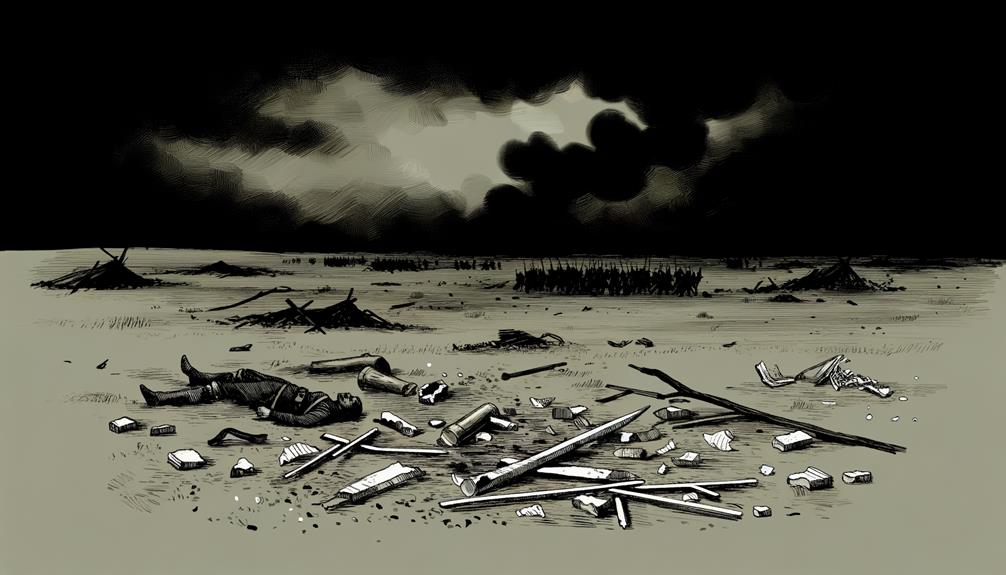
Examining the term ‘discomfited‘ within the Old Scripture reveals its nuanced deployment in pivotal narratives where divine intervention disrupts human endeavors.
For instance, in Exodus 23:27, God promises to discomfit Israel’s enemies, thereby ensuring their victory. Similarly, Joshua 10:10 narrates the Lord discomfiting the Amorites, leading to their defeat by the Israelites.
The Hebrew term often translated as ‘discomfited’, נָכָה (nakah), conveys a sense of being struck, defeated, or routed, emphasizing divine power overriding human resistance.
This term’s recurring use underscores a theological theme: God’s sovereignty and active role in guiding and protecting His chosen people.
The term ‘discomfited’ therefore serves as a demonstration of divine omnipotence in the Old Testament narratives.
New Testament References

In exploring the New Scriptures, instances of discomfiture are evident in several profound moments, including Jesus’ experiences of discomfort, the apostles’ trials and tribulations, and the parables that address themes of unease.
These occurrences not only highlight the human dimensions of biblical figures but also underscore the theological significance of enduring and overcoming spiritual and physical challenges.
Analyzing these references offers deeper insight into the multifaceted nature of discomfort as both a personal and communal experience within the Christian faith.
Jesus’ Discomfort Moments
The New Covenant vividly portrays several moments where Jesus experienced profound discomfort, revealing His humanity and the depth of His sacrificial love. These episodes are invaluable for understanding the extent of His commitment to humanity’s redemption:
- Garden of Gethsemane (Matthew 26:36-46): Jesus grapples with intense agony and anticipates His forthcoming suffering.
- Temptation in the Wilderness (Matthew 4:1-11): Jesus endures severe trials, resisting Satan’s temptations.
- Rejection in Nazareth (Luke 4:16-30): Jesus faces outright rejection and hostility from His hometown.
- Crucifixion (Matthew 27:32-56): Jesus undergoes excruciating physical and spiritual anguish on the cross.
These instances underscore His willingness to embrace discomfort for the sake of humanity’s salvation.
Apostles’ Trials and Tribulations
Just as Jesus endured profound discomfort, the Apostles also faced significant trials and tribulations as they spread the message of the New Covenant.
The Acts of the Apostles provides vivid accounts of their hardships, including imprisonments, beatings, and shipwrecks (Acts 16:23-24, 2 Corinthians 11:25).
Paul’s epistles frequently reflect on his suffering, portraying it as a means to partake in Christ’s afflictions (Colossians 1:24).
Peter, too, exhorts believers to find joy in suffering for righteousness (1 Peter 3:14).
These tribulations underscored their unwavering faith and commitment to their divine mission.
Such experiences serve as poignant reminders of the cost of discipleship and the transformative power of enduring faith amid adversity.
Parables of Unease
Many parables in the New Scriptures convey themes of unease and discomfort to illustrate profound spiritual truths. These narrative devices serve to challenge the listener’s moral compass and prompt self-reflection.
Significant parables include:
- The Rich Man and Lazarus (Luke 16:19-31): Demonstrates the eternal consequences of earthly actions and indifference.
- The Ten Virgins (Matthew 25:1-13): Emphasizes the necessity of preparedness for the Kingdom of Heaven.
- The Sheep and the Goats (Matthew 25:31-46): Highlights the division based on righteousness and compassion.
- The Unforgiving Servant (Matthew 18:21-35): Illustrates the importance of mercy and the consequences of a hardened heart.
These parables underscore the tension between earthly conduct and divine expectations, compelling believers toward spiritual growth.
‘Discomfited’ in Battle Narratives

In the biblical battle narratives, the term ‘discomfited‘ frequently illustrates the divine intervention that leads to the overwhelming defeat and confusion of God’s enemies. This term is pivotal in conveying how God’s power manifests in warfare, ensuring victory for the Israelites.
For instance, in Exodus 14:24, the Egyptians are ‘discomfited’ by the Lord through a pillar of fire and cloud, indicating divine disruption. Similarly, in Joshua 10:10, God ‘discomfited’ the Amorites, causing chaos and ensuring their defeat.
These instances underscore a theological principle: victory in battle is not solely dependent on military prowess but on divine will. Accordingly, ‘discomfited’ becomes an affirmation of God’s supremacy and active participation in the deliverance of His people.
Interpretations by Scholars

Scholars have extensively analyzed the term ‘discomfited’ within biblical texts, exploring its linguistic roots, theological implications, and contextual applications in scriptural narratives. Their interpretations have revealed several key insights:
- Linguistic Roots: The term often translates from Hebrew verbs like ‘hamam’ and ‘nús,’ which convey notions of confusion, panic, and flight.
- Theological Implications: It signifies divine intervention where God disrupts the plans of the wicked, showcasing His sovereignty.
- Contextual Applications: Frequently, ‘discomfited’ appears in battle narratives, emphasizing the totality of God’s deliverance.
- Symbolic Resonance: Beyond physical defeat, it metaphorically represents the spiritual triumph of good over evil.
These scholarly insights deepen our understanding of ‘discomfited’ within the biblical canon.
Translation Variations

Throughout various Bible translations, the term ‘discomfited’ is rendered with distinct nuances that reflect the translators’ theological perspectives and linguistic choices. This term, which captures the essence of defeat, distress, or confusion, varies significantly across different versions of the Bible. Below is a table illustrating how ‘discomfited’ is translated in four prominent Bible versions:
| Bible Version | Translation of ‘Discomfited’ |
|---|---|
| King James Version | Discomfited |
| New International Version | Overcome |
| English Standard Version | Thrown into confusion |
| New Living Translation | Completely confused |
These variations highlight the translators’ efforts to convey the term’s multifaceted meaning, ensuring that readers grasp its full impact within their scriptural context.
Theological Implications

The translation variations of ‘discomfited’ hold significant theological implications, as they shape our understanding of divine intervention and human experience within the biblical narrative.
Different translations can emphasize:
- God’s Sovereignty: The term often highlights God’s supreme power in unsettling His enemies, underscoring His control over human history.
- Human Vulnerability: It brings to the fore human susceptibility to chaos and defeat without divine aid.
- Moral Judgement: The word can reflect God’s judgement against unrighteousness, reinforcing the moral order God upholds.
- Spiritual Warfare: It underlines the ongoing spiritual conflict between good and evil, portraying God’s active role in the cosmic battle.
Such nuances enrich our theological comprehension of how divine purposes unfold in biblical accounts.
Modern Relevance

Understanding the modern relevance of ‘discomfited‘ in the Bible requires examining how this term informs contemporary Christian perspectives on divine intervention and human resilience.
In biblical contexts, ‘discomfited’ often signifies the disruption of adversaries by divine power, underscoring God’s sovereignty and protective nature.
Today, believers interpret such instances as reminders of God’s unwavering support amid trials, fostering a sense of spiritual fortitude.
This concept encourages Christians to view their struggles not as mere misfortunes but as opportunities to witness divine faithfulness and grow in resilience.
Conclusion
Just as a candle’s flicker battles the encroaching shadows, the term ‘discomfited‘ in biblical texts illuminates the profound struggle and ultimate triumph over adversity.
The word’s rich tapestry, woven through ancient Hebrew contexts and New Scriptures narratives, reveals layers of divine intervention and human frailty.
Scholarly interpretations and translation nuances further highlight its theological depth.
In today’s world, ‘discomfited’ continues to resonate, reminding believers of the enduring dance between light and darkness, victory and defeat.